
By Tylzen Spoke Roofing · Published
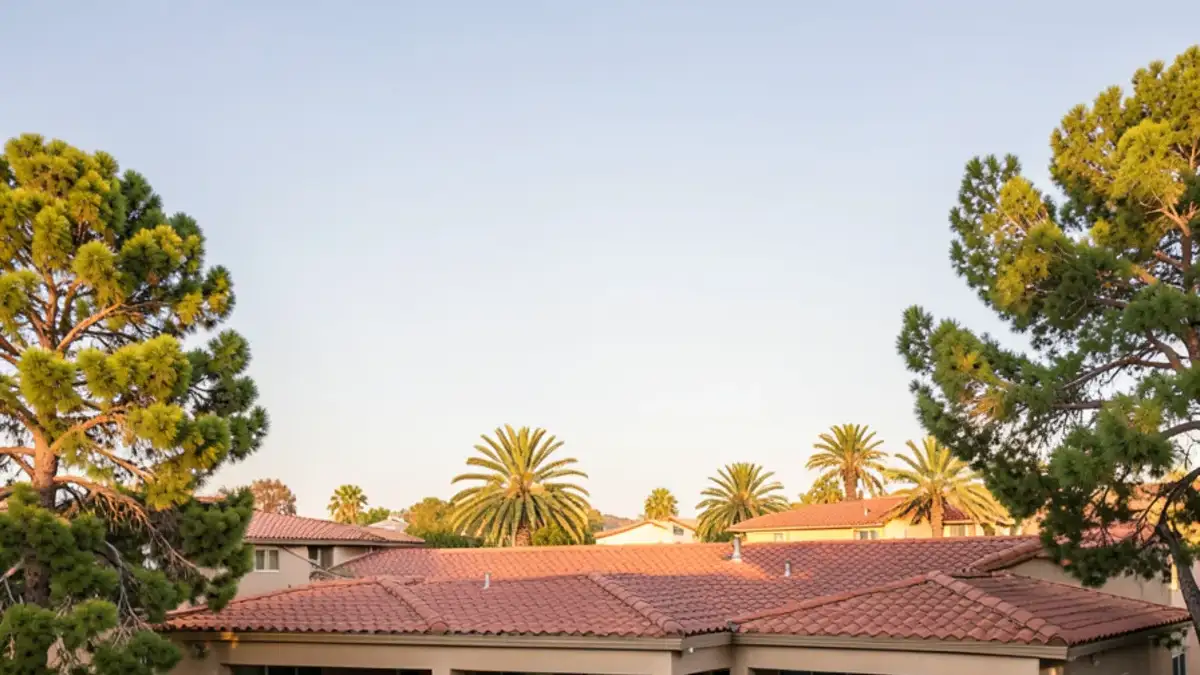
An HOA roof replacement goes smoothly when four things are settled before work starts: who is responsible for which roof under the governing documents, how the work will be funded, what exact scope every contractor is bidding, and how residents will be notified and kept safe. Apartment owners face the same questions without a board vote, but with tenants who still need access, parking and quiet.
This guide covers each step for condos, townhome HOAs and apartment buildings across LA County, and how our multifamily and HOA roofing projects are planned around the people living underneath.
Who decides on an HOA roof replacement, and who pays?
In a California common interest development, the CC&Rs say which parts of the building the association maintains and which belong to individual owners. Most condo associations maintain the roofs; some townhome communities leave roofs to each owner, which makes a coordinated reroof harder.
- Check the CC&Rs and any maintenance matrix before requesting bids.
- Confirm whether reserves cover the project or whether a special assessment is needed, and what the governing documents require for approval.
- Have the board record its decision and the chosen scope in the minutes.
- For apartments, owners decide directly but should review lender and insurance requirements.
Rules on assessments and member votes come from the Davis-Stirling Act and your own documents. Your manager or association counsel is the right source for those details.
Want a roofer to look at it?
Call with your address and what you are seeing. We visit same-day or next-day when crews are free.
- 4.9 from 48 Google reviews
- Based on Rosemead Blvd
- Photos and a written quote before work
Timing a multifamily reroof with the reserve study
California associations must prepare a reserve study at least every three years, based on a visual inspection of major components, and roofs are usually the largest line in it. The estimate of remaining life in that study is often a desk estimate, though. A roofer's inspection confirms whether the roof is ahead of or behind that schedule.
We inspect each building and roof section separately, rate its condition and photograph the problems. Boards can then replace the worst roofs first, maintain the rest and update the reserve study with real conditions instead of averages.
How should a board compare HOA roofing bids?
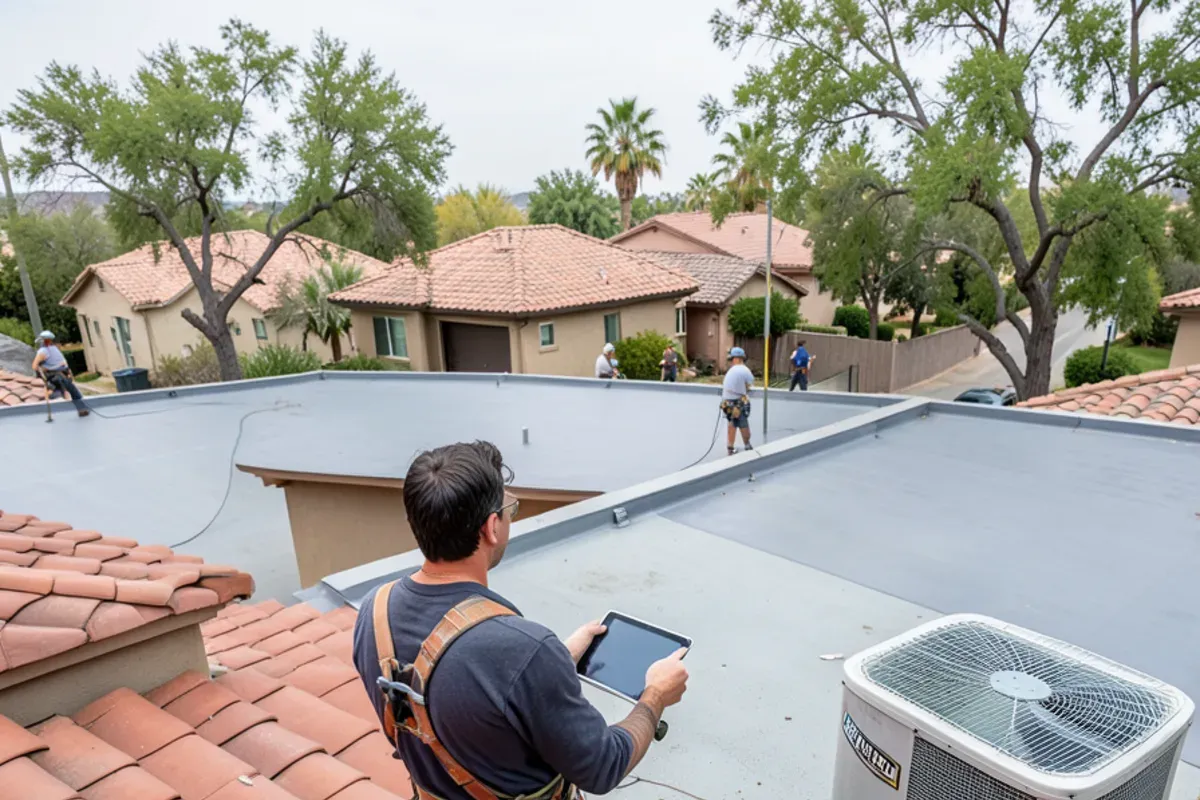
Bids only compare when they describe the same job. A short written scope sheet, sent to every bidder, does most of the work.
- List each building and roof type: pitched shingle or tile, flat center sections, carports and stair landings.
- Specify tear-off, underlayment, ventilation, flashing replacement and gutter work for each.
- Ask for unit prices on deck repair so hidden rot does not become an argument mid-project.
- Require the permit, inspections and any Title 24 cool-roof compliance to be listed as lines.
- Request the manufacturer coverage and workmanship terms in writing, and find out if both stay with the property.
- Verify every bidder's license and workers' compensation record at cslb.ca.gov.
- Ask for a phasing plan, a daily cleanup routine and a single point of contact for residents.
Matching each multifamily roof section to the right fix
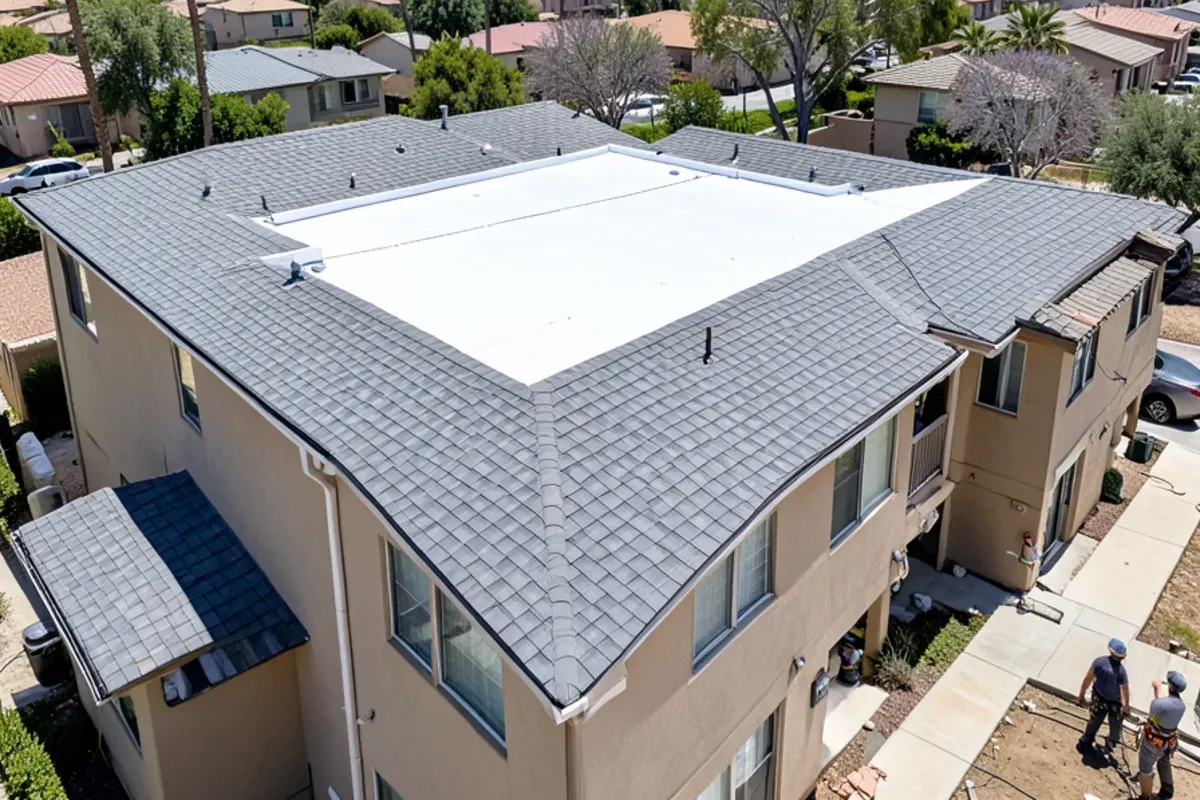
One complex can hold four or five roof types, and each wears out on its own schedule. Splitting the scope by section keeps a board from paying for a full replacement where a narrower fix would do.
| Roof section | Sign it needs work | Common approach |
|---|---|---|
| Mansard or pitched shingle edges | Curling tabs, granule loss, leaks at the flat transition | Replace with the transition flashing rebuilt |
| Flat center roofs | Open seams, ponding, wet insulation in core cuts | Recover or flat roof replacement, with a cool-roof product |
| Concrete or clay tile slopes | Leaks with tiles intact, brittle felt at the eaves | Lift and relay over new underlayment |
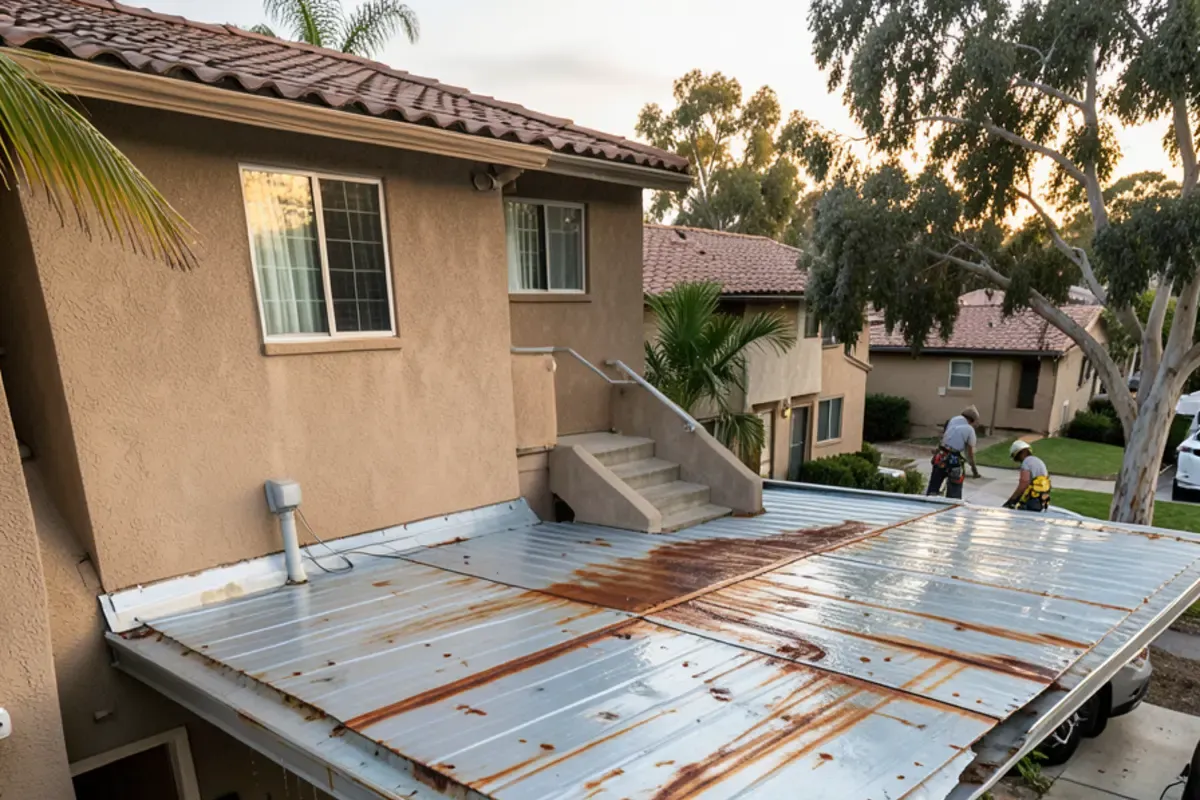
| Carport and walkway roofs | Rusted metal, water sheeting onto stairs and doors | New covering plus correct downspouts and drainage |
| Stair landings and balconies | Soft wood, cracked deck coating, stains below | Waterproofing and structural review, scoped separately |
Phasing work and keeping residents informed
Residents tolerate noise and dust far better when they know the schedule. A simple communication plan prevents most complaints.
- Written notice to every unit before work reaches their building, with dates and hours.
- Guidance on moving cars from carports and drive aisles where debris may fall.
- A request to take down wall hangings on top-floor units during tear-off, since vibration can shake them loose.
- Fenced or taped drop zones below the work area and protected entry paths.
- Daily magnet sweeps for nails around parking and walkways.
Roofing normally happens from outside, but if a unit must be entered, for example to check an attic hatch or a ceiling leak, California has notice rules for entry. Coordinate those through the manager.
What we see on apartment and condo roofs in LA County
Rental housing is a large share of the local market. Point2Homes counts 52.7% of occupied units in Rosemead as renter-occupied, and neighboring cities such as Alhambra and El Monte have many apartment and condo buildings from the 1960s through the 1980s.
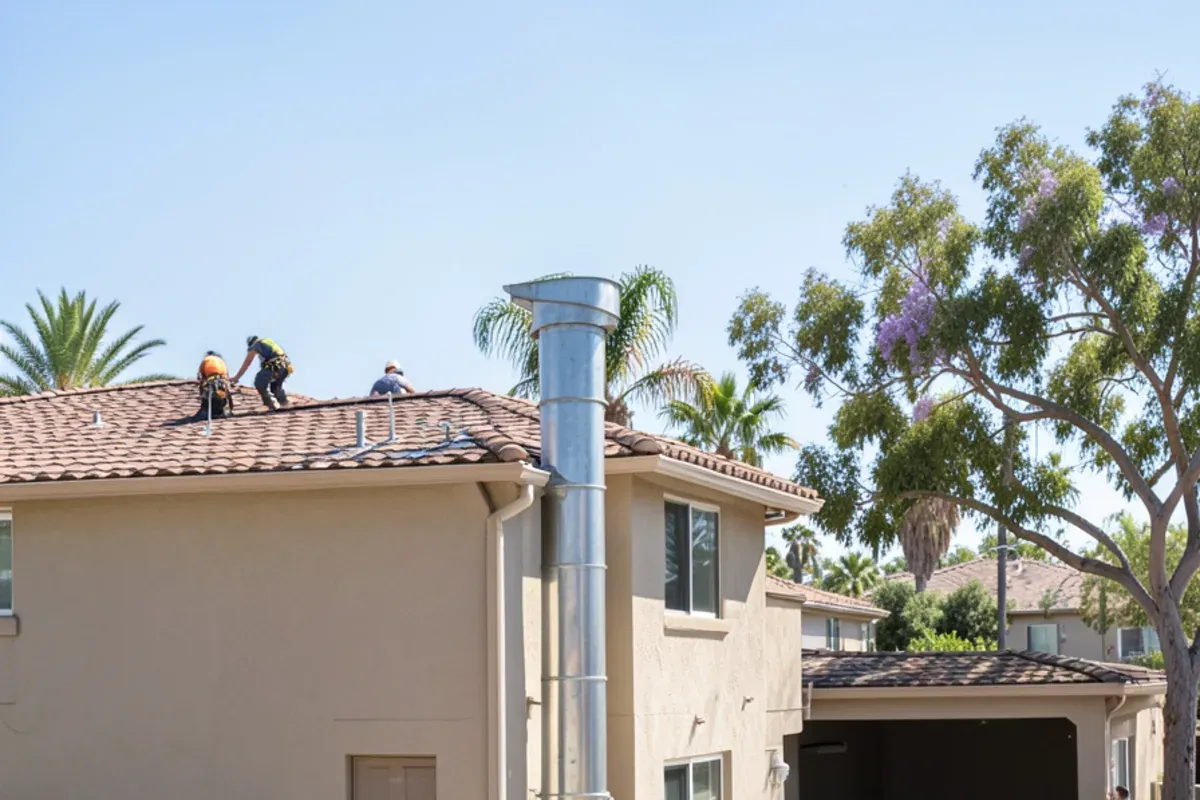
- Mansard or pitched shingle edges around a flat center roof, with a leak-prone transition between them.
- Dozens of penetrations: plumbing vents, bath fans, old swamp cooler stands and abandoned satellite mounts.
- Carport and walkway roofs that drain onto each other or onto stairs.
- Condenser units placed directly on membranes without pads, wearing holes over time.
- Repairs done unit by unit over decades, each with a different material.
Trade-offs boards and owners weigh
Phasing spreads the cost, but each phase is a separate mobilization, permit and inspection, and a shingle color chosen today may be discontinued by the time the last building is done. When a board phases, we suggest ordering a reserve of the chosen product or picking a line the manufacturer has carried for years. Doing every building at once costs more in a single year and may require a special assessment, yet it settles the look, closes the permit file once and stops interim repair spending on the roofs waiting their turn.
Flat center sections offer a cheaper path through a coating, which can bridge a few reserve years if the insulation is dry. It is a poor choice where core cuts show wet board, because residents on the top floor become the moisture alarm. We put both prices on paper so the board can vote with the numbers in front of it.
Permits, Title 24 and paperwork for the board file
Reroofs on apartment and condo buildings need permits, issued by the city building division or, in unincorporated areas, by LA County Public Works. Our crews handle the permit whenever one is required and book each inspection. When a project replaces 50% or more of a roof, Title 24 cool-roof rules can apply; low-slope sections in Climate Zone 9 generally need a CRRC-rated product with an aged reflectance of 0.63 or higher. Confirm specifics with the building department.
At closeout, the board should receive the final permit sign-off, product and color records, manufacturer registration if any, the written workmanship terms and photos of each building. Those go straight into the next reserve study.
Balcony and walkway inspections that overlap with roof work
California also requires periodic inspections of wood-supported balconies, decks, stairways and walkways: apartment buildings with three or more units under Health and Safety Code section 17973, repeated every six years, and condominium associations under Civil Code section 5551, repeated every nine years. Those reports often point to water from a roof edge, carport or walkway cover as the cause of deck damage. Reading the latest balcony report before setting the roofing scope lets one project fix the drainage that feeds both problems.
Starting your association's roof plan
Begin with a building-by-building inspection, then use the photos and ratings to set scope, timing and funding. The board receives an itemized written quote that lists permits and any deck repair on their own lines, plus a phasing plan the manager can share with residents. Call (725) 745-8803 or request a quote to schedule the walk-through.
Questions readers ask
Can an HOA replace roofs one building at a time?
Yes, and many do. Phasing spreads the cost across reserve years and focuses money on the worst roofs first. The trade-off is that materials and colors should be chosen so later phases still match, and each phase needs its own permit and inspection.
What happens if a leak reaches a unit during the reroof?
Crews seal every opened section watertight before leaving each afternoon and keep tarps ready for weather. If water does get in, the crew stops, secures the roof and documents the damage with photos. The contract should state how interior damage during the project is handled.
Do tile condo roofs need full replacement?
Often not. On most tile roofs the underlayment wears out long before the tiles do, which means many condo roofs qualify for tile underlayment replacement: tiles are lifted, new underlayment goes down, and the tiles are relaid with replacements where needed. That keeps the look consistent and avoids buying all-new tile.
How long does an apartment reroof take?
It depends on the number of buildings, roof types and weather. A single small building may take a few days; a large complex can take several weeks when phased. We share a written schedule before starting so the manager can notify residents.
Do residents have to move out during an apartment reroof?
No, residents almost always stay. Tear-off days are loud, and top-floor units feel the vibration most, so we ask the manager to warn those tenants first and suggest taking pictures off walls. Pets that react to noise may be happier elsewhere during the day. Each building is closed up before the crew leaves, so units stay dry and usable every night.
Sources
- California Legislative Information: Civil Code (Davis-Stirling Act)
- Contractors State License Board: license and HIS lookup
- California Energy Commission: Building Energy Efficiency Standards
- LA County Public Works: Building & Safety
- California Legislative Information: Health and Safety Code section 17973
Written by Tylzen Spoke Roofing
A roofing contractor on Rosemead Blvd (CA-19) in Rosemead, working on shingle, tile, metal and flat roofs across the San Gabriel Valley. This guide reflects what our crews check on local roofs. Questions about your roof? Call (725) 745-8803.