
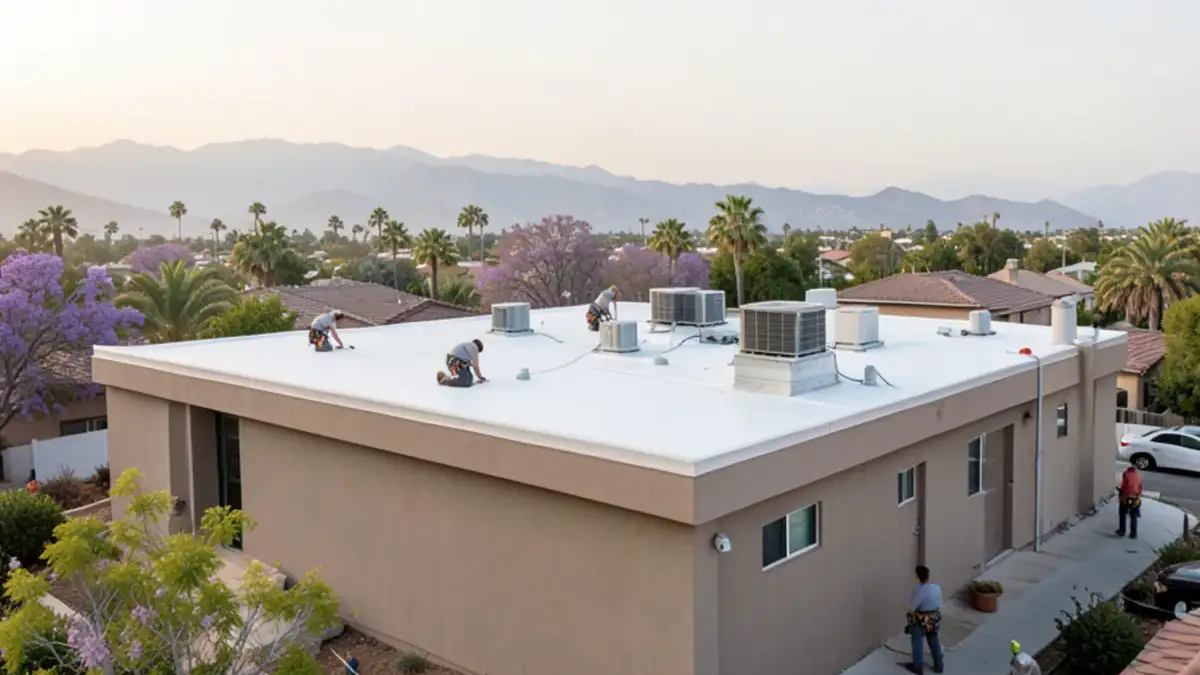
Commercial roofing in Rosemead, CA mostly means low-slope roofs: TPO, modified bitumen cap sheet, an aging built-up roof, or a coating applied over one of those, plus metal panels on industrial buildings. We repair leaks, keep drains and seams working, and recover or replace systems that have worn out on storefronts, offices, warehouses and apartment buildings.
This page covers the business side of our roofing work in Rosemead and the surrounding valley. Jobs run from Rosemead Blvd, where we are based, out to the industrial parks of South El Monte, City of Industry, Irwindale, Commerce and Vernon.
What commercial roofing in Rosemead, CA includes
Most commercial roofs here look flat but are built with a small amount of fall, often a quarter inch per foot, in the framing or in tapered insulation. That slope moves water to drains, scuppers and gutters. When the slope is missing or a drain clogs, water sits on the membrane, and ponded areas are where seams and coatings fail first.
The building stock is mixed. Strip centers along Valley Blvd, Garvey Ave and Rosemead Blvd often carry several generations of patches in different materials. Tilt-up concrete warehouses usually have panelized wood decks hidden behind parapet walls. Pre-engineered metal buildings use through-fastened or standing seam panels. Two-story apartment buildings from the 1960s through the 1980s often pair a flat main roof with a shingle or tile mansard facing the street.
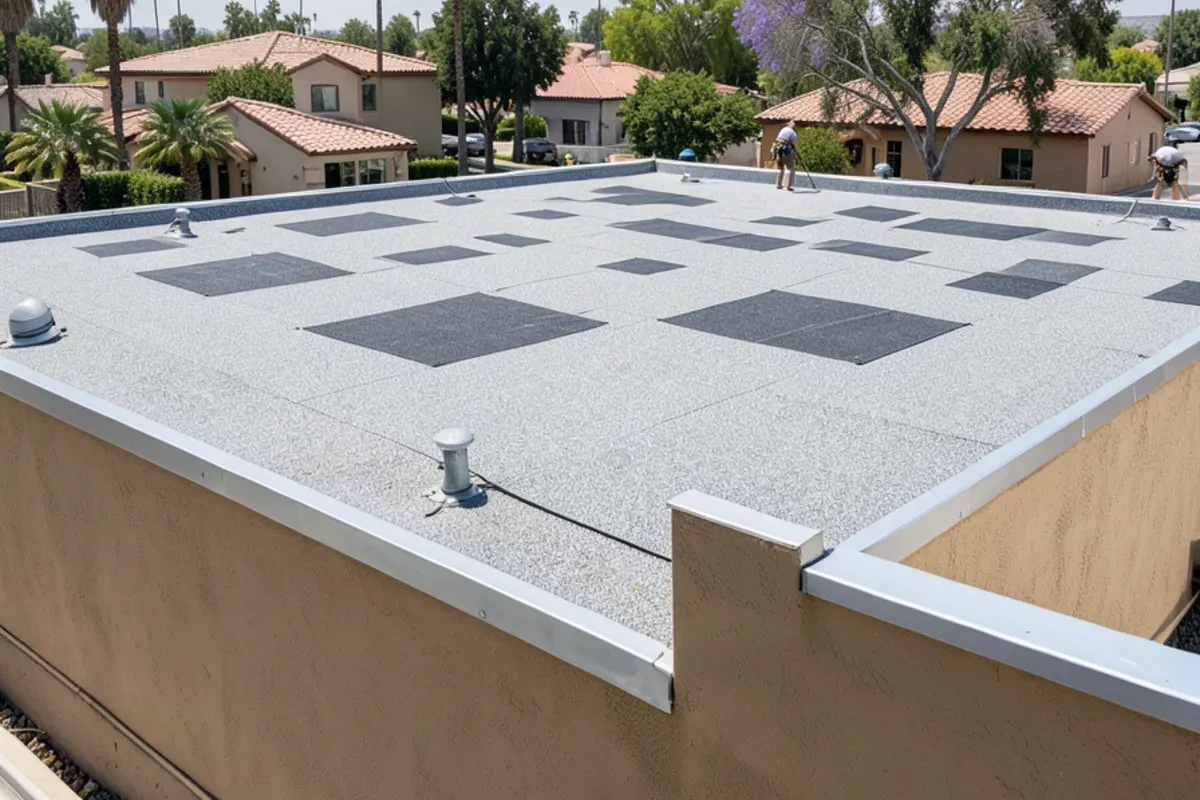
Commercial roof repair, replacement and the services in between
Each service below has its own page with the details, the process and the questions owners ask most.
- Commercial roof repair for active leaks, split seams, blistered cap sheet and failed curb flashing.
- Commercial roof replacement when the membrane is past saving, including the recover-or-tear-off decision and cool-roof compliance.
- New commercial roof installation for additions, tenant improvements and new buildings, with curbs, drains and penetrations coordinated with other trades.
- Commercial roof inspection for buyers, lenders, insurers and lease renewals, delivered as a photo report.
- Scheduled commercial roof maintenance to clear drains, reseal curbs and catch small failures before the rains.
- Warehouse and industrial roofing for tilt-ups, metal buildings, large drains and skylights over working floors.
- Apartment and HOA roofing with tenant notices, building-by-building phasing and bid documents a board can compare.
Many projects combine two of these. An inspection finds the problem, a repair holds the roof through winter, and the replacement goes into next year's budget with a real scope behind it.
How do we decide what a commercial roof actually needs?
Three questions drive the recommendation: how much of the roof is wet, how many roof layers already sit on the deck, and how long the owner plans to hold the building. The answers point toward repair, restoration coating, recover or tear-off.
- Core cuts at a few spots show every layer, the insulation type and whether it is dry.
- A moisture survey, by infrared scan at dusk or a meter grid, maps wet insulation across the field.
- A drainage check looks for ponding rings, debris lines and blocked overflows.
- Every curb, pipe, vent and skylight gets photographed and logged on a roof plan.
- Where the ceiling is open, as in most warehouses, we check the deck and framing from below.
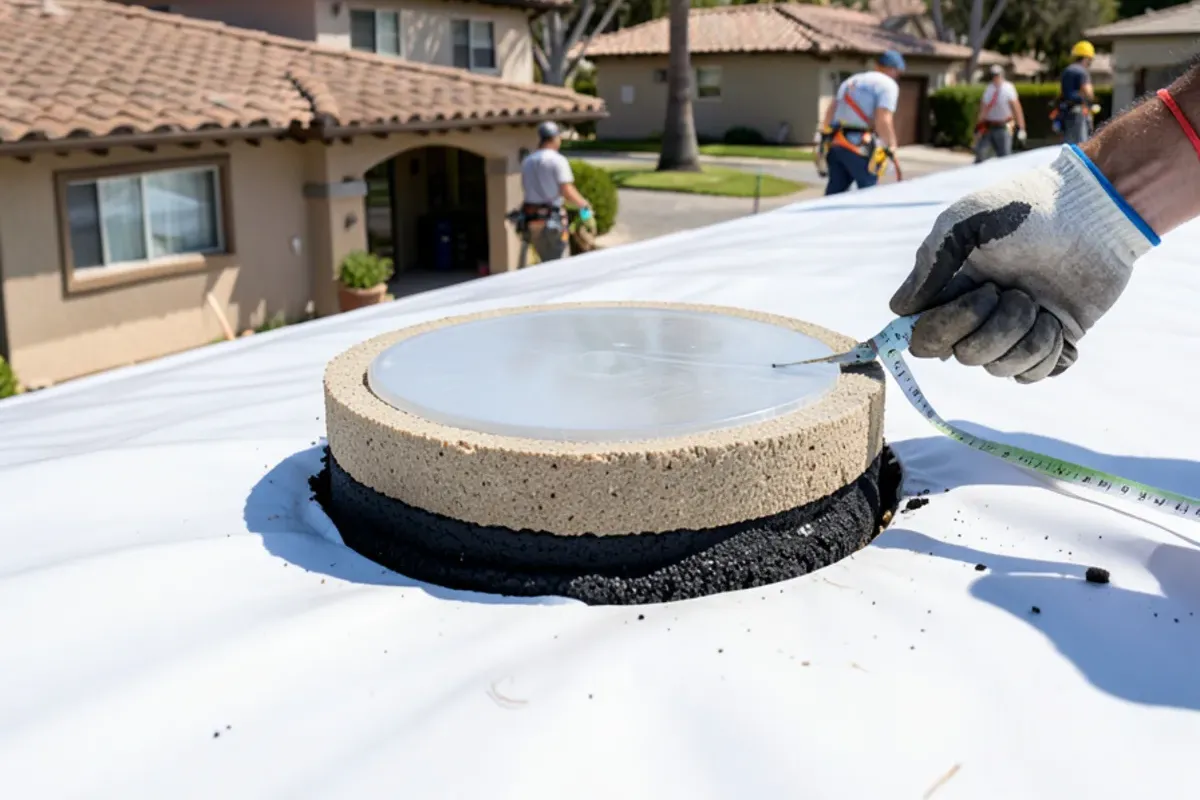
Sound seams with a little wet insulation make a roof a repair or coating candidate. Widespread wet insulation, or two roofs already stacked, usually means tear-off, since the building code limits recovers in both cases.
From first call to closed permit: how a commercial job runs
- You call (725) 745-8803 or request a quote and tell us the building type, how the roof is reached and whether anything is leaking now.
- We visit, same-day or next-day when crews are free, and walk the roof with whoever manages the building.
- You receive photo-documented findings and a written, line-by-line quote, with permits, deck repairs and drain work priced as separate lines.
- For larger jobs we agree on work hours, staging areas, crane or hoist days and the order of roof sections around tenants.
- We pull the permit when the scope needs one and schedule the city or county inspection.
- At closeout you get finished-work photos plus the product and workmanship documents for your files.
On an occupied building, rooftop work is largely logistics. We cover air intakes when adhesives are in use, keep debris chutes away from customer entrances and give tenants notice before the loud days.
What drives the cost of commercial roof work?
We do not publish commercial prices, because two roofs of the same size can differ several times over in scope. These factors move a quote, and each appears as its own line on ours.
- Roof area, and how many penetrations, curbs and drains sit in it.
- Existing layers, and how much wet insulation has to come out.
- Deck repairs found after tear-off, priced per unit in writing before work starts.
- Insulation for the energy code, plus tapered crickets to correct ponding.
- Access, crane days and work-hour limits set by tenants or production.
- The membrane, its thickness and the level of manufacturer coverage the owner wants.
Recover versus tear-off is often the biggest swing, since two stacked roofs or widespread wet insulation force full removal. Our commercial roof replacement cost guide for LA County goes line by line.
If a replacement has to be spread across budget cycles, ask about payment options when we send the quote.
Need commercial roofing help this week?
Tell us what you are seeing. We schedule same-day or next-day visits when crews are free and send photos with a written quote.
- 4.9 from 48 Google reviews
- Based on Rosemead Blvd
- Photos and a written quote before work
Commercial roof permits, Title 24 and license checks
Permits follow the address: Rosemead's Building and Safety Division, another city's building division or the county office it contracts with, or LA County Public Works Building & Safety for unincorporated areas such as Avocado Heights.
A reroof covering 50% or more of a low-slope roof, or more than 2,000 square feet on some buildings, must meet Title 24 cool-roof values in Climate Zone 9: aged solar reflectance of 0.63 and emittance of 0.75, from a CRRC-rated product. Confirm the trigger with the building department before budgeting.
California requires a CSLB C-39 license for roof work over $1,000 in labor and materials or needing a permit; check any roofer's license and workers' comp record at cslb.ca.gov.
Flat commercial roof systems compared
| System | Where it shows up | Strengths | Watch for |
|---|---|---|---|
| TPO single-ply | Warehouses, retail, newer additions | Heat-welded seams, white reflective surface, light weight | Kitchen grease and some chemicals attack it; curb details need care |
| PVC single-ply | Restaurants and food processing | Resists grease and many chemicals; welded seams | Higher material cost; needs a separator over old asphalt |
| Modified bitumen cap sheet | Older strip centers and apartments | Tough, patchable, familiar to inspectors | Dark granules unless a white or coated cap is used; torch work needs fire precautions |
| Built-up roof with gravel | 1960s to 1980s offices and shops | Several plies; long life on well-drained roofs | Heavy; leaks are hard to trace under gravel |
| Acrylic or silicone coating | Sound older membranes and metal | Adds reflectivity and seals small cracks without tear-off | Only works over a dry substrate; acrylic dislikes ponding |
| Metal panels | Pre-engineered industrial buildings | Long-lived and noncombustible; sheds water fast | Fastener back-out, rusted laps, leaking skylight panels |
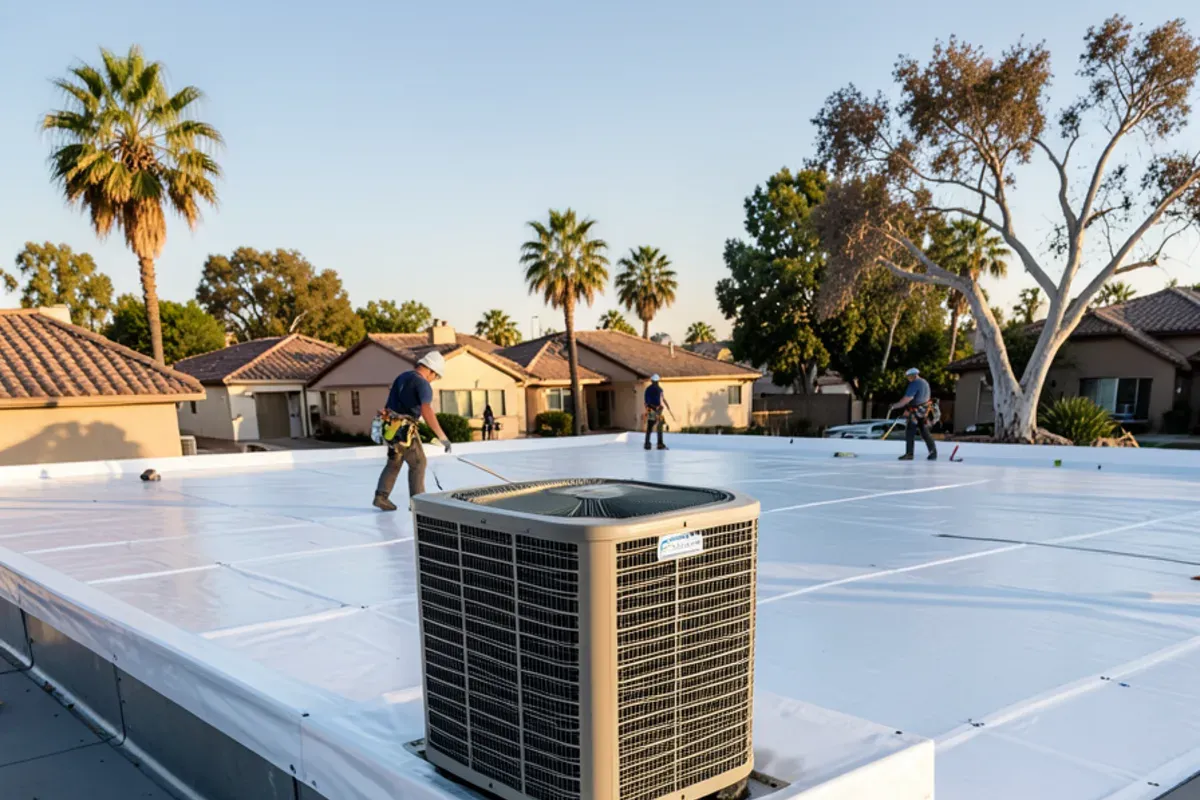
When a commercial roof problem should not wait
- Water dripping onto inventory, electrical panels, server rooms or a sales floor.
- Standing water still on the roof two days after the rain stopped.
- A drain or overflow scupper packed with debris ahead of a forecast storm.
- Membrane torn loose or flashing peeled back after a wind event.
- Soft spots underfoot, a sagging deck, or stains spreading along a beam line.
Call (725) 745-8803. Meanwhile, move goods away from the drip, cover equipment with plastic sheeting and keep staff off the roof. If we cannot get there today, we will tell you when we can; a temporary seal can come first, with the permanent repair once the weather clears. Photos of the drip and any damaged stock help with an insurance claim.
Local causes behind most valley commercial leaks
Months of upper-80s heat dry out membranes and sealant, then short, heavy storms between November and March test every seam. Leaves collect at drains through fall, Santa Ana winds lift loose edges and copings, and grease from restaurant exhaust softens some membranes.
Why owners hire Tylzen Spoke as their San Gabriel Valley commercial roofing contractor
- As of November 2026, our 48 Google reviews average 4.9 stars.
- We work out of Rosemead Blvd (CA-19), a short drive from most valley business districts and industrial parks.
- Proposals come line by line with photos, so a manager can forward them to an owner or board as they are.
- Reviewers mention crews that arrive on time and leave a clean site, which matters when customers walk beneath the roof.
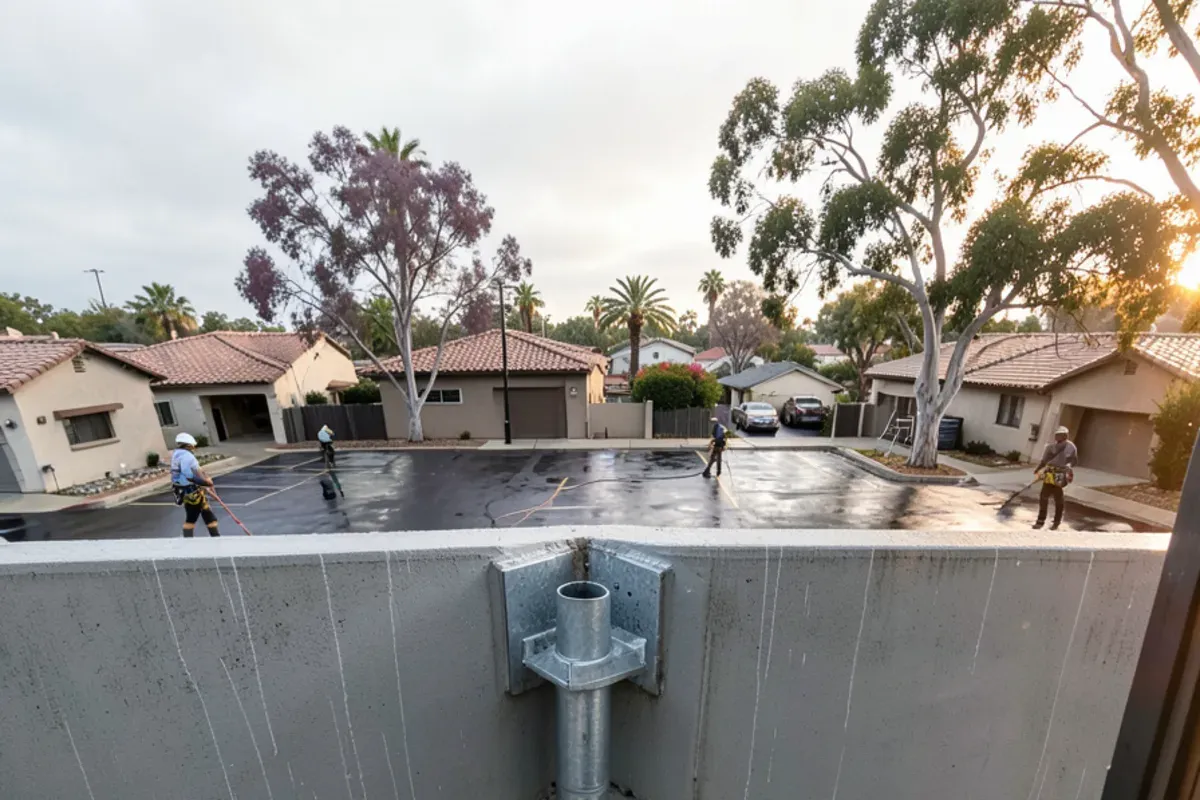
Membrane makers set coverage by product line and system, and our workmanship terms are written into the contract. Get both in writing, and ask whether either one transfers if the building sells.
We handle commercial roofs throughout the valley, including South El Monte, City of Industry and Alhambra, along with Rosemead itself.
Commercial Roofing services
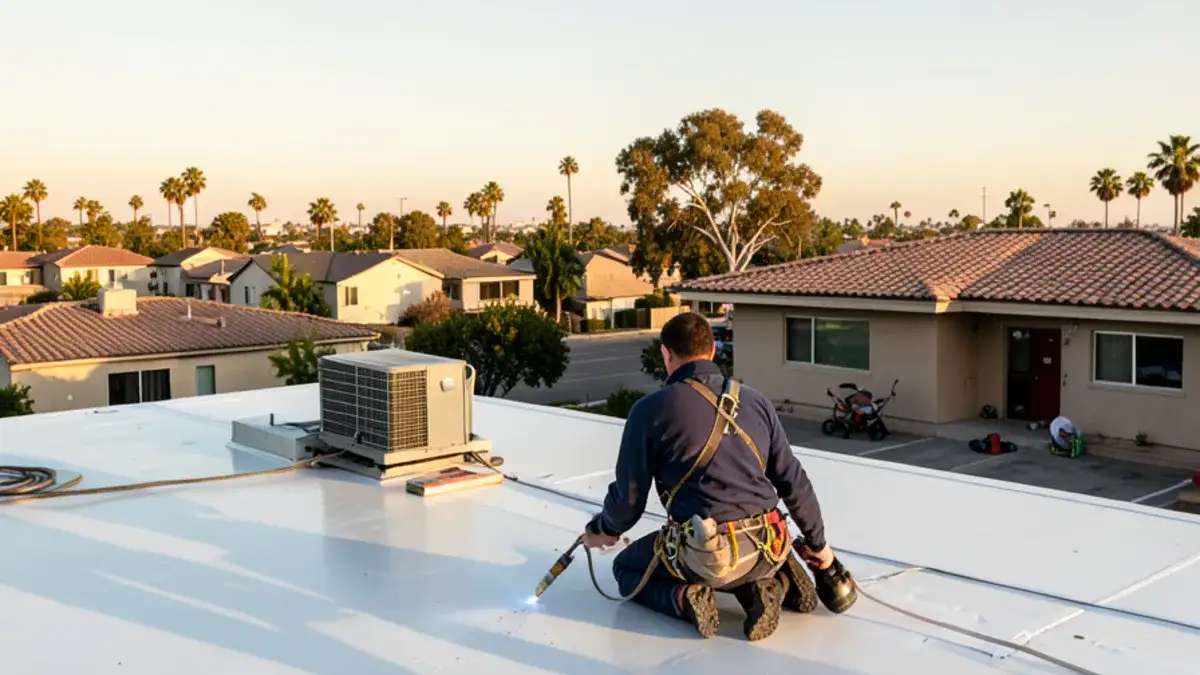
Commercial Roof Repair
We find where water gets into a flat or metal commercial roof, repair that detail, and send photos of the before and after.
Learn more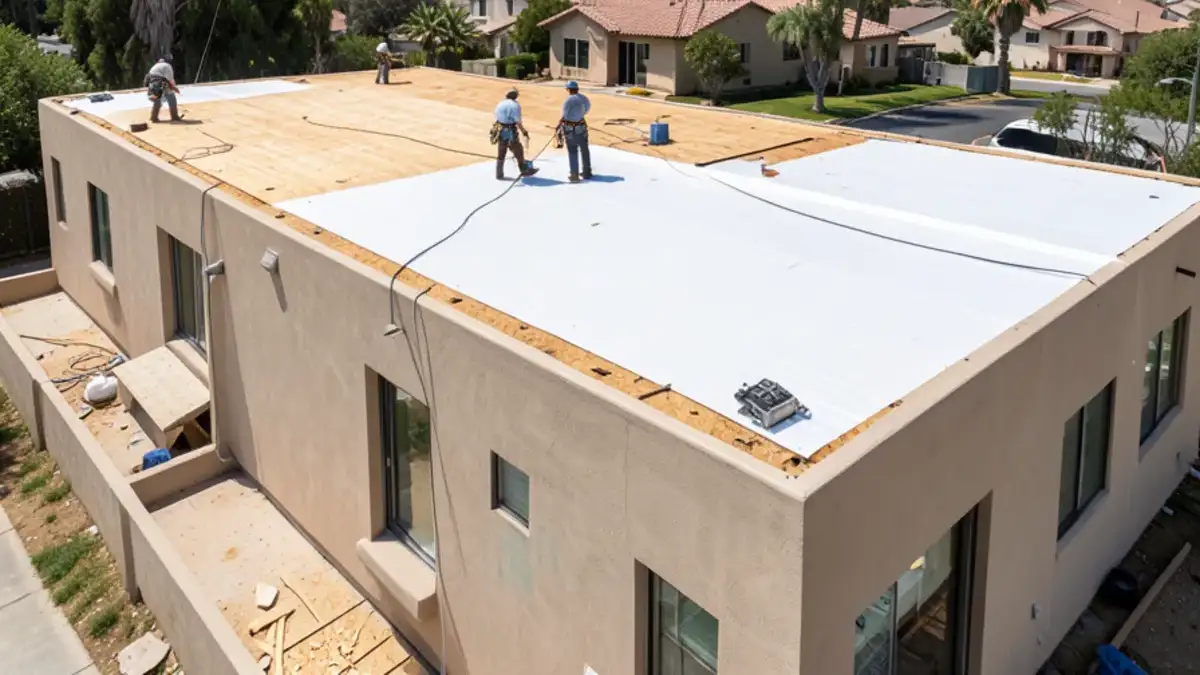
Commercial Roof Replacement
We test what is under the old membrane, tell you whether a recover is allowed, and phase the new roof around your tenants.
Learn more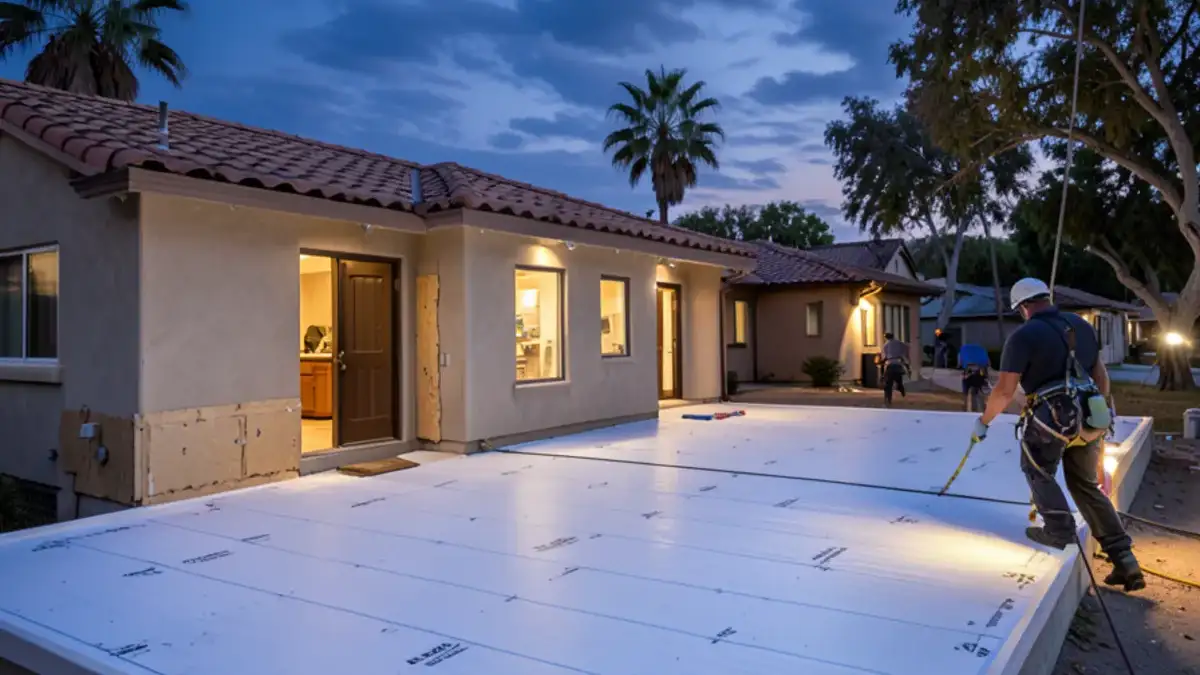
Commercial Roof Installation
New low-slope roofs for additions, tenant improvements and ground-up buildings, with curbs, drains and solar attachments planned before the membrane goes down.
Learn more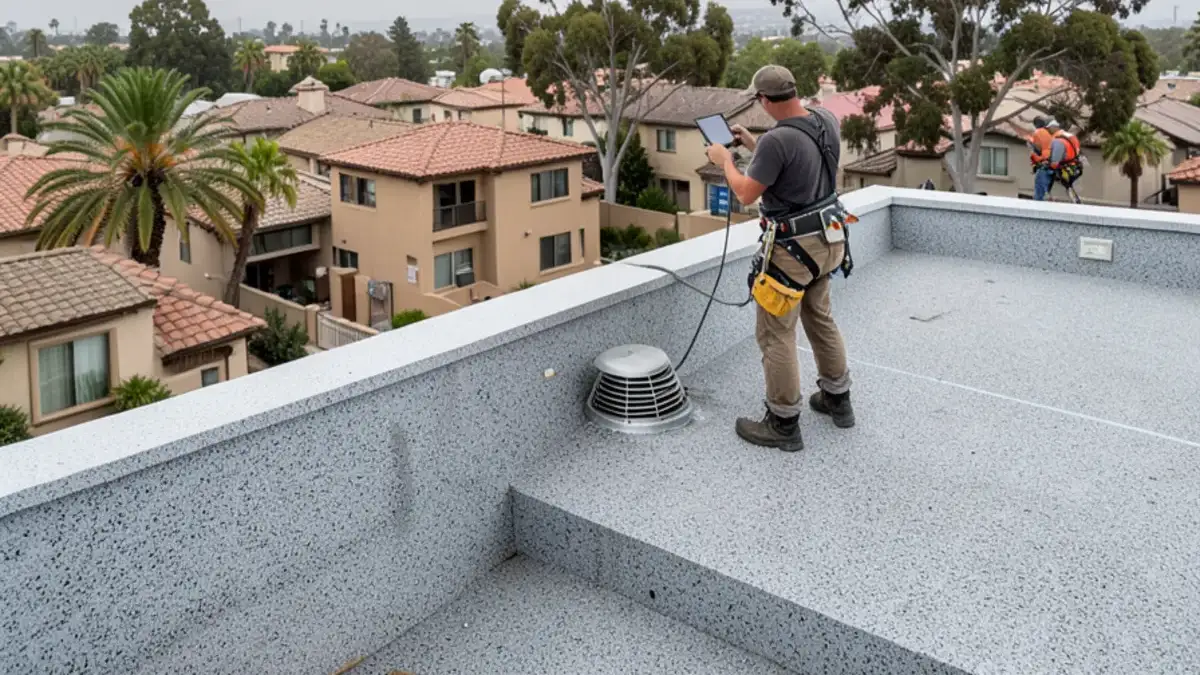
Commercial Roof Inspection
A walk of the whole roof, a look at the deck from below where we can, and a photo report that ranks what needs attention and when.
Learn more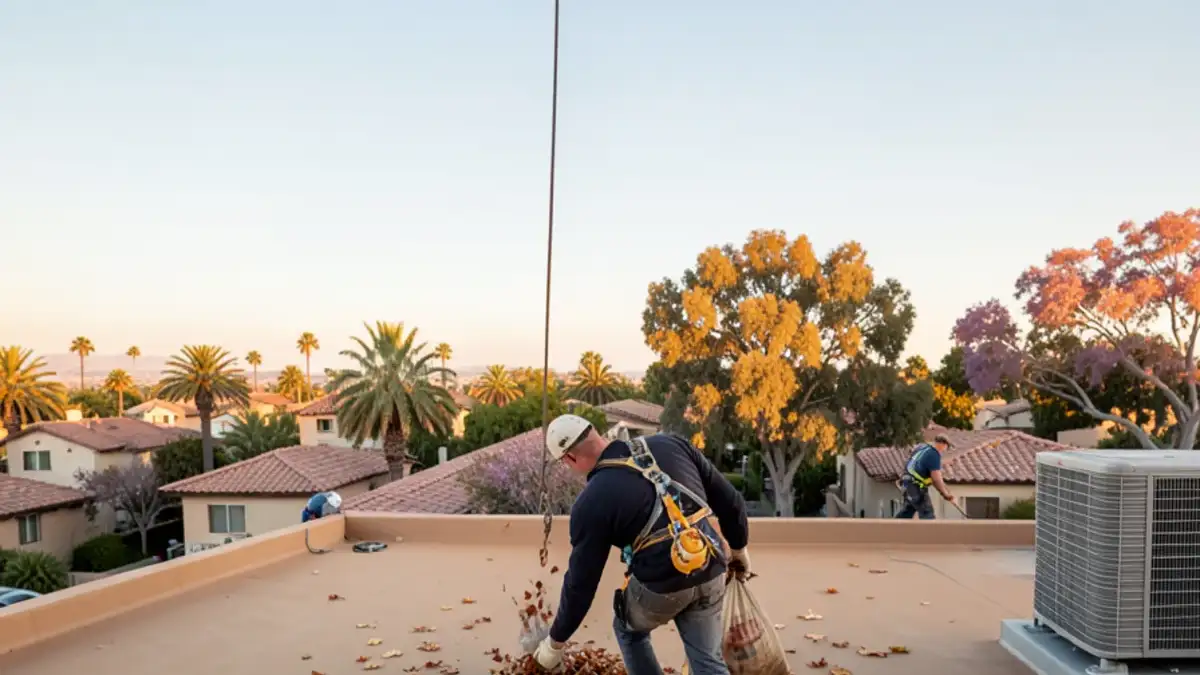
Commercial Roof Maintenance
Scheduled visits that clear drains, reseal curbs and fix small seam failures before the rainy season turns them into ceiling damage.
Learn more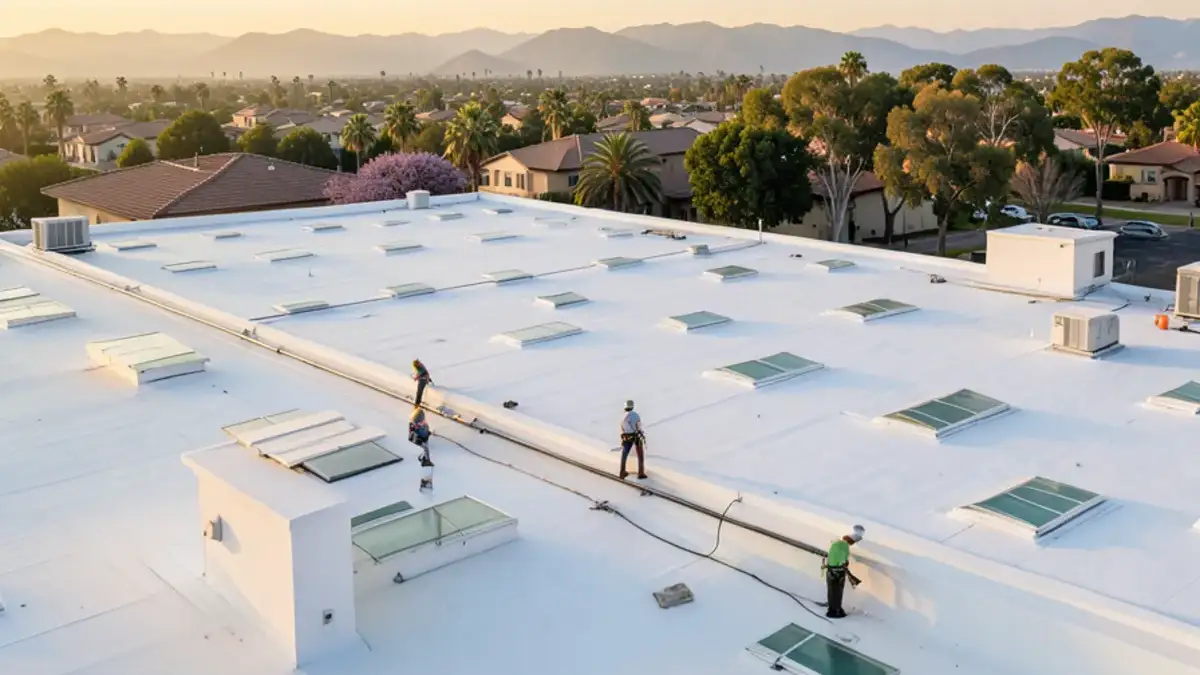
Warehouse & Industrial Roofing
Roof repair, recover and replacement for tilt-up warehouses, metal buildings and plants, planned around racking, docks and shifts.
Learn more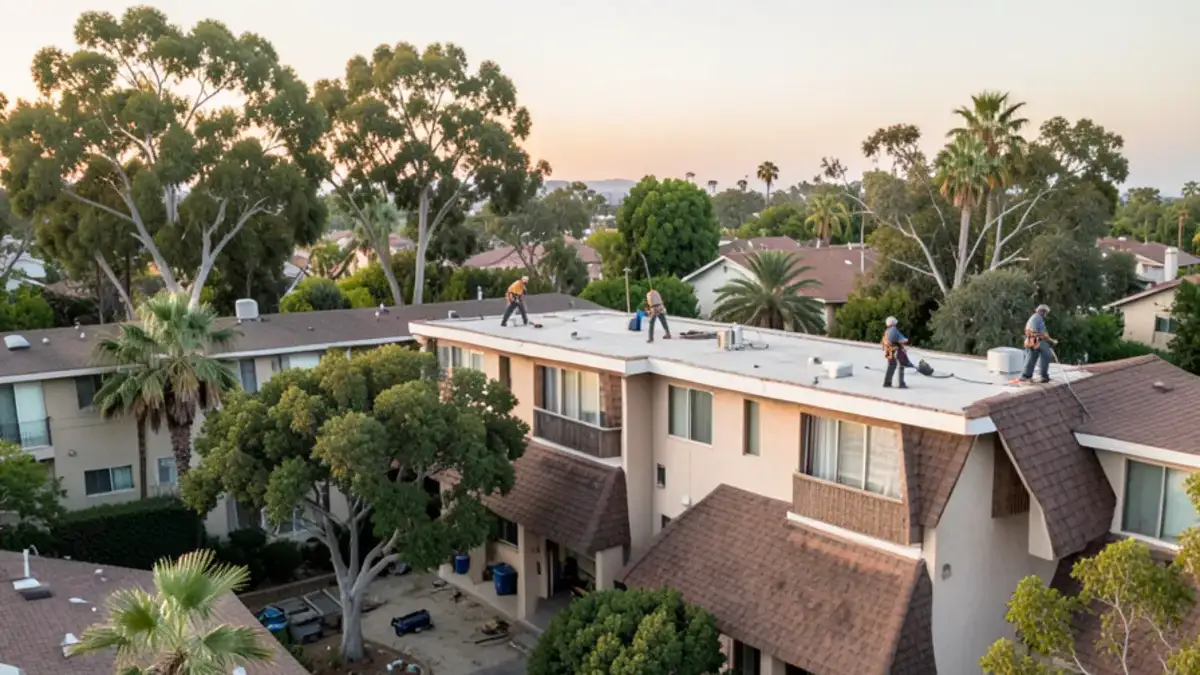
Apartment & HOA Roofing
Repairs and reroofs for apartment buildings and condo associations, with resident notices, building-by-building phasing and bids a board can line up side by side.
Learn moreWhat customers say on Google
4.9★ from 48 Google reviews (checked Nov 2026)
“I worked with Tanner, and he stayed professional from start to finish. He was patient, easy to talk to, and flexible, and he made time around my busy schedule. When we got to the financing part, Brandon went the extra mile to help me look at every available option and explain the process clearly. …”
“Our flat garage roof had a leak, and since the main roof was already aging, we decided to handle the full roofing project at the same time and upgrade from asphalt shingles to a metal roofing system. …”
“the roofing crew did an excellent job replacing the roof on my house in rosemead. we had some hail damage after a storm, which another roofer first pointed out. i wanted a second opinion, so i called for a quote, and the response was fast. tanner came by, explained clearly what needed fixing, and was very professional and friendly. …”
Where we handle commercial roofing
- Rosemead
Strip centers on Valley Blvd, Garvey Ave and Rosemead Blvd, many carrying layered patches over aging cap sheet.
- South El Monte
Tilt-up and metal industrial buildings minutes from our base, where wide drains and skylights need regular attention.
- City of Industry
Warehouses and distribution buildings along the 60 freeway, with very large low-slope roofs and many rooftop units.
- Irwindale
Manufacturing and industrial buildings near the 605 and 210 freeways, where big single-ply fields and metal panels are common.
- Commerce
Rail-served warehouses holding stored goods, which makes drain clearing before storms and quick leak response a priority.
- Vernon
An almost entirely industrial city of food plants, where grease-resistant PVC membranes often outperform TPO or asphalt roofs.
- El Monte
Offices, shops and light-industrial buildings near the 10 freeway, plus older apartment buildings with flat main roofs.
- Alhambra
Main Street storefronts, medical offices and 1960s-80s apartments, many with flat roofs hidden behind parapets or mansards.
- Santa Fe Springs
Industrial parks where tear-off phasing has to work around loading docks, shipping schedules and production floors.
More places we handle commercial roofing
Commercial Roofing questions
Can roof work be scheduled around business hours?
Usually, yes. We can start early, stop before your busiest hours, or work weekends over sensitive tenants. Tear-off and any step with odor get scheduled first with the manager. TPO seams are welded with hot air rather than open flame, which is one reason we often favor it on occupied buildings.
Do you provide roof reports for property managers and insurers?
Yes. A report includes overview photos, close-ups of each defect, a roof plan marking where they are, and repair priorities with a written quote. Insurers and lenders usually want the system type and an estimate of remaining life; managers want budget years. Tell us who will read it and we write for that reader.
Which commercial roof systems do you install?
TPO and PVC single-ply membranes, modified bitumen cap sheet systems, acrylic and silicone coatings over sound roofs, and metal panel repairs and replacements. The right one depends on drainage, foot traffic from HVAC service, grease or chemical exposure and the cool-roof rules that apply. Each option we price comes with its trade-offs in writing.
How often should a commercial roof be inspected?
Twice a year is the common standard: in fall before the November to March rains, and in spring to catch storm damage. Add a look after strong Santa Ana winds or whenever new equipment is set on the roof. Many manufacturer warranties expect documented upkeep, so keep every report.
Does commercial roof work need a permit?
Reroofs, recovers and structural deck work generally do; small repairs often do not. Each incorporated city permits roof work through its building division or a contracted county office; unincorporated pockets go to LA County Public Works Building & Safety. When a permit applies, we file for it and set up the inspection.