

By Tylzen Spoke Roofing · Published
Gutter cleaning before the rainy season is best done in October or early November, before the first real storm. It means more than scooping out leaves: clear every outlet, flush each downspout, check the pitch and hangers, look for leaking seams, and make sure water leaves the downspout well away from the foundation. Homes under heavy trees may need a second pass after the first big wind event.
Use the checklist below on your own house, or hand it to whoever does the work. If repairs turn up, our gutter repair and cleaning visits handle both on the same trip.
When should gutters be cleaned before the rains?
Valley storms arrive mostly from November through March. Debris builds all summer, and a single Santa Ana or downslope wind event, common from October on, can refill a clean gutter in one afternoon. That makes the timing a balance: late enough to catch the summer's debris, early enough to beat the first storm.
- Main cleaning: October to early November.
- Follow-up: after the first strong wind event if trees overhang the roof.
- Spring check: after the last storms, to clear blossoms and seed pods and spot damage.
- Extra visits for homes under pines, oaks, ficus or jacarandas.
Want a roofer to look at it?
Call with your address and what you are seeing. We visit same-day or next-day when crews are free.
- 4.9 from 48 Google reviews
- Based on Rosemead Blvd
- Photos and a written quote before work
The pre-rain gutter checklist
- Scoop debris from every run, working toward the downspouts, and bag it rather than dropping it in beds.
- Clear each downspout outlet and the elbow just below it, where clogs usually lodge.
- Flush the gutters with a hose from the far end and confirm water reaches every outlet.
- Watch for drips at seams, end caps and corners while the water runs.
- Check pitch: water should flow, not sit. Note any sections that hold puddles.
- Push gently on hangers. Any that move or have backed out need resetting into sound wood.
- Look at the fascia behind the gutter for peeling paint, dark stains or soft spots.
- Confirm each downspout ends in an extension or splash block that carries water away from the house.
- Look along the roof edge for granules, loose shingle tabs or cracked tiles you can see without walking the roof.
- Take photos of anything you could not fix, so a repair can be quoted quickly.

How do you check a downspout without climbing?
Most downspout problems can be found from the ground. Start at the bottom and work up.
- Feed a garden hose up from the bottom outlet and listen for water backing out at the top.
- Tap the downspout along its length; a dull thud often marks a packed section.
- Remove the bottom elbow, which usually comes off with a couple of screws, and clear it by hand.
- If the downspout runs into an underground pipe, run the hose into it and see whether the far outlet flows.
Underground lines that do not drain are a common source of water backing up into gutters. They may be crushed, root-filled or never connected to an outlet at all. Our downspout and drainage work includes clearing or rerouting them.
Which gutter jobs are safer to leave to a crew?
The US Consumer Product Safety Commission publishes ladder safety guidance worth reading before any gutter job. A single-story gutter cleaned from a stable ladder is manageable for many homeowners. Some situations call for professionals.
- Second-story gutters or any work that requires leaning out from the ladder.
- Clay or concrete tile roofs, which crack easily underfoot.
- Gutters along slopes, tight side yards or over hardscape.
- Sagging runs, loose hangers or rotted fascia that need repair, not just cleaning.
- Gutters near power lines to the house.

Where should the debris go once it is out of the gutter?
Leaves rinsed off the driveway end up in the street gutter, and in LA County that water enters a storm drain system kept separate from the sewer. It carries runoff untreated toward the rivers and the ocean, so the county asks residents to keep yard waste out of it.
- Bag wet debris or drop it straight into the green waste bin, not onto the lawn edge or the sidewalk.
- Lay a tarp below the work area so granules and grit can be folded up and binned.
- Flush gutters only after the solid debris is out, and aim downspout tests at planted areas rather than the driveway.
- Sweep, rather than hose, whatever lands on hardscape.
Extra steps for homes in foothill fire zones
In the Very High Fire Hazard Severity Zones along the foothills, from Altadena to Sierra Madre and Monrovia, dry needles in a gutter are a bed for wind-blown embers. CAL FIRE's Ready for Wildfire guidance tells owners to keep roofs and gutters clear of dead leaves and needles. On these homes, a cleaning right before the Santa Ana season matters as much as the one before the rains, and noncombustible metal guards beat plastic ones.
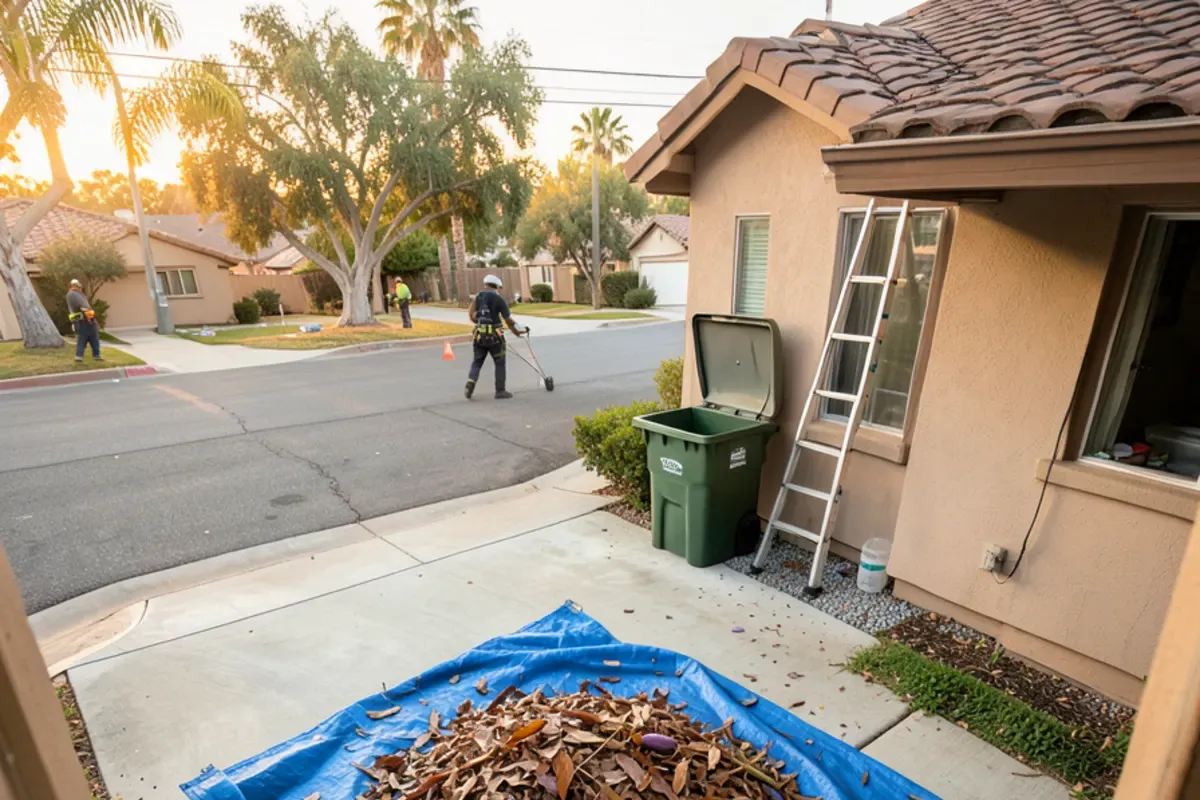
What we pull out of Temple City and San Gabriel gutters each fall
Our crews clean and repair gutters across Temple City, San Gabriel and the rest of the valley. The contents tell the story of the neighborhood.
- Jacaranda blossoms and seed pods that turn to sludge at outlets after the first rain.
- Pine needles that knit into a mat across gutter guards and corners.
- Shingle granules from aging roofs, which settle like sand and add weight.
- Tennis balls, nests and roof debris lodged in downspout elbows.
- Ficus and palm debris on older lots with mature landscaping.
We also find many gutters pitched backward after years of debris weight bending hangers, which no amount of cleaning will fix. A roof tune-up on the same visit covers the roof edge, vents and flashing above the gutter.
Timing and method trade-offs
Cleaning in early October beats the first storm, but sycamores and sweetgums keep shedding into December, and the spiky sweetgum seed balls lodge in outlets. Under those trees, a cleaning before Thanksgiving and a second pass in January often costs less than repairing one overflowed corner. Under open sky, one fall visit is plenty.
Guards present a similar choice. Lifting every section to clean beneath takes time and can bend the mesh, so we pull a sample section first and only remove the rest if grit has built up. Leaves packed in roof valleys feed the gutters all winter, yet clearing them means walking the roof, which is crew work on tile and on any second story. A roof cleaning visit can take care of valleys and gutters together.
How often do gutters need cleaning in the valley?
| Yard condition | Suggested frequency | Notes |
|---|---|---|
| No trees near the roof | Once a year, in fall | Check for granules and wind debris |
| A few small or distant trees | Once in fall, once in spring | Spring pass clears blossoms and seeds |
| Large trees overhanging the roof | Two to three times a year | Add a pass after the first strong wind event |
| Pines or needle-dropping trees | Two to four times a year, or guards | Needles clog screens; micro-mesh guards help |
Keeping gutter guards working before the storms
Guards reduce cleaning but do not end it. Debris collects on top of mesh and screens, and fine grit still gets through to the gutter floor. Before the rains, brush the top surface, lift a section or two to check underneath, and flush the gutter. If guards were never right for your trees, see our gutter guards page for alternatives.

Ready for the first storm
Work through the list in October, fix what you find, and the first storm becomes a test you have already passed. If you would rather not climb, or if the checklist turned up sagging runs or soft fascia, call (725) 745-8803 or request a quote. We can often visit same-day or next-day when crews are free, and every finding comes with photos.
Questions readers ask
Is it too late to clean gutters once it has started raining?
No. Clean them on the next dry day, ideally before the following storm. Wet debris is heavier and messier, but clearing outlets still prevents overflow and fascia damage. Avoid ladders and roofs while surfaces are wet, and focus first on downspouts that backed up.
Should I flush gutters with a pressure washer?
A garden hose is usually enough and safer for the gutter, roof edge and paint. Pressure washers can bend thin aluminum, force water behind the gutter and blow granules off shingles. Use a hose and a scoop, then flush to check the flow.
What does a professional gutter cleaning include?
Ours includes clearing every run and downspout, flushing to confirm flow, checking pitch, hangers and seams, and a look at the fascia and roof edge. You receive photos of anything that needs repair and a written quote before any repair work begins.
Do telescoping gutter wands work from the ground?
They work for light, dry debris on single-story gutters with clear sightlines. A wand cannot easily lift packed, wet sludge from outlets, and without seeing inside the gutter you miss loose hangers, leaking seams and backward pitch. Many owners use a wand between visits and still have the gutters checked from a ladder once a year, ideally in October before the rains.
How can I tell whether my gutters spilled during last year's storms?
Look below the gutter line on a dry day. A trench or bare strip in the soil under the eave shows where water poured over the edge. Dark streaks or efflorescence on stucco below a seam mark slow drips, and mildew or peeling paint on the soffit points to water running behind the gutter. Note each spot before the October cleaning so it gets fixed, not just cleared.
Sources
Written by Tylzen Spoke Roofing
A roofing contractor on Rosemead Blvd (CA-19) in Rosemead, working on shingle, tile, metal and flat roofs across the San Gabriel Valley. This guide reflects what our crews check on local roofs. Questions about your roof? Call (725) 745-8803.