
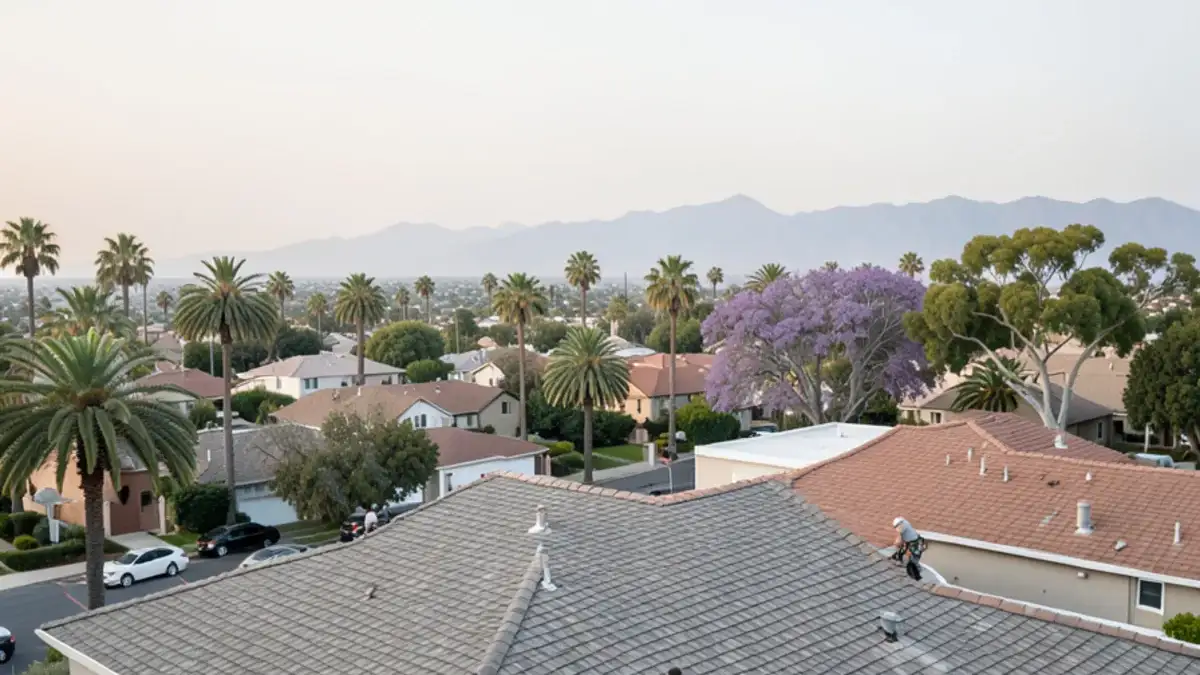
By Tylzen Spoke Roofing · Published
How long does a roof last in Southern California? Architectural asphalt shingles typically give 20 to 30 years, the felt under clay or concrete tile often 20 to 30 years while the tile itself can last far longer, standing seam metal 40 years or more, and flat roofs over garages and additions roughly 10 to 25 years depending on the membrane. Sun exposure, attic ventilation and installation quality move every one of those numbers.
These are typical ranges from general trade experience, not promises for any single roof. Below we break them down by material, explain why our climate wears roofs the way it does, and list the habits that add years. When a roof does reach the end, our roof replacement service starts with a photo inspection.
Typical roof lifespan by material
| Roof type | Typical life | What usually fails first |
|---|---|---|
| 3-tab asphalt shingle | About 15-20 years | Tabs crack and lift; granules wear off |
| Architectural asphalt shingle | About 20-30 years | Granule loss and cracking on sunny slopes |
| Clay tile | Tile often 50+ years; underlayment about 20-30 | Felt underlayment, flashing, broken tiles |
| Concrete tile | Tile often 40-50+ years; underlayment about 20-30 | Underlayment, surface wear on the tile |
| Standing seam metal | About 40-60 years | Sealants at penetrations, fasteners in salt air |
| Torch-down or modified bitumen | About 10-20 years | Seams, blisters and ponding areas |
| TPO single-ply membrane | About 15-25 years | Seams and flashings at walls and drains |
| Coated flat roof | Recoat about every 10-15 years | Coating thins; membrane beneath is exposed |
Notice that on tile roofs the material you see is rarely what fails. The underlayment beneath it sets the real replacement date, which is why so many tile jobs are lift-and-relays rather than new tile.
Want a roofer to look at it?
Call with your address and what you are seeing. We visit same-day or next-day when crews are free.
- 4.9 from 48 Google reviews
- Based on Rosemead Blvd
- Photos and a written quote before work
Why does the Southern California sun age roofs faster?
Our roofs rarely face snow loads or freeze-thaw cycles, but they get a heavy dose of ultraviolet light and heat. Rosemead summer highs run about 78 to 88°F, and a dark roof surface gets far hotter than the air. Asphalt shingles slowly lose the oils that keep them flexible, sealant strips harden, and rubber pipe boots crack.
Then the weather flips. Roughly 14 to 16 inches of rain falls in a typical year, most of it between November and March, often in short, heavy storms. A roof that dried and cracked over summer meets its hardest test in a few winter downpours. Santa Ana and downslope wind events, which peak from October through March, add another strain by lifting shingle edges that have lost their seal.
How long does tile roof underlayment last?
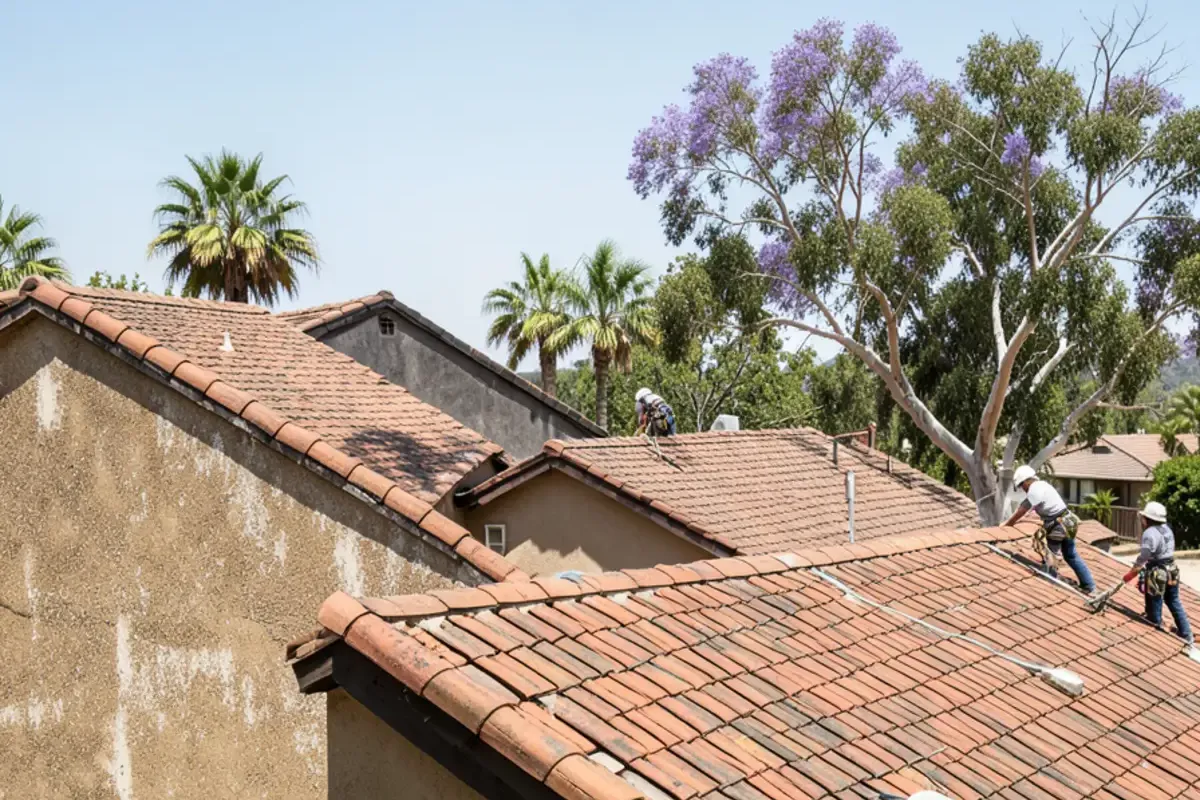
Tile roof underlayment life depends on what was installed. A single layer of standard asphalt felt under tile, common on older roofs, may last around 20 years before it dries and tears. Two layers, heavier felt, synthetic underlayment or a mineral-surfaced cap sheet tend to last longer. Heat in the attic below and sun reaching the felt through broken tiles both speed failure.
The first symptoms are usually leaks at the eaves, valleys or along exterior walls with no visible tile damage. Lifting a few tiles at the eave shows the felt's condition in minutes.
Flat roof lifespan on garages, patios and additions
Low-slope roofs work harder than sloped ones. Water drains slowly, sun hits the surface all day, and many of these roofs are walked on for HVAC service. Ponding water that sits more than a day or two after rain shortens membrane life, and so does a coating left to wear through.
Recoating on schedule, keeping drains and scuppers clear, and fixing small blisters early can add years to a flat roof. Ignored, the same roof can fail in about half its expected life.
Parts that wear out before the roof covering does
A roof rated for 25 years rarely goes 25 years without work, because the small parts around it age on a shorter clock. Knowing which ones go first explains why a roof can leak at year 12 while the shingles still look fine.
| Component | Why it fails early here | What extends its life |
|---|---|---|
| Rubber pipe boots | The rubber collar dries and splits in summer heat and sun | Lead, silicone or metal-collar boots at reroof time |
| Sealant at flashing joints | Daily expansion and contraction cracks the bead | Mechanically lapped flashing that does not depend on sealant |
| Ridge and hip caps | They take the most wind and sun of any piece on the roof | Caps matched to the shingle line and fastened to its specs |
| Skylight seals and plastic domes | Gaskets harden and acrylic clouds or cracks | Glass units with new curb flashing installed with the roof |
| Flat-roof coatings | UV thins the coating until the membrane shows | Recoating on schedule before the base is exposed |
Replacing these parts on time is the cheapest way to reach the long end of a roof's range. Ignoring them is how a sound roof picks up deck rot around a single penetration.
Habits that shorten or extend roof life
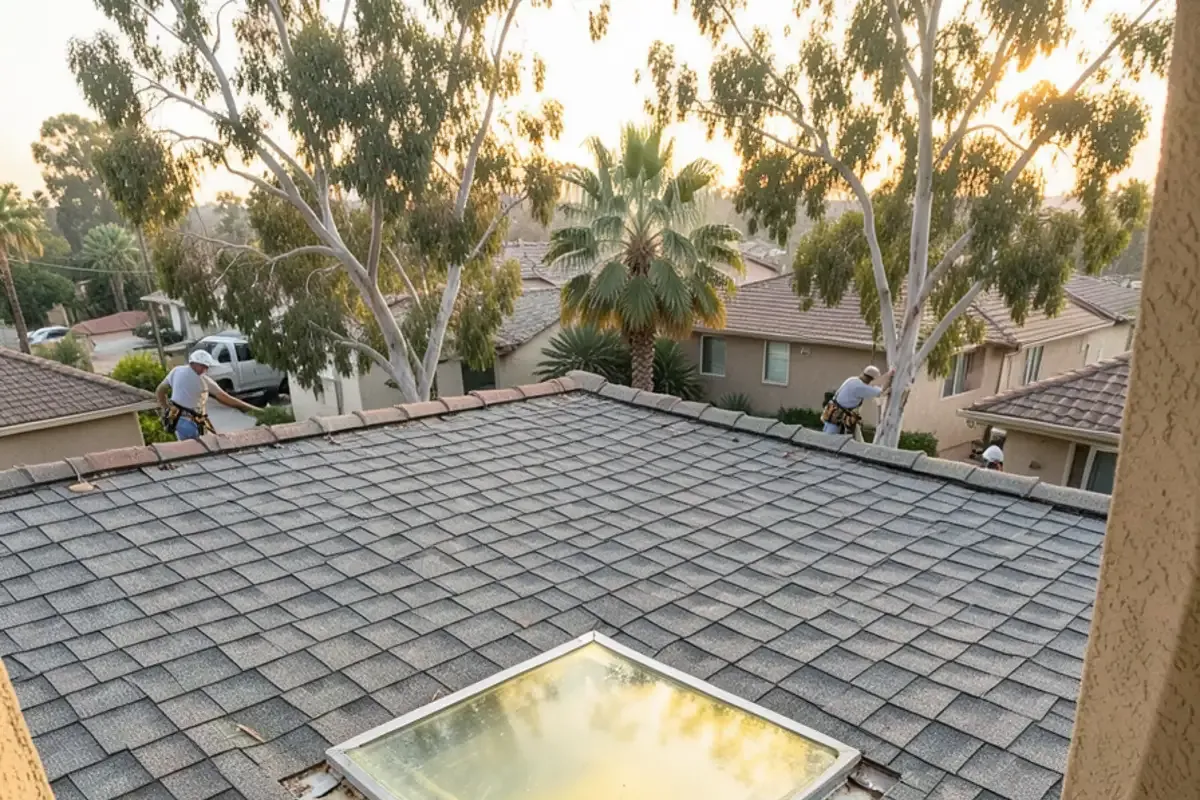
- Attic ventilation: a hot, stagnant attic cooks shingles from below. Balanced intake and exhaust, which our attic ventilation work addresses, keeps the deck cooler.
- Gutters and valleys: debris holds water against the roof edge and rots fascia and decking.
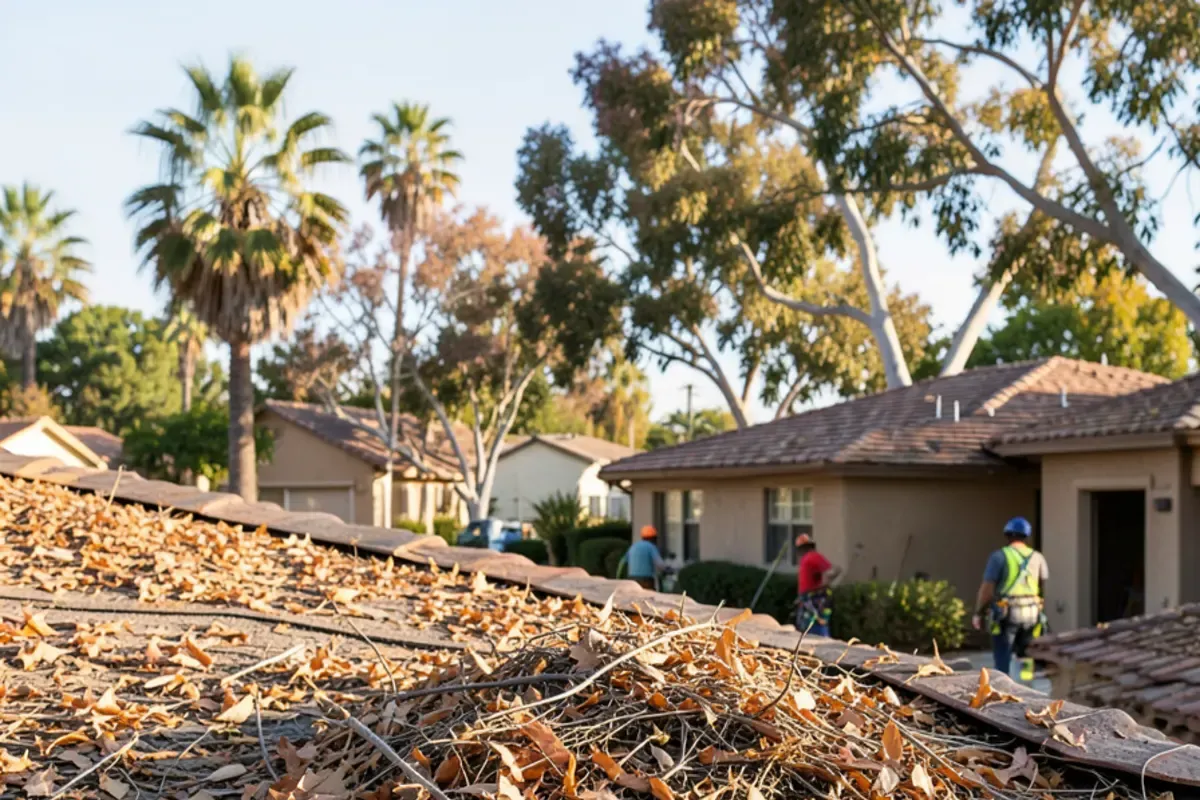
- Overhanging trees: branches scrape surfaces and drop leaves that trap moisture.
- Foot traffic: painters, dish installers and solar crews crack tile and scuff granules.
- Overlays: a second shingle layer runs hotter and hides deck problems.
- Color: lighter, reflective shingles run cooler than very dark ones.
- Small repairs done early: a replaced boot or reset flashing stops a slow leak before it softens the deck.
A yearly roof tune-up before the rainy season covers the last item: resealing, replacing worn boots and clearing valleys while the fixes are still small.
Is a longer-lasting roof worth the higher price?
Longer-lived materials cost more up front, so the useful question is cost per year you will actually own the roof. That answer depends on your plans as much as on the material.
- Staying 20 years or more: metal or a tile roof over upgraded underlayment can outlast one shingle roof and avoid a second tear-off, which tends to favor the higher price.
- Selling within 5 to 10 years: a well-installed architectural shingle roof usually returns more of its cost, and buyers' inspectors mainly look for condition and permits.
- Rentals: durability matters less than how quickly leaks can be repaired, so a common, easy-to-match shingle often wins.
- Heavy materials on light framing: switching from shingles to tile can mean structural work, which changes the math entirely.
Our honest view is that installation quality beats material choice. A mid-range shingle with new flashing, sound decking and balanced ventilation will outlast a premium product nailed over tired boots and an overheated attic.
What we see on older roofs in Rosemead and El Monte
About 26.5% of Rosemead's housing was built in the 1950s, and the post-war tracts in El Monte are similar in age. On those homes, the roof we inspect is often an overlay on top of an earlier roof, with a south or west slope that has worn noticeably faster than the north side. Pipe boots are frequently the first failure, cracking long before the shingles around them.
We also see roofs that should have had years left but were cut short by poor ventilation: attics with no ridge or upper vents, blocked eave vents, or bathroom fans venting into the attic instead of outside. Fixing those causes matters as much as the new roof itself. For roofing in Rosemead, we note ventilation findings in every inspection report.
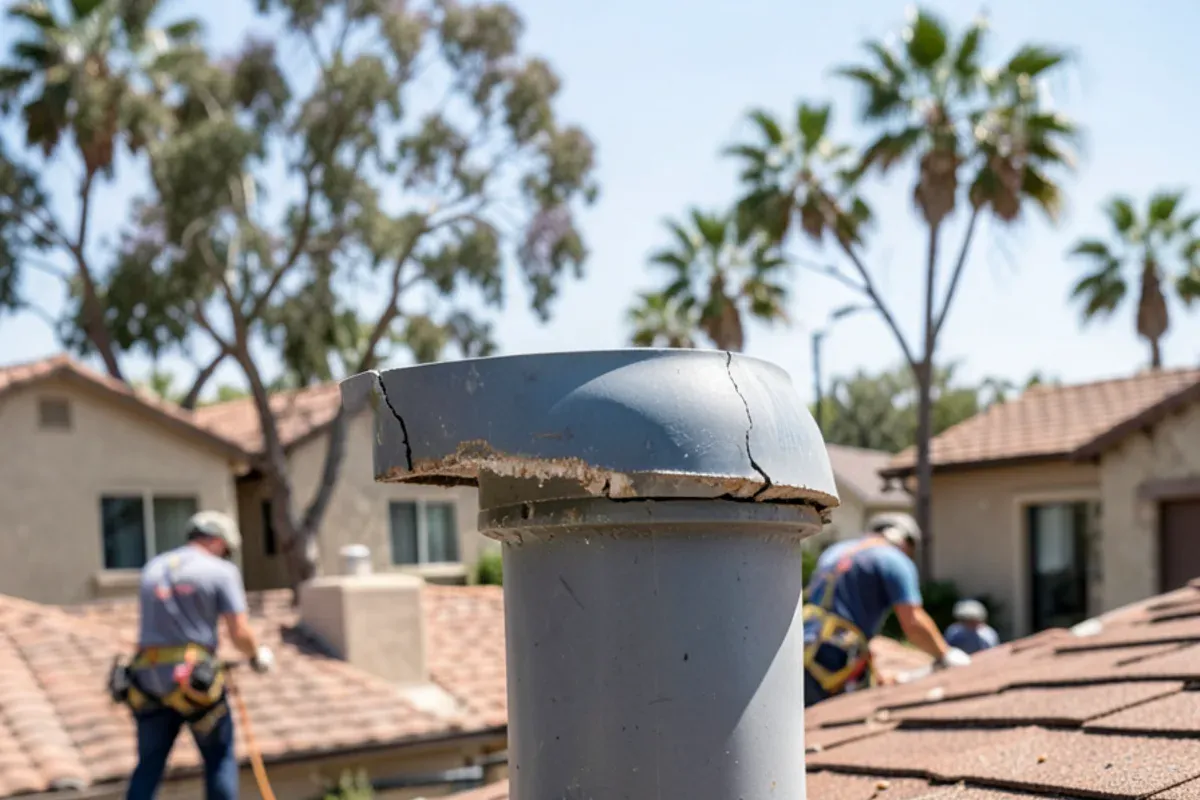
When your roof is nearing the end of its range
How to estimate the life left in your own roof
- Find the install year: purchase disclosures, old invoices or the permit history at your city's building division.
- Identify the material, and on tile, what kind of underlayment sits beneath it.
- Check the sunniest slope from the ground with binoculars for bare spots, curling and cracked tabs.
- Count the repairs paid in the last few winters and note where each leak appeared.
- Look in the attic for stains, daylight and blocked vents.
- Compare what you found with the ranges in the table above, then have the roof checked up close.
A roof inspection turns that rough estimate into photos of every slope and a written read on the remaining life.
Age alone does not decide replacement; condition does. If your roof is inside or past its typical range, read our list of signs you need a new roof and book an inspection before the rains. Call (725) 745-8803 or request a quote for a photo-backed read on how much life the roof has left.
Questions readers ask
Does a lighter shingle color make a roof last longer?
It can help a little. Lighter, reflective shingles run cooler in summer, which slows the drying of the asphalt and reduces heat in the attic. The effect is real but modest compared with ventilation and installation quality. In Climate Zone 9, a reflective shingle is often required at reroof time anyway under Title 24.
Is a 20-year-old shingle roof automatically due for replacement?
No. Some architectural shingle roofs in good shape, with sound flashing and good ventilation, last well beyond 20 years. Others wear out sooner on hot, steep south slopes. A close inspection of granule loss, cracking, boots and the attic tells you more than the age does.
How often should a roof in the San Gabriel Valley be inspected?
Once a year is a sensible baseline, ideally in early fall before the November to March rains. Add a check after any strong Santa Ana or downslope wind event, or after a tree limb hits the roof. Older roofs and tile roofs benefit most because their problems hide under the surface.
Does a manufacturer's warranty term tell you how long a roof will last?
No. The warranty term is a contract with conditions, not a forecast of service life. Most manufacturer coverage reduces over time, excludes installation errors, and can depend on using the maker's matching underlayment and accessories. A roof in strong sun with poor ventilation can wear out well inside its warranty term. Treat the warranty as protection against defects and judge the roof's life by its condition.
Sources
Written by Tylzen Spoke Roofing
A roofing contractor on Rosemead Blvd (CA-19) in Rosemead, working on shingle, tile, metal and flat roofs across the San Gabriel Valley. This guide reflects what our crews check on local roofs. Questions about your roof? Call (725) 745-8803.