
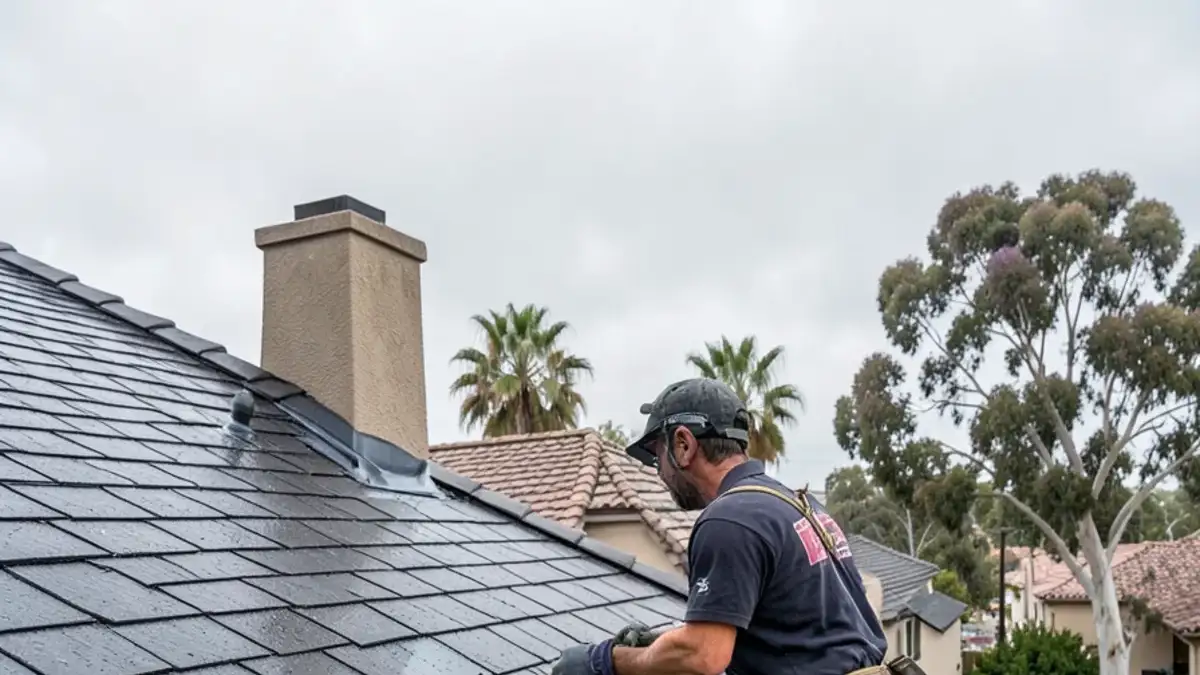
By Tylzen Spoke Roofing · Published
A leaking skylight almost always has one of three causes: rain getting past the flashing where the skylight meets the roof, a failed seal in the glazing or frame, or condensation forming on the inside of the glass. Flashing leaks show up during rain, seal failures show up as fog or drips at the frame, and condensation appears on cool mornings with no rain at all. Each needs a different fix, and only one of them is a roofing problem.
Getting the diagnosis right first saves money. A new skylight will not cure condensation, and fresh caulk will not hold back water running under a missing head flashing.
Leak or condensation? Reading the symptoms
Start inside. Note when the water appears, where on the skylight it collects and what the weather was doing at the time.
| What you see | Most likely cause | Typical fix |
|---|---|---|
| Drips only during or right after rain | Flashing, curb joint or a cracked dome | Reflash or replace the unit |
| Stain at the top corner of the light shaft | Water entering on the uphill side of the curb | Clear debris; rebuild head flashing |
| Water beads across the inner glass on cold mornings | Condensation from indoor humidity | Better ventilation; insulated low-E glazing |
| Fog or haze trapped between two panes | Failed insulated glass seal | Replace the glass unit or the skylight |
| Wet or dark wood at the frame | Frame seal failure or a rotting curb | Replace the curb and unit together |
| Drips on dry, sunny afternoons | Condensation draining late, or a clogged weep channel | Clean the channel; reduce humidity |
Bathroom and kitchen skylights are the usual condensation suspects. Shower steam and cooking moisture rise into the shaft and meet glass that cooled overnight. In the San Gabriel Valley that happens most on clear winter mornings, which is why it often gets mistaken for a rain leak.
Want a roofer to look at it?
Call with your address and what you are seeing. We visit same-day or next-day when crews are free.
- 4.9 from 48 Google reviews
- Based on Rosemead Blvd
- Photos and a written quote before work
How does water get past skylight flashing?
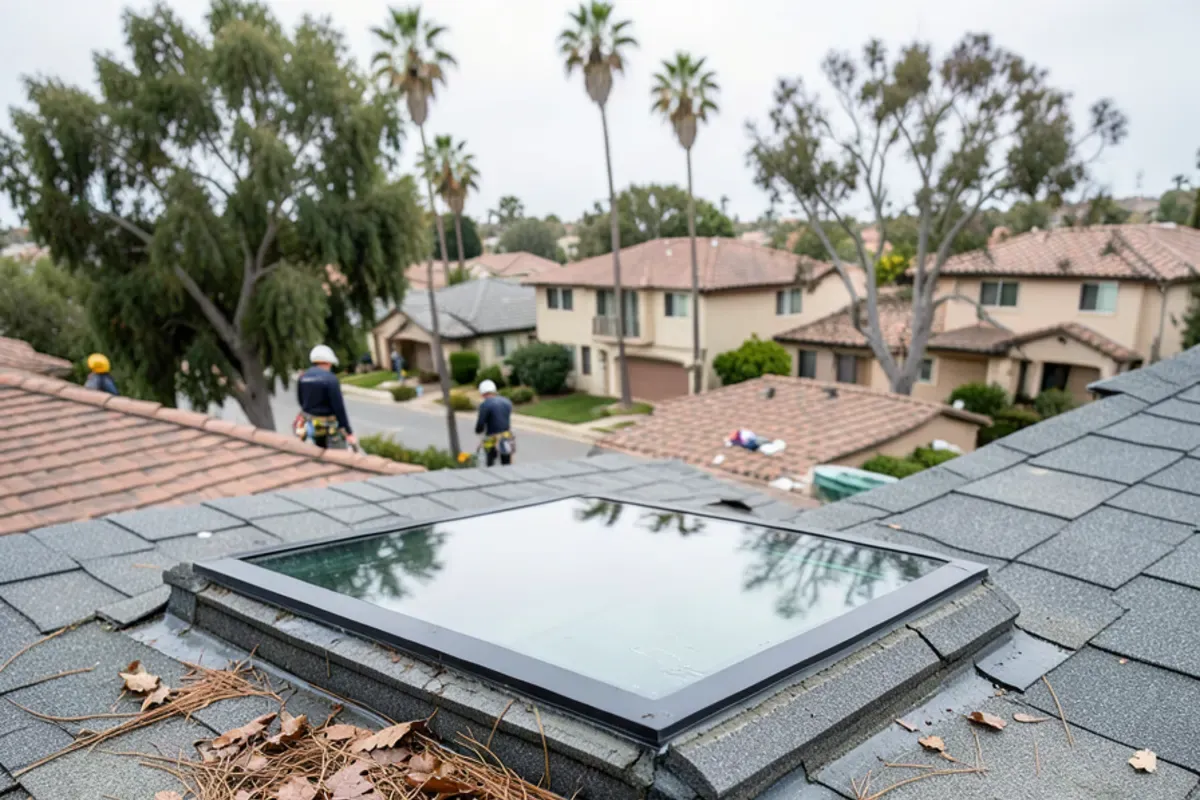
A skylight is a hole in the roof with a box around it. Flashing is the metal that turns water around that box: a head piece on the uphill side, step flashing woven into the shingles or tile along both sides, and an apron that laps over the roofing below. Leaks start when any piece is missing, short, face-nailed or held in place only by sealant.
- Sealant doing flashing's job: caulk dries and cracks within a few hot summers, and many older installs rely on it alone.
- Debris dams: leaves and needles collect against the uphill side, hold water and push it under the head flashing.
- Reroof shortcuts: old flashing bent back around a new roof instead of a kit matched to the unit.
- Tile roof details: water runs under clay and concrete tile on the underlayment, so worn felt beside the curb leaks even when the tiles look perfect.
- Low curbs: a curb that barely rises above the roofing lets water splash over during heavy bursts.
How do roofers trace a skylight leak to its source?
A skylight leak gets traced the same way every time, from the evidence inside to the joints outside, before anyone lifts a shingle. Our order of work:
- Ask when the drip appears, how long into the storm, and which way the wind was blowing. A leak that starts only after hours of rain points to saturated underlayment rather than an open joint.
- Go into the attic and look at the shaft framing from behind: water lines, dark wood and wet insulation usually sit below the point of entry, often on the uphill side.
- Walk the roof around the curb and check the head flashing, both runs of step flashing, the apron and the dome or glass for cracks.
- Run a hose test on a dry day, starting at the downhill apron and moving uphill one side at a time while someone watches inside. Wetting the top first would send water over every lower joint and hide the real gap.
- Inspect the glazing itself: fog between panes, a lifted frame gasket or a clogged weep channel on factory units.
- Photograph each finding and write up the repair options with what each one costs.
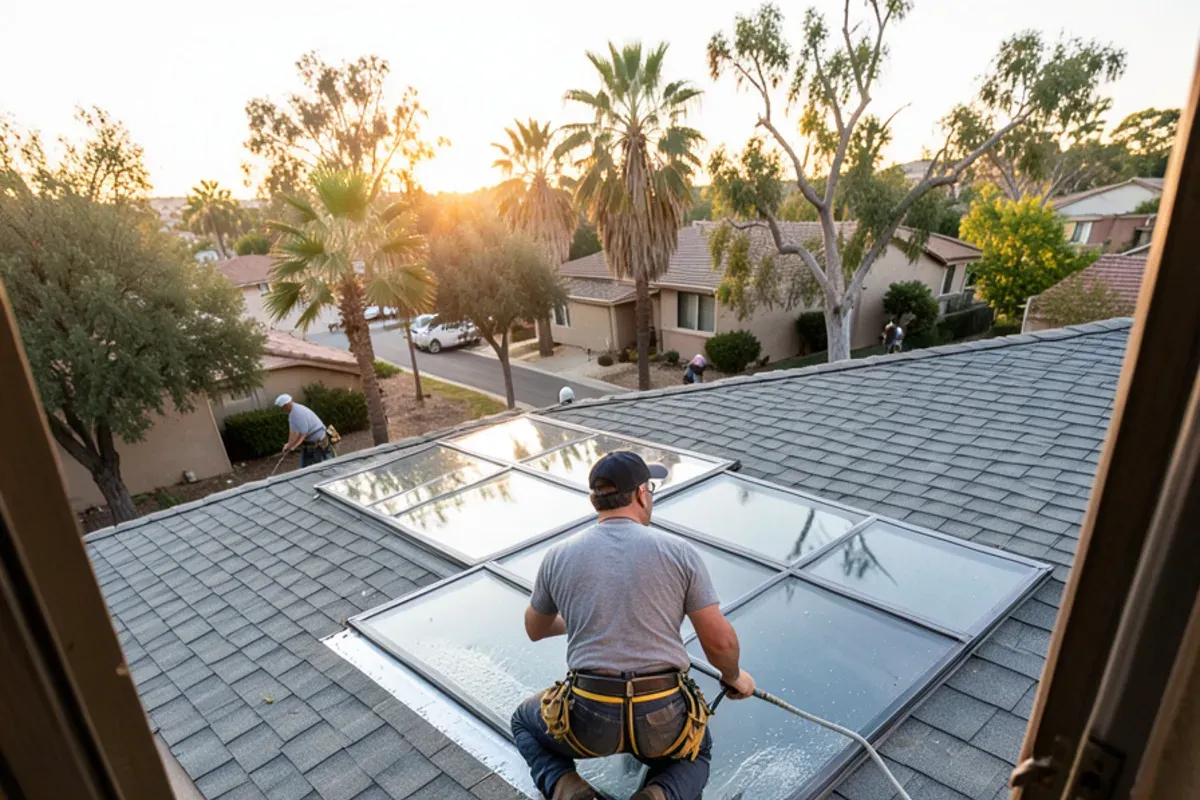
Most leaks show themselves by step 3 or 4. The hose test earns its time on skylights with a history of repairs, where several layers of roof cement make every joint look suspect.
What our crews find when a skylight is opened up
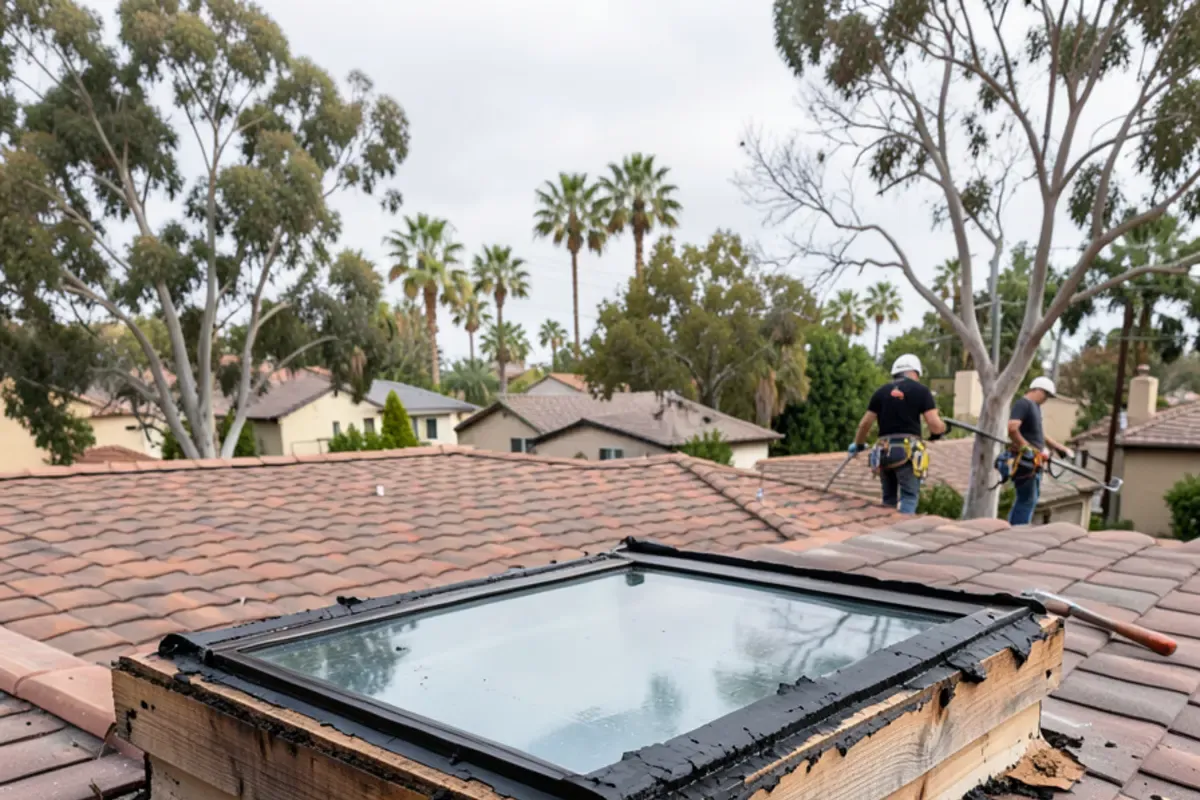
On the post-war homes common in Rosemead and San Gabriel, the leaking unit is often a plastic dome on a site-built wood curb, sealed with layers of roof cement from past repairs. Peeling those layers back usually shows flashing that was never woven into the roof, just tucked under the shingles and tarred. The curb wood beneath is often soft at the uphill corners.
Another pattern is the skylight that was fine until a reroof. The new roofing went on, the old flashing stayed, and the first long storm found the gap. On tile roofs, the underlayment beside the curb can wear through while the tiles above still look fine from the street.
Each of those situations calls for a different fix, so we photograph the curb, the flashing and the attic side before recommending anything.
Reflash the old unit or replace it? Where we draw the line
Most of the labor in a skylight repair goes into lifting and relaying the roofing around the curb, not the flashing metal. That shapes the advice. If the unit is an acrylic dome that is already yellow or crazed, reflashing it means paying for that labor now and again when the dome cracks, so replacing the unit during the same visit usually costs less over a few years. If the unit is glass with clear panes and a firm frame, new flashing alone is the better spend.
Tile roofs tip the decision further, because lifting and resetting tile is slow and some tiles break. We would rather open a tile roof around a skylight once than twice. The case for repair over replacement is strongest on a shingle roof with a sound unit and a single failed joint.
Skylight repairs from least to most involved
Clear and reseal
If the dome and flashing are sound and one sealant joint has opened, cleaning and resealing it is a short-term fix. It buys time; it does not correct flashing that was built wrong.
Reflash the skylight
We lift the roofing around the curb, install new underlayment and a flashing kit or custom-bent metal, and relay the roofing. This is the right fix when the unit is in good shape and the leak is at the roof joint.
Replace the glazing or the unit
A cracked dome, fogged glass or warped frame means the unit itself has failed. Replacing it brings new flashing at the same time, and it is the moment to choose laminated, low-E glass that limits heat and condensation.
Rebuild the curb
Soft curb wood holds fasteners poorly and keeps wicking water. We replace the curb and any rotted sheathing around it before setting the unit.
Our skylight repair service covers all four. When the unit needs to go, skylight replacement is priced separately, side by side with the repair.
What should you do while a skylight is leaking?
- Move furniture and set a bucket or towels under the drip; plastic sheeting taped across the shaft opening keeps water off the ceiling.
- If you can reach the attic safely, pull back wet insulation around the shaft so it can dry.
- Stay off the roof in the rain. Wet shingles and tile are slick, and stepping near a skylight risks a fall through the dome.
- Take photos and note the time and wind direction; that record helps pinpoint the failure later.
- Call for a repair once the storm passes, and if water is coming in fast, ask about an emergency roof tarp.
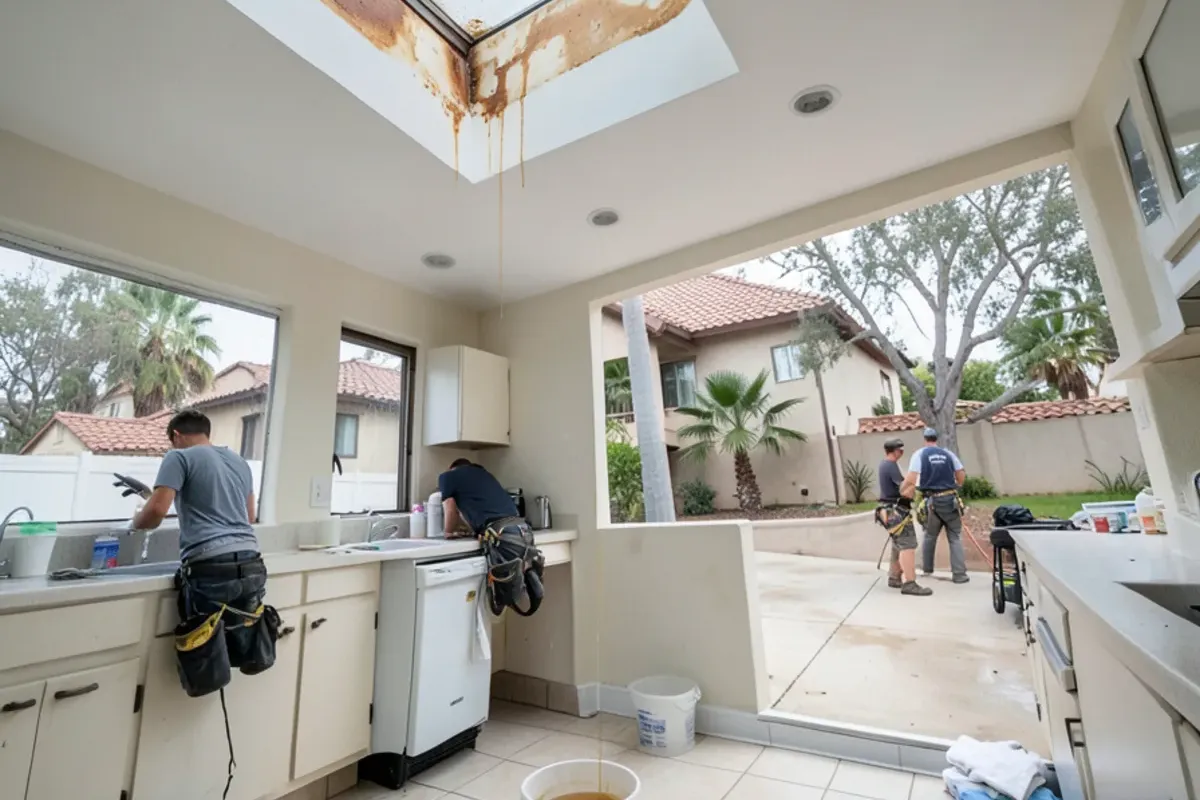
Fix the cause first, then the ceiling
Most leaking skylights can be repaired without a new unit if the glazing is sound, and most condensation problems are solved inside the house rather than on the roof. When the dome is cracked, the glass fogged or the curb rotted, replacement is the cleaner answer. If you are not sure which one you have, call (725) 745-8803. We will check both the roof side and the room side, take photos, and put the repair options in a written quote.
Questions readers ask
Can condensation alone make a skylight drip?
Yes, and it can drip enough to stain drywall. Warm, moist air from showers or cooking meets glass that cooled overnight, and the water runs down to the frame. If drips appear on dry days, especially in a bathroom, run the exhaust fan longer and check that the shaft is insulated before calling a roofer.
Is caulking a leaking skylight enough?
Rarely for long. Sealant on a sun-exposed roof dries and cracks, and caulk cannot stand in for missing step or head flashing. It is a reasonable stopgap until a dry day allows a proper repair. A lasting fix layers flashing in the right order under the roofing so water is shed, not held back by a bead of sealant.
How can I tell if the skylight seal has failed?
On double-pane units, a failed seal shows as fog, haze or moisture streaks trapped between the panes that you cannot wipe off from either side. It does not let rain in by itself, but the unit has lost its insulating value. On frame seals, look for gaps, rust or wet wood around the glass edge.
Should I replace a leaking skylight if a reroof is coming?
Usually yes, at the same time. Reflashing an old skylight now and tearing that work out for a reroof later means paying for the flashing twice. If the reroof is a year or more away, a temporary repair to stop the water makes sense, with the skylight swap folded into the roof quote.
Why does my skylight leak only when rain blows sideways?
Wind-driven rain is a test most flashing never gets on a calm day. Gusts push water up and sideways under step flashing that is too short, over a curb that sits too low, or through a gap at the corner where the head flashing meets the side pieces. Note which side of the shaft gets wet and which way the storm came from; that tells us which side of the curb to open first.
Sources
Written by Tylzen Spoke Roofing
A roofing contractor on Rosemead Blvd (CA-19) in Rosemead, working on shingle, tile, metal and flat roofs across the San Gabriel Valley. This guide reflects what our crews check on local roofs. Questions about your roof? Call (725) 745-8803.