
By Tylzen Spoke Roofing · Published
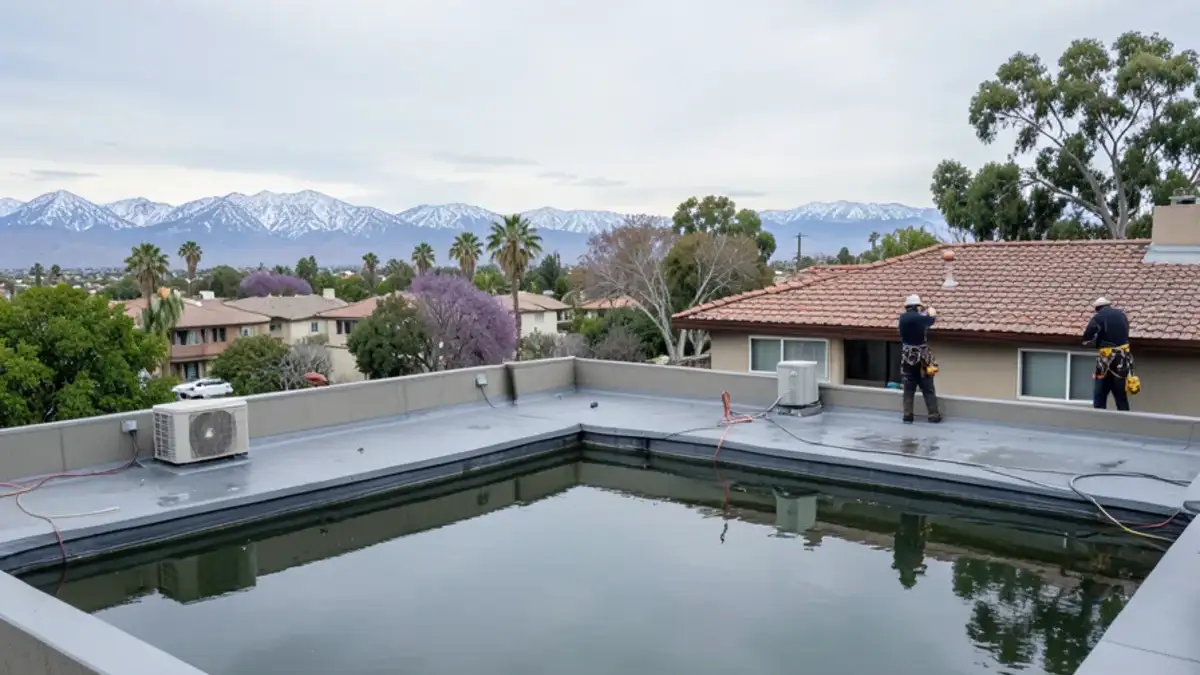
Ponding water on a flat roof is water that is still standing about 48 hours after rain stops in normal drying weather, which is the roofing industry's usual line between harmless puddles and a drainage problem. It is caused by low spots, clogged or poorly placed drains, too little slope or a sagging deck, and it is fixed by restoring a path for water to leave, from simple drain clearing to tapered insulation or re-sloping.
Valley rain tends to come in brief, intense storms from November through March. That makes ponding easy to miss: by the time anyone climbs up to look, the sun may have dried the puddle and left only a ring of dirt.
Why does water sit on a flat roof after rain?
Flat roofs are not truly flat. They are built with a slight pitch, often a quarter inch per foot, toward drains, scuppers or gutters. Anything that interrupts that pitch leaves water behind.
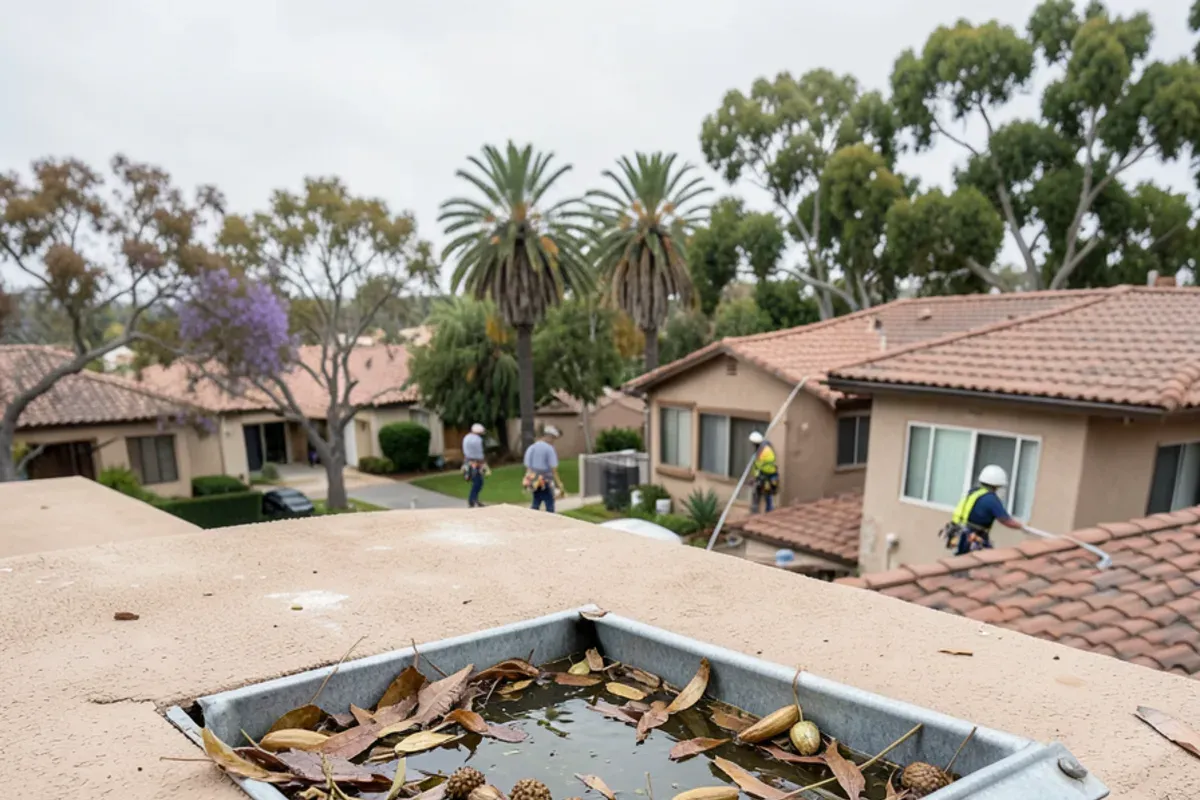
- Clogged drains, scuppers or gutters packed with leaves, seed pods and dust.
- Drains or scuppers set slightly above the roof surface, so the last inch of water never reaches them.
- Joists or sheathing that have deflected over time, creating a dish in the middle of the roof.
- Added layers or patches that built up ridges and blocked flow.
- Compressed insulation under foot traffic paths or around heavy equipment.
- Additions and patio covers framed nearly dead flat when they were built.
Want a roofer to look at it?
Call with your address and what you are seeing. We visit same-day or next-day when crews are free.
- 4.9 from 48 Google reviews
- Based on Rosemead Blvd
- Photos and a written quote before work
When ponding becomes a real problem
Water is heavy. One inch of standing water weighs a little over 5 pounds per square foot, so a wide, deep pond on an older garage or addition adds real load to framing that was never designed for it. The deeper the dish, the more water collects, which deepens the dish further.
- Membrane wear: constant wet and dry cycles under strong sun break down many roof surfaces faster in ponded areas.
- Seam stress: laps and seams under standing water are the first places to open.
- Dirt and growth: ponds leave sediment and algae that hold more moisture next time.
- Leaks: any small opening under a pond leaks steadily instead of only during rain.
- Coverage questions: some membrane and coating warranties exclude damage from long-term ponding, so read the terms.
Clues to ponding you can spot from the ground
Most homeowners never see the pond itself. These signs suggest one is there, and none of them requires walking the roof.
- A ceiling stain or sagging drywall in the middle of a room under the flat section, away from walls and vents.
- Scuppers or downspouts that keep dripping for a day or more after the rain has stopped.
- A visible dip in the roof edge or fascia line when you sight along it from the yard.
- Mosquitoes or birds gathering on the roof in the days after a storm.
- Dark streaks of dirt running down the wall below a scupper, showing slow, steady overflow.
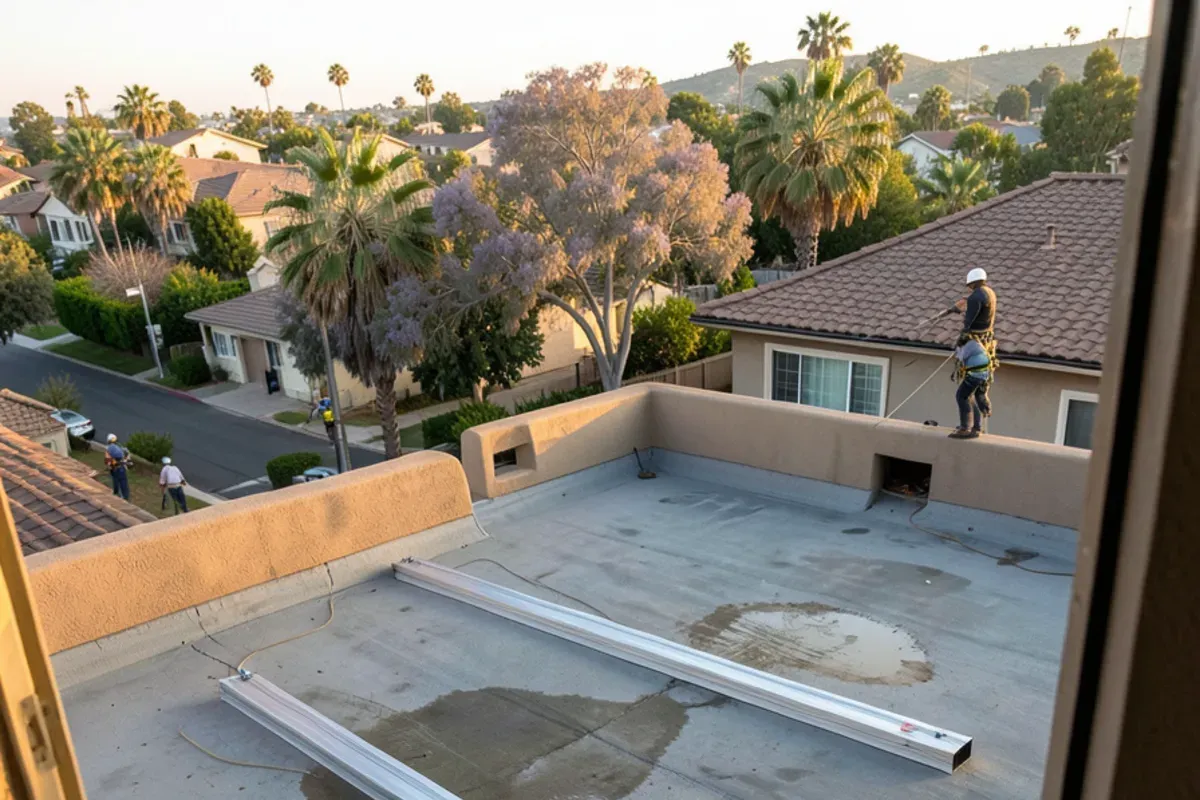
If you can see the roof from a second-story window or a neighbor's yard, a quick photo the morning after rain tells you a lot.
How do we find the cause of a pond?
Standing water is a symptom, and the same puddle can come from a blocked scupper or from a sagging joist. Our drainage inspection follows a set order so the fix matches the cause.
- Map every pond and dirt ring on a sketch of the roof, with photos and rough depths.
- Check slope with a long level or laser across the field and toward each outlet. New membrane roofs are generally built to at least a quarter inch per foot.
- Measure how high each drain, scupper and gutter lip sits relative to the surface around it.
- Probe the deck at the ponded areas and take moisture readings or a small core cut to see whether insulation or sheathing is wet.
- Look at the framing from below, through the attic or a ceiling opening, for deflected joists, stains and soft spots.
- Price the fix that addresses the cause, with any structural or deck work on its own line.
Ponding causes and fixes compared
| Cause | Typical fix | Scale of work |
|---|---|---|
| Clogged drain, scupper or gutter | Clear debris; add strainers or guards | Maintenance visit |
| Drain set too high | Reset drain or lower scupper; add a sump | Repair |
| Small low spot | Build up with patching or tapered insulation under new membrane | Repair |
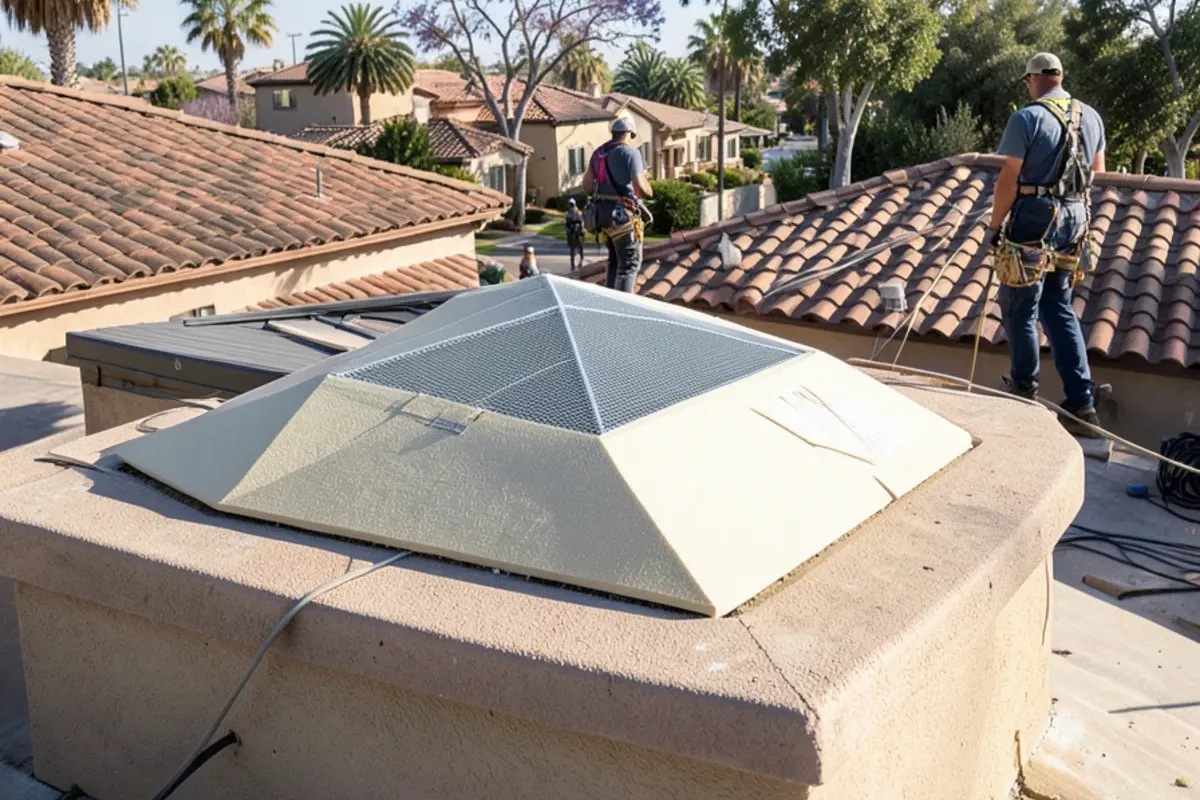
| Water trapped behind AC unit or skylight | Add a cricket to divert flow around it | Repair |
| Whole roof too flat | Tapered insulation system during replacement | Replacement |
| Sagging or rotted deck | Replace sheathing; sister or reinforce joists; re-slope | Structural repair plus reroof |
Our flat roof repair visits handle drains, crickets and low spots. When the whole surface needs reworking, we price re-sloping with a new membrane.
Do coatings stop ponding water damage?
Coatings do not remove ponding, but some tolerate it better than others. Silicone coatings resist standing water well, while many acrylic coatings soften and wear where water sits. A coating also adds very little thickness, so it will not change where water collects.
The right order is drainage first, then surface. Clear and correct the low spots, then apply a waterproofing system or coating rated for the conditions that remain.
What we see on flat roofs around Monterey Park and Rosemead
Hillside streets in Monterey Park and the flatter blocks of Rosemead both have plenty of low-slope roofs on additions, garages, patio covers and small apartment buildings. Our crews keep finding the same drainage issues.
- Scuppers that drain onto a lower roof or into a gutter too small to keep up with a February downpour.
- Downspouts that dump next to the foundation, moving the water problem from the roof to the ground.
- Patched roofs where each repair raised the surface, creating small dams around old leaks.
- Ponds forming on the uphill side of rooftop AC units because no cricket was installed.
Trade-offs between drainage fixes
- A new scupper through a parapet is simple and easy to inspect, but it can overflow in a heavy storm and stain the wall below. An interior drain handles more water and stays hidden, yet it needs a pipe routed through the building.
- Crickets are a small, inexpensive fix for water trapped behind a unit or skylight. They do nothing for a roof that is too flat across its whole field.
- Tapered insulation corrects slope everywhere and adds comfort below, but it raises the roof surface, so walls, doors to roof decks and flashing heights all have to be checked first.
- Reinforcing sagging joists is the most costly answer and the only one that stops a dish from deepening. Building up the low spot without it just moves the problem a few feet.
We also suggest an overflow scupper set slightly above the main outlet on roofs enclosed by parapets, so a clogged drain cannot back water up to the top of the wall.
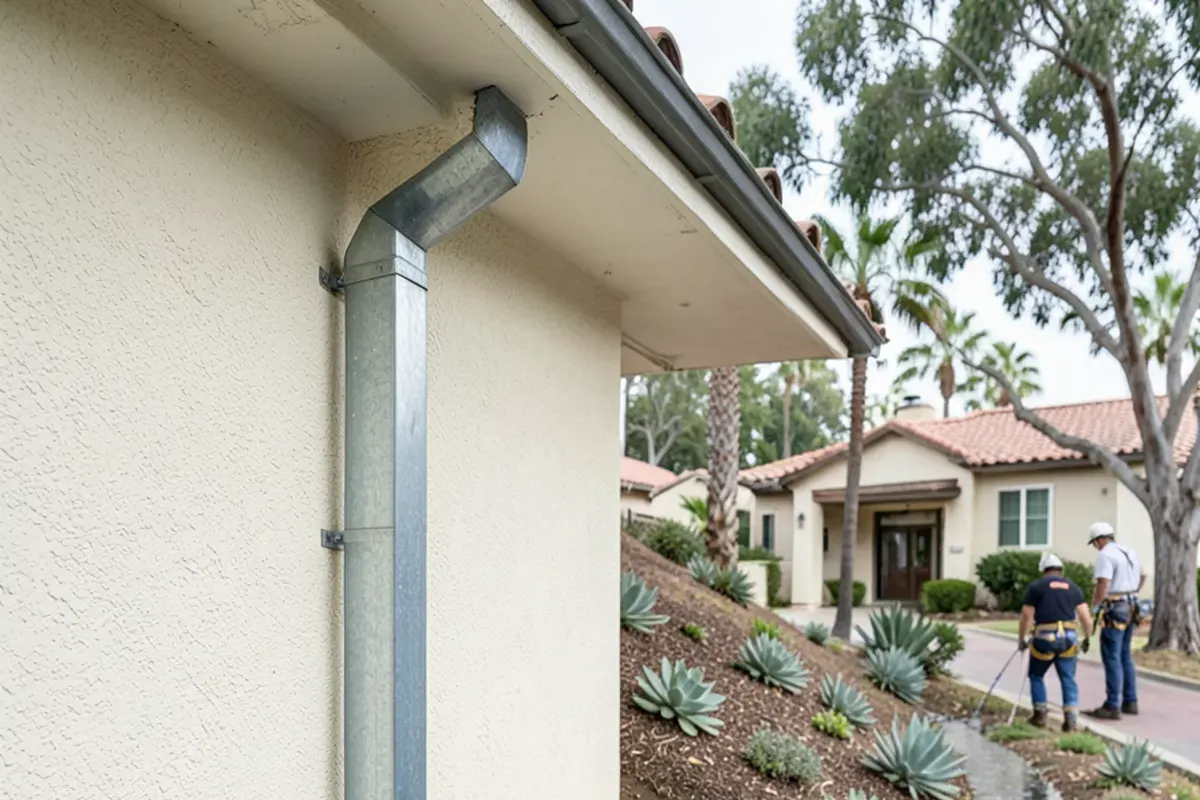
Fixing the roof often means fixing where water goes next. Our downspouts and drainage work carries it away from walls and foundations.
Next steps for a roof that holds water
If the roof needs re-sloping across most of its area, the work is usually folded into a flat roof replacement, since the old membrane has to come off either way.
Clear what you can safely reach from a ladder, photograph the pond after the next storm, and check the ceiling below for stains. Then have the roof surveyed for slope and deck condition before the wettest months. For an inspection with photos and a written repair plan, call (725) 745-8803 or request a quote.
Questions readers ask
How much standing water on a flat roof is normal?
Small, shallow puddles that are gone within about 48 hours of the rain ending, in normal drying weather, are generally acceptable. Water that lingers longer, covers a wide area or leaves heavy dirt rings points to a slope or drainage problem that will shorten the roof's life.
Can I sweep or pump the water off myself?
You can, but it treats the symptom and walking a wet roof is risky. Brooms and shovels can also damage the membrane. Use the time to photograph the pond and its location, then have the drainage problem corrected so the water leaves on its own.
Is ponding covered by a roof warranty?
Often it is not. Many membrane and coating warranties exclude damage from water that stands beyond a set period. Read the documents for your roof, and ask your installer how the design handles drainage. Coverage terms vary by manufacturer and product.
Does re-sloping a flat roof require tearing it off?
Usually. Tapered insulation and crickets go beneath the new membrane, so the old surface comes off first. Small low spots can sometimes be built up during a repair, but a roof that is too flat overall is best corrected during a full replacement.
Can ponding water make a flat roof cave in?
On a sound roof it is rare, but water weighs a little over 5 pounds per square foot for each inch of depth, and older garages and patio covers were not always framed with much margin. A ceiling that bows, cracks appearing in the drywall below, or doors that start to stick under the flat section are warning signs. Keep people out of the room and call promptly.
Sources
Written by Tylzen Spoke Roofing
A roofing contractor on Rosemead Blvd (CA-19) in Rosemead, working on shingle, tile, metal and flat roofs across the San Gabriel Valley. This guide reflects what our crews check on local roofs. Questions about your roof? Call (725) 745-8803.