
By Tylzen Spoke Roofing · Published
Flat garage roof repair or replace comes down to three questions: is the deck dry and solid, how much of the membrane has actually failed, and does water drain off or sit. A few open seams on a firm deck can be patched. An aged but intact surface is a good candidate for a coating. Soft plywood, blisters across the field or water that stays for days mean the roof needs a new membrane, and often a better slope underneath it.
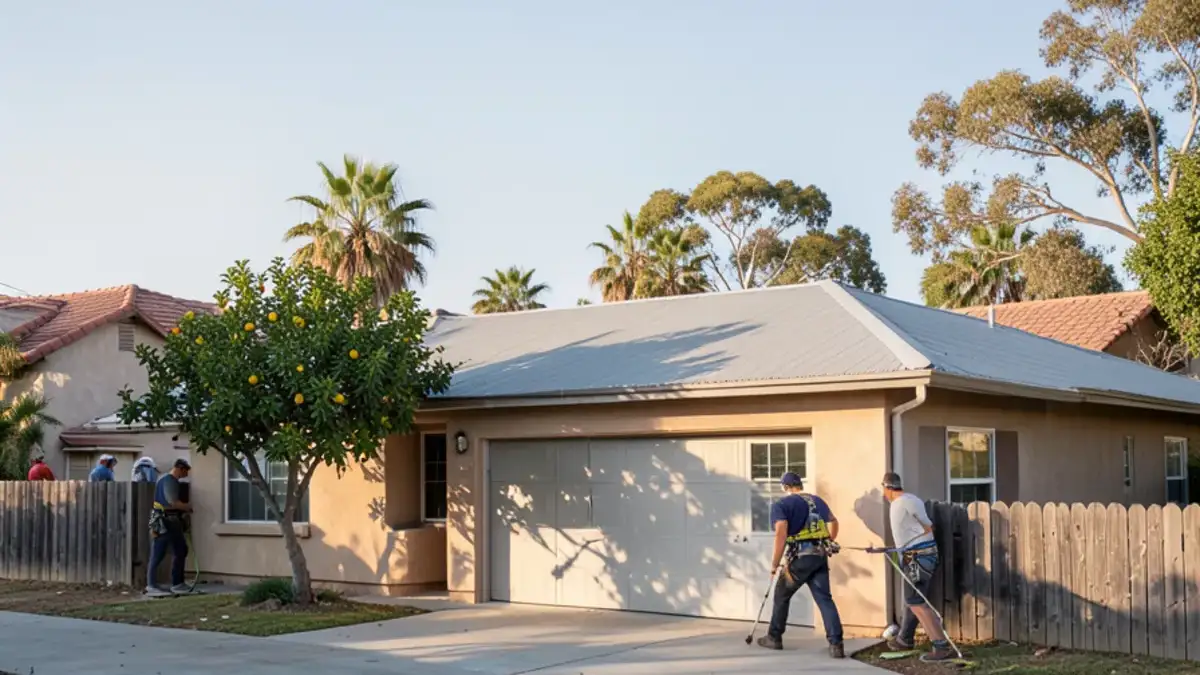
This guide walks through how we make that call on detached garages, patio covers and converted garages, the same low-slope roofs we handle through our garage and patio roof service. Most of them sit behind post-war houses, where the flat roof gets less attention than the main roof until a stored box gets wet.
How can you tell a flat garage roof is still repairable?
Start with the deck, because no surface treatment fixes rotted wood. Walk the roof only if it feels firm and you can reach it safely; otherwise look from a ladder and from inside the garage, where the underside of the sheathing is often exposed.
Signs a repair or coating can work
- The leak traces to one seam, one penetration or one edge, and the stain inside is small.
- The surface is chalky or faded but still bonded, with no soft spots underfoot.
- Water clears within about 48 hours after rain.
- There is only one existing roof layer, so a coating or patch has something sound to bond to.
Signs it is time for a new membrane
- Sheathing that is dark, delaminated or spongy when you press it from below.
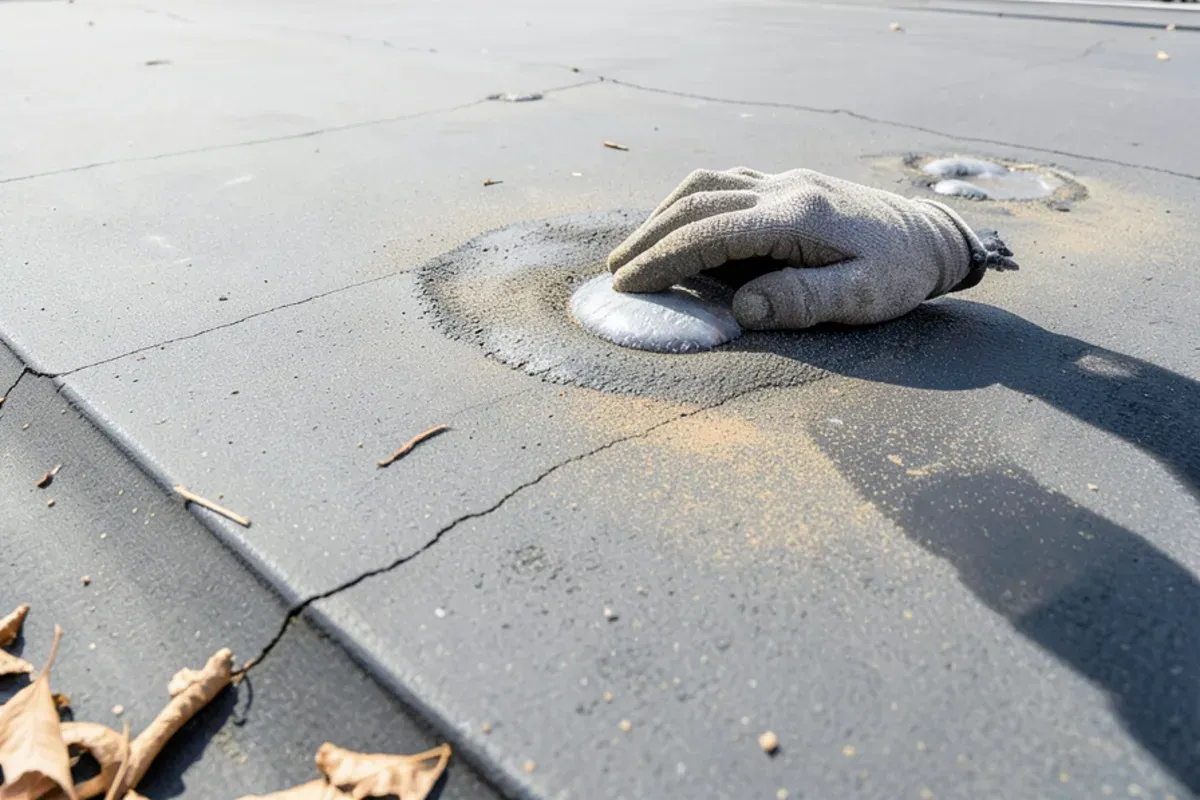
- Blisters, cracks or alligatoring across large areas rather than in one spot.
- Ponding that leaves dirt rings and stays well past two days.
- Two or more layers of rolled roofing already, which hides wet wood and adds weight.
Want a roofer to look at it?
Call with your address and what you are seeing. We visit same-day or next-day when crews are free.
- 4.9 from 48 Google reviews
- Based on Rosemead Blvd
- Photos and a written quote before work
Patch, coat or replace: comparing the three paths
Each option solves a different problem. Choosing the cheaper one when the roof needs the bigger fix usually means paying twice.
| Option | Best fit | What it will not fix | Prep required |
|---|---|---|---|
| Spot repair | One failed seam, vent, drain or edge on a sound roof | General aging across the surface | Clean, dry area; matching material |
| Garage roof coating | Aged but intact membrane on a dry deck | Wet insulation, rot, chronic ponding on some coatings | Washing, seam repair, primer, adhesion test |
| New membrane | Wet or failed deck, widespread cracking, several layers | Nothing, if slope and drainage are corrected too | Tear-off, deck repair, flashing, permit |
| Re-slope and replace | Roofs that pond because the framing is flat | Nothing structural left unaddressed | Tapered insulation or framing, new drain path |
For rough planning, Manta's 2023 calculator listed LA County roof repair at $1,185-$1,625. Garage roofs are often smaller than that range assumes, while a tear-off with deck work can run past it. A written quote based on the actual size, layers and deck condition is the only number worth budgeting on.
When a garage roof coating pays off, and when it does not
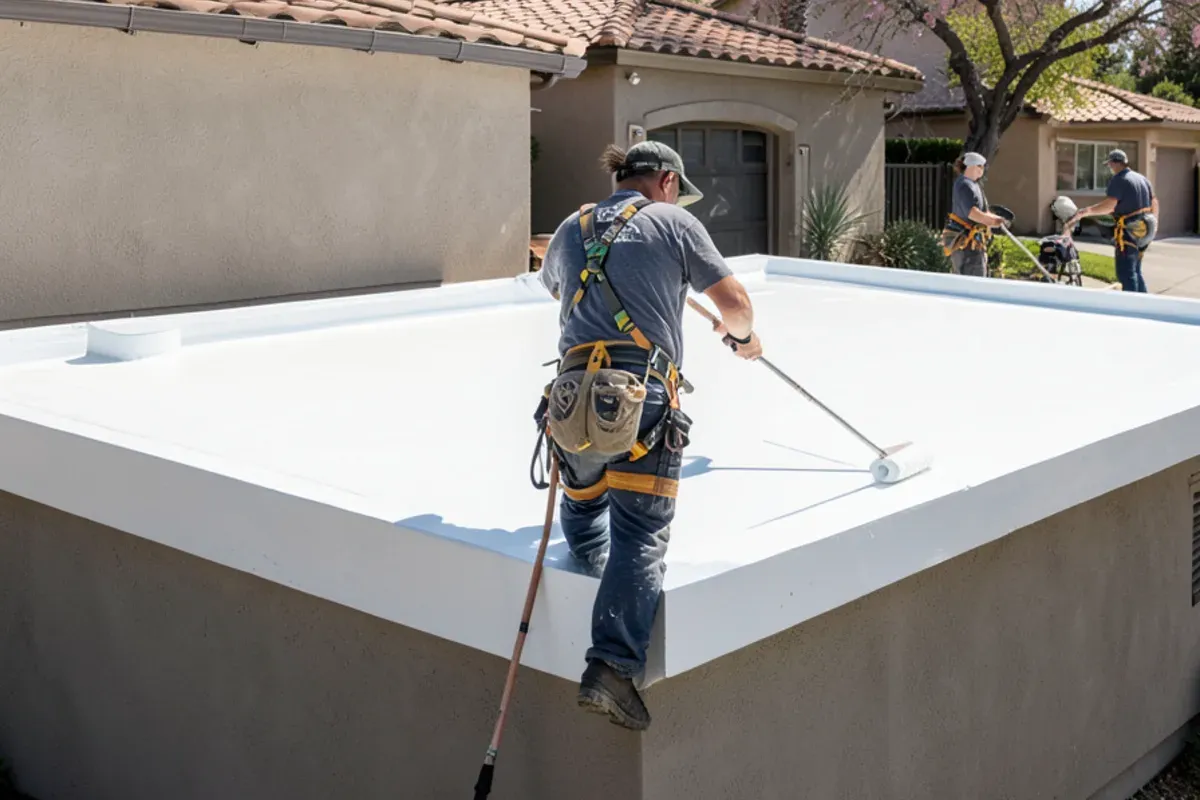
A roof coating is a liquid membrane rolled or sprayed over an existing roof. It renews the weathering surface, seals small cracks and, in white, reflects summer sun off the garage. It does not add strength to a weak deck or dry out wet material trapped underneath.
- Coatings need a clean, dry, bonded surface. We wash the roof, cut out blisters and reinforce seams with fabric first.
- Chemistry has to match. Silicone bonds well to most surfaces but little else sticks to silicone later; acrylics are easy to recoat but do poorly where water ponds.
- Metal and aluminum-flake paints from past decades often need to be tested before anything goes over them.
- A coating that is part of a project covering half the roof or more can bring in Title 24 cool-roof requirements. Rosemead falls in Climate Zone 9, so check with the building department first.
Why does water pond on a garage roof, and can it be re-sloped?
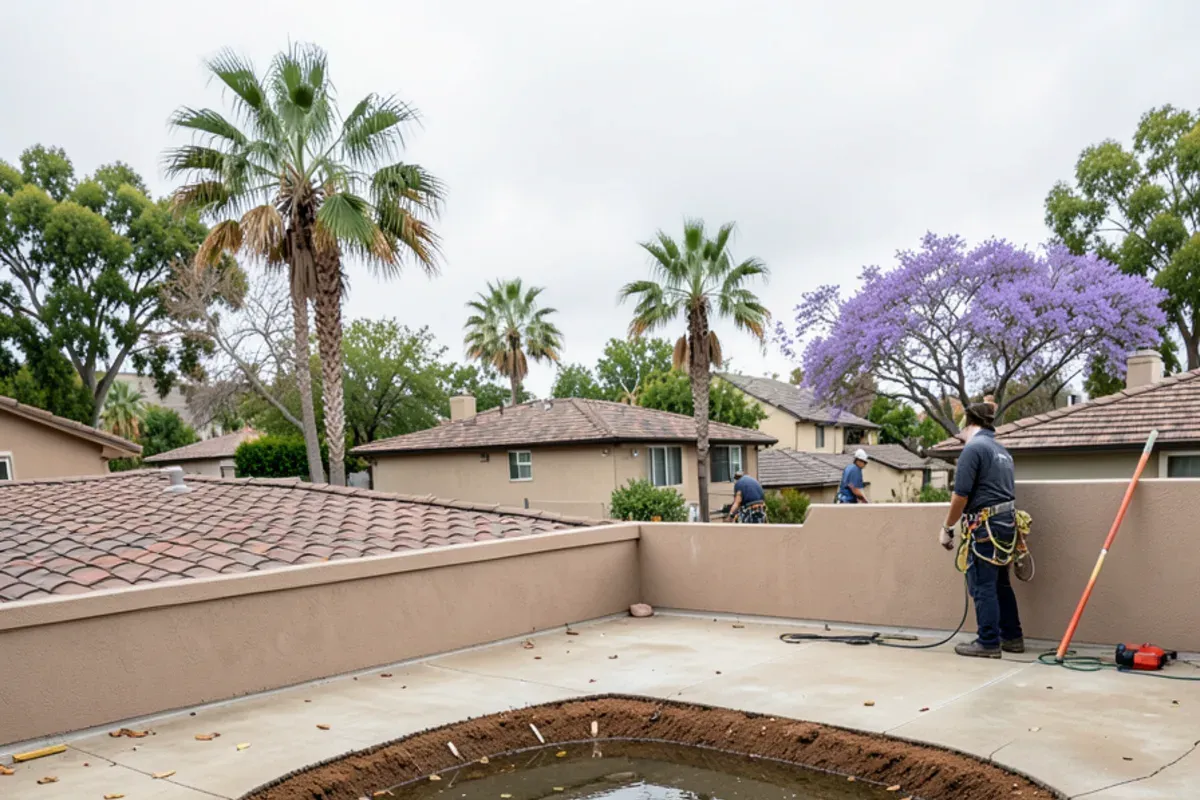
Many older garage and patio roofs were framed nearly dead flat. Over time the joists sag a little, a low spot forms in the middle, and every storm leaves a pond. Standing water speeds up membrane aging, finds every pinhole and adds weight to framing that was never sized for it.
Re-sloping a garage roof is usually done during a replacement. Common approaches are tapered insulation boards under the new membrane, tapered strips fastened along the joists, or a small cricket that pushes water toward a scupper or gutter. Most low-slope membranes are designed for at least 1/4 inch of fall per foot, and getting there is often the fix that makes the new roof last.
What our crews find on garage and patio roofs around Rosemead
Rosemead's housing is mostly post-war: 51.6% of units predate 1960, according to the City's Housing Element. Many lots carry a detached garage or patio cover added in a later decade with whatever roofing was cheapest at the time.
- Rolled roofing nailed over an older layer, with the nail heads now rusting through.
- Patio covers tied into the house wall with no real flashing, so the leak shows on the house side.
- Garage conversions and ADUs still wearing the original garage roof over new living space.
- Neighbors' trees dropping leaves into the low corner, which then holds water like a sponge.
- Layers of silver paint applied every few years instead of fixing the seam underneath.
The trade-offs behind each choice
A coating is the cheapest way to buy time, but it also locks in what is underneath. If the old membrane holds a little trapped moisture, the coating hides it until the deck goes soft, and on a garage with no attic or ceiling below, nobody sees the damage until boards sag. We only recommend coating when a core cut or probe shows dry material.
Silicone has its own catch. It handles sun and short ponding well, yet a future replacement usually means tearing it off rather than recovering over it, because few membranes or adhesives bond to it. An acrylic is easier to renew but asks for a recoat sooner and dislikes standing water.
Re-sloping fixes ponding for good, but it raises the roof edge. That can mean taller fascia, new edge metal and reworked flashing where a patio cover meets the house stucco. The California Building Code sets 1/4 inch per foot as the design slope for new membrane roofs, yet it lets a reroof keep the existing pitch when the roof still drains positively. So re-sloping is a judgment call on many small garages, not a legal requirement, and we price it as a separate line so you can weigh it.
The same patterns show up next door in South San Gabriel, an unincorporated community where roof permits come from LA County Public Works rather than a city hall. For roofing in Rosemead itself, the city's own building division handles it.
Questions to ask before you approve a coating or new membrane
Two quotes for the same garage roof can differ widely because they describe different work. Ask each roofer these questions and get the answers on paper.
- Will you probe or core the roof to confirm the deck and old layers are dry before coating?
- Which seams, vents and edges get fabric reinforcement, and is that preparation priced on its own line?
- What dry film thickness will the coating reach, and how many coats does that take?
- If the project covers half the roof or more, does the white product carry a CRRC rating of at least 0.63 aged reflectance for a low-slope roof?
- For a replacement, how many sheets of plywood are included, and what does each extra sheet cost?
- How will the new roof tie into the house wall, and is new flashing or counterflashing in the price?
Vague answers on preparation are the usual warning sign. A coating rolled over dirt and open seams can look finished on day one and peel within a season. If a replacement is on the table, ask whether a TPO roofing system or modified bitumen suits the slope you have.
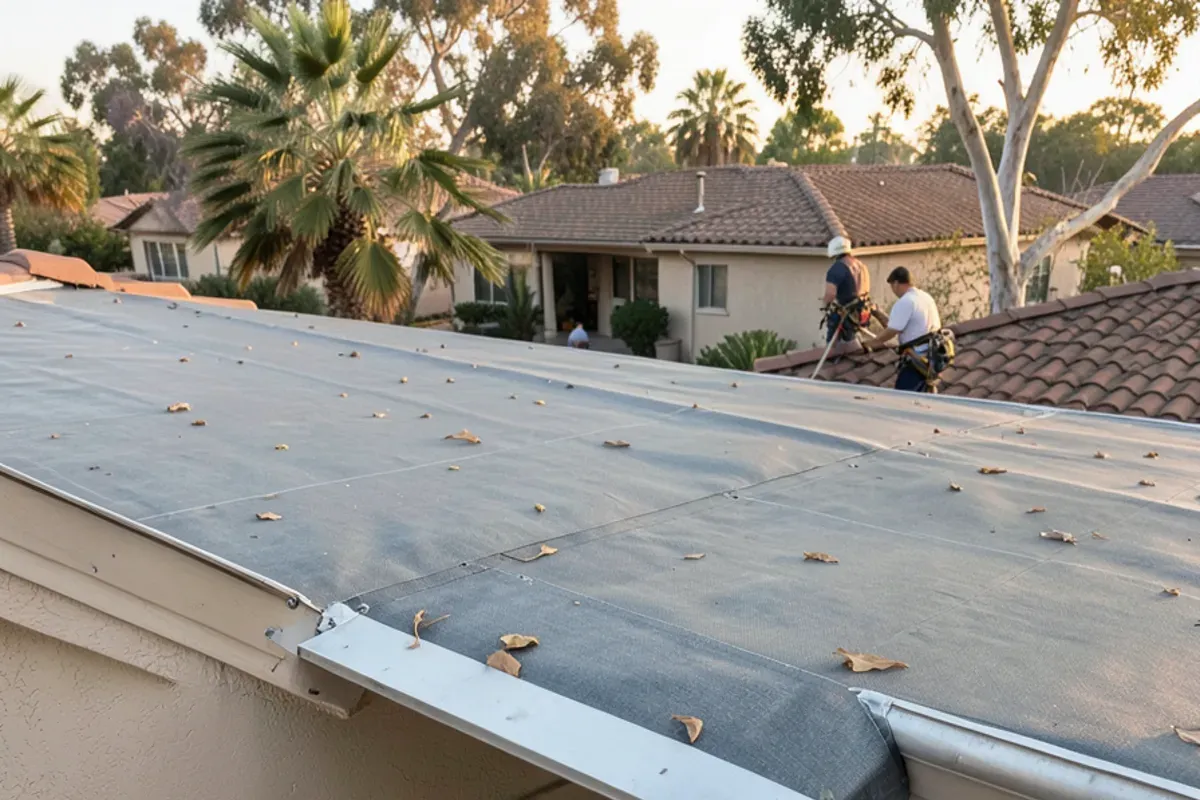
What a garage roof replacement involves
- Inspection and photos of the deck from above and below, plus a written, line-by-line quote.
- Permit pulled when the scope requires one, with the inspection scheduled on your behalf.
- Tear-off down to the sheathing and replacement of any soft boards, each listed in writing.
- Slope correction where needed, then new edge metal, flashing at the house wall and a new membrane.
- Cleanup of nails and debris from the driveway and yard, and photos of the finished roof.
A single-car garage roof usually takes one or two working days after the materials arrive. Larger patio roofs or full flat roof replacement on an addition take longer when framing needs work.
Making the call on your garage roof
If the deck is solid and the leak is local, repair it. If the surface is tired but dry, coat it. If the wood is wet, the layers are stacked or the water never drains, replace it and fix the slope while the roof is open. We will show you photos of which case your roof falls into before you spend anything. Call (725) 745-8803 or request a quote to schedule a look.
Questions readers ask
Can I coat a flat garage roof that is already leaking?
Only after the leak source is repaired and the area is dry. Coating over wet material traps moisture against the deck, and the coating may blister or peel. We cut out the wet section, replace any soft sheathing, reinforce the seam, and coat once everything has dried.
Does a garage roof replacement need a permit?
Replacing the roof covering or decking generally does, while small patches usually do not. In Rosemead the city issues roof permits; in unincorporated areas such as South San Gabriel, LA County Public Works does. We pull the permit when the scope needs one and schedule the inspection.
Is torch-down or TPO better for a small garage?
Both work well on a properly sloped deck. Torch-down modified bitumen is tough and forgiving around older edges. TPO is light, seamed with hot air and comes in white, which helps with heat. The choice often depends on what the house roof ties into and how much foot traffic the garage roof gets.
How long should a garage roof coating last before recoating?
It depends on the product, the thickness applied and how much water ponds. Manufacturers publish recoat intervals for each line, and the coating should be inspected every year or two. Recoating before the old layer wears through is far cheaper than starting over.
Can a flat garage roof be changed to a pitched roof?
Yes, but it becomes a framing project rather than a roofing repair. New rafters or trusses, a permit, and sometimes plans are needed, and the added height has to fit local setback and height rules. On a detached garage behind a Rosemead ranch home, owners often get most of the drainage benefit from tapered insulation and a new membrane at a fraction of the disruption.
Sources
Written by Tylzen Spoke Roofing
A roofing contractor on Rosemead Blvd (CA-19) in Rosemead, working on shingle, tile, metal and flat roofs across the San Gabriel Valley. This guide reflects what our crews check on local roofs. Questions about your roof? Call (725) 745-8803.