
By Tylzen Spoke Roofing · Published
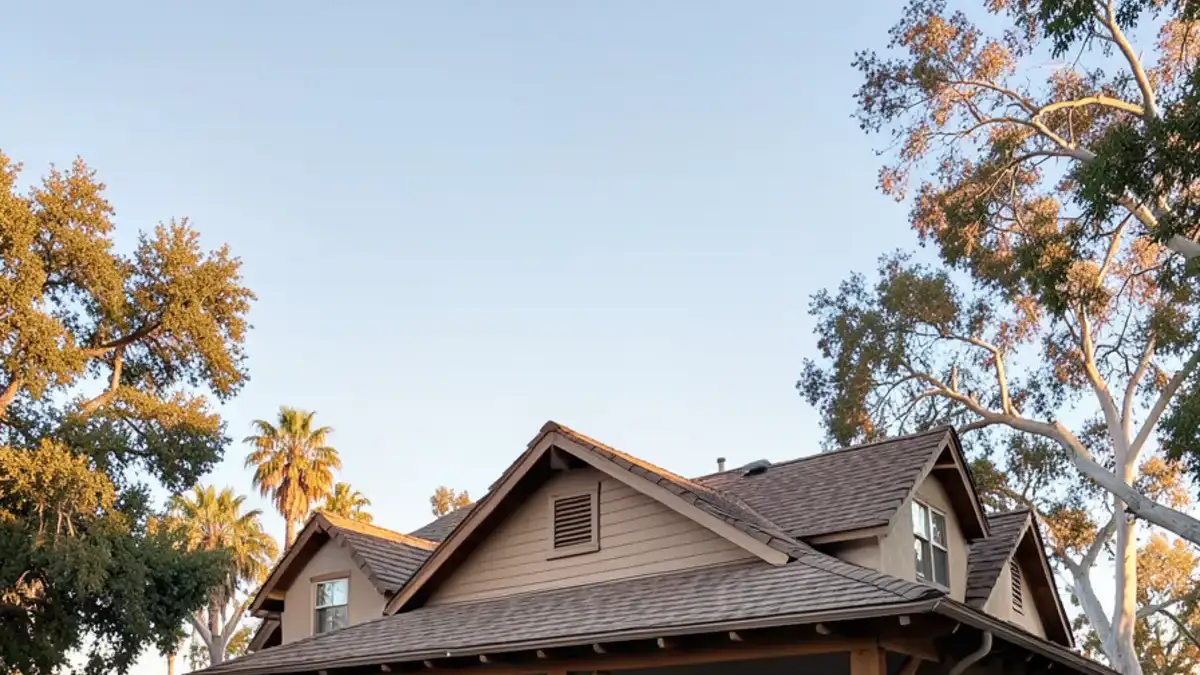
A historic home roof replacement in Pasadena or South Pasadena succeeds when the new roof keeps the original lines, color and edge details while meeting today's building and fire codes. Before anything else, find out from the city whether the house is a designated landmark or falls inside a historic or landmark district; that status determines whether preservation staff must approve material and color ahead of the permit.
Most work on these houses is like-for-like and moves through review without drama. Problems come from surprises: a material swap nobody cleared, rafter tails damaged during tear-off, or a roof profile that suddenly looks thicker from the street. Here is how we plan around those.
Does a historic home need special approval to reroof?
It depends on designation. Pasadena has landmark districts and designated historic properties, and South Pasadena has a Cultural Heritage Commission that reviews changes to historic resources. In both cities the first call should go to planning or preservation staff, not the building counter, because their sign-off can be a condition of the roof permit.
- Same material, same color family, same profile: often handled at staff level.
- Changing material, such as wood shingle to composition or composition to tile: more likely to need formal review.
- Adding skylights, solar or new roof vents visible from the street: ask before ordering anything.
- Changing the roof shape, overhang depth or fascia: treat as a design change, not a reroof.
We do not predict review times or fees. We do bring photos, product samples and color data to the conversation so staff can see exactly what is proposed.
Want a roofer to look at it?
Call with your address and what you are seeing. We visit same-day or next-day when crews are free.
- 4.9 from 48 Google reviews
- Based on Rosemead Blvd
- Photos and a written quote before work
What makes Craftsman and Revival roofs different
Craftsman bungalows are common in Pasadena and South Pasadena, along with Spanish Revival and Tudor-influenced homes. Their roofs carry details that a generic tract-house crew may not expect.
- Low-pitched gables with deep overhangs and exposed rafter tails that are often original old-growth lumber.
- Knee braces and outlookers under the gable ends that tie into the roof edge.
- Spaced board sheathing left from original wood shingles, which needs a solid deck before composition goes on.
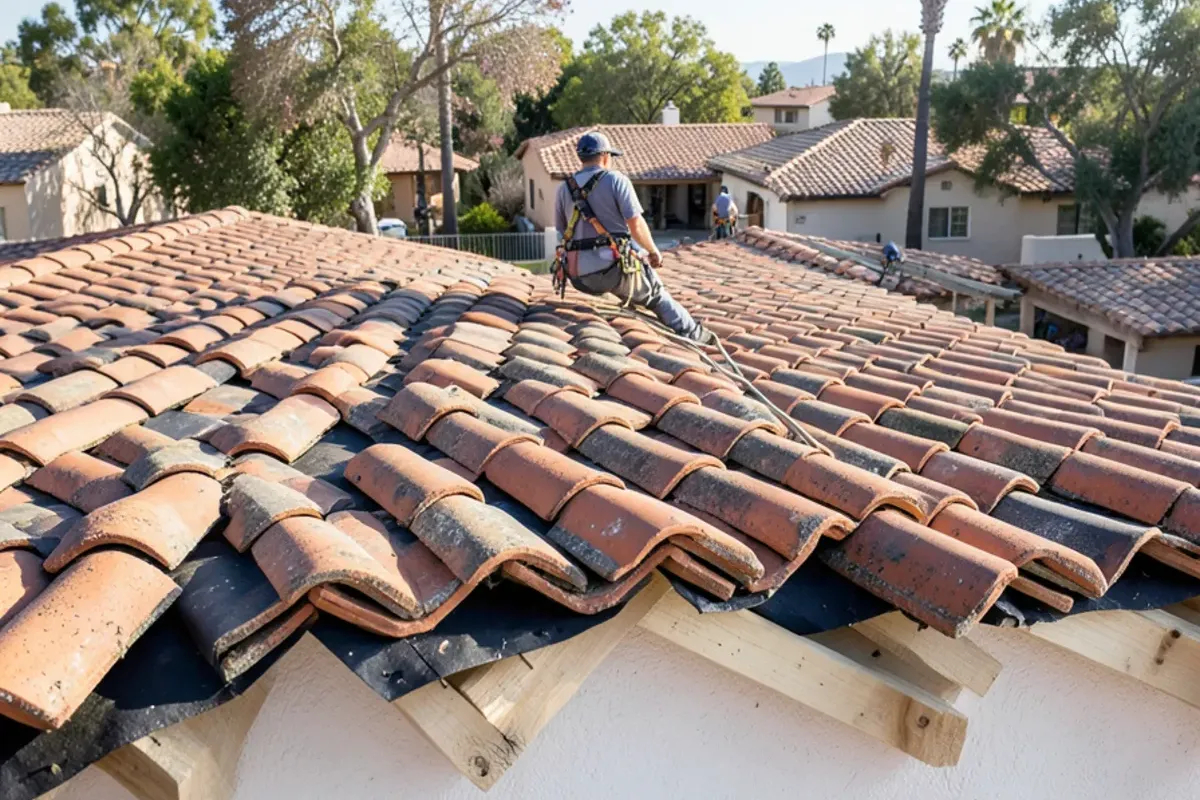
- Clay barrel or S-tile on Revival homes, sometimes with hand-laid irregular courses worth preserving.
- Built-in gutters or box cornices hidden in the eave on some older houses.
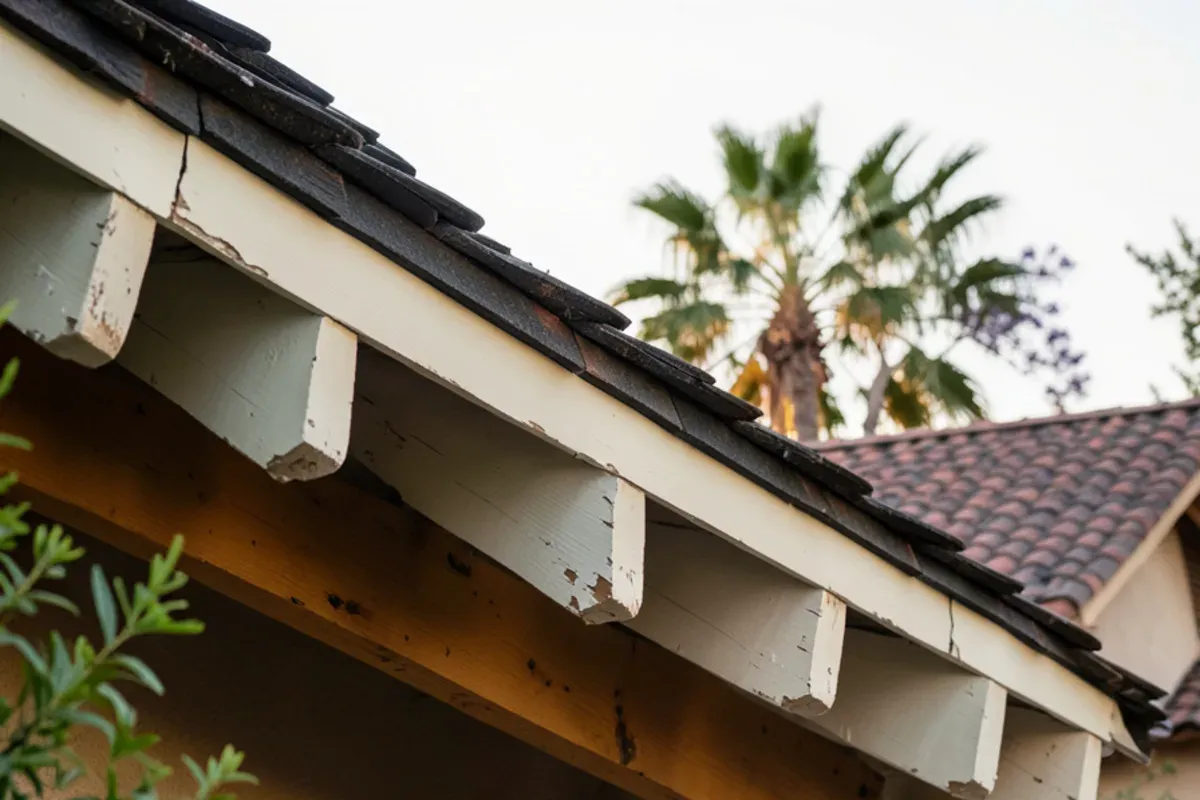
Adding plywood over spaced boards raises the roof edge slightly. We plan the drip edge and fascia trim so the change stays invisible from the sidewalk.
Roof materials that suit a historic house
| Original look | Typical replacement | Notes |
|---|---|---|
| Wood shingle or shake (Craftsman) | Architectural composition in a muted, textured color | Most common path; fire-zone parcels need a Class A assembly |
| Wood shake where a shake look must stay | Synthetic shake | Reads like wood from the street; confirm fire rating and review approval |
| Clay barrel or S-tile (Spanish Revival) | Clay tile, reusing sound originals where possible | New underlayment is the real job; salvage helps color match |
| Slate (Tudor, some period revivals) | Natural or synthetic slate | Heavy; framing and fastening need attention |
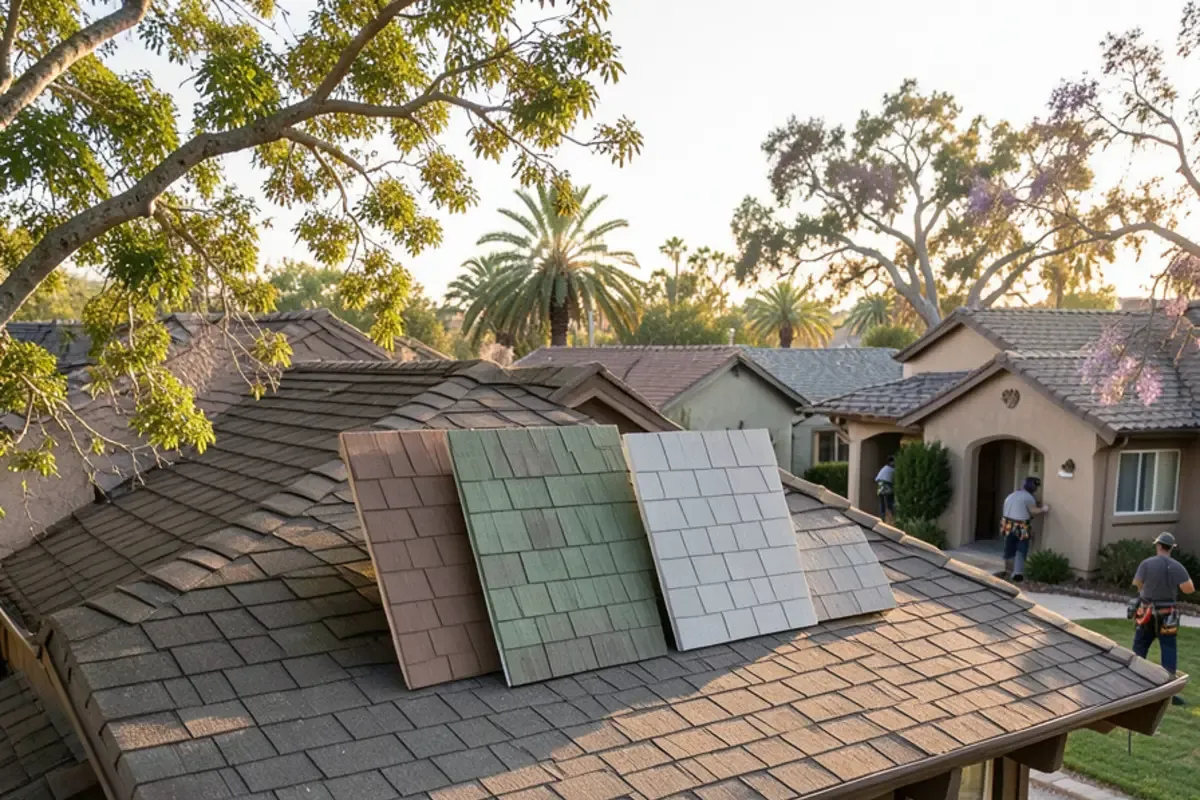
Color deserves as much care as material. Craftsman homes were built to blend with wood, stone and greenery, so warm browns, weathered greens and soft grays usually read as period-correct, while flat black or bright tones stand out. We bring full-size samples and look at them on the roof plane in morning and afternoon light, because a shingle chip on a kitchen table rarely looks the same 20 feet up.
Our slate and synthetic roofing page covers those materials in more depth, and tile roofing explains clay salvage and relay.
How do you protect original trim during tear-off?
Old houses are unforgiving. Rafter tails, crown molding and leaded windows sit right below the work area, and replacement wood rarely matches.
- Photograph every elevation and edge before work starts, so the finished roof can be checked against it.
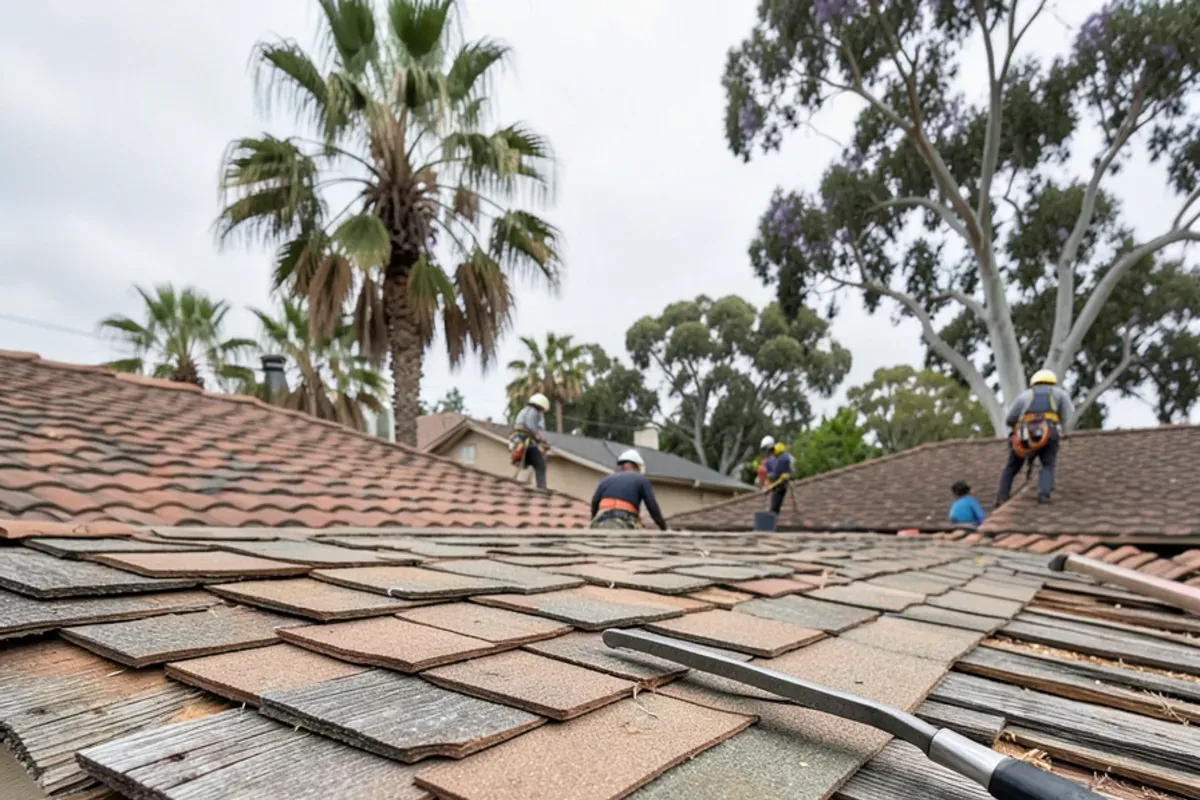
- Tear off by hand near the eaves instead of prying from the edge with heavy tools.
- Cover windows, porches and plantings, and route debris away from original siding.
- Inspect exposed rafter tails and sheathing, and report any rot with photos before repairing.
- Match replacement drip edge and flashing to the existing profile and paint color.
Hidden rot is common near gutters and at the lowest course. When we find it, the repair and its cost go on a separate written line before we continue.
Built-in box gutters hidden in the cornice deserve their own line on the quote. Their old metal linings often rust through out of sight, and the water ends up inside the eave framing. Relining them with new metal or a membrane keeps the original profile from the street, and our gutter repair crews handle the downspout connections at the same visit.
Our take on older Pasadena-area roofs
Our crews regularly find the same few issues on pre-war homes in Pasadena and South Pasadena.
- Two or three layers of composition stacked over the original wood shingles, hiding the spaced boards below.
- Old flashing at chimneys set into mortar joints that crumbled long ago.
- Attics with little or no ventilation, because the original wood roof breathed on its own.
- Earlier repairs in mismatched shingles that the new roof finally lets you erase.
Ask about energy and fire rules early too. Energy code cool-roof rules may reach a reroof as well, and homes up toward the foothills can fall within a Very High Fire Hazard Severity Zone. Qualified historic buildings may get some flexibility under the California Historical Building Code; your building department can say whether your house is eligible.
Where preservation and performance pull in different directions
- Salvaging clay tile keeps the aged color and usually simplifies review, but sorting, storing and relaying every piece takes labor, and broken tiles have to be matched from salvage or new stock blended onto rear slopes.
- A solid plywood deck over spaced boards gives composition shingles the nailing base their makers' instructions call for, at the cost of a slightly thicker edge that we then hide with trim.
- Ridge or low-profile vents cure the overheated attics many of these houses have, though each vent visible from the street becomes one more review item, so we place exhaust on rear slopes where the roof shape allows.
- Synthetic shake or slate recreates the original look at lower weight, but staff may still ask why the material is changing, so bring the fire rating and a sample.
What should a historic reroof file include before review?
In both cities, approval for exterior changes on a historic resource usually comes as a Certificate of Appropriateness, and staff can only approve what they can see. South Pasadena's Cultural Heritage Commission, for example, has heard composition shingles matching the existing roof as one item within a larger certificate request. A complete file cuts down the back-and-forth.
- Dated photos of every roof slope, the eaves, rafter tails and chimney, taken from the street and from roof level.
- The manufacturer, product line and color of the proposed covering, with a full-size sample ready to show.
- A note on edge details: drip edge profile, fascia and barge trim, and whether the rafter tails stay exposed.
- The location of every new vent, skylight or solar panel, marked on a simple roof plan.
- The parcel's fire zone status and the Class A assembly you intend to use if the zone requires one.
- The cool-roof rating for the chosen color, or the Title 24 exception that applies, so the energy question is answered once.
We put the photo set and product data together with the quote, so the file is ready when you or your designer submit the application.
Planning your historic reroof
Confirm designation, talk to preservation staff, choose a material and color you can document, and hire a crew that respects original wood. Our residential roofing team prepares photo-documented scopes with permits and any deck repair listed separately. Call (725) 745-8803 when you want to talk through your house, or send a quote request online.
Questions readers ask
Can I replace original wood shingles with composition on a Pasadena historic home?
Often yes, and many Craftsman homes in the area already made that switch decades ago. On a designated property or in a landmark district, expect staff to review the color and texture. Choosing a muted, dimensional shingle and keeping the original edge details usually helps the conversation.
Do I have to keep clay tile on a Spanish Revival house?
On a designated or district property, changing away from clay tile is a visible material change and is likely to need review. Most owners keep the tile anyway, because sound original pieces can be lifted, stored and relaid over new underlayment, which also preserves the aged color.
Will a new roof change how my historic home looks from the street?
It should not, if planned well. The details that change appearance are edge thickness, ridge style, color and vent placement. We match drip edge profiles, keep vents off street-facing slopes where possible, and review samples in daylight against your trim before ordering.
Is a historic reroof more expensive than a standard one?
It usually takes more labor, because of hand tear-off near trim, sheathing upgrades over spaced boards, and careful flashing at old chimneys. Material choice matters most. A written, line-by-line quote shows where the extra cost comes from so you can compare options fairly.
Can solar panels go on a historic Pasadena-area roof?
Often, with planning. Arrays on rear or side slopes that are hard to see from the sidewalk are generally simpler to clear than street-facing panels, and flush racking keeps the profile low. Talk with preservation staff before signing a solar contract. If the covering is near the end of its life, reroof first so the panels never have to come off for a tear-off.
Sources
Written by Tylzen Spoke Roofing
A roofing contractor on Rosemead Blvd (CA-19) in Rosemead, working on shingle, tile, metal and flat roofs across the San Gabriel Valley. This guide reflects what our crews check on local roofs. Questions about your roof? Call (725) 745-8803.