
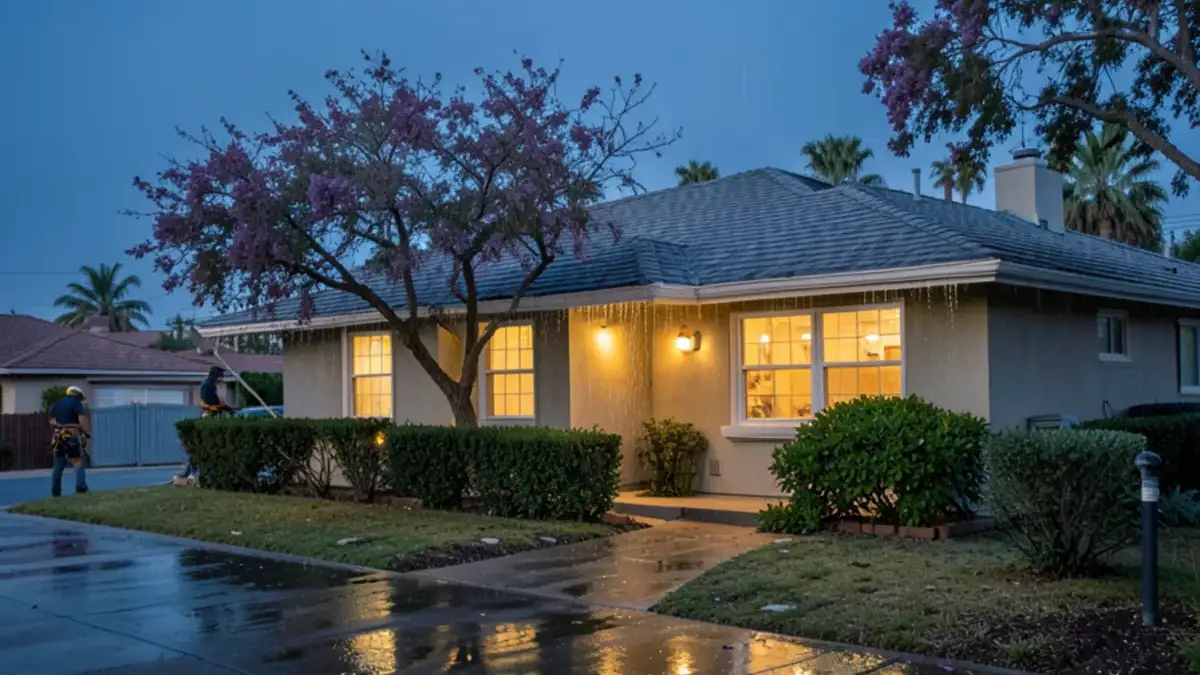
By Tylzen Spoke Roofing · Published
If your roof is leaking in the rain, here is what to do first: keep everyone away from wet wiring, catch and contain the water, photograph everything, and call a roofer to cover the opening. Do not climb onto a wet roof. Most storm damage comes from water left to spread through the ceiling, not from the hole itself.
This guide covers the first hour step by step, what you can safely do from inside to slow the drip, and what happens once a crew arrives. It is written for the short, heavy storms that reach homes needing roofing in Rosemead and the rest of the San Gabriel Valley between November and March.
What should you do in the first 10 minutes of a roof leak?
Work through these in order. Safety comes before saving the carpet.
- Look for water near light fixtures, ceiling fans, smoke detectors or outlets. If you see any, switch that circuit off at the breaker while standing on a dry floor. If the panel itself is wet, stay away from it and call Southern California Edison.
- Clear the room of people and pets if the ceiling is sagging, bubbling or cracking.
- Move electronics, rugs, furniture and paperwork out of the drip zone, and slide plastic sheeting under anything too heavy to move.
- Set a bucket, trash can or storage tote under each drip, with a towel inside to stop splashing.
- If the drywall is bulging with trapped water, poke a small hole at the lowest point with a screwdriver so it drains into the bucket instead of spreading or collapsing.
Want a roofer to look at it?
Call with your address and what you are seeing. We visit same-day or next-day when crews are free.
- 4.9 from 48 Google reviews
- Based on Rosemead Blvd
- Photos and a written quote before work
How to slow the drip from inside while it is still raining
If you have an attic hatch and can move around up there safely, you can often catch the water before it reaches the ceiling. Step only on the joists or on a plank laid across them, never on drywall between framing.
- Place a shallow pan or a sheet of plastic on a board under the drip so water collects above the ceiling rather than soaking it.
- Pull soaked insulation away from the wet spot so the drywall below can start drying.
- Mark where water enters the roof deck with painter's tape on the nearest rafter. That mark saves time when the roof is inspected.
- Skip the hardware-store sealant. Most patching products bond poorly to wet surfaces and can trap water under them.
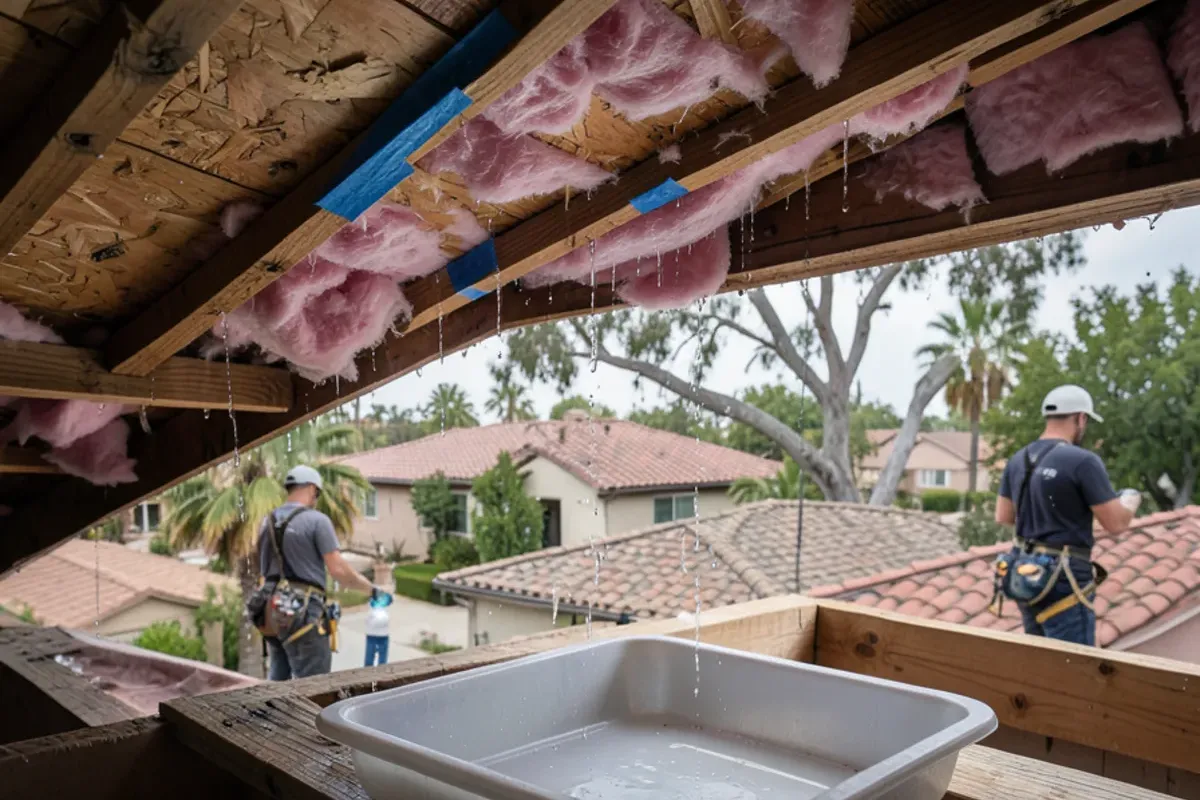
If the attic is cramped, hot or has no floor, stay out and focus on the rooms below. A ceiling hole is cheap to patch; a fall through one is not.
Photos and notes that help an insurance claim
Most homeowners policies expect you to take reasonable steps to prevent further damage, and adjusters want to see what the leak looked like while it was active. A few minutes with your phone now can make the claim much easier later.
| What to capture | Why it matters |
|---|---|
| Video of the active drip with audio of the rain | Shows the leak happened during the storm, not over months |
| Wide shots of each affected room, then close-ups | Ties stains and damaged items to specific locations |
| Damaged belongings before you throw anything out | Lets the adjuster value contents you could not save |
| Ground-level photos of missing shingles, tiles or a fallen limb | Points to sudden storm damage rather than wear |
| Receipts for tarps, fans, buckets or emergency service | Mitigation costs are often reimbursable under the policy |
Write down when the leak started, which rooms were affected and what you did. Keep the notes with the photos in one folder.
When does a storm leak need an emergency tarp?
A single slow drip into a bucket can usually wait for a dry-day repair. Call for a tarp right away when water reaches more than one room, the drip is speeding up, you can see daylight or a gap from the attic, or shingles, tiles or a branch are visibly out of place.
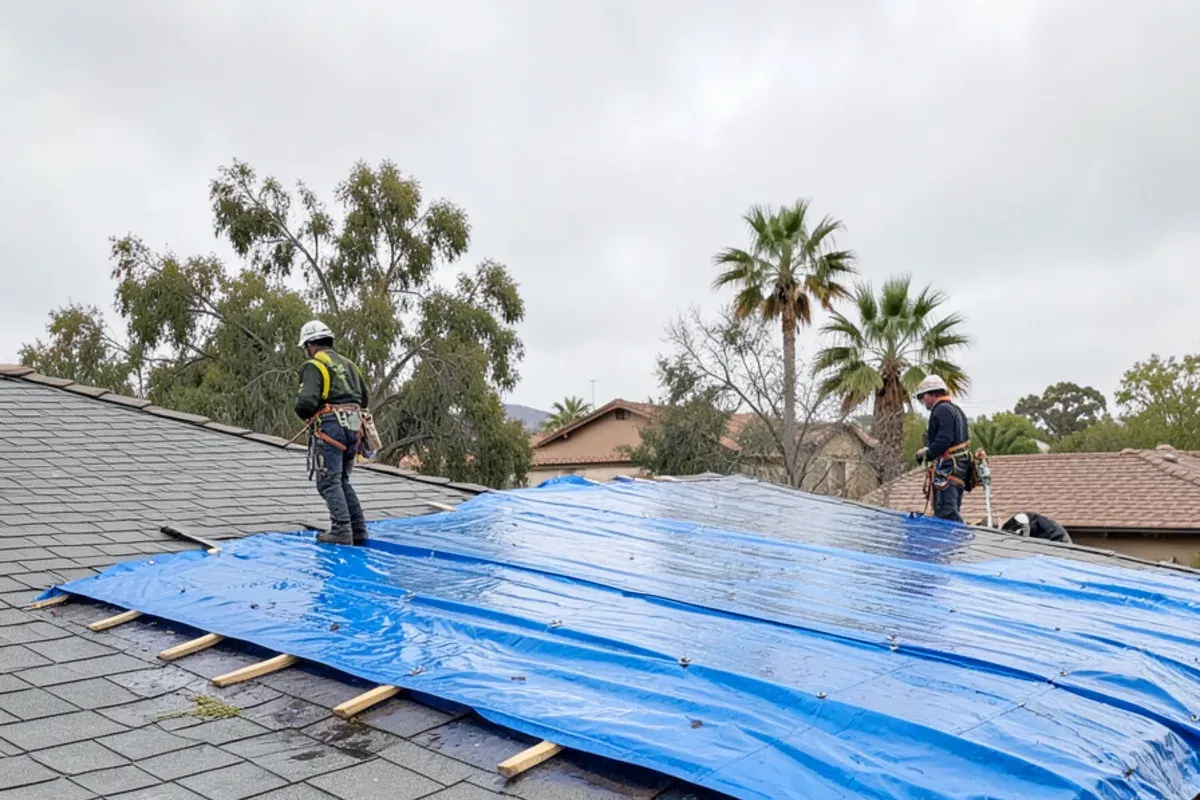
A crew can secure an emergency roof tarp over the opening with battens so it holds through wind, and our emergency roof repair team handles the follow-up fix. When crews are free, that visit can be same-day or next-day. If we cannot reach you today, we say so on the call and give you a time.
Why the wet spot is rarely right under the opening
Water that gets past the roof covering rarely drops straight down. It lands on the underlayment or the top of the deck, runs downhill along a rafter or a sheathing seam, and falls only when it meets a nail, a joint or a low point in the ceiling. On a 4:12 or 5:12 slope that path can run several feet, so a stain in the hallway often traces to a vent boot over the bathroom next door.
The location of the stain still narrows the search. Use this list when you describe the leak on the phone:
- Stain along an exterior wall: often an overflowing gutter, a rotted fascia board, or water backing up under the first course of shingles or tile at the eave.
- Stain near a bathroom, kitchen or water heater closet: usually a cracked pipe boot or a rusted vent flashing above that room.
- Stain in a line down the middle of a ceiling: often a roof valley above, where two slopes meet and the most water travels.
- Wet drywall around a skylight or fireplace: the step and counter flashing at the curb or chimney is the first suspect.
- Drips only when wind comes with the rain: water pushed sideways past wall flashing, a ridge cap or loose tile, which may stay dry in a calm shower.
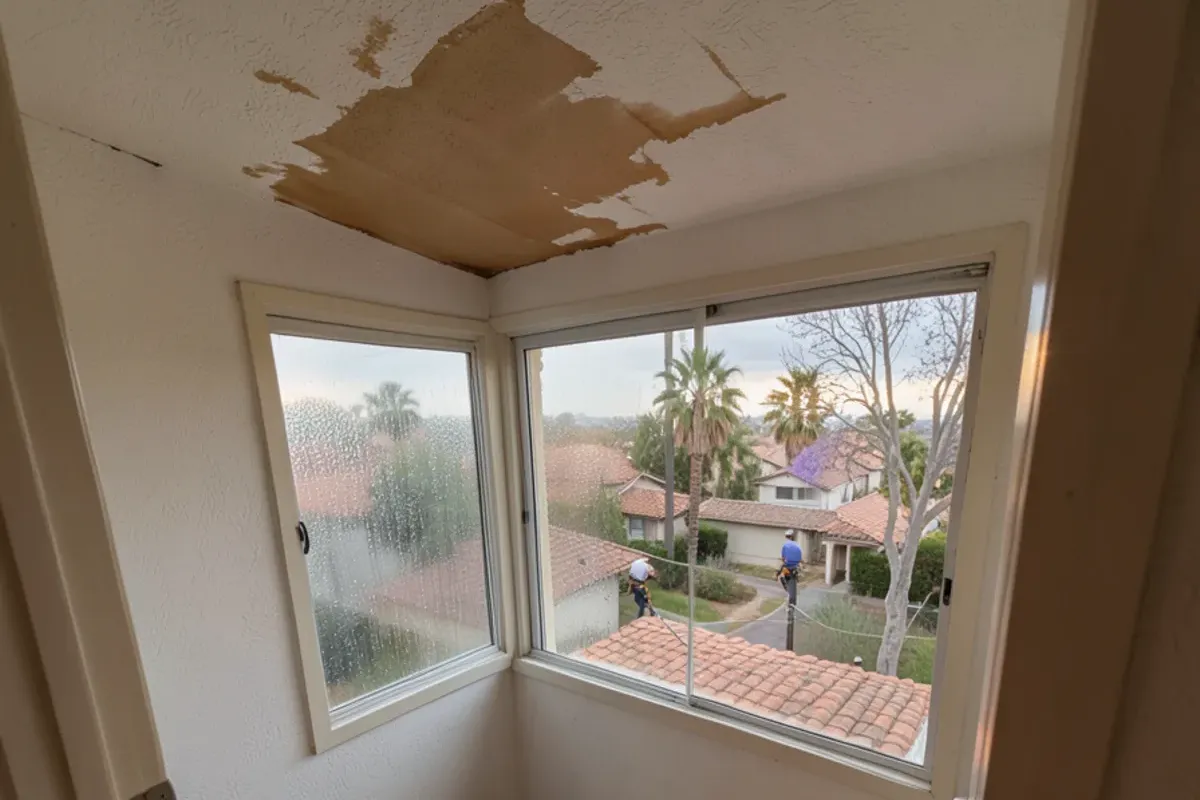
Tell us which way the storm was blowing and whether the drip started at the first rain or hours later. A leak that shows within minutes points to an open hole. One that starts late in a long storm usually means soaked underlayment or a valley that filled up, which helps us bring the right materials on the first visit.
What we see when San Gabriel Valley roofs leak in the first big storm
The first heavy rain after a long dry summer brings the most calls, and the causes repeat. Months of upper-80s heat crack rubber pipe boots and dry out sealant at flashing. Leaves and needles collect in valleys and gutters during fall, then dam water against the shingle edge once the rain comes.
Age plays a large part. Rosemead's Housing Element counts 51.6% of homes built before 1960, and many carry patched-over flashing or a second layer of shingles laid on the first. Flat roofs over patio rooms and garage conversions pond water when drains clog. We see the same pattern on post-war tracts across homes in El Monte, Temple City and San Gabriel.
February is usually the wettest month, so a leak that shows in November is a warning worth acting on before the heavier storms arrive.
The honest trade-off with storm-day fixes
Anything done to a roof in the rain is a holding measure. A tarp keeps water out but can scuff shingles, and battens screwed through it leave holes that get sealed during the real repair. A dab of roofing cement on a wet vent boot may slow a drip for a day, yet it rarely bonds well and has to be scraped off before the boot is replaced. We tell you which of these we used and why, and the permanent fix is quoted separately once the roof is dry enough to open up safely.
What happens after the rain stops?
Once the storm passes, the job shifts from containing water to finding the cause and drying the house.
- On arrival we check the roof and attic, photograph where water got in and explain what failed.
- If a tarp went on during the storm, we replace it with a permanent fix once you approve the written quote.
- Run fans and a dehumidifier in wet rooms. The EPA advises drying wet materials within 24 to 48 hours to limit mold growth.
- Open or replace drywall and insulation that stayed soaked; surface-drying a saturated ceiling rarely works.
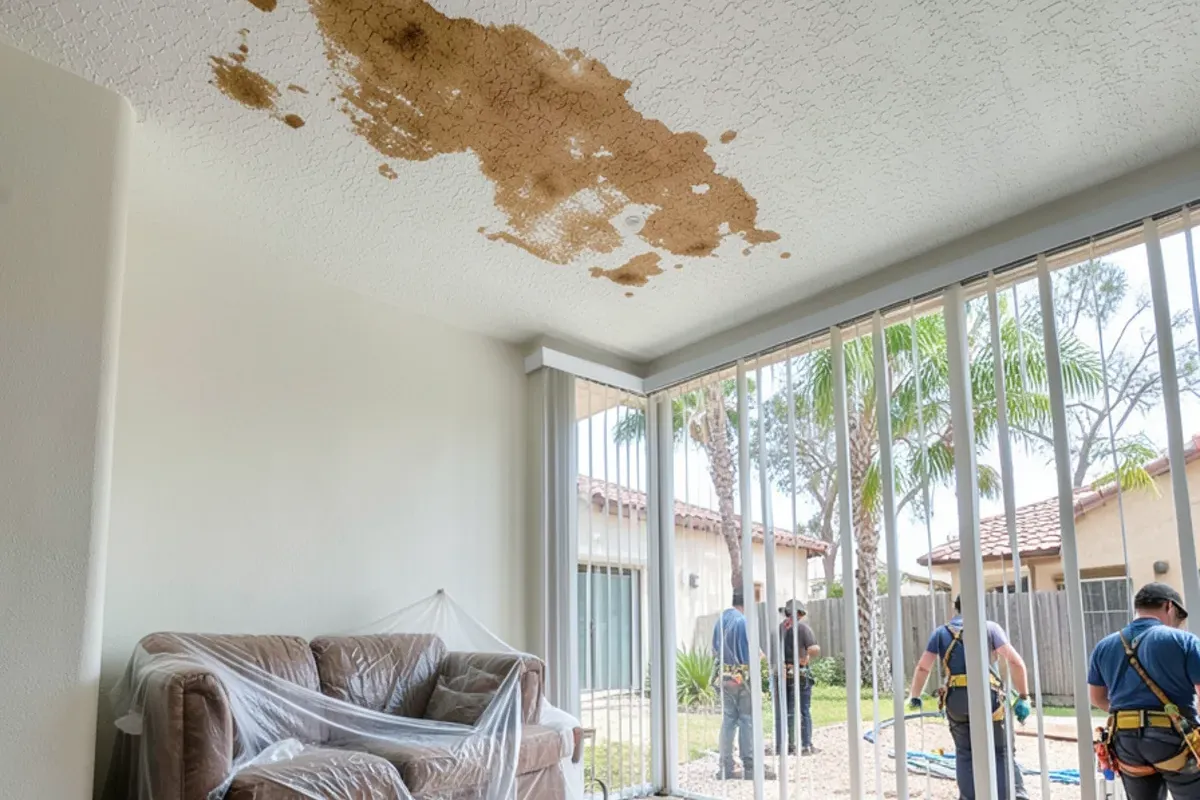
Many leaks are small enough for same-day roof leak repair, such as a cracked vent boot or a few slipped tiles. Wet decking or a long flashing run takes longer, and we list that work as its own line in the quote.
Contain it, document it, then get it covered
A storm leak feels urgent because it is, but the steps are simple: power off near the water, buckets and plastic down, photos taken, and a roofer on the phone. Everything after that is repair work best done on a dry roof. If water is coming into your home now, call (725) 745-8803 and tell us which rooms are affected and whether you can see the opening.
Questions readers ask
Can I tarp my own roof while it is still raining?
We advise against it. A wet roof is slippery, wind can turn a tarp into a sail, and tile breaks underfoot. A loose tarp can also funnel more water inside. Contain the leak indoors and let a harnessed crew secure the tarp with battens once it is safe to get on the roof.
Is a bucket and some towels enough to get through the night?
For a slow, single drip with dry wiring nearby, often yes. Empty the bucket before bed, check the ceiling for new bulging, and keep the room's circuit off if water is near a fixture. If the drip speeds up or a second spot appears, call for a tarp rather than waiting.
Does a leak during heavy rain mean I need a new roof?
Not usually. Most storm leaks trace to one failed part: a pipe boot, a flashing joint, a clogged valley or a cracked tile. A replacement makes sense when the deck is soft across a slope or several leaks appear at once. We show you photos and price both options when that is the case.
Should I call my insurance company or a roofer first?
Protect the house first, which often means a roofer for a tarp, then report the claim promptly. Insurers generally expect you to prevent further damage, and the tarp receipt and your photos become part of the file. Your policy and adjuster decide what is covered.
Why does my roof leak only in some storms and not others?
Wind direction and storm length are the usual reasons. A gap at wall flashing or a lifted ridge cap may only take water when rain is driven sideways from one side of the house. A worn underlayment can shed a short shower and then soak through in a storm that lasts all day. Note the wind direction and timing of each leak, because that pattern points us to the failed spot quickly.
Sources
Written by Tylzen Spoke Roofing
A roofing contractor on Rosemead Blvd (CA-19) in Rosemead, working on shingle, tile, metal and flat roofs across the San Gabriel Valley. This guide reflects what our crews check on local roofs. Questions about your roof? Call (725) 745-8803.