
By Tylzen Spoke Roofing · Published
Yes. A roof permit in Rosemead is normally required for a full roof replacement, including tear-offs, overlays and tile underlayment jobs, and for work that replaces roof sheathing. Small repairs, such as swapping a few damaged shingles or a pipe boot, usually do not need one. Because Rosemead is an incorporated city, the permit comes from the City of Rosemead, and the roofing contractor normally pulls it.
Below we cover which jobs need a permit, how city and county jurisdiction splits around Rosemead, what the inspector looks at, and why skipped permits come back at sale time. For how we run the whole project, see our roof replacement service.
Which roof jobs need a permit in Rosemead?
The general rule in California cities is that replacing the roof covering, or any part of the structure beneath it, needs a permit. Exact thresholds are set by each building department, so the city confirms what applies to your scope. These are the typical categories:
- Usually permitted: full reroofs, tear-offs and overlays, tile lift-and-relay with new underlayment, and replacing roof decking or sheathing.
- Usually permitted: changing to a heavier material, adding a skylight, or changing roof framing.
- Usually not permitted: replacing a handful of shingles or tiles, a vent boot, or a small flashing section.
- Check with the city: partial replacements of one slope or a flat section over an addition.
A full reroof in Rosemead also falls under Title 24 cool-roof rules in most cases, which is checked through the same permit. Our post on Title 24 cool roof rules for Rosemead explains that part.
Want a roofer to look at it?
Call with your address and what you are seeing. We visit same-day or next-day when crews are free.
- 4.9 from 48 Google reviews
- Based on Rosemead Blvd
- Photos and a written quote before work
City of Rosemead or LA County: which office issues it?
Rosemead is an incorporated city, so permits for homes inside city limits come from the city's own building and safety function, not from the county. That changes just outside the boundary. South San Gabriel and East San Gabriel are unincorporated communities, so roof permits there are issued by LA County Public Works Building & Safety, even though some residents share nearby mailing addresses.
If you are not sure which side of the line you are on, your property tax bill or the county's parcel records will show it. Our guide to roofing permits in unincorporated LA County covers the county process. We do not publish fees or review times, because each office sets and changes its own.
Who should pull the roof permit?
In most cases, the roofing contractor. California requires a CSLB-licensed contractor for any job that needs a building permit, and for jobs above the $1,000 minor-work limit in labor and materials set by Business and Professions Code §7048. A roofer pulling the permit under their own license takes responsibility for the work meeting code.
Be cautious if a contractor asks you to pull the permit yourself as an owner-builder. That shifts legal responsibility for the work, and for anyone hired to do it, onto you. You can check any roofer's license and classification at the CSLB website; roof work calls for a C-39 Roofing license.
What goes into a Rosemead reroof permit application?
In Rosemead the application goes to the Building and Safety Division of the city's Community Development Department. The contractor usually assembles and submits the package, but several items come from the owner, and gathering them early keeps the start date from slipping.
- Owner authorization: the city's form signed by the property owner, giving the contractor permission to file.
- Property details: the site address and the owner's contact information as they appear on the tax record.
- Scope of work: roof area in squares, the number of layers coming off, and any planned deck replacement.
- Product details: the roofing product and color, with its Cool Roof Rating Council product ID when Title 24 applies.
- Contractor credentials: the CSLB license number and proof of workers' compensation coverage, which every C-39 roofer must carry even with no employees.
- Related work: skylights, new vents, a solar detach-and-reset or framing changes, so they are reviewed together rather than added later.
A complete package is the simplest way to avoid a correction notice. Ask your roofer for a copy of what was filed so you can see the permit number before work begins.
What does the inspector check on a reroof?
Inspection steps vary by jurisdiction and scope. On a typical shingle reroof, expect some or all of the following.
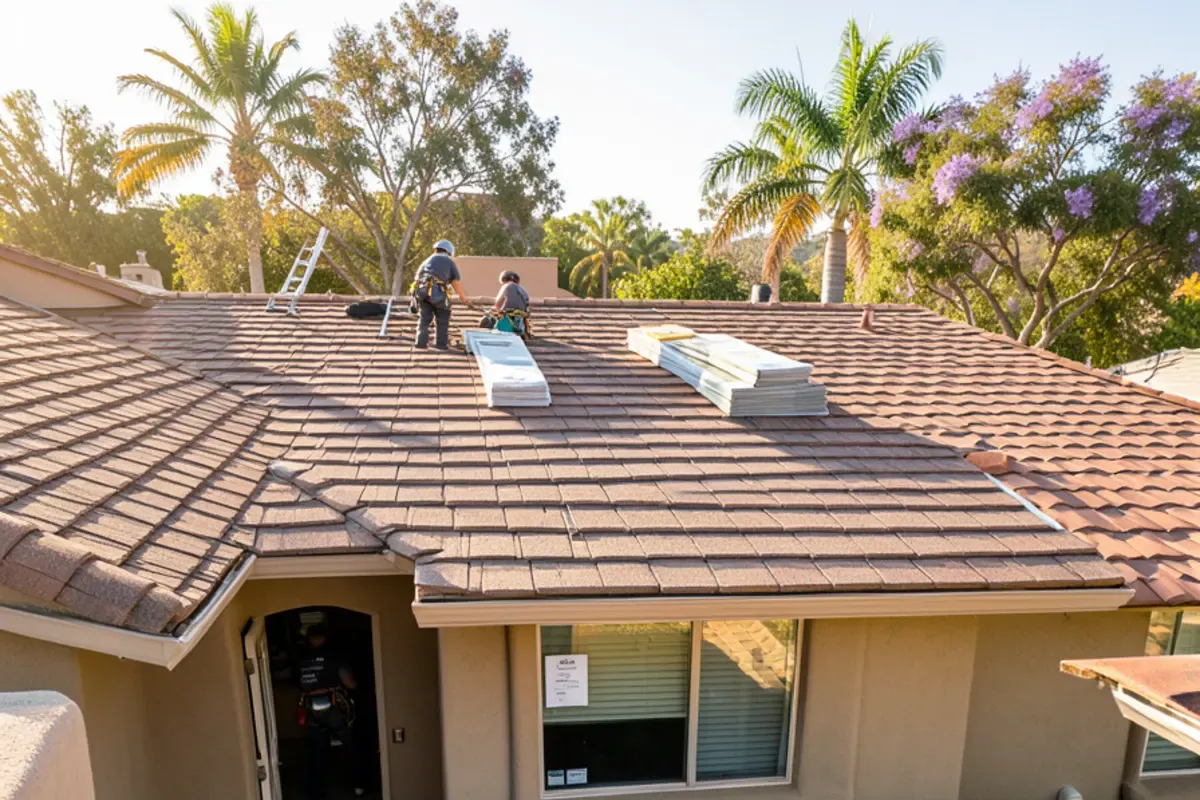
- Deck or sheathing check after tear-off, especially where sheets were replaced or new plywood was laid over boards.
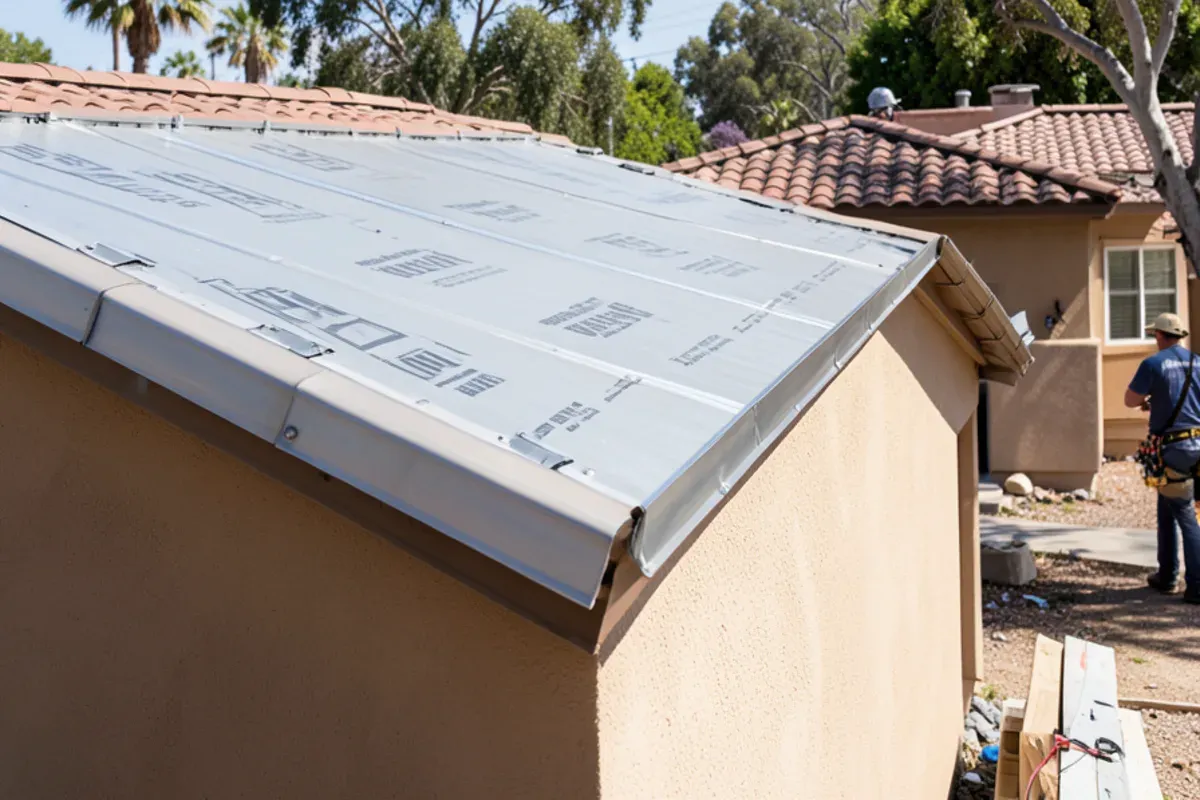
- In-progress check of underlayment, drip edge and flashing at walls, chimneys and valleys.
- Final inspection of the finished covering, ridge and vents, installed to the manufacturer's instructions.
- Title 24 compliance, including the Cool Roof Rating Council label on the product when the cool-roof rule applies.
If the inspector flags an item, the contractor corrects it and a reinspection is scheduled. The permit closes only after the final passes, and that closed permit is the record you want on file.
Why does an unpermitted roof cause trouble at sale?
California sellers fill out disclosure forms that ask about work done without the necessary permits. A buyer's inspector or agent who finds a recent roof with no permit on record may ask for a credit, a price cut, or proof the work meets code. Some buyers walk away.
Fixing it afterward is not always simple. An after-the-fact permit may require opening parts of the roof so an inspector can see the underlayment and flashing. A permitted roof also gives you a dated record of its age, which helps with insurers and with the next sale. This matters for owners of rental homes too. Point2Homes counts 52.7% of occupied units in Rosemead as renter-occupied, and landlords who sell or refinance face the same disclosure questions as owner-occupants.
Permit trade-offs owners ask us about
A permit adds steps to a roof job, and owners reasonably want to know what those steps cost them. These are the trade-offs we explain most often.
Emergency work versus waiting for a permit
An active leak cannot wait for plan review. Tarping and temporary sealing can happen right away through emergency roof repair, and the permit is then filed for the permanent reroof. The trade-off is paying for the temporary work, but it protects the house while the paperwork moves.
Inspection pauses on the schedule
When the city wants to see the deck or the underlayment before the covering goes on, the crew has to dry in and wait for that visit. It can stretch a job by a day. In return you get an inspector's record that the hidden layers were done right, which is exactly what a later buyer cannot see.
Code upgrades the permit brings with it
A permitted reroof has to meet current rules, which can mean a cool-rated product, new plywood over spaced boards or added ventilation. On an insurance claim, those code-driven costs are usually paid only if the policy includes building ordinance or law coverage, so check your declarations page before the adjuster visits.
How we handle permits on Rosemead jobs
When a Rosemead job needs a permit, we pull it, list it as its own line in the written quote, schedule each inspection and keep the job open until the final is signed off. You receive the permit record with your invoice and photos.
If your home turns out to be in unincorporated county territory, we tell you before work starts and file with LA County Public Works instead. Either way, the permit step is part of the project, not an option. Learn more about roofing in Rosemead and the neighborhoods we cover.
Planning a reroof and want the permit question settled first? Call (725) 745-8803, or use the form to request a quote.
Questions readers ask
How much does a roof permit cost in Rosemead?
The city sets its fees, and they usually depend on the scope and valuation of the work, so the city is the right source for a current figure. In our quotes, the permit always appears as a separate line so you can see exactly what portion of the price it represents.
Can I get a permit after the roof has already been replaced?
Often, yes, through an after-the-fact permit, but expect more scrutiny. The inspector may ask to see underlayment, flashing or deck details, which can mean removing some of the new roofing. It is far simpler to permit the work before it starts. If you are buying a home, ask the seller for the closed permit record on any recent roof.
Does a small roof repair in Rosemead need a permit?
Generally not. Swapping a few shingles, resetting tiles or replacing a pipe boot is usually treated as minor repair. Once a repair grows to replacing decking, a whole slope, or a large flat section, it typically needs a permit. When we are unsure, we check with the city before starting.
What happens if a roofer never calls for the final inspection?
The permit stays open on the city's record and eventually expires without a final sign-off, which looks almost as bad as no permit when you sell. Closing it later usually means a new request, an inspection fee and sometimes opening part of the roof. Before your last payment, ask for the date the final passed, and keep that record with the invoice and photos.
Sources
Written by Tylzen Spoke Roofing
A roofing contractor on Rosemead Blvd (CA-19) in Rosemead, working on shingle, tile, metal and flat roofs across the San Gabriel Valley. This guide reflects what our crews check on local roofs. Questions about your roof? Call (725) 745-8803.