
By Tylzen Spoke Roofing · Published
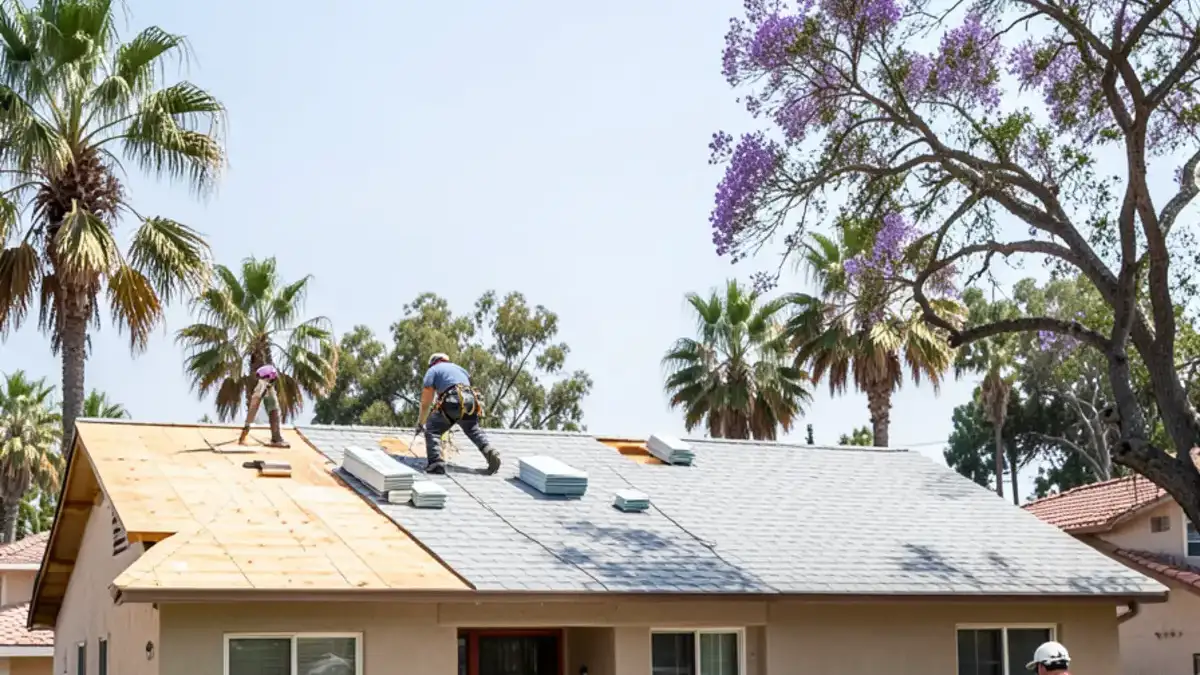
Roof replacement cost in Rosemead is set by five things: how big the roof really is, how many old layers come off, the material you choose, how much of the wood deck underneath needs replacing, and the permit and energy-code work the job triggers. Published planning ranges for the area run from roughly $5,582 to $8,133 depending on the source, but none of those figures has measured your house.
This guide explains where those numbers come from, which line items push a quote up, and how to compare two bids fairly. When you want a real figure, our roof replacement team in Rosemead measures the roof, photographs what we find and writes the scope out line by line.
What do published estimates say a Rosemead reroof costs?
Online calculators are a reasonable starting point for a budget, as long as you treat them as planning numbers. They assume an average-sized roof, one layer of old shingles, a sound deck and no surprises. Here is what three published sources reported for this area.
| Source and year | What it measured | Reported range |
|---|---|---|
| Manta calculator, 2025 | Asphalt shingle roof replacement, LA County, before permits and fees | $5,582-$7,555 |
| Homeyou estimate, 2025 | Typical roofing projects, based on about 1,010 Rosemead-area projects | $7,158-$8,133 |
| Manta calculator, 2023 | Roof repair in LA County, shown for comparison | $1,185-$1,625 |
Notice what the first figure leaves out: permits and fees. Notice too that the Homeyou number covers roofing projects in general rather than one specific scope. A two-story house, a second layer of shingles or a dozen sheets of rotted plywood can each move a real quote well outside these bands, in either direction.
Want a roofer to look at it?
Call with your address and what you are seeing. We visit same-day or next-day when crews are free.
- 4.9 from 48 Google reviews
- Based on Rosemead Blvd
- Photos and a written quote before work
Squares, pitch and waste: how a roof gets measured
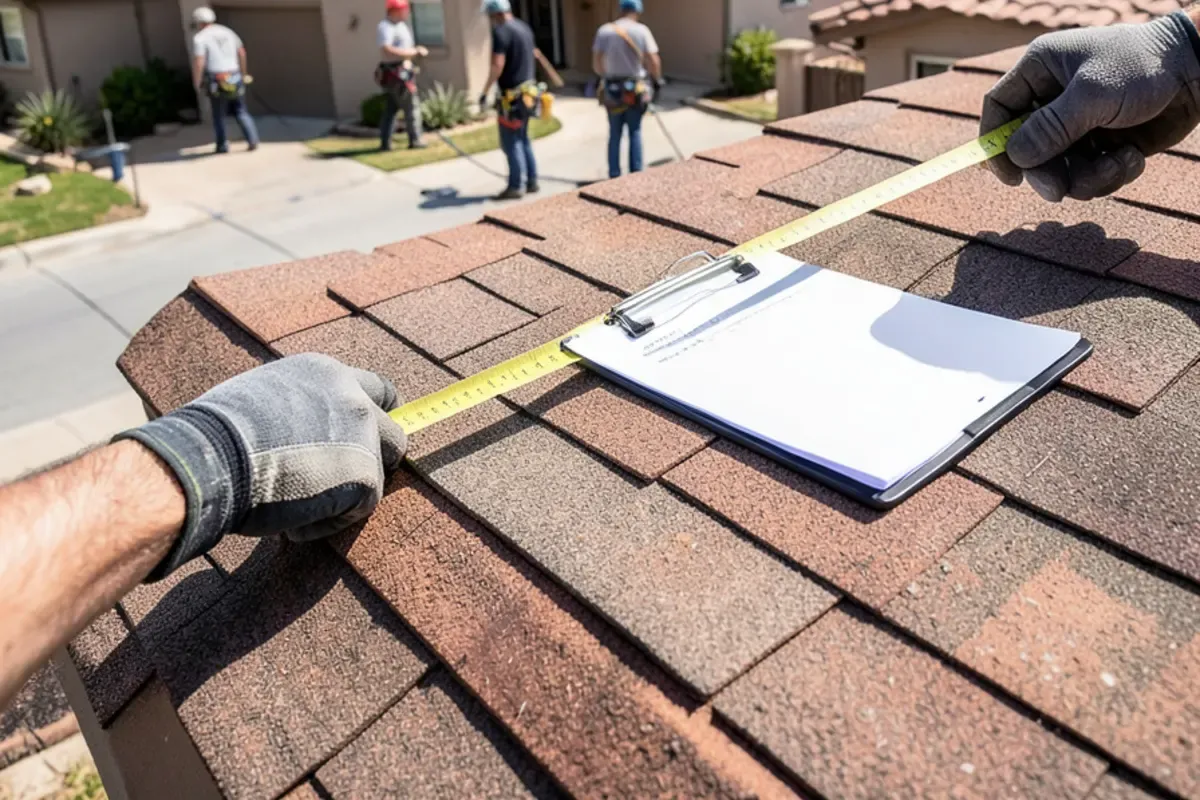
Roofers price by the square, which is 100 square feet of roof surface. That is not the same as your home's floor area. The roof is larger because of overhangs at the eaves and rakes, and because a sloped surface covers more area than the flat footprint beneath it. A steeper pitch adds more.
Material orders also include a waste allowance for cuts at hips, valleys and rakes. A simple gable roof wastes little. A cut-up roof with several hips, a dormer and an attached patio cover wastes more and takes longer to flash. When people search for shingle roof cost per square, the honest answer is that the per-square figure only means something once the square count, the pitch and the shingle line are fixed.
Line items that raise or lower the total
Two houses with identical square footage can get very different quotes. These are the items that usually explain the gap.
- Tear-off layers: removing one layer is standard; a second layer adds labor, disposal weight and dump fees.
- Deck condition: soft, delaminated or rotted plywood is replaced per sheet, and the quote should state the price per sheet in advance.
- Board or spaced-plank decks: some mid-century homes need new plywood laid over old boards before shingles can be nailed properly.
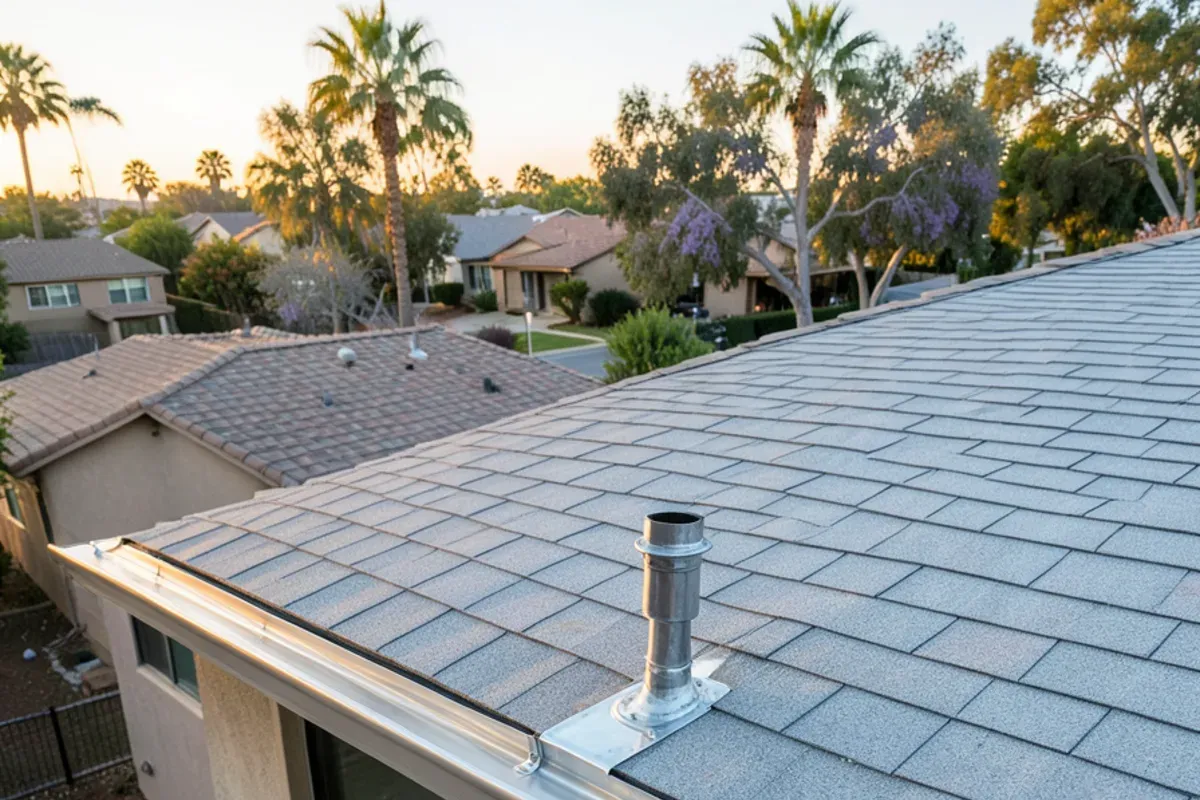
- Flashing and vents: new pipe boots, step flashing, drip edge and exhaust vents cost more up front than reusing old metal, and last far longer.
- Attic ventilation: adding ridge or eave vents to fix a hot, under-ventilated attic is a separate line.
- Title 24 cool-roof products: on most qualifying reroofs here, the shingle must carry a rated solar reflectance, which narrows color choice.
- Access: two stories, a steep pitch, tight side yards or no driveway for a dumpster all add setup time.
- Permit and inspection: a real cost on nearly every full replacement, listed as its own line.
How tile and flat sections change the math
Tile roof replacement cost follows different rules. Clay and concrete tiles often outlast the underlayment beneath them, so many tile jobs are a lift-and-relay: tiles come off, new underlayment goes down, and the same tiles go back with replacements for broken pieces. A brand-new tile roof costs more because you are buying the tile itself and handling far more weight. Our post on lift-and-relay versus a new tile roof walks through that choice.
Low-slope sections over garages, additions and patio rooms are priced separately because they use different systems, such as torch-down or single-ply membranes. On low-slope areas, Title 24 sets a much higher reflectance target than it does for sloped shingles, so the membrane or coating choice affects the price.
What our crews find when Rosemead roofs come off
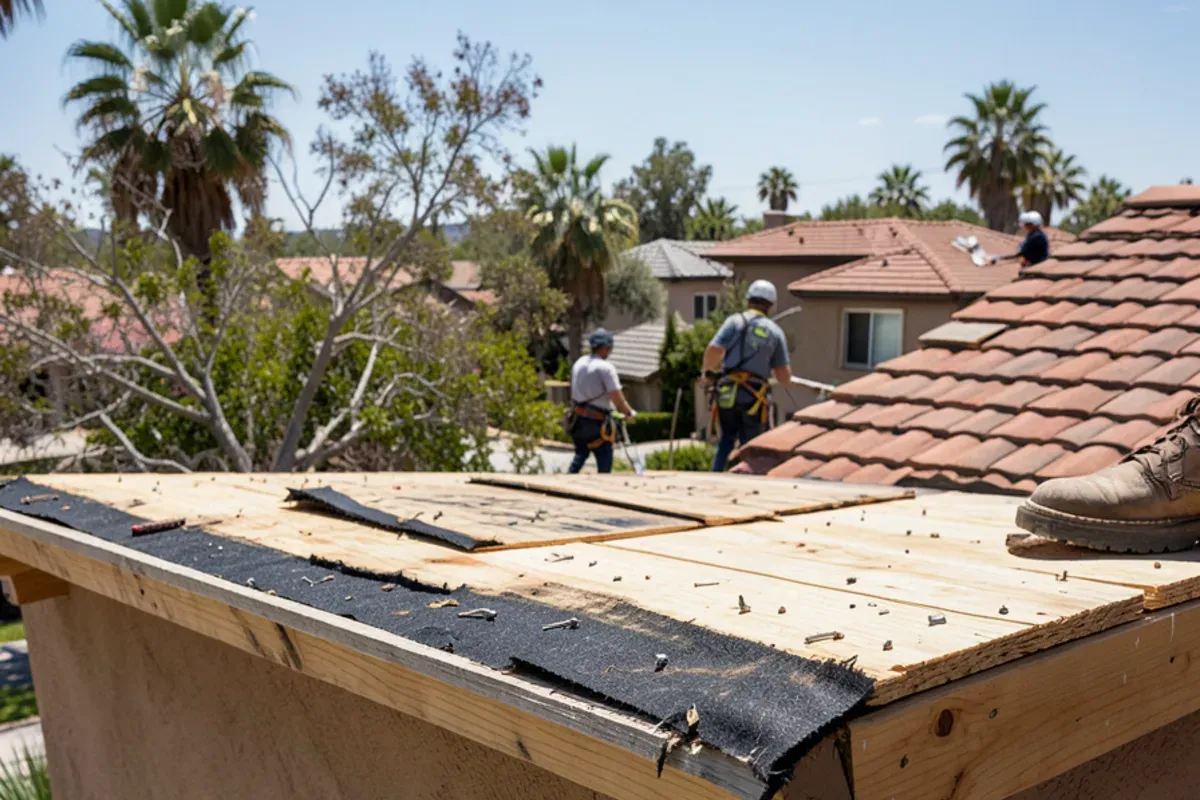
The City of Rosemead's Housing Element counts 51.6% of local homes built before 1960, and Point2Homes puts the median build year at 1959. On houses that old, the current roof is rarely the first one. We regularly open up two stacked layers of composition shingle, old felt that crumbles at a touch, and soft plywood along the eaves where gutters have overflowed for years.
That is why a full roof tear-off is the norm here rather than a shortcut overlay. Once the deck is bare, we photograph every damaged sheet before replacing it, so the deck line on your invoice matches pictures you can see. The pattern is much the same next door in San Gabriel, where post-war tracts sit alongside older homes with board decks.
Which reroof upgrades earn their cost, and which can wait?
Most quotes carry a few optional lines, and the right call on each depends on the house. These are the trade-offs we talk through before anyone signs.
| Upgrade | When it earns its cost | When it can wait |
|---|---|---|
| Synthetic underlayment instead of felt | Tear-offs that leave the deck open overnight, and cut-up roofs crews walk for days | Seldom worth skipping; the price gap is small next to labor, so ask which one the bid assumes |
| New drip edge, pipe boots and step flashing | Most 1950s houses, where old metal is bent or rusted and rubber boots have cracked in the heat | Heavy flashing that is flat, sealed and rust-free can stay, and the quote should say it is being reused |
| Added ridge and eave vents | Hot rooms under the roof, attic mildew, or shingles that curled early on the old roof | Attics that already pull air in at the eaves and let it out near the ridge |
| Plywood over spaced board decks | Gapped planks that cannot hold nails where the shingle maker requires them | Tight, solid plank decks, where swapping only the damaged boards keeps the cost down |
| R-38 ceiling insulation or a radiant barrier | You want a darker shingle, since either one can stand in for a cool-rated product under Title 24 | You already like a cool-rated color, which turns it into a separate energy decision |
Where we advise against spending more
Two items rarely pay off on a modest single-story home. Premium designer shingles cost more per square on a low-pitch roof that barely shows from the street. Powered attic fans can pull cooled air up through gaps in the ceiling, so balanced passive vents usually do the job better. We would rather see that money go into deck repair and new metal, because those parts decide whether the roof leaks a decade from now. A bid that comes in low by reusing tired flashing is a saving you pay back later.
How should you compare two roof replacement quotes?
A lower number is only cheaper if it covers the same work. Put the quotes side by side and check each of these.
- Both quotes state how many layers are being removed.
- Both name the shingle or tile product line and color, and its Cool Roof Rating Council rating if Title 24 applies.
- Both list the underlayment type and whether drip edge, pipe boots and flashing are new or reused.
- Both show a per-sheet price for deck replacement.
- The permit appears as a line item, with the contractor responsible for pulling it.
- Cleanup, nail sweeping and disposal are included in writing.
- The license number checks out as active at the CSLB website, with a C-39 Roofing classification.
- Manufacturer coverage and workmanship terms are written into the contract, including whether they transfer if you sell.
What should a California roofing contract say about payments?
The total is only half of the deal. State home improvement rules decide how much money changes hands before work starts and how long you have to back out, and a contract that ignores them is a warning sign by itself.
- Down payment: the Contractors State License Board puts the legal limit at $1,000 or 10% of the contract price, whichever is less, unless the contractor has a blanket performance and payment bond on file with the board.
- Payment schedule: each payment should cover work already finished or materials already delivered, with the stages and their amounts spelled out in the contract.
- Right to cancel: most homeowners can cancel in writing until midnight of the third business day after receiving the signed contract, and homeowners 65 or older get five days.
- Changes: added deck sheets or extra flashing beyond the written allowance belong on a signed change order, not a verbal agreement on the roof.
- Lien protection: the contract must explain mechanics liens, and paying the roofer and the material supplier with a joint check keeps a supplier from filing against your home.
For a reroof, a sensible schedule ties payments to stages you can check yourself: materials on site, tear-off and deck repair finished, and the final inspection signed off. Reviewers mention flexibility on how payments are scheduled, and you can ask about payment options when you request the quote.
Getting a measured number for your own roof
Planning ranges help you budget; a measured scope tells you what your roof will actually cost. We inspect the roof and attic, photograph the deck edges and flashing, and give you a written, line-by-line quote with permits and any deck replacement shown separately. Ask about payment options if timing matters. For a visit from our base on Rosemead Blvd, call (725) 745-8803 or request a quote. You can also read how we approach roofing in Rosemead before we arrive.
Questions readers ask
Does a second layer of shingles make replacement more expensive?
Yes. Each extra layer means more labor to strip, more weight to haul and higher disposal fees. It also hides the deck, so rot under two layers is often worse than under one. California's residential code limits how many layers a roof can carry, so a home that already has two must be stripped to the wood before new shingles go on.
Do I have to buy cool-rated shingles when I reroof in Rosemead?
Usually, if you replace 50% or more of a sloped roof. Rosemead is in Climate Zone 9, where sloped roofs need a rated aged reflectance of at least 0.20 with 0.75 emittance under Title 24, with exceptions such as heavy tile and certain attic upgrades. Confirm the details with the city's building department before you choose a color.
Will homeowners insurance pay for a new roof?
Only when a covered event, such as a windstorm or falling tree, caused the damage. Age and wear are typically excluded. If you suspect storm damage, document it with photos and call your insurer. We can photograph the damage and meet the adjuster, but the adjuster and your policy decide what is paid.
How long does a shingle reroof take on a single-story house?
Most single-story shingle replacements in Rosemead take 1 to 3 working days once materials are on site. Extra layers, significant deck repair or a rain delay in winter can add time. The permit inspection is scheduled around the work, and the quote tells you which steps need an inspector present.
Is a roof replacement cheaper to schedule in summer than in winter?
Not reliably. Material prices do not follow the seasons in a predictable way, so the quote itself rarely changes much. What changes is the schedule: winter tear-offs here wait for a dry forecast, and a storm in the middle of a job adds tarping time. Booking in late spring or early fall usually means fewer weather delays and an easier start date to plan around.
Sources
Written by Tylzen Spoke Roofing
A roofing contractor on Rosemead Blvd (CA-19) in Rosemead, working on shingle, tile, metal and flat roofs across the San Gabriel Valley. This guide reflects what our crews check on local roofs. Questions about your roof? Call (725) 745-8803.