
By Tylzen Spoke Roofing · Published
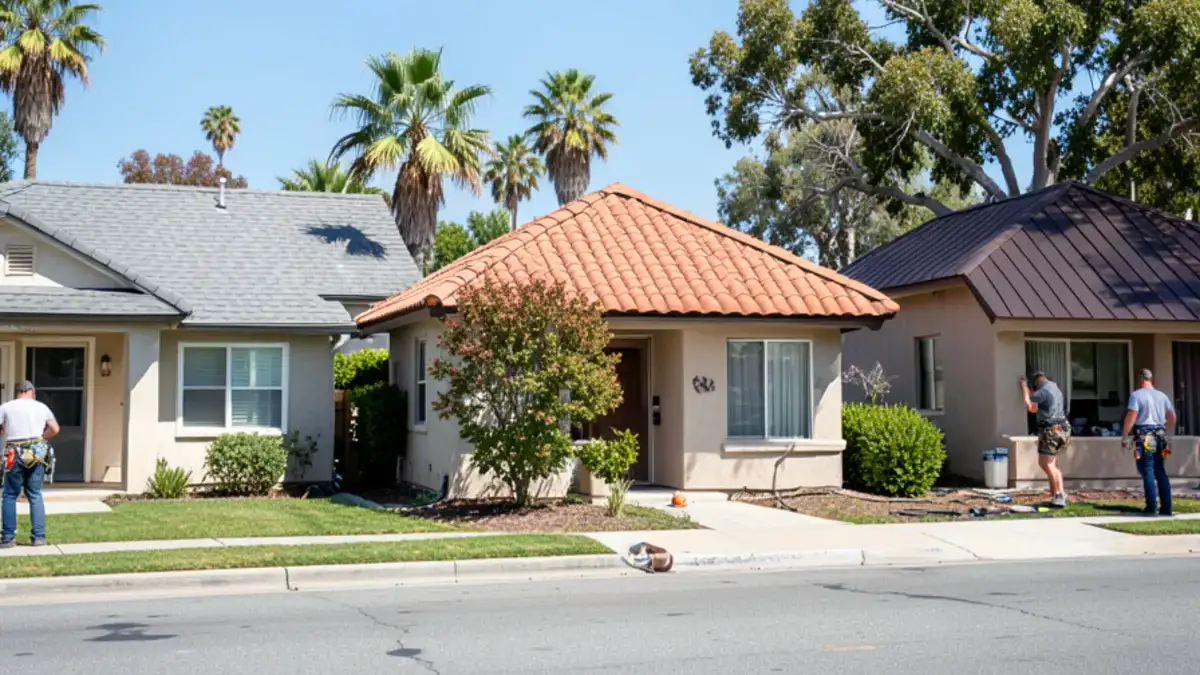
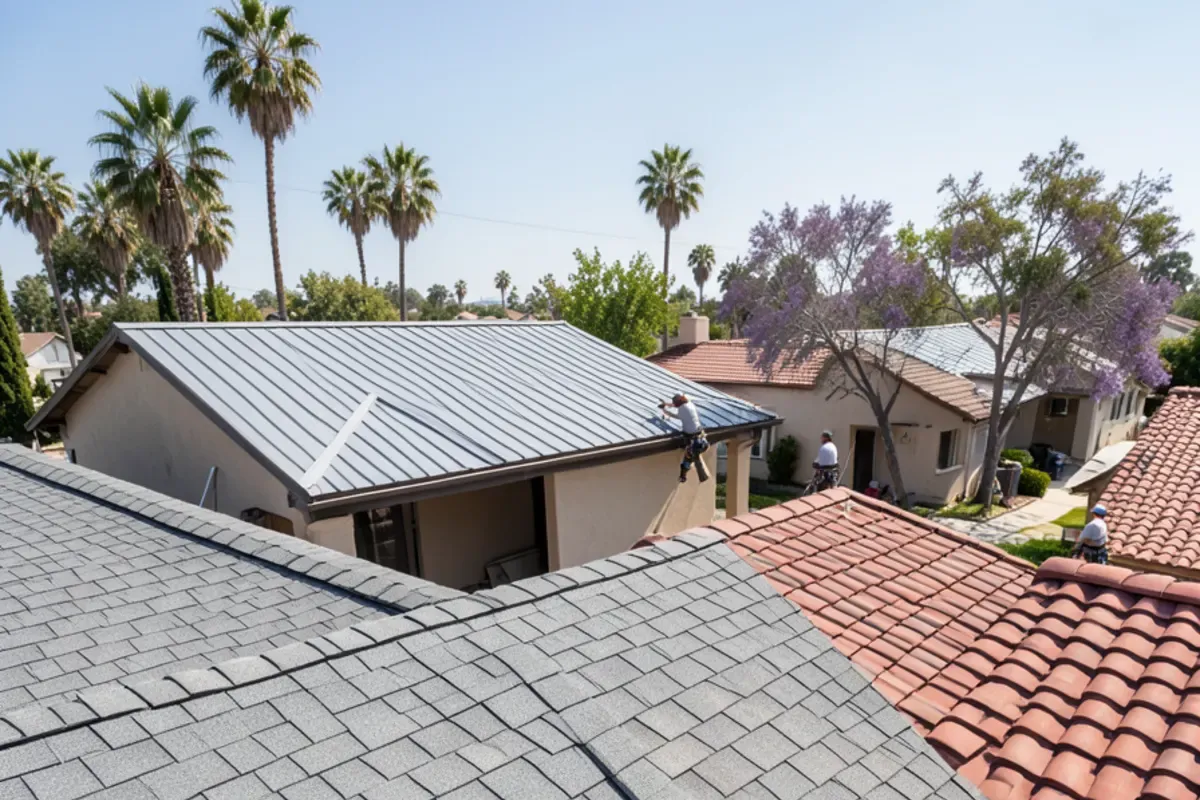
Comparing shingles vs tile vs metal roof options comes down to this: asphalt shingles cost the least up front and suit most post-war tract homes, tile lasts the longest and fits Spanish and Mediterranean styles but is heavy, and metal sits in between on price while offering low weight, strong fire performance and long service. The right pick depends on your framing, your home's style and how long you plan to stay.
All three can be installed as Class A fire-rated assemblies and all three can meet California's cool-roof rules with the right color. The differences show up in weight, repairs and what the roof costs over its whole life.
Side-by-side: how the three roof types compare
| Factor | Architectural shingle | Clay or concrete tile | Metal |
|---|---|---|---|
| Up-front cost | Lowest of the three | Highest, plus possible framing work | Middle to high, depends on panel type |
| Weight | Light | Heavy; most tile weighs 25 lb/ft² or more | Lightest |
| Service life | Shortest; heat shortens it further | Tile lasts for generations; underlayment needs replacing sooner | Long, with finish and fastener care |
| Heat | Dark colors run hot; cool-rated colors help | Mass and air gap slow heat gain | Reflective finishes shed heat fast |
| Fire rating | Class A widely available | Class A as an assembly | Class A as an assembly |
| Repairs | Easy, though color matching can be hard | Broken pieces swap out; walking cracks tile | Panel repairs need matching profile and finish |
| Typical SGV house | Post-war ranch and tract homes | Spanish Revival, Mediterranean, hillside tracts | Ranch, modern, foothill homes |
Want a roofer to look at it?
Call with your address and what you are seeing. We visit same-day or next-day when crews are free.
- 4.9 from 48 Google reviews
- Based on Rosemead Blvd
- Photos and a written quote before work
Which roof type costs the most over its life?
Manta's 2025 calculator gives a planning range of $5,582-$7,555 for asphalt shingle replacement across LA County; permits and fees come on top. Tile and metal cost more than that up front. That is not a quote: your final number hinges on roof area, steepness, the count of old layers, deck health and the material.
Life-cycle cost changes the picture. A shingle roof is replaced more often than tile or metal, while a tile roof usually needs only its underlayment redone partway through its life, a job that reuses the tile. Metal's cost is mostly paid once. If you plan to stay a long time, the cheapest roof today is not always the cheapest per year.
- Short horizon or a tight budget: architectural shingles.
- Long horizon on a Spanish or Mediterranean home: tile, with new underlayment.
- Long horizon on a house that cannot carry tile weight: metal, including tile-profile stone-coated steel.
Does roof weight matter on an older house?
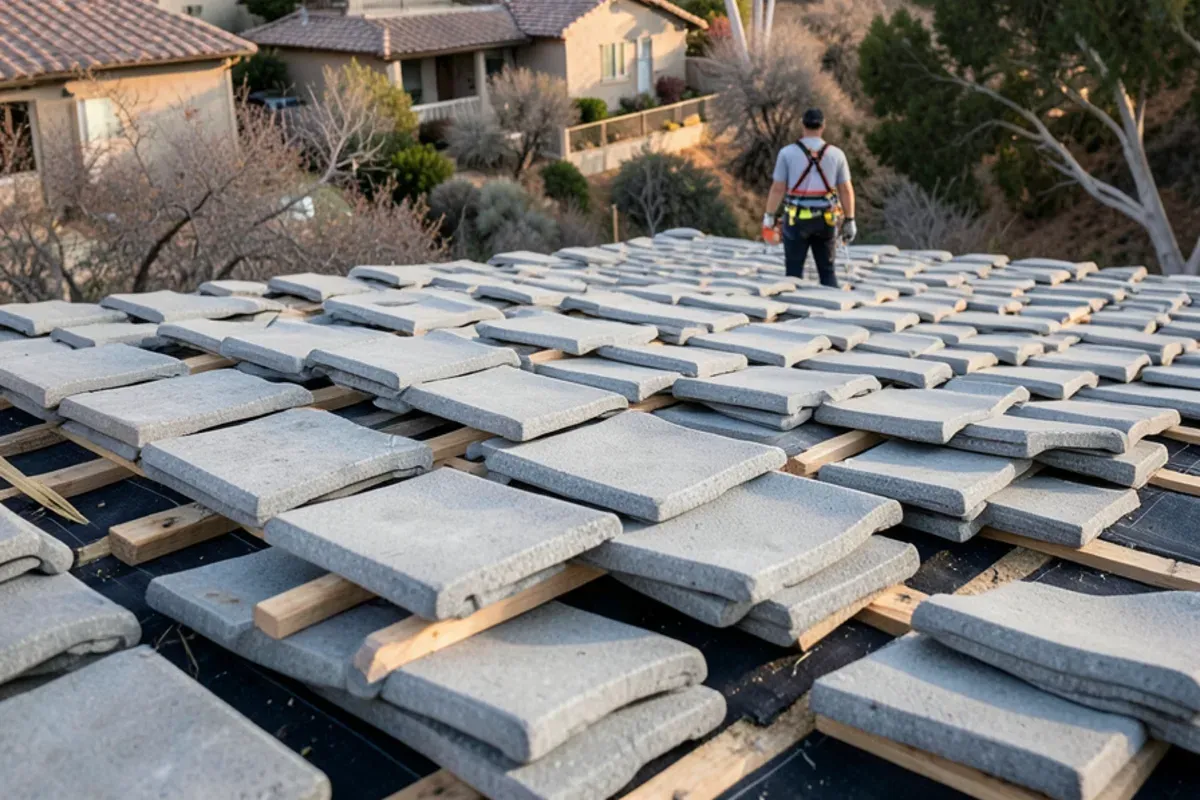
It matters a lot. Much of the San Gabriel Valley was built in the 1940s through the 1960s with framing sized for composition shingles. Switching that kind of house to standard tile adds a heavy load to rafters and walls, so an engineer may need to check the framing, and reinforcing adds cost.
Weight matters in earthquakes too. A heavier roof pushes harder on the walls when the ground moves, and the 1987 Whittier Narrows quake struck just south of Rosemead. Moving from shingles to metal sheds weight; moving to tile adds it.
Heat, fire and noise compared
Climate Zone 9 reroofs that replace at least half of a pitched roof may call for a CRRC-rated product reaching 0.20 aged reflectance and 0.75 emittance, barring an exception. Light metal finishes and many tile colors clear that easily. Shingle buyers should check the rating of the exact color.
Chapter 7A sets Class A as the minimum in Very High Fire Hazard Severity Zones, which take in foothill sections of Sierra Madre, Monrovia and Bradbury near Arcadia. Tile and metal need properly closed eaves and ridge ends so embers cannot get underneath. Our metal roofing and tile roofing installs both address those details.
Noise is the most common worry about metal. Installed over a solid deck with underlayment, metal is not much louder in rain than other roofs. Tile is the quietest of the three.
What upkeep does each roof type need?
Purchase price is only part of the comparison. Each material asks for different care, and the repairs it needs over the years are where owners feel the difference most.
| Roof type | Routine care | Most common repair | What to watch for |
|---|---|---|---|
| Architectural shingle | Clear debris from valleys and gutters before the rainy season | Replacing blown-off or cracked shingles and pipe boots | Granule loss on sun-facing slopes and lifted tabs after wind |
| Clay or concrete tile | Keep valleys and weep areas free of leaves; stay off the tile | Swapping cracked or slipped pieces; resetting ridge and hip tile | Leaks that appear years before any tile looks damaged, because the underlayment has failed |
| Metal | Rinse off debris and check sealant at trim and penetrations | Resealing or replacing fasteners and trim pieces | Loose exposed fasteners, scratches that reach bare steel, and corrosion where unlike metals touch |
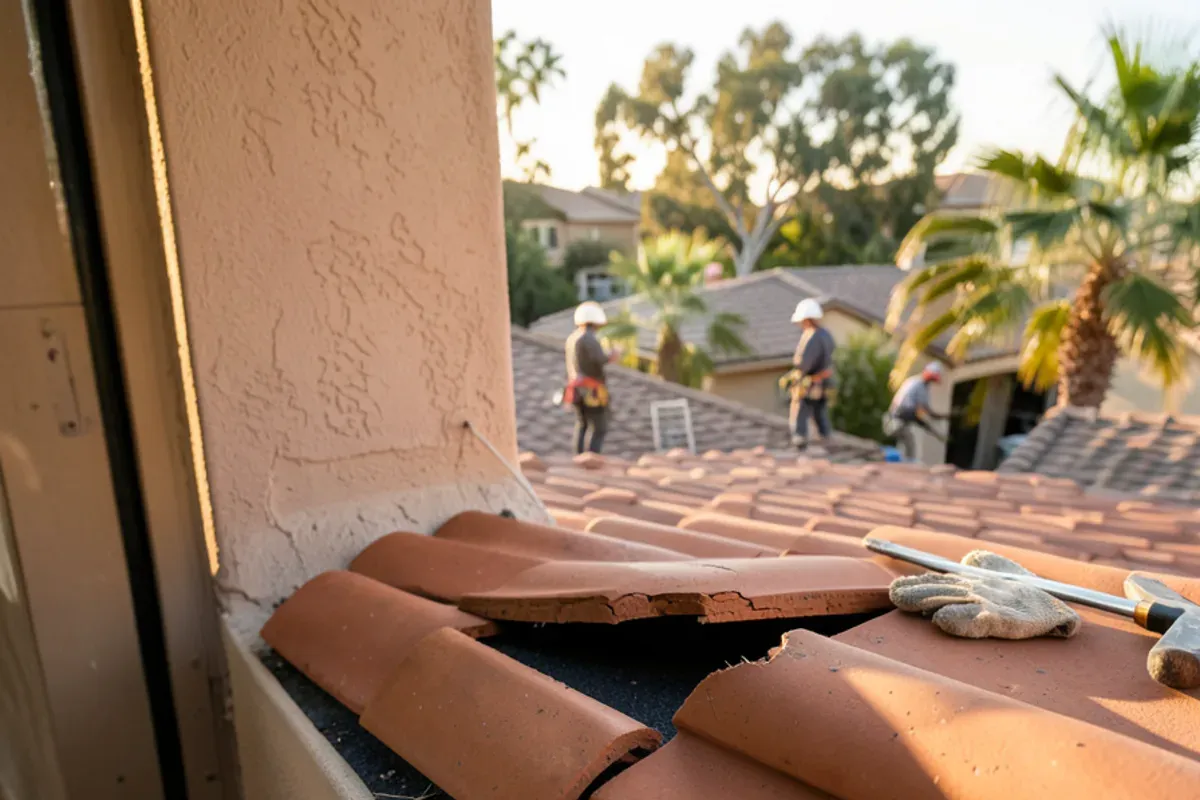
Tile repair is a specialty of its own, since a careless step cracks the piece next to the one being fixed. Our tile roof repair work covers single-tile swaps through full lift-and-relay.
What our crews see when homeowners compare roof types
From our base in Rosemead, we inspect plenty of roofs where the owner is weighing all three options. A few patterns help the decision.
- Older tile roofs in Arcadia and nearby cities often need new underlayment, not new tile, which keeps tile in the running on cost.
- Shingle roofs on post-war homes frequently hide two layers, so the tear-off line item narrows the gap to metal.
- Owners planning solar soon often lean toward metal or a new shingle roof so the panels do not outlast what is under them.
- Homes with a flat section over an addition need a membrane there regardless of the main roof choice.
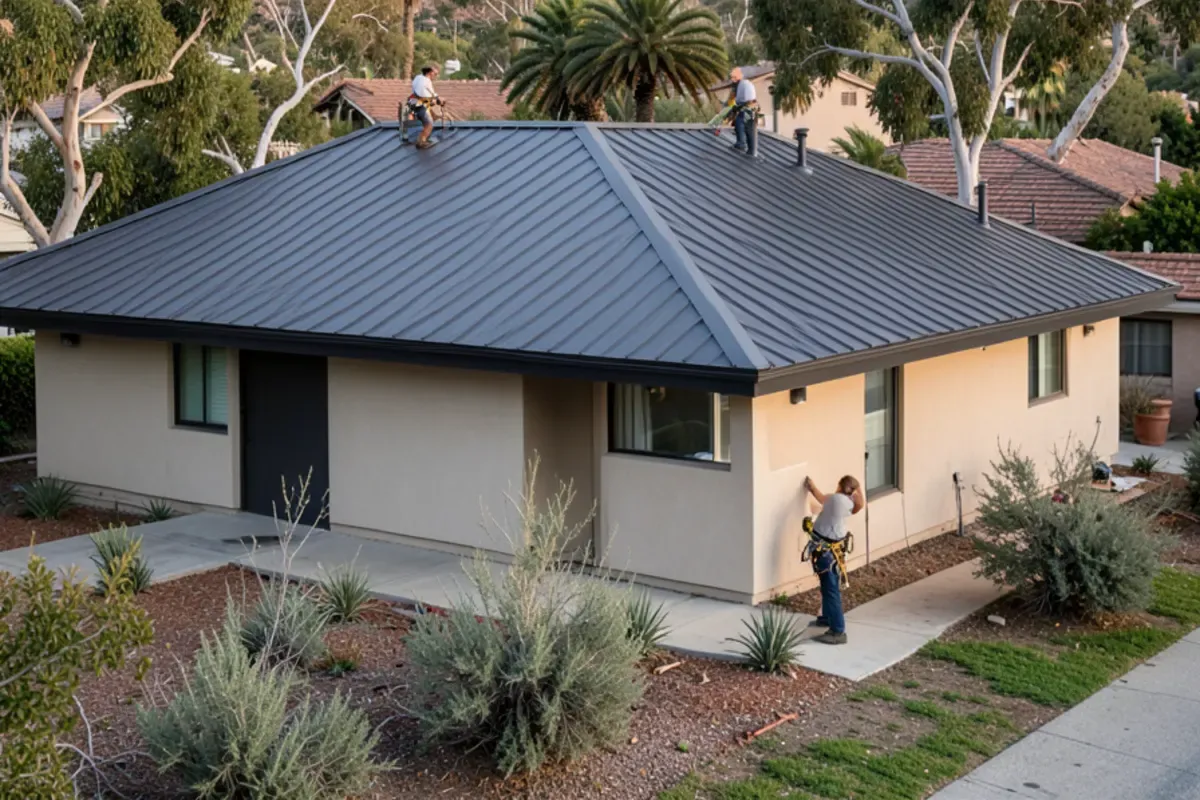
We photograph the deck, layers and framing access during the visit, then price the options side by side so you can compare like for like.
Trade-offs owners tend to underestimate
- Shingle repairs are cheap, but matching a faded color from ten summers ago is hard, so a patch can stay visible from the street.
- Tile's long life comes with a labor-heavy midlife job: every piece is lifted, stacked and relaid when the underlayment is replaced.
- Solar on tile means swapping tiles at each mount for flashed bases, while standing seam can often take clamp-on mounts that never pierce the panel.
- Metal tolerates heat and embers well, yet a scratch that reaches bare steel needs touch-up paint promptly, or rust spreads under the finish.
Which questions narrow the choice fastest?
Most homeowners can rule out one of the three options in a single conversation by working through these questions in order.
- Can the framing carry tile? If an engineer would need to add support, shingles or metal usually win on cost.
- What does the house style call for? A Spanish Revival home rarely looks right without a tile profile; a mid-century ranch suits shingles or standing seam.
- Is the parcel in a Very High Fire Hazard Severity Zone? All three can meet Class A, but the eave and ridge details change the scope.
- Are solar panels coming within a few years? Pick a roof that will not need replacing before the panels do.
- How long will you own the house? A short stay favors the lower up-front cost; a long one favors the roof that lasts longest per dollar.
- Which cool-roof path applies? Confirm the exact color's CRRC rating, or whether a tile exception covers you.
Making the call for your home
Match the material to the framing first, the style second and the budget third. Then confirm Title 24 and any fire-zone rules with your building department. Our asphalt shingle roofing page covers lines and colors. When you want two or three roof types priced against each other with photos of your house, call (725) 745-8803 or use the quote form.
Questions readers ask
Is metal roofing a good fit for a Spanish-style home?
Standing seam usually looks out of place on a Spanish or Mediterranean house, but stone-coated steel pressed in a tile profile can look close to clay from the street at a fraction of the weight. It is worth considering when the framing cannot carry real tile or when you want fewer cracked pieces.
How long do shingle roofs last compared with tile in Southern California?
Shingles have the shortest life of the three, and strong sun on south- and west-facing slopes shortens it further. Tile itself can last for generations, but the underlayment beneath it wears out much sooner and must be replaced. Ventilation and installation quality shift both numbers.
Can I walk on a tile or metal roof?
Tile cracks under foot unless you step only on the lower edge of each piece, which is why we discourage homeowners from going up. Metal can be walked with care on the flat areas of the panel, but it is slippery when wet or dusty. Shingles are the easiest to walk.
Which roof type is most fire resistant?
All three can be part of a Class A assembly, the highest rating. The real differences come from details: tile and metal need closed eaves and ridge openings so embers cannot get beneath, and every roof needs clean gutters and ember-resistant vents in high fire zones.
Will switching roof types need a permit?
Yes. Any reroof generally needs a permit, and a material change can add a structural review when the new roof is heavier. Switching away from tile can also trigger Title 24 cool-roof rules. We pull the permit and schedule the inspections when the job calls for them.
Sources
Written by Tylzen Spoke Roofing
A roofing contractor on Rosemead Blvd (CA-19) in Rosemead, working on shingle, tile, metal and flat roofs across the San Gabriel Valley. This guide reflects what our crews check on local roofs. Questions about your roof? Call (725) 745-8803.