
By Tylzen Spoke Roofing · Published
Skylight maintenance takes about an hour twice a year: keep the outside clear of debris, check the flashing and seals from a safe vantage point, clean the glazing gently, and control indoor humidity so condensation does not form. Those few steps prevent most skylight leaks and catch the ones that start anyway while the fix is still small.
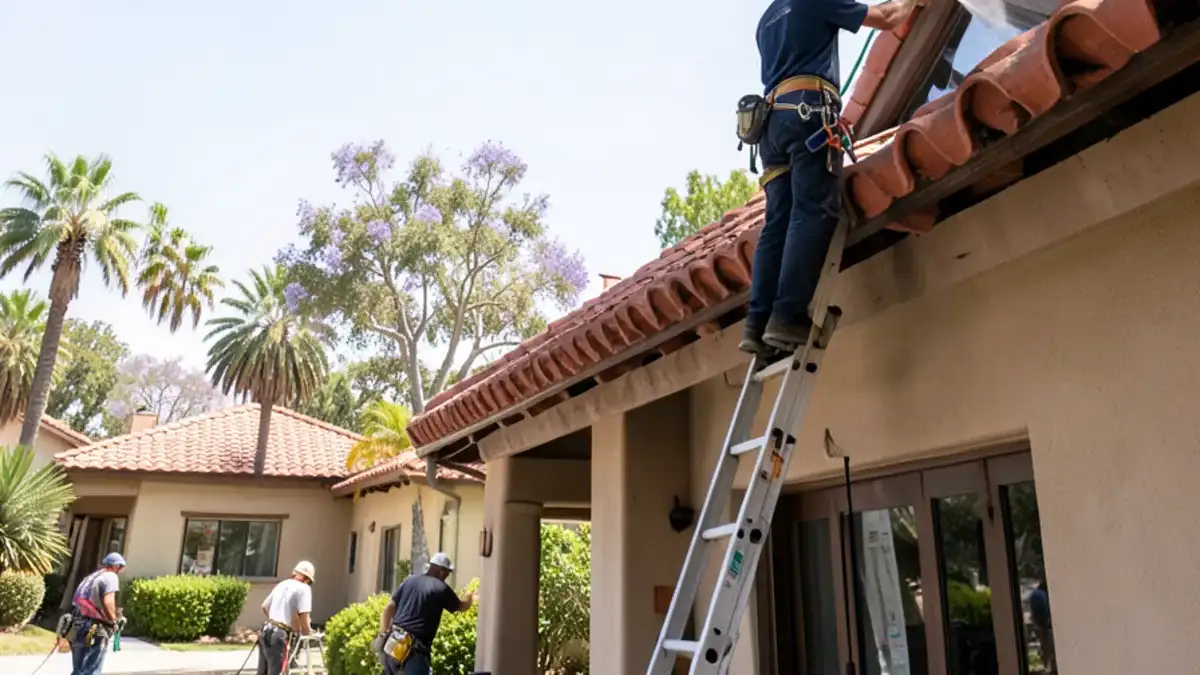
Most of the work happens from inside the house or from a ladder at the eave. Walking out across a roof to reach a skylight is the part best left to a roofer, especially on tile.
A twice-a-year skylight checklist
From inside the room
- Look at the drywall in the light shaft, especially the upper corners, for brown rings or bubbling paint.
- Run a finger along the bottom of the frame after a cool night for moisture or dark marks.
- On venting units, open and close the sash fully, test the crank or remote, and clear the insect screen.
- Test blinds and rain sensors on electric or solar models, and swap remote batteries before the wet season.
From outside, without walking the roof
- From the ground or a ladder at the eave, look for leaves, needles or seed pods piled on the uphill side of the curb.
- Check the dome or glass for cracks, crazing or yellowing, and the frame for gaps or rust.
- Look for lifted shingles, cracked tiles or missing flashing pieces around the skylight.
- Clear the gutters below the skylight so overflow does not back up at the eave.
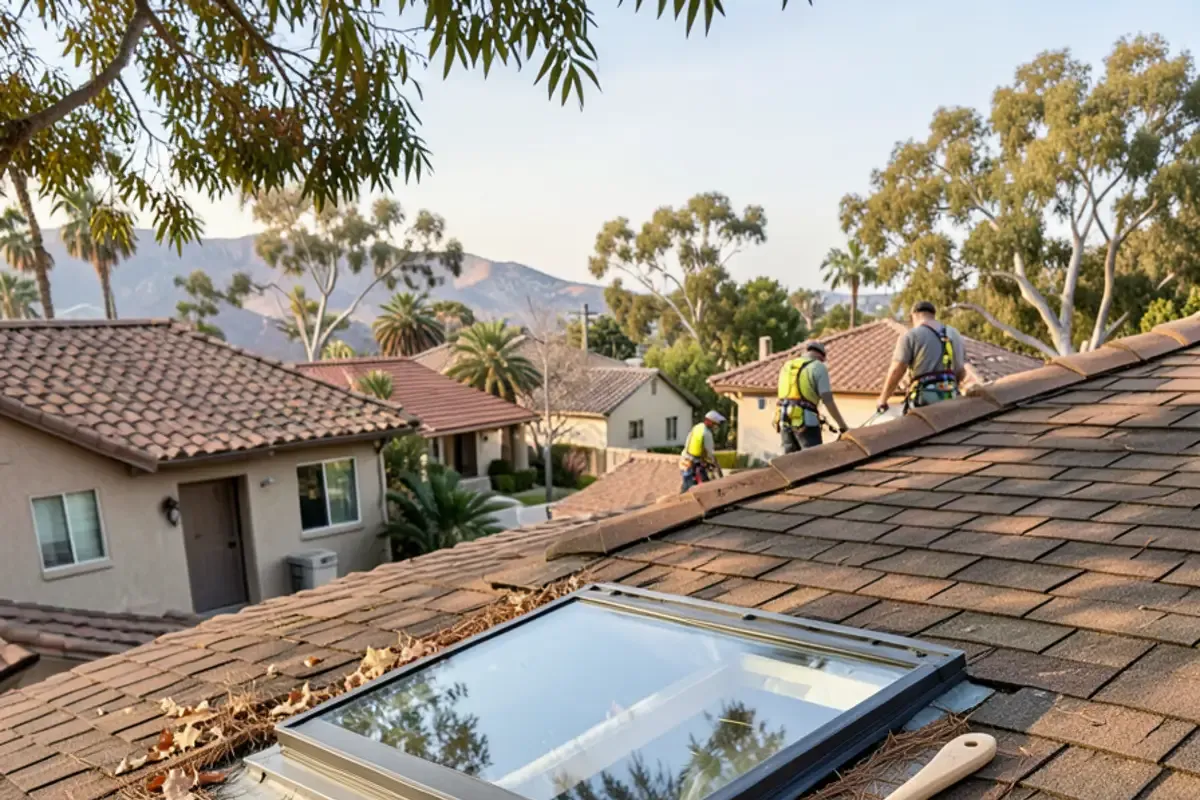
Plan one check in early fall, ahead of the rains, and one in spring after the last big storm.
Want a roofer to look at it?
Call with your address and what you are seeing. We visit same-day or next-day when crews are free.
- 4.9 from 48 Google reviews
- Based on Rosemead Blvd
- Photos and a written quote before work
Skylight care through the San Gabriel Valley year
The twice-a-year checks above fit around the local weather. Here is how skylight care lines up with the seasons in Rosemead and the foothill cities, where most rain falls between November and March and Santa Ana winds can blow from October on.
| When | What to do | Why it matters |
|---|---|---|
| September to October | Clear the uphill side of the curb, check flashing and sealant, test rain sensors and remote batteries | The first storms of the season find every opening left by summer heat |
| After a Santa Ana wind event | Look for branches on the dome, bent flashing and lifted shingles or tiles nearby | Gusts drop limbs and pry at loose metal edges |
| December to February | Watch the inner glass on cold mornings and the shaft corners after each big storm | Condensation peaks on clear winter nights, and February is usually the wettest month |
| March to April | Rinse the glazing, note any stains, and book repairs while the roof is dry | Repairs go faster and cleaner outside the rainy season |
| June to August | Check shades and look for split sealant on south and west roof faces | Summer sun dries sealant and turns acrylic brittle |
How do you clean a skylight without damaging it?
Glass and plastic need different handling. Acrylic domes scratch easily, and harsh cleaners speed up the crazing that sun already causes.
| Glazing | Clean with | Avoid |
|---|---|---|
| Acrylic or polycarbonate dome | Mild soap, water and a soft cloth or sponge | Ammonia glass cleaners, paper towels, scrapers |
| Tempered or laminated glass | Mild soap or glass cleaner, then a squeegee | Abrasive pads and pressure washers aimed at seals |
| Factory-coated glass | A garden hose rinse; follow the maker's care sheet | Abrasive cleaners that strip the coating |
| Tubular skylight dome | A rinse, with a gentle wipe if needed | Prying the dome off its flashing |
Interior glass gets the same soft-cloth treatment. Outside, rinsing from a ladder at the eave works on many single-story homes. If the skylight sits high on the roof, have it cleaned during a roof service instead of walking out to it.
Is it condensation or a real leak?
Condensation is the most common winter skylight complaint, and it is not a roof problem. Humid indoor air meets glass chilled by a clear night, droplets spread across the inner surface, and they run to the frame and drip. These steps reduce it:
- Run the bathroom fan during showers and for a good while after.
- Use the range hood when cooking under a kitchen skylight.
- Crack a venting skylight open for a few minutes after showers or cooking.
- Keep the shaft walls insulated on the attic side so the shaft stays warm.
- Consider double-pane low-E glazing if a single-pane dome drips every winter.
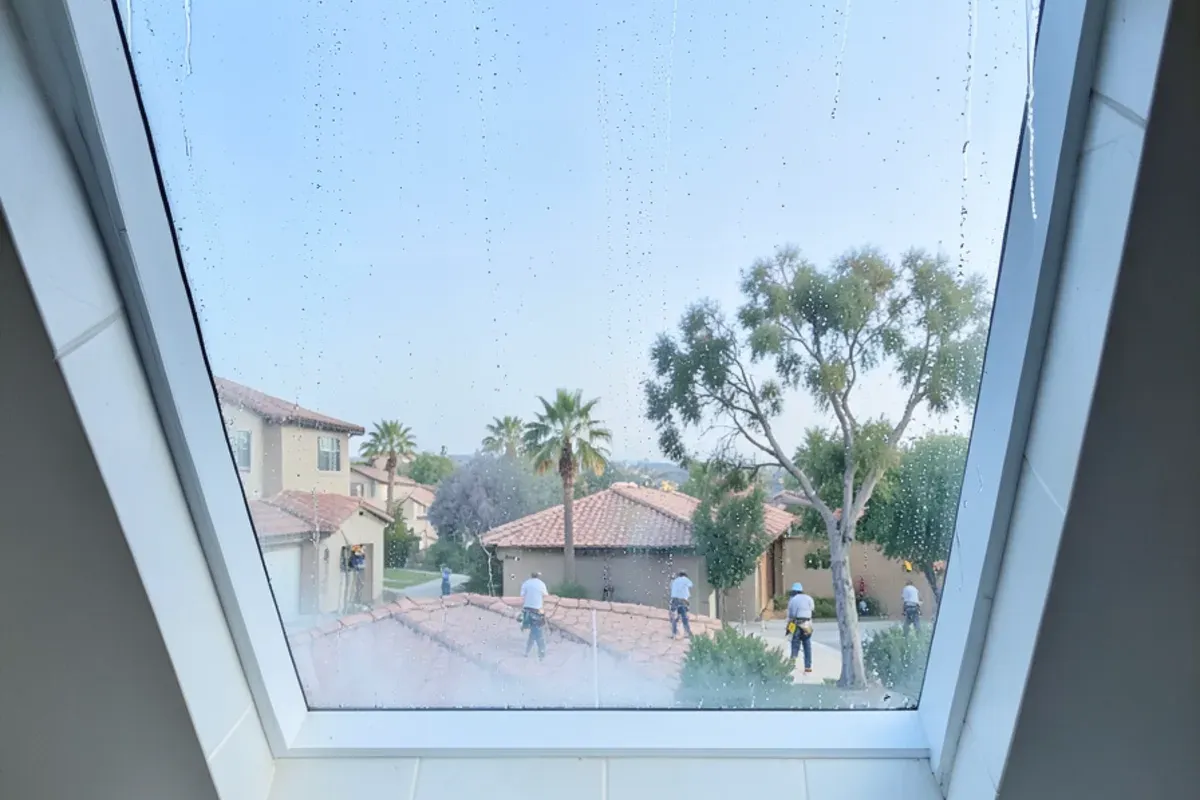
A real leak follows the weather instead. It shows up during or after rain, often at one corner, and the stain grows storm by storm. That pattern calls for a skylight repair visit.
What we notice on skylights during SGV roof visits
Big trees create the most skylight debris. In Pasadena and San Marino, mature oaks, sycamores and pines drop leaves and needles that pile against skylight curbs on the uphill side. That pile stays damp, rots the curb wood and steers rain under the flashing. Clearing it twice a year is the cheapest leak prevention there is.
Sun damage shows up first on south and west roof faces, where acrylic domes turn brittle and sealant joints split. On tile roofs the usual culprit is foot traffic: a satellite or solar installer cracks tiles near the skylight, and rain reaches the underlayment through the gap.
The tile and slate roofs in those older neighborhoods also deserve care in how the check is done. We look from a ladder first and step only where the roof can take weight.
What to handle yourself and what to leave to a roofer
Homeowners do the most useful skylight maintenance themselves: watching the shaft for stains, running fans, rinsing glazing from the eave and keeping gutters clear. Where a roofer adds value is anything that touches the seal between the skylight and the roof. A bead of store-bought caulk over old roof cement often traps water behind it, and the next repair starts with scraping it all off.
The honest trade-off runs the other way too. A newer glass skylight on a single-story shingle roof with no trees overhead may need nothing more than your own checks for years. A skylight on a second story, on tile, or under oaks and pines is where a yearly look during a roof visit pays for itself.
Why is walking near a skylight so risky?
A skylight looks like part of the roof, but most units are not built to carry a person. Federal workplace safety rules treat a skylight as a hole in the roof: OSHA requires roofers working more than 6 feet above a lower level to be protected from falling through one by a cover, a guardrail or a personal fall arrest system. That rule exists because people have fallen through domes they stepped on, sat on or leaned against.
- Never step, kneel or lean on a dome, a glass unit or a tubular skylight lens, even one that looks solid.
- Treat old acrylic as brittle. Sun-aged domes can shatter under a hand braced against them.
- Do your checks from a ladder at the eave, set at a steady angle and extending about 3 feet above the roof edge.
- Stay off the roof when it is wet, dusty or covered in leaves and needles, and never walk on clay or concrete tile.
- If a skylight sits where people regularly work on the roof, ask about a fitted screen or guard over it.
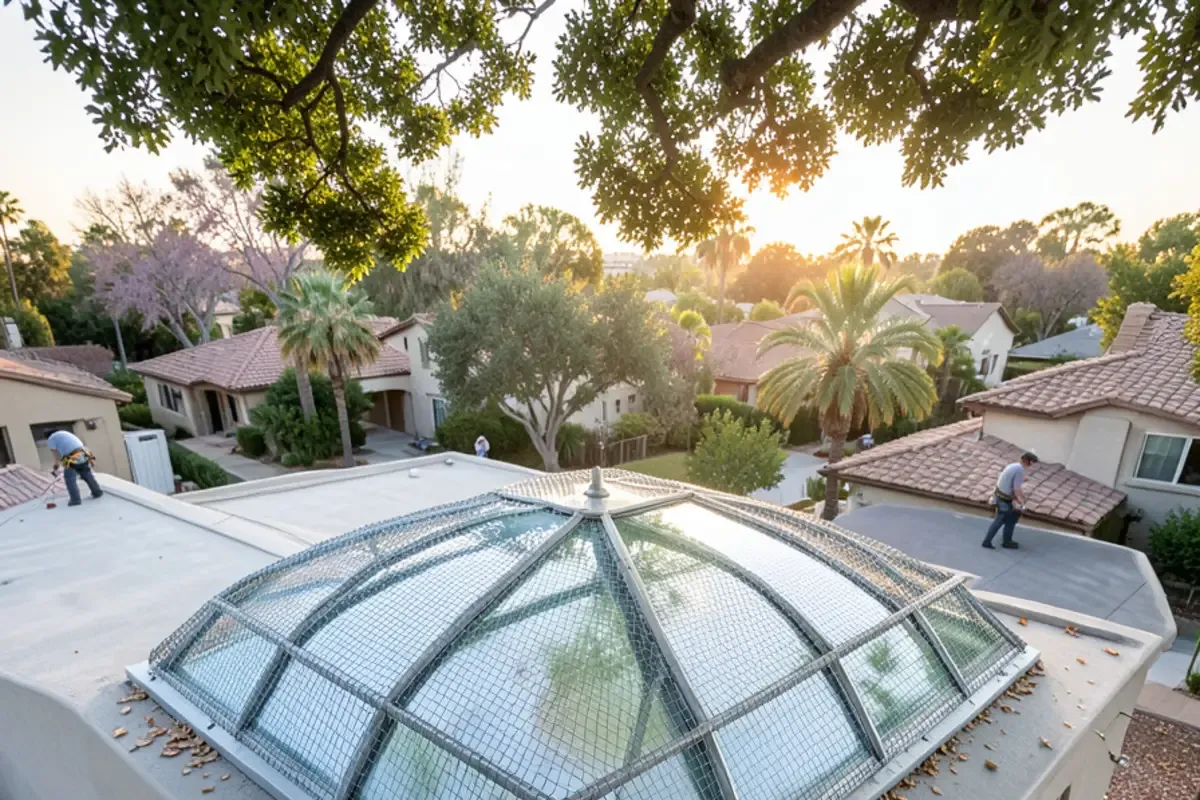
Roofers clip into an anchor before working near a skylight. A homeowner without that gear gets the same information from the eave and from the room below.
Signs that maintenance has become a repair
Some findings mean the skylight needs more than cleaning:
- A crack or hole in the dome, even a small one.
- Fog trapped between glass panes that will not wipe off.
- Soft or dark wood at the curb or inside the shaft.
- Flashing held on only by sealant, or sealant that has pulled away.
- Water stains that grow after each storm.
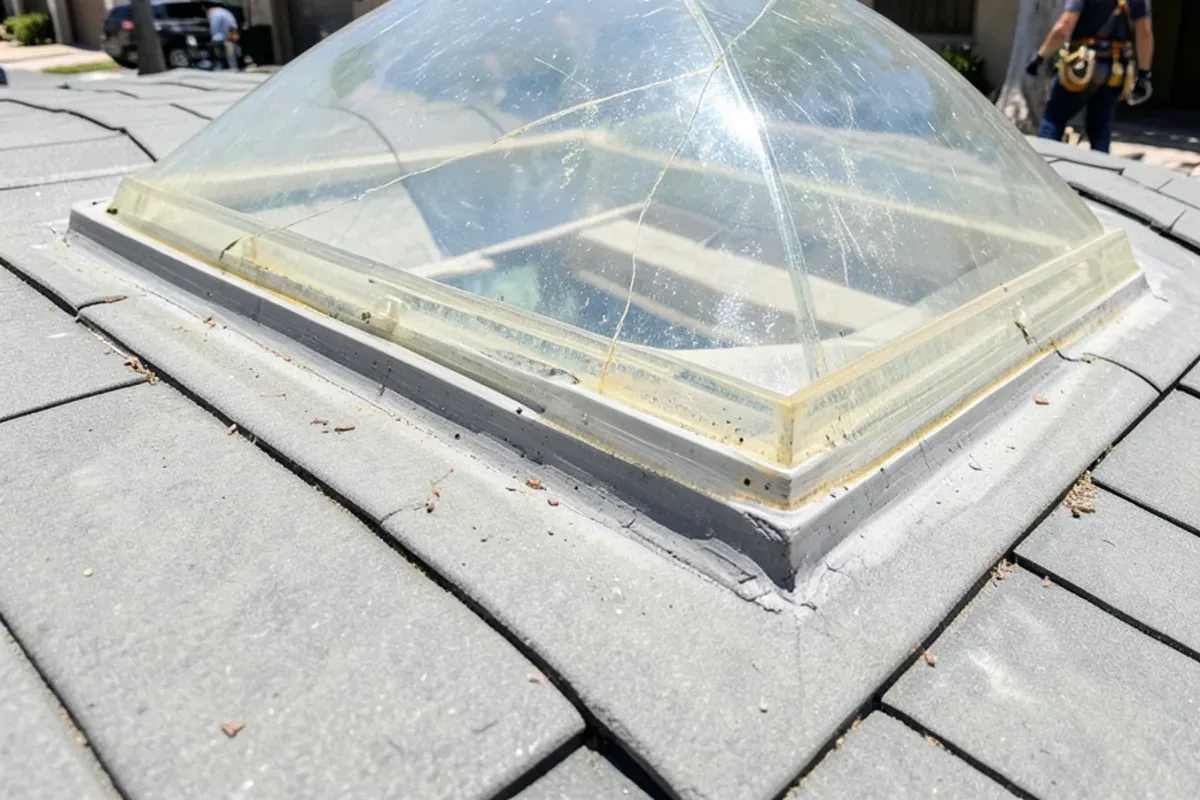
Small items can often be folded into general roof maintenance. Larger ones call for reflashing or a new unit, and if the skylight is near the end of its life, compare the cost of replacing the skylight against another repair.
Keep it clear and keep it dry
Most skylight leaks begin with debris, dried sealant or a crack nobody noticed in time. Two short checks a year, gentle cleaning and good indoor ventilation keep a skylight working through the rainy season. If you would rather not climb, or you spot something from the list above, call (725) 745-8803 to set up a skylight check with photos of what we find.
Questions readers ask
How often should a skylight be checked?
Twice a year suits most Southern California homes: early fall before the rains and spring after them. Add a look after any strong Santa Ana wind event, which can lift flashing or drop branches onto the dome. Homes under large trees may need the uphill side of the curb cleared more often.
Can I pressure wash my skylight?
It is not a good idea. High-pressure water can force its way past seals and flashing, crack aging acrylic and strip coatings from glass. A garden hose, mild soap and a soft cloth do the job safely. If the glazing still looks cloudy after that, it is probably weathered or scratched rather than dirty.
Why does my skylight drip only on winter mornings?
That timing points to condensation. Overnight the glass cools, and the first showers or cooking of the morning load the room with moisture that condenses on it. It usually clears by midday. Better ventilation and insulated glazing reduce it; roofing work does not.
Do tubular skylights need maintenance?
Very little. Rinse the dome when it looks dusty, check that the flashing collar is tight and free of debris, and look for condensation or dust inside the ceiling diffuser. If the light dims noticeably, a tube joint in the attic may have separated, which is a quick fix from the attic side.
Sources
Written by Tylzen Spoke Roofing
A roofing contractor on Rosemead Blvd (CA-19) in Rosemead, working on shingle, tile, metal and flat roofs across the San Gabriel Valley. This guide reflects what our crews check on local roofs. Questions about your roof? Call (725) 745-8803.