
By Tylzen Spoke Roofing · Published
Commercial roof preventive maintenance is a schedule of inspections and small repairs, usually twice a year plus after major storms, that catches failing seams, flashing and drains before they leak. A good plan also produces a written record of every visit, which helps keep manufacturer coverage in force and turns roof spending into a predictable line in the budget instead of a surprise.
Here is what a commercial roof maintenance plan should cover, how often visits make sense in Southern California's climate, and how to use the reports for planning.
What should a commercial roof maintenance plan include?
A plan is more than someone walking the roof. It should spell out the work, the paperwork and the follow-up.
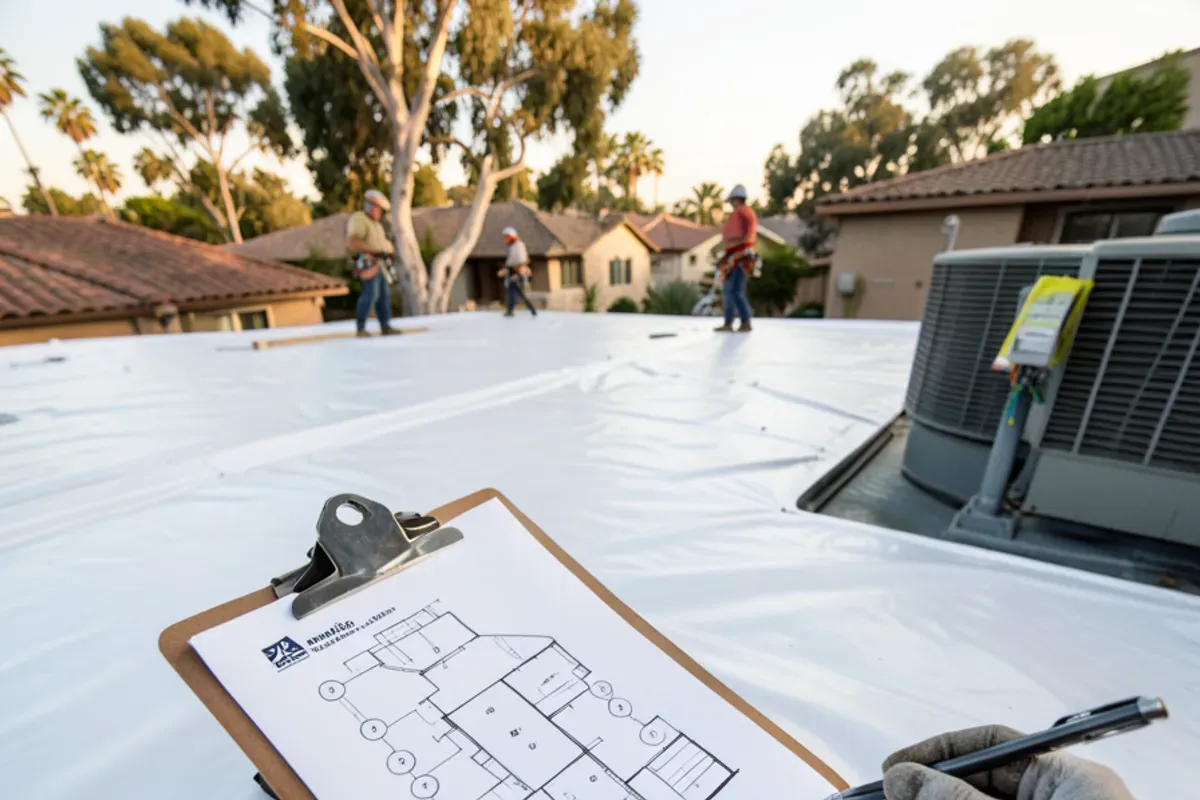
- A roof plan drawing with sections, drains, curbs and skylights numbered, so every report uses the same map.
- Clearing of drains, scuppers, gutters and downspouts, plus removal of loose debris and abandoned materials.
- Inspection of field seams, perimeter edges, parapet coping, counterflashing and every penetration.
- Minor repairs done on the visit, such as resealing pitch pans or patching small punctures, within an agreed limit.
- Photos of each finding and a written report with repairs ranked by urgency.
- A note of any work done by other trades since the last visit.
Want a roofer to look at it?
Call with your address and what you are seeing. We visit same-day or next-day when crews are free.
- 4.9 from 48 Google reviews
- Based on Rosemead Blvd
- Photos and a written quote before work
How often should a commercial roof be inspected?
Twice a year is the industry baseline, timed around the local weather. In the San Gabriel Valley and most of LA County, rain falls mainly from November to March and wind events peak from October to March, so the calendar almost writes itself.
| Timing | Focus | Why then |
|---|---|---|
| Early fall (September-October) | Drains, seams, curbs, skylights, edge metal | Fix summer heat damage before the first storm |
| Spring (March-April) | Storm damage, ponding marks, wind-lifted edges | Repair what the rainy season exposed |
| After a major wind or rain event | Perimeter, loose panels, debris, drains | Catch damage while it is small and documented |
| After rooftop work by other trades | New penetrations, cuts, dropped fasteners | Find damage before it voids coverage or leaks |
What happens during a scheduled maintenance visit?
A visit follows the same order every time, so this year's report can be laid next to last year's and the changes stand out.
- Check in with the facility contact, review the interior leak log and note any rooftop work by other trades since the last visit.
- Walk the perimeter first: edge metal, coping, counterflashing and wall panel joints, numbered against the roof plan.
- Clear and test every drain and scupper, then look for dirt rings or algae that show where water sits.
- Probe field seams and laps, paying closest attention to the walking paths between hatches and rooftop units.
- Inspect each curb, pitch pan, pipe boot and skylight, and make the small repairs the agreement allows.
- Photograph each finding with its plan number, then send a written report that ranks items as now, this year or monitor.
On a mid-size building the visit usually fits in one working day. Larger roofs are split into sections across several days, so the report stays detailed rather than rushed.
Roof drain maintenance: the cheapest work on the list
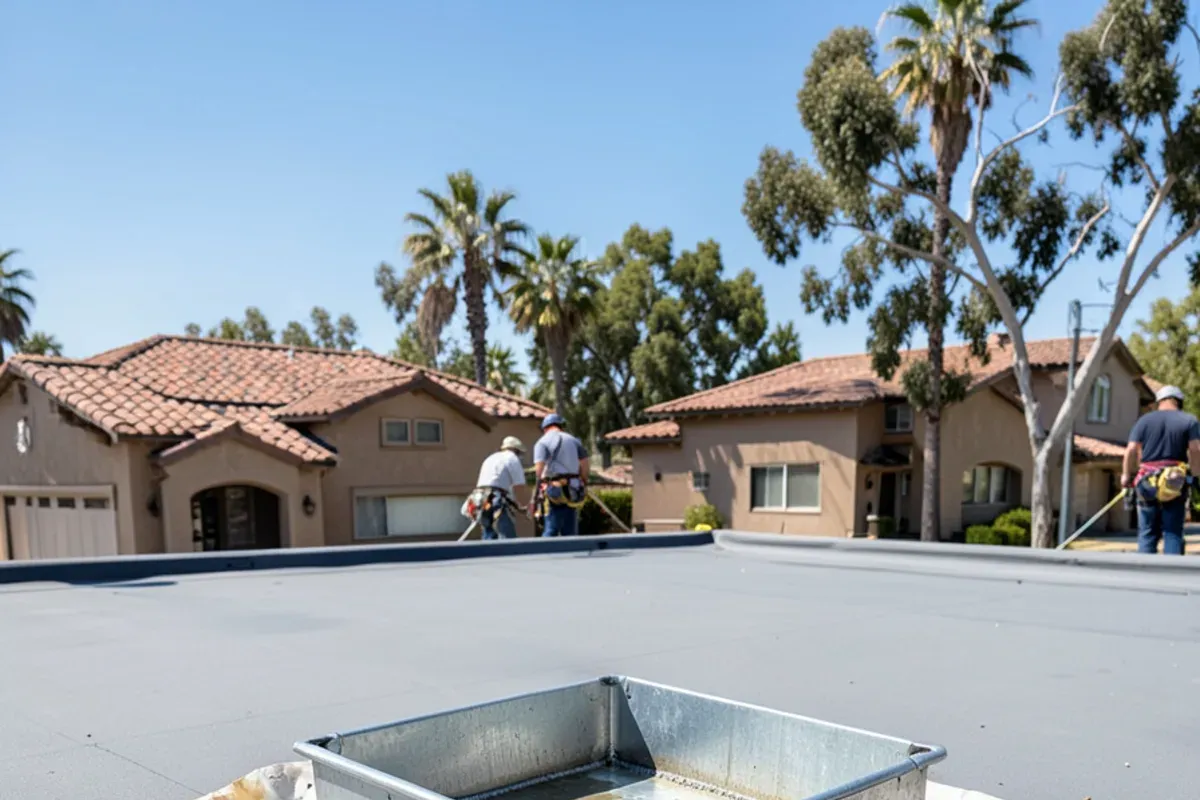
Clearing drains costs little and prevents more damage than any other task. A blocked drain lets water stand, which adds load, ages the membrane and eventually pushes water past the flashing. On low-slope roofs, standing water that remains more than about 48 hours is a sign of a drainage problem.
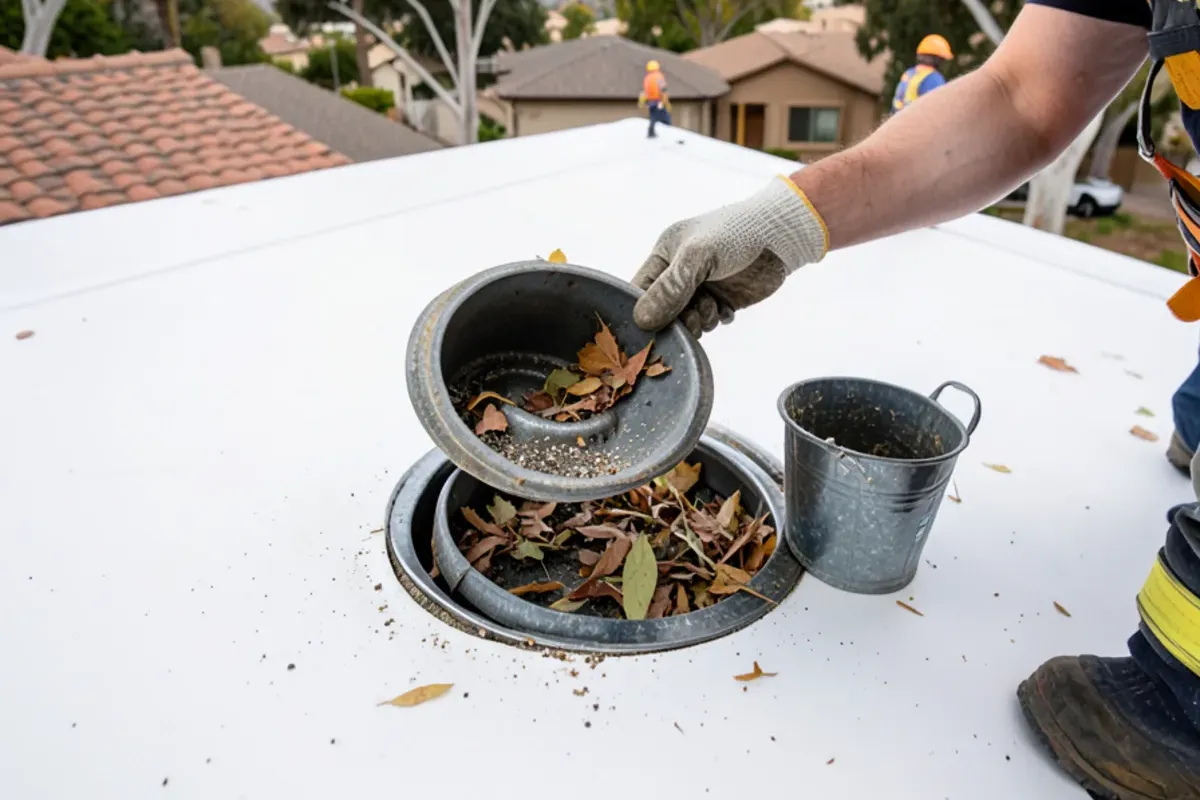
Each visit should lift and clean the strainer, confirm the clamping ring is tight, check the drain flashing, and run water to make sure the leader flows freely. Overflow scuppers need the same attention, since they are the backup when the main drain fails.
Gutters and downspouts on buildings with pitched sections or canopies belong on the same list. A clogged downspout that empties onto a lower roof can flood it during a single February storm, and a crushed leader at grade can back water up to the roof edge.
How do maintenance records protect a roof warranty?
Many commercial manufacturer warranties expect the owner to maintain the roof and to report problems promptly. Terms differ by product line, so read yours. In general, the owner who can show dated reports, photos and repair invoices is in a much stronger position if a claim is ever disputed.
- Keep every inspection report and invoice in one folder tied to the roof plan.
- Require other trades to notify you before cutting into the roof, and have penetrations flashed by a roofer.
- Register the roof with the manufacturer if that is required, and keep the paperwork.
- Ask whether manufacturer and workmanship coverage transfer if the building is sold.
What we find on maintenance visits across El Monte and Industry
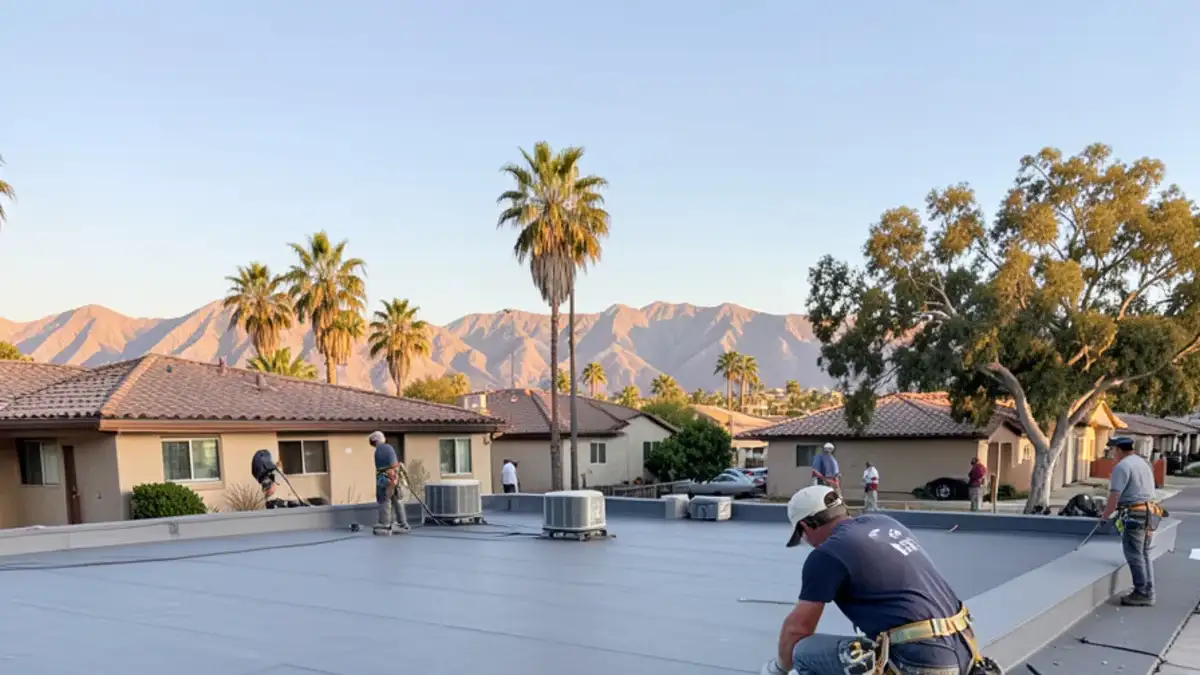
Our crews maintain roofs on retail strips, warehouses and multi-tenant buildings in El Monte, City of Industry and nearby cities. The findings are remarkably consistent.
- Pitch pans and sealant joints shrunk and cracked by summer heat, leaving gaps around pipes.
- Debris piled in drain sumps and against parapets, often including tools and fasteners left by other trades.
- Small punctures in single-ply membranes along the paths HVAC technicians walk.
- Loose or bent edge metal after wind, which lets water and wind get under the membrane.
- Crazed skylight domes and screens that no longer meet safety needs.
Plan design trade-offs we discuss up front
A repair allowance inside the plan lets small fixes happen on the visit without a separate approval. Set it too low and every cracked pitch pan waits for paperwork; set it too high and you lose sight of what is being spent. Most owners settle on a not-to-exceed figure per visit and written approval for anything above it.
Visit frequency is the other dial. Two visits suit most retail and office roofs. Buildings beside truck yards or gravel operations may need quarterly drain checks in the rainy months, which adds cost but prevents the backed-up drain that soaks a full bay of insulation. Cleaning white membranes keeps them reflective, yet harsh pressure washing can scar a single-ply surface, so we use low pressure and the manufacturer's approved cleaners. When repeat findings stack up, the report says so, and commercial roof repair or a larger project gets priced separately.
Budgeting with maintenance data instead of emergencies
Emergency repairs are expensive mainly because of what comes with them: interior damage, lost inventory and disrupted tenants. Scheduled maintenance shifts money from those surprises into small, planned work.
The reports also build a capital plan. When each roof section carries a condition rating and an estimated remaining life, owners can schedule a coating, recover or replacement for the worst section first and spread costs over several years. Lenders, buyers and insurers increasingly ask for that history, too.
Reflective roofs benefit in a less obvious way. Dust and soot build up on white membranes over a dry summer and lower their reflectance, so a gentle cleaning during maintenance helps a cool roof keep doing its job on the hottest days.
Setting up a maintenance plan for your building
If you are comparing proposals from several roofers, line them up on the same points before looking at price:
- Number of visits per year and when they fall relative to the November-to-March rains.
- The repair allowance per visit and how work above it gets approved.
- Whether the report includes photos keyed to a numbered roof plan or only a checklist.
- How leak calls between scheduled visits are handled and billed.
- Whether drain leaders inside the building and gutters on canopies are in scope.
The first visit is a baseline: a full commercial roof inspection, a numbered roof plan, photos and a list of repairs ranked by urgency. From there, we schedule visits around the rainy season and send a written report after each one. Anything beyond routine work comes with a written, line-by-line quote first. Call (725) 745-8803 or request a quote to set up the baseline visit.
Questions readers ask
What is the difference between maintenance and repair?
Maintenance is scheduled care: clearing drains, resealing small joints, recording conditions. Repair fixes something that has already failed, like a leaking curb or a torn seam. A plan includes both, with small repairs handled on the visit and larger ones quoted separately.
Can our building staff handle roof maintenance themselves?
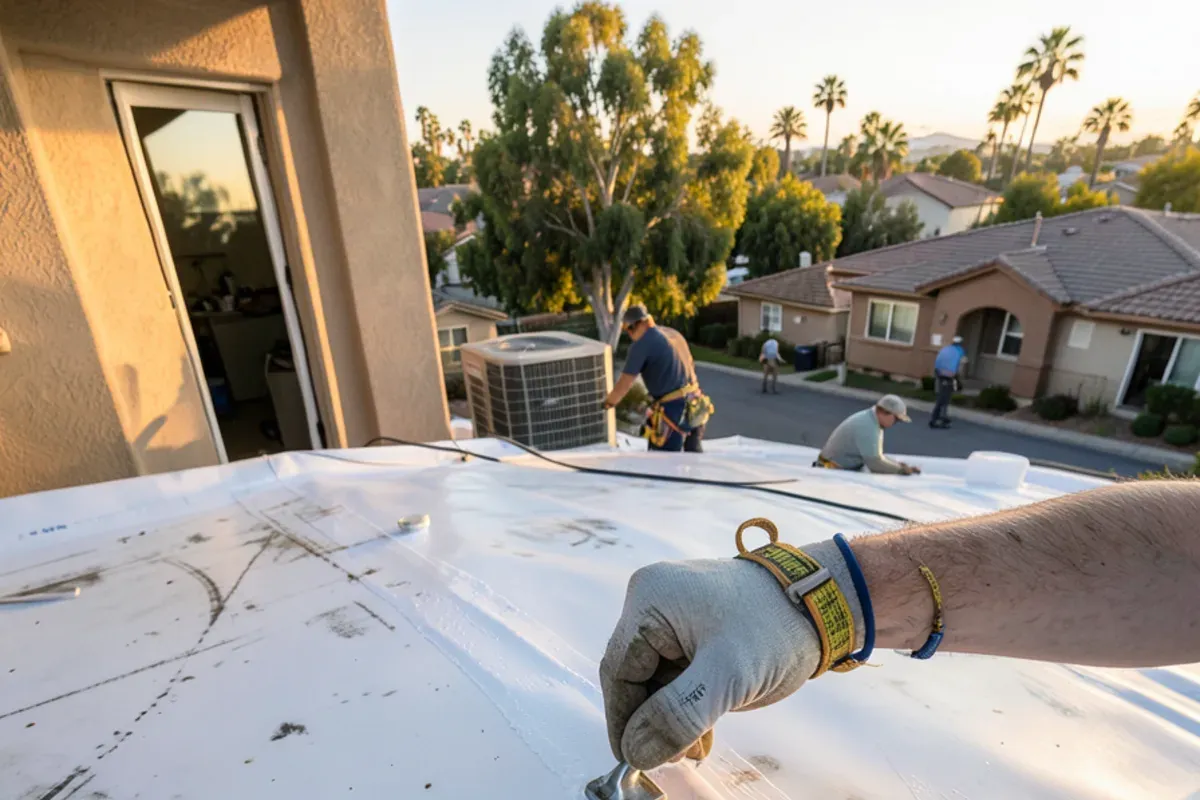
Staff can safely watch for ponding from a hatch, keep debris off the roof and log leaks. Walking the roof, especially near skylights and edges, needs fall protection and training. Repairs to the membrane should be done by a roofer so they match the system and do not conflict with manufacturer terms.
Does preventive maintenance make sense on an old roof?
Yes, if the roof still has some useful life. Maintenance can stretch the remaining years while you plan and fund a replacement. If the inspection shows wet insulation or failing seams across the field, we will say so and help you compare options.
What does a maintenance plan usually leave out?
Major repairs, section replacement and work on rooftop equipment itself sit outside routine maintenance. The plan finds and reports those items, then each one is quoted in writing so you can approve, schedule or budget it. Interior damage from earlier leaks is also handled separately.
Should roof cleaning be part of a commercial maintenance plan?
On white or reflective roofs, usually yes. Dust from a dry San Gabriel Valley summer dulls the surface, and the aged ratings published by the Cool Roof Rating Council assume normal weathering, not a coat of soot. A gentle cleaning before summer helps the roof reflect heat as rated. It also makes small punctures and open seams easier to spot during the inspection.
Sources
Written by Tylzen Spoke Roofing
A roofing contractor on Rosemead Blvd (CA-19) in Rosemead, working on shingle, tile, metal and flat roofs across the San Gabriel Valley. This guide reflects what our crews check on local roofs. Questions about your roof? Call (725) 745-8803.