
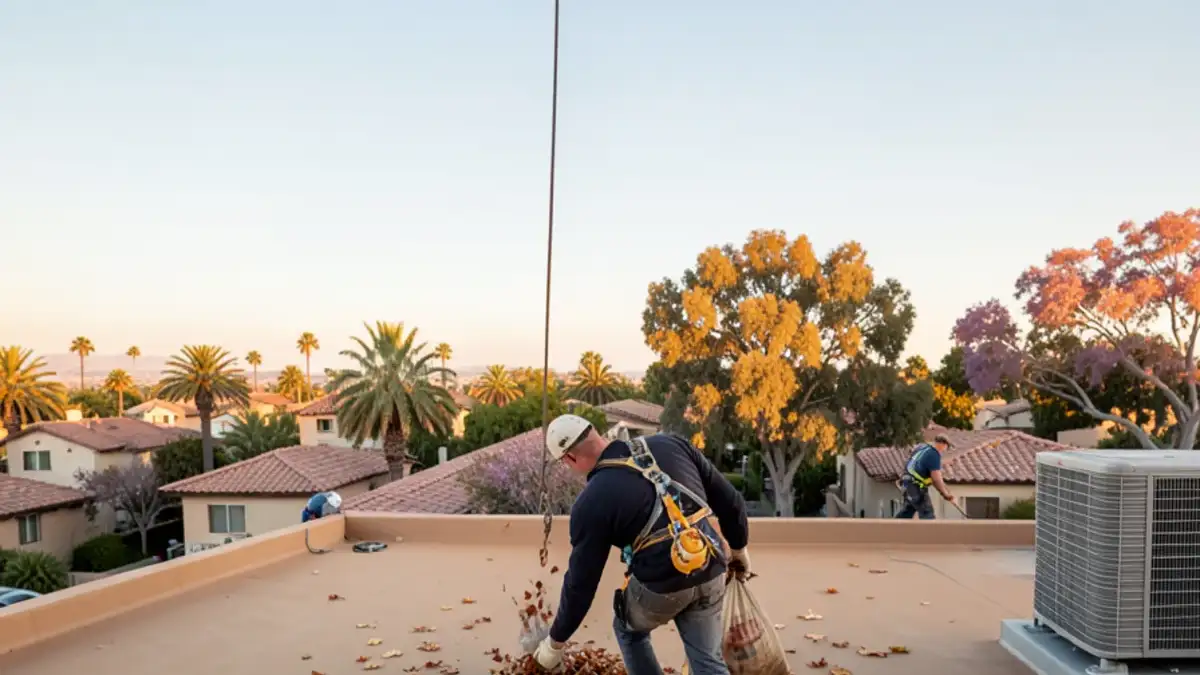
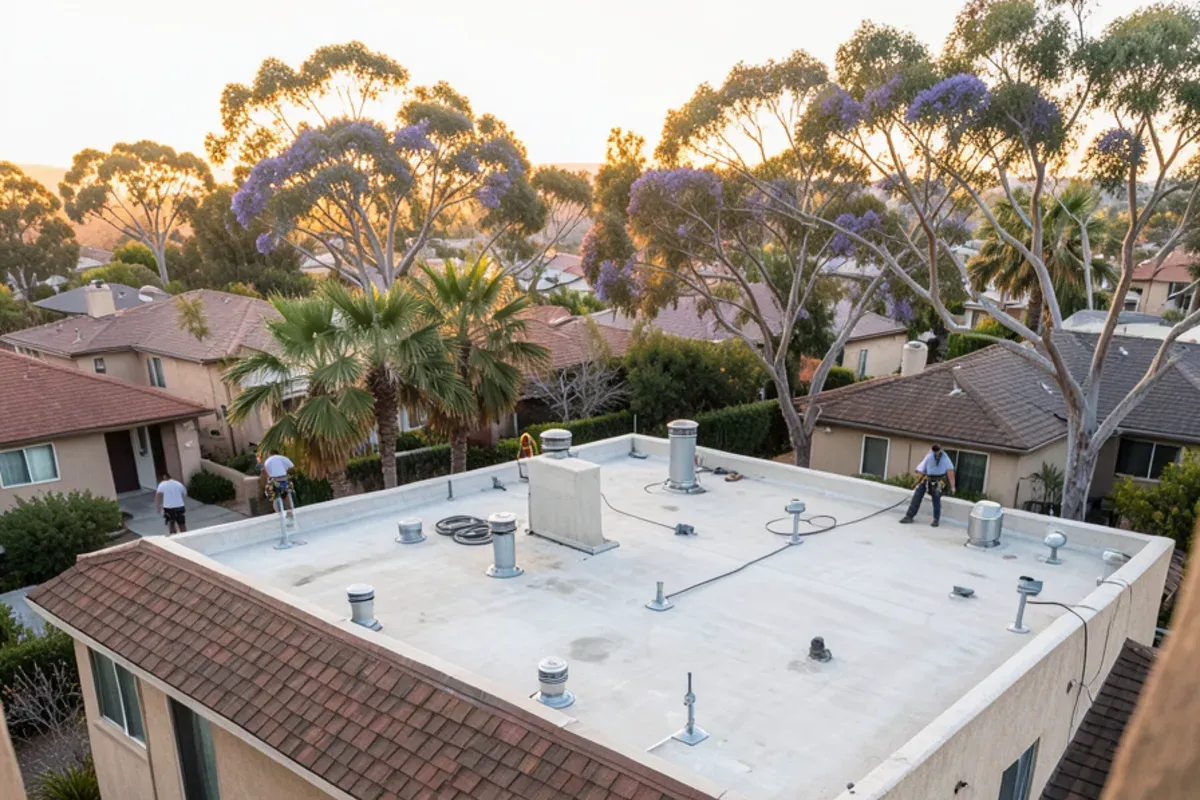
Commercial roof maintenance in Rosemead is a planned visit, usually twice a year, where we clear drains and scuppers, probe seams, reseal flashing at curbs and penetrations, and touch up coatings. Each visit ends with a photo log, so the owner has a record of the roof's condition and of the upkeep many manufacturer warranties expect.
Maintenance is part of our commercial roofing work in the San Gabriel Valley and costs far less than chasing leaks through ceiling tiles after the first big storm.
What a commercial roof maintenance visit includes
- Debris removal across the roof: leaves, palm fronds, dust drifts, packaging and parts left by service vendors.
- Drains, overflow scuppers and conductor heads cleared, with strainers and clamping rings checked and reset.
- Gutters and downspouts flushed where the building has them.
- Seams probed along water paths and near equipment; small open laps repaired.
- HVAC curbs, pipe boots, pitch pockets and skylight curbs checked; cracked sealant and loose counterflashing redone.
- Parapet coping joints and roof edge metal inspected for gaps and loose fasteners.
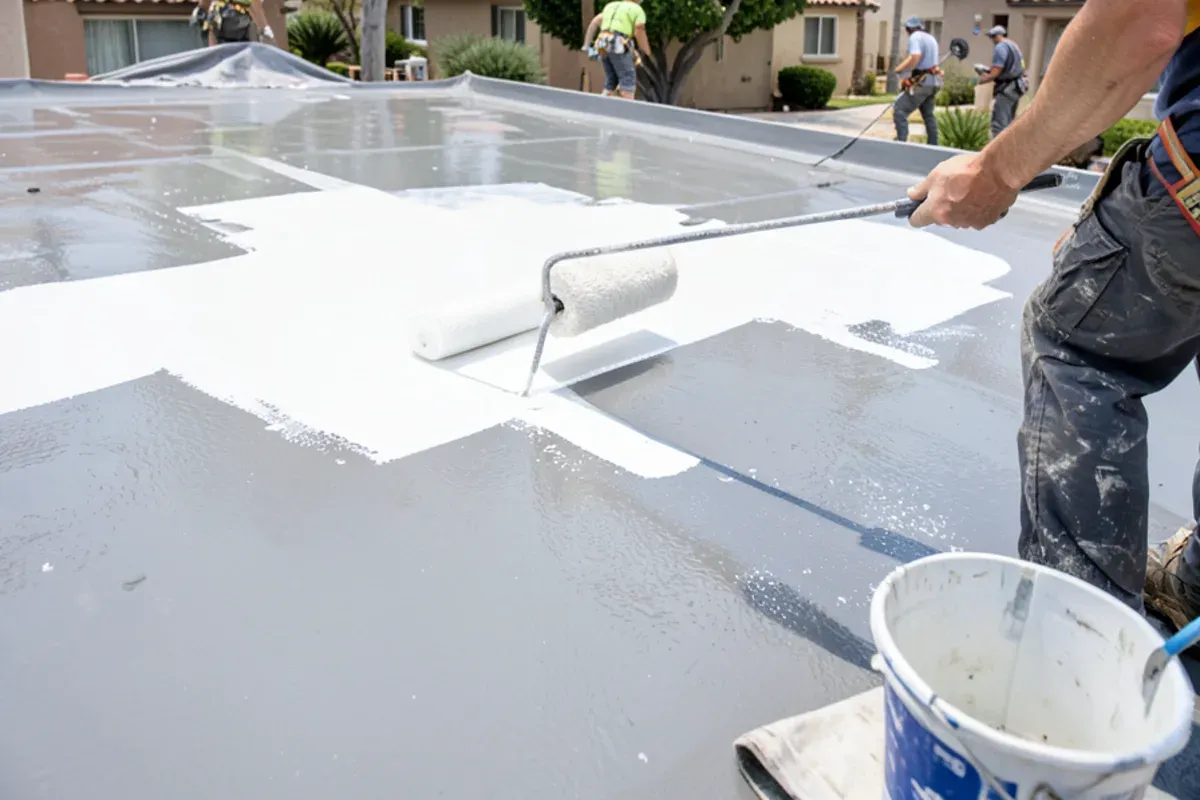
- Coating wear spots touched up on coated roofs.
- Photo log and a short report with anything that needs a separate quote.
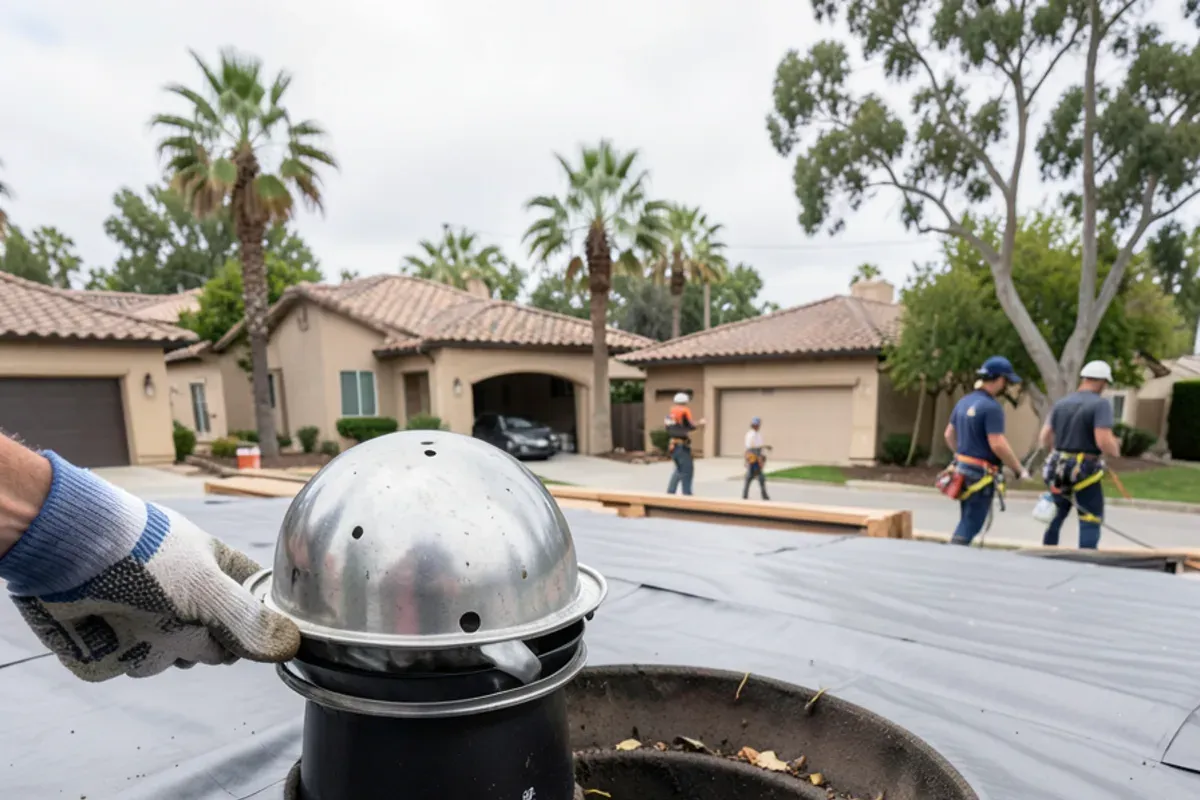
Small repairs that fit in the visit are done on the spot with your approval. Anything bigger goes into a written quote, so you can plan it.
When should roof drains be cleared before the rainy season?
Aim for October or early November. Most of the valley's rain falls between November and March, and February is usually the wettest month. A drain that clogged over summer can turn the first storm into ponding deep enough to find every weak seam.
Santa Ana and downslope wind events also peak from October through March, and they pile leaves and debris against parapets and into scuppers. A quick check after a strong wind costs little compared with a leak over stock or tenants.
Commercial roof maintenance plans compared
| Plan | Visits | Good fit | Trade-off |
|---|---|---|---|
| Annual | Once, in fall | Small, newer roofs with little equipment | Spring storm damage can go unnoticed for months |
| Twice yearly | Fall and spring | Most retail, office and apartment roofs | Standard for warranty records |
| Twice yearly plus storm checks | Fall, spring and after major wind or rain | Roofs with trees nearby or a history of leaks | More visits, faster catches |
| Coating program | Twice yearly plus scheduled recoats | Coated cap sheet, foam and metal roofs | Recoat budget needed every several years |
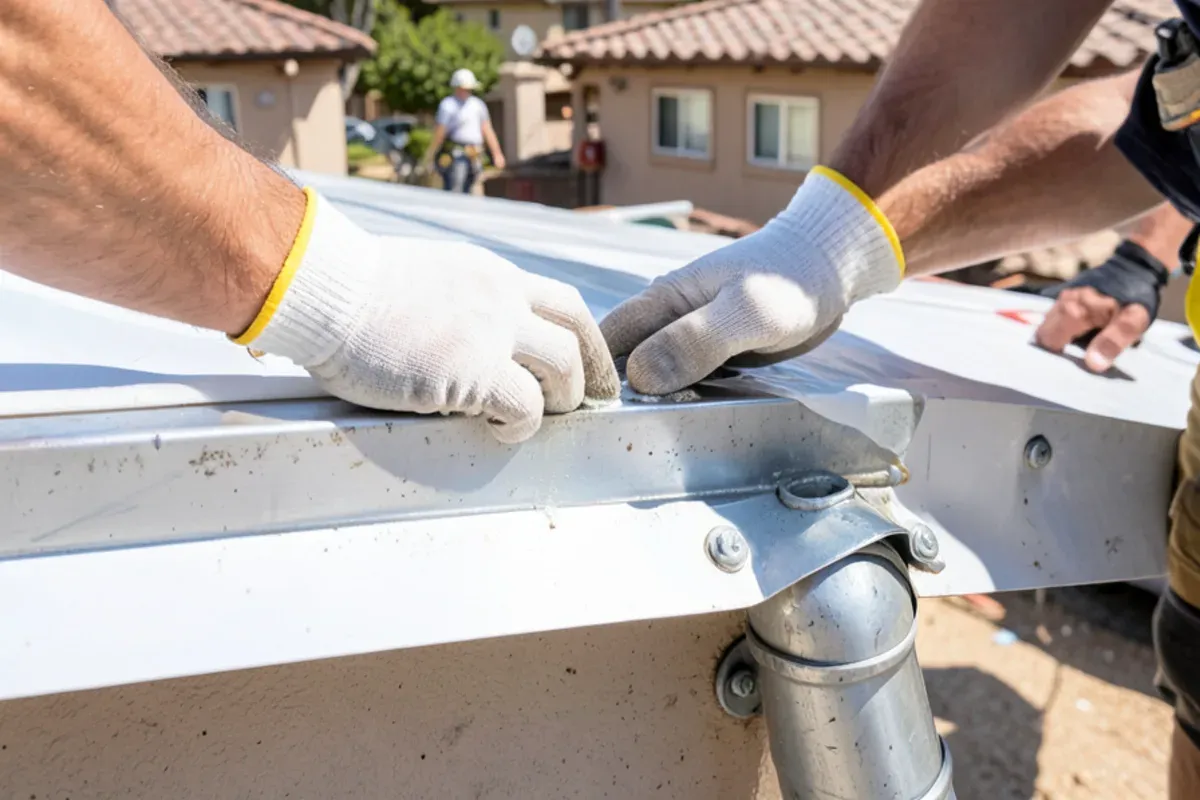
Restaurant buildings may need extra attention at kitchen exhaust fans, where grease can soften membranes and should be cleaned or contained between visits.
How a maintenance plan gets started
- A baseline inspection records the system, its age range and existing defects.
- We recommend a plan from the table above based on trees, equipment and leak history.
- Visits go on the calendar, with the fall visit set ahead of November.
- After each visit you receive the photo log and any repair quote.
- Once a year we review the record with you and update the budget years for recoat or replacement.
How does maintenance protect the roof and its warranty?
Most commercial roofs fail at details, not across the field. Catching an open seam or a cracked curb corner early keeps water out of the insulation, and dry insulation is what makes a later recover or coating possible instead of a full tear-off.
- Fewer emergency calls and less damage to ceilings, stock and equipment.
- A dated photo record for warranties, insurers, buyers and lenders.
- Predictable budgets: issues show up a season or more before they become leaks.
- Longer service life from the membrane already paid for.
Many manufacturer warranties require the owner to keep the roof maintained and to use approved contractors for repairs. Read the terms in your warranty document, and keep every visit report with it.
Need commercial roof maintenance help this week?
Tell us what you are seeing. We schedule same-day or next-day visits when crews are free and send photos with a written quote.
- 4.9 from 48 Google reviews
- Based on Rosemead Blvd
- Photos and a written quote before work
What a commercial roof maintenance plan costs to run
We price maintenance per visit or per year from the roof itself, so two buildings of the same size can land at different numbers. The variables:
- Roof area, plus the number of separate roof levels and buildings on the site.
- How many drains, scuppers, curbs and skylights need checking.
- Access: interior hatch, fixed ladder, or a lift for a tall wall.
- Visit frequency and any after-storm checks added to the plan.
- Trees over the roof, which add debris removal time at every visit.
- Grease cleanup at kitchen exhaust fans on restaurant buildings.
Repairs found during a visit are priced separately, and coating programs need a recoat line in the capital budget. Ask about payment options and visit scheduling when we send the plan.
What commercial roof maintenance in Rosemead does not cover
- Major repairs, section replacements or reroofing, which are quoted separately.
- HVAC equipment, condensate lines and ductwork, which belong to the mechanical contractor.
- Solar panel service; we check the flashings at attachments but do not touch the array.
- Interior repairs such as ceiling tiles or drywall.
- Damage from storms or impacts after the visit, which may be an insurance matter.
Underground drain lines are also outside the visit. If water backs up after we clear the roof drain, a plumber should camera the line below.
Permits, cool-roof rules and licensing for upkeep work
Routine maintenance rarely needs a building permit. Recoating is the exception to watch: the California Energy Commission treats a recoat covering more than 50% of the roof or 2,000 square feet, whichever is less, as an alteration that must meet cool-roof values. A large coating job therefore needs a CRRC-rated product and may need a permit from the city or LA County Public Works, so confirm with the building department first.
Any maintenance contract over $1,000 in labor and materials must go to a CSLB-licensed contractor. Check a roofer's C-39 status and workers' comp record at cslb.ca.gov.
Why property teams keep Tylzen Spoke on the maintenance calendar
- Each visit produces dated photos and notes you can forward as they are.
- We are based on Rosemead Blvd, so valley properties are a short drive for routine visits.
- Reviewers mention punctual crews and quick returns when something needs a second look.
- Customers have left 48 Google reviews averaging 4.9 stars (as of November 2026).
Repairs we make during visits fall under workmanship terms written into the agreement; membrane coverage stays with the original manufacturer's terms. Ask for both in writing.
We maintain commercial roofs in Monterey Park, West Covina and Montebello, among other cities. Industrial owners can read about warehouse and industrial roofing, and managers of rental buildings about apartment and HOA roofing. Our preventive maintenance guide has a checklist for the months between visits.
What customers say on Google
4.9★ from 48 Google reviews (checked Nov 2026)
“Our roof needed to be replaced, so we asked family and friends for referrals and did some research before calling Tylzen Spoke Roofing. David came out the same day to inspect the roof, explained what needed to be done, and gave us a fair estimate for the full roofing and gutter work. …”
“tylzen spoke roofing was recommended to me, so i gave them a call and talked with brandon. i explained that my roof in rosemead had two layers of comp shingles and lots of dry rot on the rafters and plywood under the eaves. i wanted all of that repaired, plus anything else they found once the old shingles were removed. …”
“Our flat garage roof had a leak, and since the main roof was already aging, we decided to handle the full roofing project at the same time and upgrade from asphalt shingles to a metal roofing system. …”
Where we handle commercial roof maintenance
- Rosemead
Retail and apartment flat roofs under mature street trees, where leaves fill drains every fall before the rains.
- Monterey Park
Hillside shopping centers and offices where wind-blown debris collects against parapets and in scuppers each season.
- West Covina
Large retail centers and offices near the 10 freeway with many rooftop units that need curb checks at each visit.
- Montebello
Light-industrial and retail roofs where twice-yearly drain clearing keeps early storms from ponding on older cap sheet.
- San Gabriel
Restaurant rows on Valley Blvd, where exhaust grease needs cleaning between visits to protect the membrane.
- Alhambra
Apartments and offices with flat roofs behind parapets, where single-outlet drains make clearing before November essential.
- Pasadena
Older commercial buildings under large street trees, where built-up roofs and through-wall scuppers clog quickly in fall.
- Arcadia
Office and medical buildings near the foothills, where Santa Ana winds push leaves across roofs from October on.
- City of Industry
Warehouse roofs with dozens of drains, where one missed strainer can pond water across thousands of square feet.
More places we handle commercial roof maintenance
Commercial Roof Maintenance questions
What happens during a commercial roof maintenance visit?
We clear debris, drains and scuppers, probe seams, check and reseal curbs, boots and pitch pockets, inspect coping and edge metal, and touch up coatings. Small repairs are made with your approval. You get a photo log and a short report listing anything that needs a separate quote.
How does maintenance affect a commercial roof warranty?
Many manufacturer warranties require reasonable maintenance and approved repairs, and a claim can be denied if neglect caused the leak. Dated reports from each visit show the roof was cared for. Check your warranty document for its specific terms and keep the reports filed with it.
When is the right time to clear roof drains before the rains?
October or early November, before the November to March rainy season. Add a check after strong Santa Ana or downslope winds, which often blow debris into drains and scuppers. Buildings under large trees may need clearing more than twice a year.
Can our janitorial staff clear the roof drains?
They can remove loose debris if they have safe roof access and fall protection, but they should not pull strainers, walk on fragile skylights or step on soft areas. Ask them to report ponding, torn membrane or loose flashing so a roofer can look.
Do you maintain roofs you did not install?
Yes. Most of the maintenance we do is on roofs installed by other contractors. On the first visit we identify the system, note its condition and any past repairs, and set a baseline the later reports compare against.
Will you flag problems with rooftop equipment?
Yes. If we see a dripping condensate line, a loose access panel or a unit that has shifted on its curb, we photograph it and note it for your HVAC contractor. We do not service the equipment, but anything that can send water into the roof belongs in the report.