
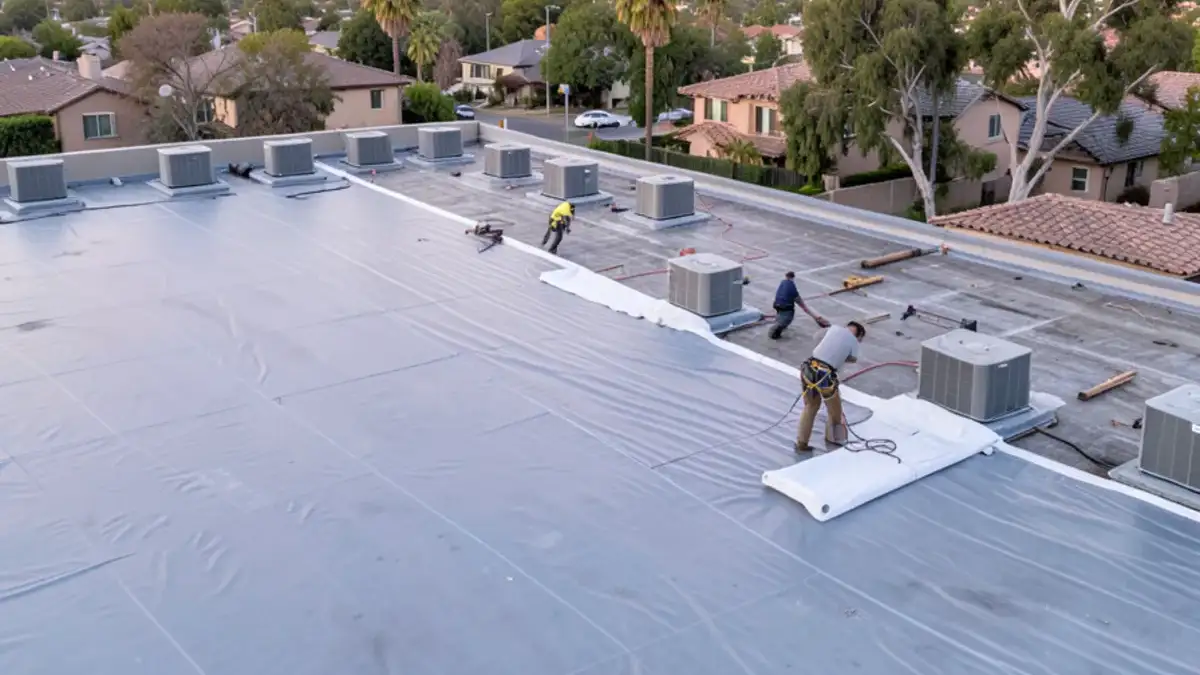
By Tylzen Spoke Roofing · Published
Commercial roof replacement cost in LA County is driven less by square footage than by five decisions: whether the existing roof can be recovered or must be torn off, which membrane goes on, how much insulation the job needs, how much drain, edge and curb work is involved, and what Title 24 requires once you replace half or more of the roof. Settle those, and bids start to look alike.
We do not publish a per-square-foot price, because a figure without those decisions attached is misleading. What follows is how we build a commercial roof replacement estimate, so you can budget and compare contractors on the same terms.
Why commercial roof cost per square foot swings so widely
Per-square-foot pricing is a convenient way to state a bid, not a way to predict one. The same 20,000 square feet can be a clean recover on a sound deck or a full tear-off with wet insulation, new drains and a crane.
- Existing layers: one roof can often be covered; two usually have to come off.
- Moisture: wet insulation must be removed, and it is rarely visible from the surface.
- Deck type and condition: wood panelized decks, steel deck and concrete each need different fasteners and repairs.
- Roof shape: parapets, height changes and many penetrations add labor that a plain rectangle does not.
- Access: hoisting, street closures, tenant schedules and night work all appear in the price.
- Code triggers: cool-roof and insulation rules can change what the new assembly must include.
Want a roofer to look at it?
Call with your address and what you are seeing. We visit same-day or next-day when crews are free.
- 4.9 from 48 Google reviews
- Based on Rosemead Blvd
- Photos and a written quote before work
Recover or tear-off: which one does your building qualify for?
A recover adds a new membrane, usually over a thin cover board, on top of the existing roof. It skips disposal and keeps the building dry during work, so it typically costs less. Building codes generally limit recovers to roofs with a single existing layer, and the old roof has to be dry and well attached.
That is why a moisture survey comes first. Infrared scans at dusk, moisture meters and a few core cuts show how much of the insulation is wet. If wet areas are small, they can be cut out and replaced within a recover. If they are widespread, a tear-off is the honest answer, even though it costs more up front.
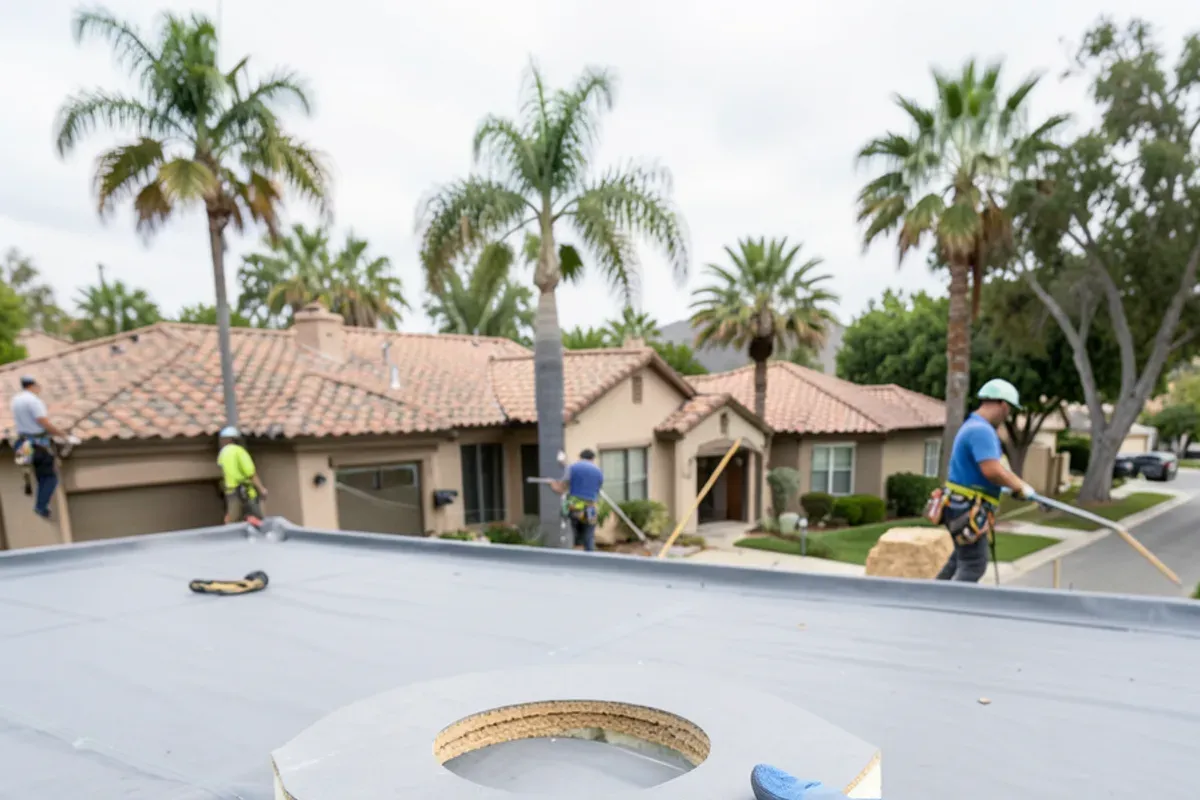
How membrane choice changes the budget
| System | Where it fits | What drives its cost | Watch for |
|---|---|---|---|
| TPO single-ply | Warehouses, retail, offices with simple layouts | Thickness, attachment method, insulation below | Seam quality at corners and curbs |
| PVC single-ply | Restaurants and roofs exposed to grease or chemicals | Higher material cost, detail work | Compatibility with old asphalt layers |
| Modified bitumen (torch-down or cold-applied) | Smaller buildings, heavy foot traffic, complex flashing | Number of plies, cap sheet type | Fire-safety rules for torch work near walls |
| Silicone or acrylic restoration coating | Sound roofs that are aged but dry | Surface prep, mil thickness, seam reinforcement | Not a fix for wet insulation |
| Built-up roof | Older buildings matching existing systems | Labor and hot asphalt handling | Weight and longer installation time |
A TPO commercial roof cost depends heavily on whether it is mechanically fastened or fully adhered. Fastened systems install faster; adhered systems resist wind uplift and flutter better and often carry different manufacturer coverage. Ask each bidder to name the attachment method in writing.
What does Title 24 add to a commercial reroof?
California's Energy Code (Title 24, Part 6) comes into play once a commercial reroof covers 50% or more of the roof area, and on some low-slope roofs when the work covers more than 2,000 square feet. Most of the San Gabriel Valley is in Climate Zone 9, where low-slope roofs of 2:12 or flatter generally need a cool-roof product.
- Aged solar reflectance of at least 0.63 and thermal emittance of at least 0.75, or an SRI of 75.
- A product listed in the Cool Roof Rating Council directory and carrying its label.
- Exceptions exist, including roof area covered by building-integrated solar panels; your building department decides which apply.
When a low-slope reroof has to add insulation
White TPO, PVC and many coatings meet those numbers easily. The bigger cost question is insulation, since some reroofs also trigger insulation requirements. Confirm both with the city before bids are finalized; see our cool roof installation page for how product ratings are checked.
Under the 2022 Energy Code, replacing a low-slope nonresidential roof generally means bringing roof insulation up to the levels in Table 141.0-C, as the BayREN reroofing guide summarizes. That can add a full layer of polyiso board across the building, which in turn raises curbs, drains and edge metal. The code offers a few relief valves that shape the bid:
- A recover that adds new R-10 insulation above the deck does not have to meet the full table value.
- Where rooftop units will not be disconnected and lifted, insulation can stop at the thickness that keeps base flashing at the manufacturer's required height.
- Tapered insulation may count even where its thinnest areas fall below the prescribed value, under conditions the code spells out.
- Replacing less than 50% of the roof and less than 2,000 square feet keeps the job outside these alteration rules.
The code is revised every three years, so ask the city which cycle applies on your permit date before you compare bids.
Drains, curbs and edges: the line items that surprise owners
The membrane is often less than half the story. Much of a commercial roof's leak risk, and a large share of the labor, sits at its edges and openings.
- Roof drains and overflow scuppers, which may need new bowls, clamping rings or added capacity.
- HVAC curbs that are too short for the new insulation height and must be raised.
- Skylights and smoke vents that are cheaper to replace during the reroof than after.
- Parapet coping and counterflashing, often rusted or pulled loose on older masonry buildings.
- Deck repair, which should be quoted as a unit price per sheet or per square foot before work starts.
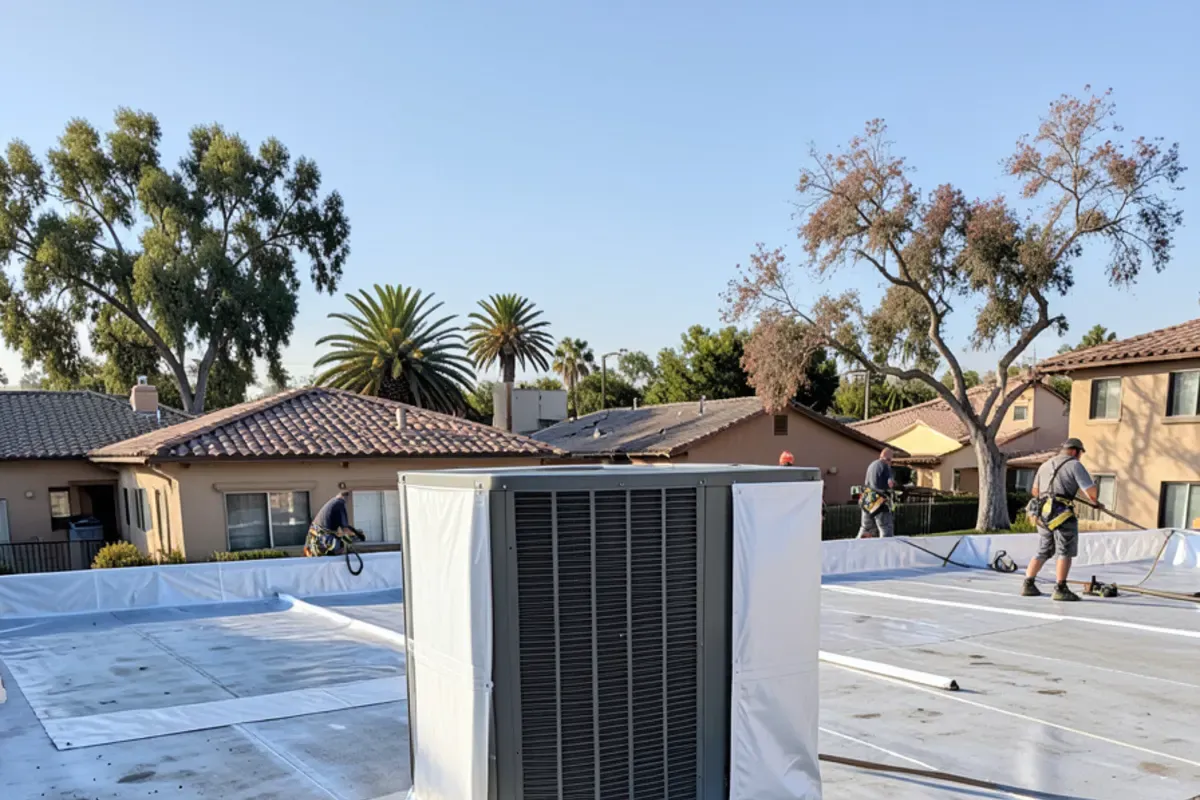
What we see on commercial roofs in South El Monte and City of Industry
Our base on Rosemead Blvd sits a short drive from the industrial and retail buildings of South El Monte and City of Industry. The roofs there share a few habits that shape replacement budgets.
- Older roofs recoated several times, so a recover is off the table and the tear-off is heavier than expected.
- Rooftop units added and removed over the years, leaving abandoned curbs and patched holes.
- Drains that clog with dust, causing ponding that softens insulation around them.
- Perimeter metal loosened by the gusty Santa Ana season that runs roughly October through March.
Trade-offs we put in front of owners
A recover saves disposal costs now, but it leaves two systems on the deck. When that roof wears out, both have to come off, so the next owner pays a heavier tear-off. If you plan to hold the building for decades, a full tear-off often prices out closer to a recover over the long run than the first bid suggests.
Insulation works the same way. Adding polyiso lowers cooling loads in a Climate Zone 9 summer, yet it can force curb raises, taller parapet flashing and drain extensions that push the bid up. A thicker membrane costs more per square but tolerates foot traffic from HVAC service better. We price these as options side by side, so the decision is about your hold period and tenants, not a sales pitch.
None of that is visible on a satellite image, which is why we walk the roof and photograph it before quoting.
How to compare commercial reroof bids
- Make sure every bid covers the same scope: recover or tear-off, membrane type and thickness, insulation type and R-value, attachment method.
- Check that drains, curbs, skylights and parapet work are either included or priced separately.
- Look for unit prices on deck repair and wet insulation replacement.
- Ask how manufacturer coverage and workmanship terms are written, and whether they transfer to a buyer.
- Look up each contractor's C-39 Roofing license at cslb.ca.gov before signing.
- Confirm who pulls the permit and schedules the inspection.
How each line on an estimate is usually priced
| Line item | Usual pricing | Why it matters |
|---|---|---|
| Tear-off and disposal | Per square, by number of layers | A second hidden layer can change it mid-job |
| Wet insulation replacement | Unit price per board or square foot | Moisture surveys estimate it; the tear-off confirms it |
| Deck repair | Unit price per sheet or square foot | Protects you from open-ended change orders |
| New insulation and cover board | Per square, by R-value and thickness | Often the line Title 24 makes largest |
| Membrane and flashing | Per square plus detail allowances | Thickness and attachment method belong in writing |
| Drains, curbs, skylights | Each, or a lump sum per item | Easy to leave out of a low bid |
| Permit, crane and hoisting | Lump sum or allowance | Separate lines make bids comparable |
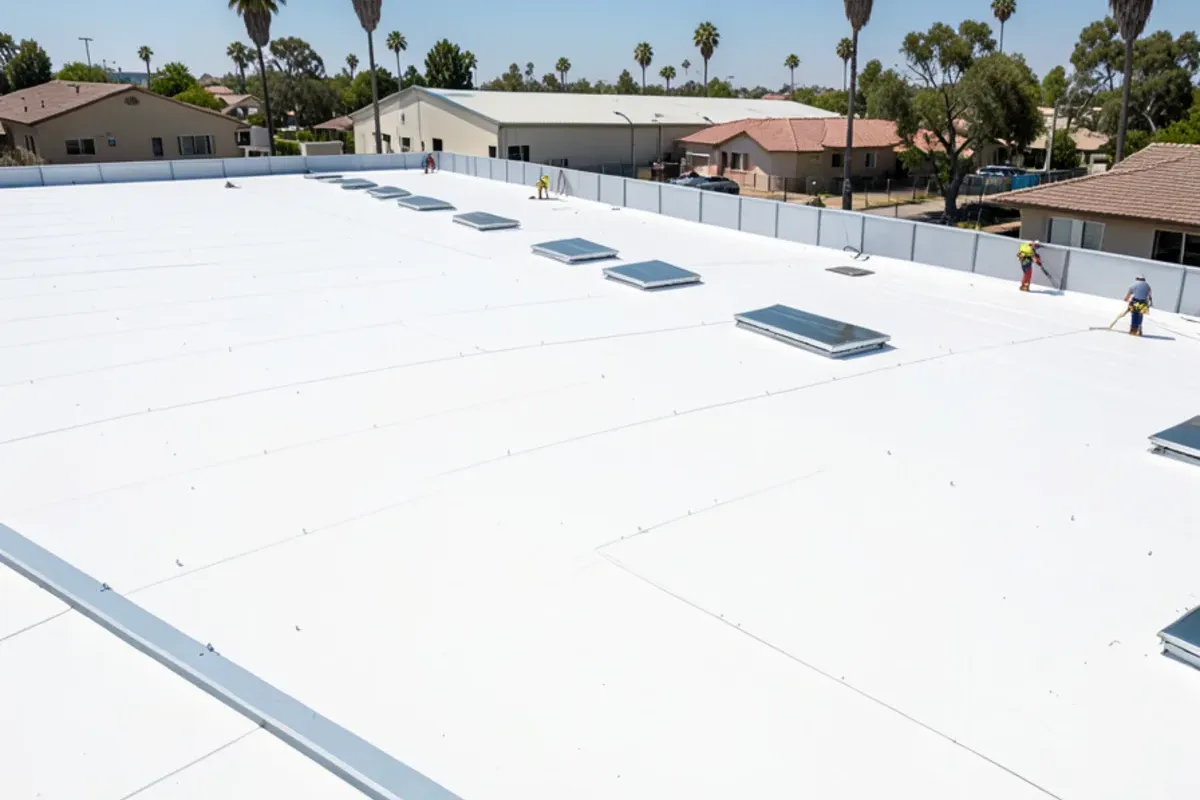
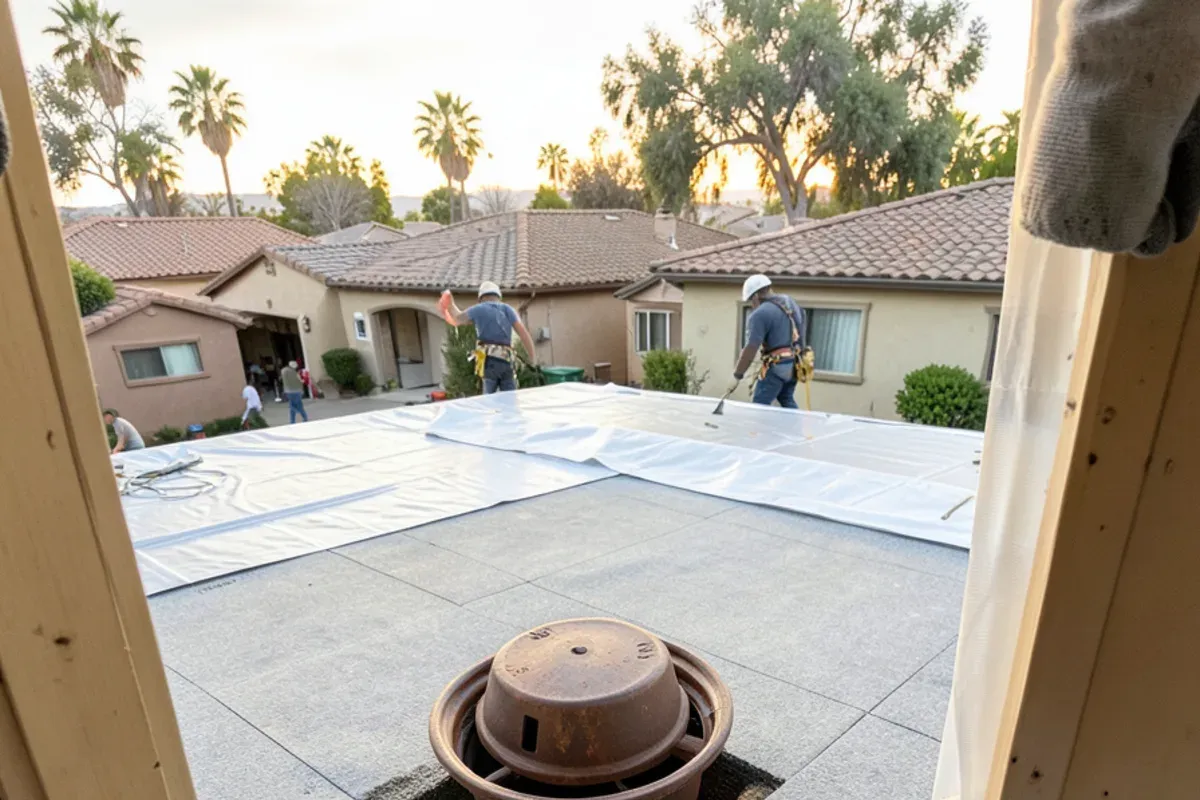
Getting a commercial roofing number you can budget around
Start with a commercial roof inspection that includes a moisture check, then ask for an itemized written estimate that shows permits and deck repair as separate lines. That gives you a real figure for capital planning and a scope that other bidders can match. Call (725) 745-8803 or request a quote, and we will schedule a walk of your roof.
Questions readers ask
Is a roof recover always cheaper than a tear-off?
Up front, usually yes, because there is no disposal and less labor. It only saves money if the old roof is dry and well attached. Covering wet insulation traps moisture, shortens the new roof's life and can rust steel decks, so the survey matters more than the price difference.
Can we reroof while tenants stay open?
Usually. Work is phased by section, noisy or odorous steps are scheduled around business hours, and each area is closed up before the end of the day. Interior protection is planned where tear-off will happen over inventory or equipment.
Does a commercial reroof in LA County need a permit?
Yes, replacing a commercial roof needs a permit. Each city issues it through its building department or a contracted county office, while unincorporated areas go through LA County Public Works. Our team files for it and lines up the inspection.
How far ahead should we budget for replacement?
Ideally a few years. An inspection that rates each roof section and estimates remaining life lets you plan the expense instead of reacting to a leak. Sections in fair shape can often be maintained while the worst section is replaced first.
Can a cool roof on our building qualify for a utility rebate?
Possibly, but check before you count on it. LADWP's cool-roof rebate applies only to its own electric customers, mostly inside the City of Los Angeles. Buildings in South El Monte, City of Industry and most of the San Gabriel Valley are served by SCE, so check current SCE and Energy Upgrade California offerings directly before your bid is final.
Sources
- California Energy Commission: Building Energy Efficiency Standards (Title 24, Part 6)
- Cool Roof Rating Council: product ratings directory
- Contractors State License Board: check a license
- Single Ply Roofing Industry (SPRI)
- BayREN Codes and Standards: Nonresidential Roofing Guide to 2022 Energy Code Requirements
Written by Tylzen Spoke Roofing
A roofing contractor on Rosemead Blvd (CA-19) in Rosemead, working on shingle, tile, metal and flat roofs across the San Gabriel Valley. This guide reflects what our crews check on local roofs. Questions about your roof? Call (725) 745-8803.