
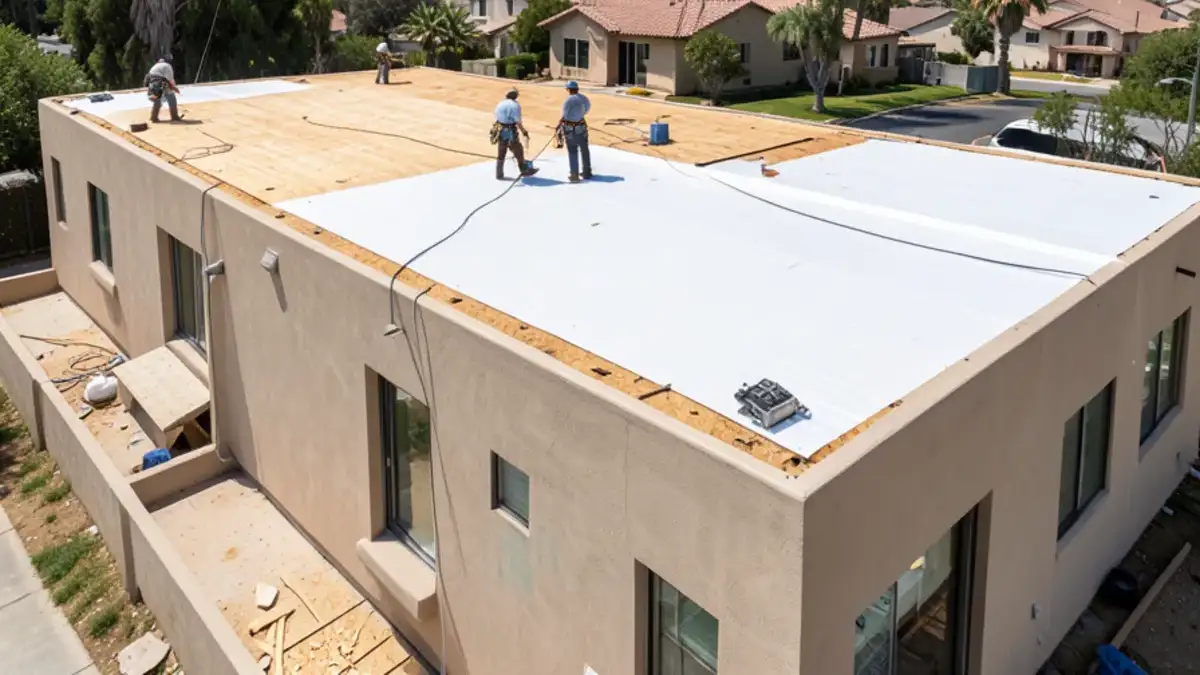
Commercial roof replacement in Rosemead starts with one question: can the new roof go over the old one, or does everything come off to the deck? We answer it with core cuts and a moisture survey, then price the replacement in writing with every layer, deck repair and drain upgrade shown as its own line.
Replacement sits within our commercial roofing work across the San Gabriel Valley. It covers strip centers, office buildings, medical offices, warehouses and apartment roofs that have reached the point where repairs cost more each year than they save.
Commercial roof replacement in Rosemead: recover or tear-off?
A recover installs new insulation or a cover board and a new membrane over the existing roof. A tear-off strips the old system to the deck. Recovers cost less and keep the building closed to weather during the job, but they are only allowed in some cases.
| Condition found | Recover | Tear-off |
|---|---|---|
| One existing roof, insulation dry | Usually allowed | Optional |
| Two roofs already on the deck | Not allowed by the building code | Required |
| Wet or crushed insulation across large areas | Not allowed over water-soaked material | Required in those areas |
| Gravel-surfaced built-up roof | Possible after gravel removal and cover board | Common choice |
| Deck rust or rot visible from below | Not until the deck is repaired | Lets the deck be fixed fully |
Weight matters too. An old built-up roof with gravel can weigh several pounds per square foot, and adding a recover on top adds load the structure was never checked for. When the numbers are close, a structural engineer should confirm the deck and framing can take it.
A recover also carries costs that arrive later. The next replacement has to remove both layers, and membrane makers often offer less coverage on a recover than on a tear-off system. When either is allowed, we price them side by side.
What every replacement quote from us includes
- Removal or preparation of the existing roof, with hauling and disposal.
- Deck repairs at a stated per-unit price.
- Insulation or cover board for the energy code and any tapered design.
- New membrane, base flashing at walls and curbs, and edge metal or coping.
- Drain bowls, strainers, scuppers and overflows.
- Permit, inspection and a closeout package with product data.
Signs a commercial roof is due for replacement
Replacement makes sense when problems are spread across the roof rather than sitting at one detail. Here the usual tipping point is an original membrane that has been through many hot summers and wet winters, with repairs that keep moving to new spots.
- Leaks at several unrelated points in the same rainy season.
- A moisture survey showing wet insulation across a large share of the field.
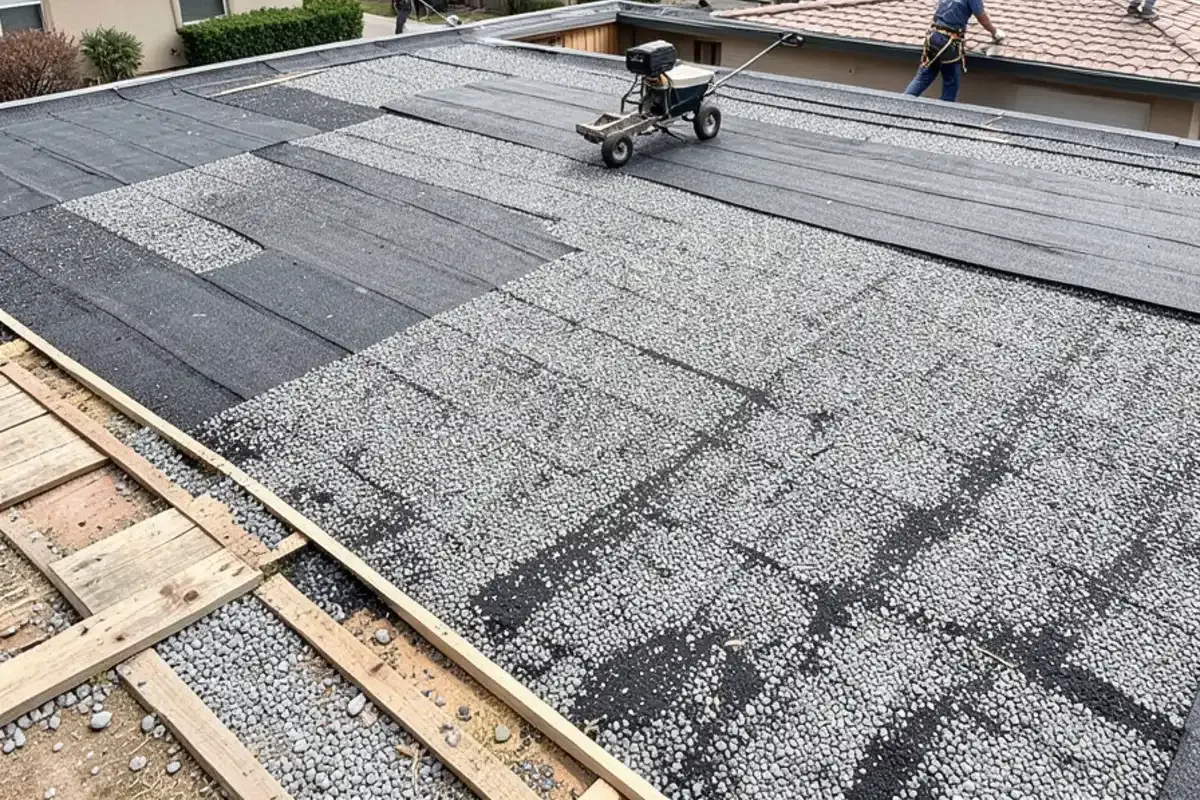
- Cap sheet with bare, granule-free areas, alligatored asphalt, or shrinkage pulling at the edges.
- TPO or PVC that cracks when folded or will no longer take a weld.
- Repair bills over the last few years that add up to a real share of a new roof.
- A sale, refinance or new lease where the other side wants remaining life documented.
Older strip centers and 1960s-80s offices in the valley often still carry a gravel built-up roof with a cap sheet laid over it, which sends them straight to tear-off.
Which membrane should replace an old flat commercial roof?
Most reroofs we price here end up as TPO or modified bitumen cap sheet, with PVC where grease or chemicals are present. Each has a place.
- TPO: white, heat-welded and light. A common choice for warehouses and retail where cool-roof rules apply.
- PVC: welded like TPO but more resistant to grease and many chemicals, so it suits restaurants and food plants.
- Modified bitumen: a multi-ply asphalt system with a granulated or coated cap sheet. Tough under foot traffic and easy to patch later.
- Silicone restoration: not a replacement, but on a dry, sound roof a coated restoration can defer one for years at lower cost.
Product lines from Carlisle, GAF, Johns Manville and Elevate are common market examples for single-ply and modified systems, and the coating market includes several silicone and acrylic lines. We choose by the roof's needs and show you the specific product sheet before you sign.
Do commercial reroofs have to meet Title 24 cool-roof rules?
Often, yes. California's Energy Code, Title 24 Part 6, treats a commercial reroof covering 50% or more of the roof area, or more than 2,000 square feet on some low-slope roofs, as work that can trigger cool-roof requirements in the climate zones that require them. Rosemead, like most valley cities, falls in Climate Zone 9.
For low-slope roofs (2:12 or less), the membrane must reach 0.63 aged reflectance and 0.75 emittance, or SRI 75. The product must be rated by the Cool Roof Rating Council (CRRC) and carry its label. Insulation requirements can also apply when the roof is replaced. The rules have exceptions and change between code cycles, so confirm with the building department for your city before choosing a product.
The reroof permit comes from the city where the building stands, or from LA County Public Works Building & Safety in unincorporated pockets such as East San Gabriel. Only a CSLB-licensed contractor, C-39 for roofing, can take a permitted reroof. Check the license and workers' comp record at cslb.ca.gov before signing.
Need commercial roof replacement help this week?
Tell us what you are seeing. We schedule same-day or next-day visits when crews are free and send photos with a written quote.
- 4.9 from 48 Google reviews
- Based on Rosemead Blvd
- Photos and a written quote before work
Design changes worth making while the roof is open
A reroof is the cheapest time to fix problems built into the old roof. Once new membrane is down, changing them means cutting it open.
- Tapered insulation and crickets to push water off flat spots and around curbs.
- Added overflow drains or scuppers where the roof has only one way out.
- Raising low HVAC curbs so flashing can run high enough above the finished roof.
- New parapet coping with proper laps and cleats, instead of resealing old joints.
- Walkway pads to equipment, and attachment points planned for future solar.
How do you phase a reroof on an occupied building?
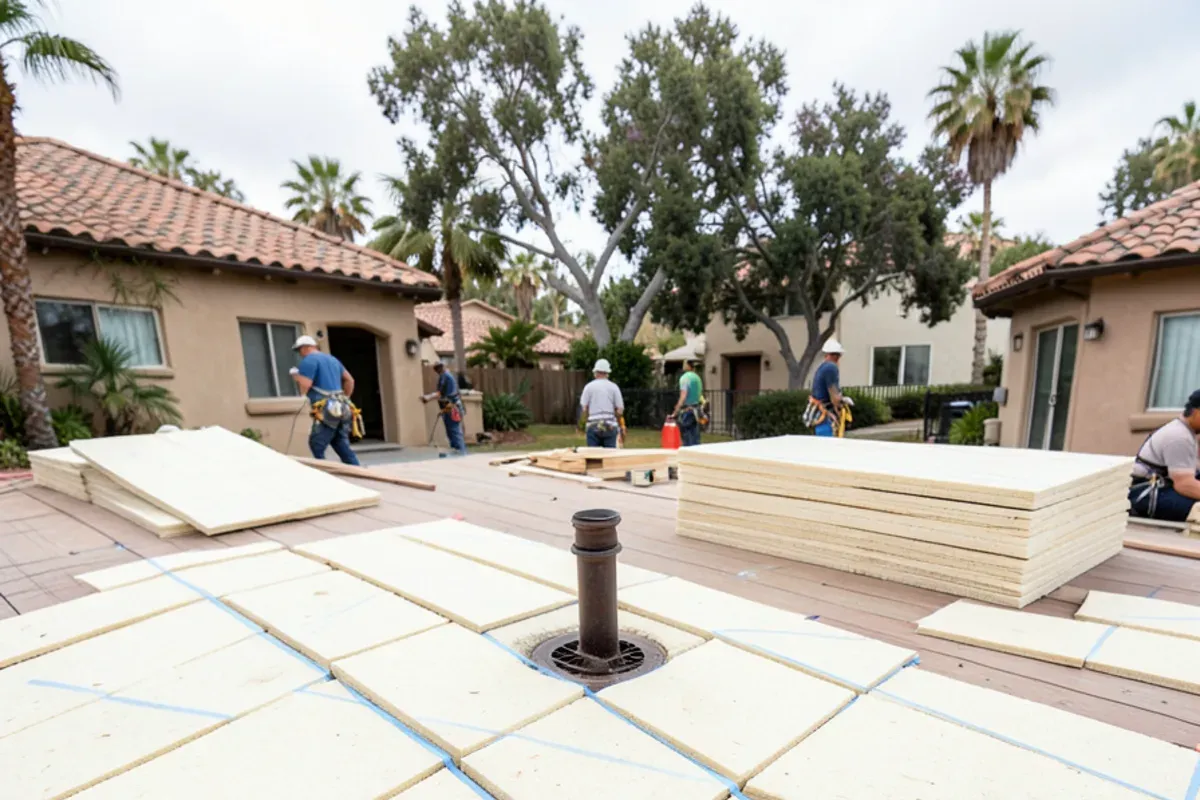
We divide the roof into sections that can be torn off and closed back up in a single day. Nothing is left open overnight, and weather forecasts decide which days we tear off.
- Preconstruction walk with the manager: tenant list, sensitive spaces, intake locations, staging and parking.
- Written notices to tenants with dates, noise days and any HVAC shutdowns.
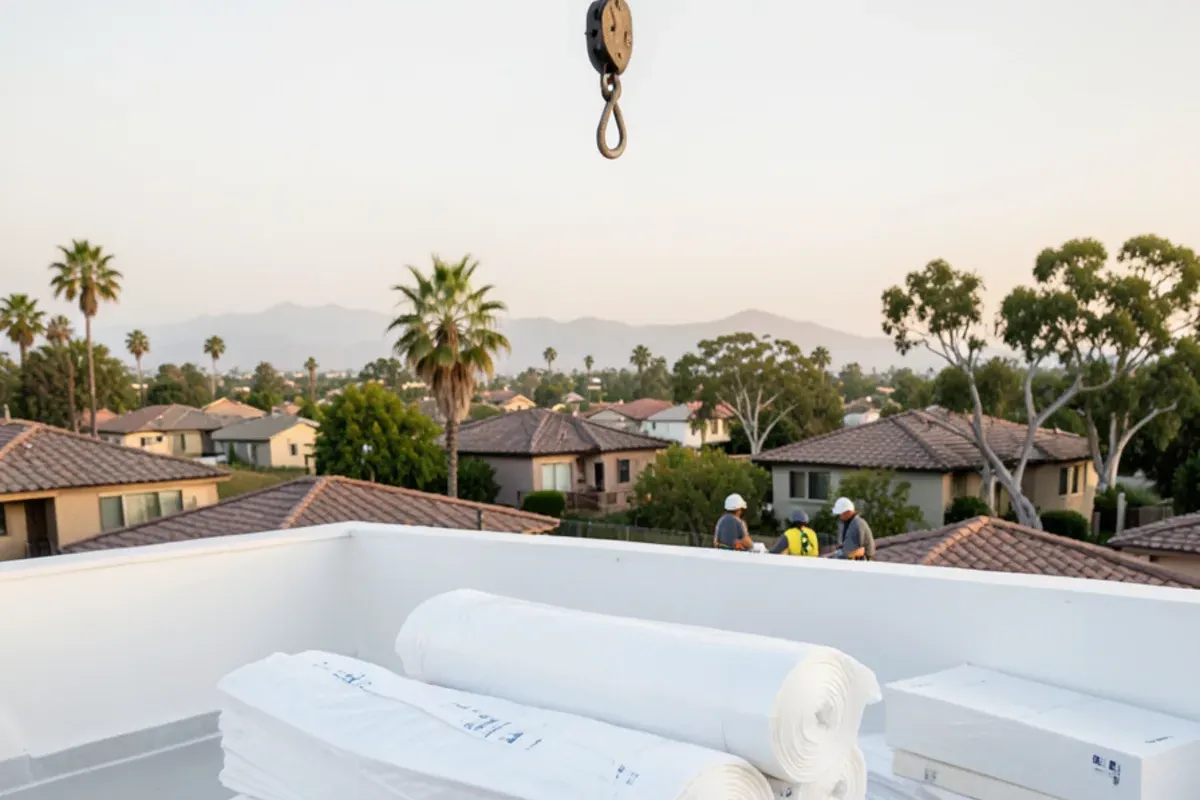
- Material loading by crane or hoist, often early on a weekend morning.
- Daily tear-off and dry-in by section, with debris chuted to a covered bin.
- Flashing, curbs and drains completed; permit inspection scheduled with the city or county.
- Final walk, punch list and closeout package.
A small storefront can take a few working days. A large retail or industrial roof can run several weeks. We give you a section schedule in writing and update it when weather moves it.
Commercial roof replacement cost: what moves the number
Two roofs of the same area can price very differently. Our quotes separate the items below so you can see where the money goes. For broader planning numbers, read our LA County commercial roof replacement cost guide.
- Tear-off depth: one layer, two layers, or gravel-surfaced built-up roof.
- Deck repairs: rusted metal deck or rotted plywood, priced per unit before work starts.
- Insulation thickness needed for code and the tapered design.
- Number of curbs, drains, skylights and penetrations to flash.
- Access, crane days, and after-hours work around tenants.
- Membrane thickness and the manufacturer coverage level you choose.
Commercial reroofs are often budgeted across fiscal years. Ask about payment options when you review the quote.
Why owners pick Tylzen Spoke to replace a commercial roof
- Core cuts and photos back up the recover-or-tear-off recommendation, so you are not taking our word for it.
- Permits and any deck replacement appear as separate lines on a written quote.
- We pull the permit and book the inspection with the city or county.
- Reviewers mention protected, clean job sites and crews who show up when scheduled.
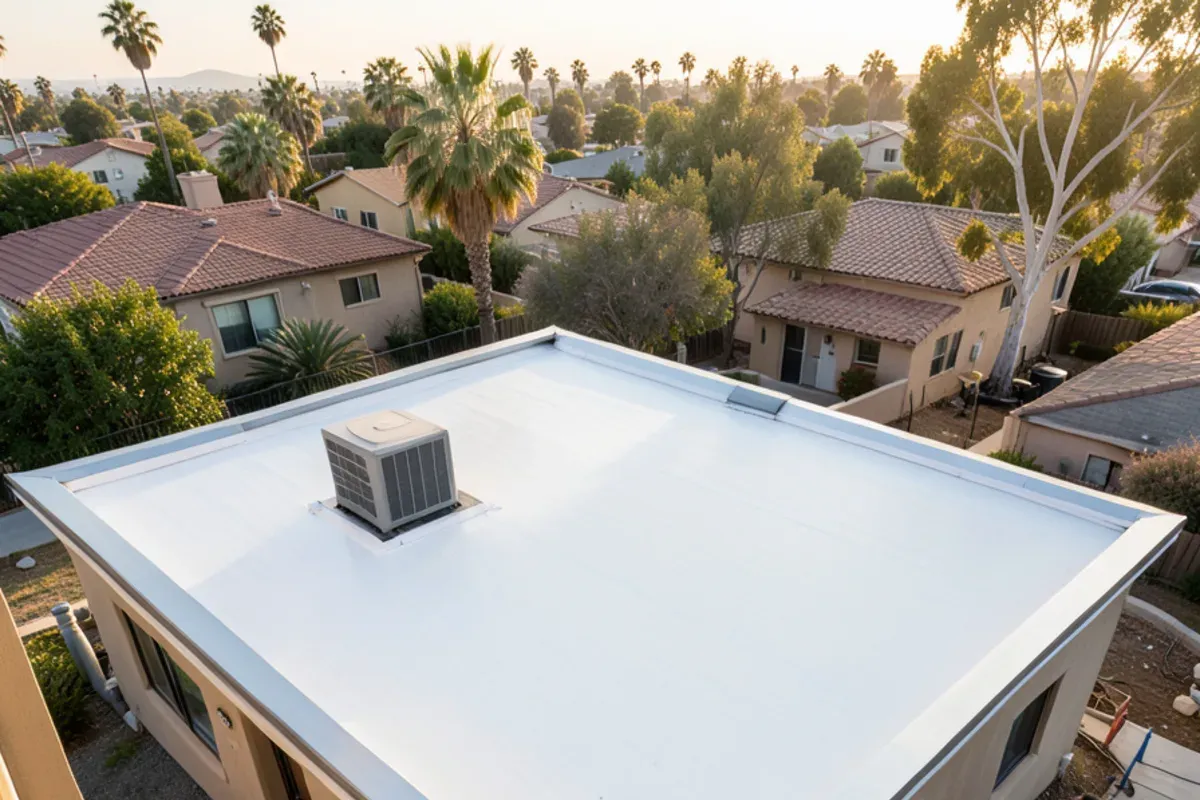
System coverage comes from the membrane maker and varies by product line; workmanship terms are spelled out in our contract. Get each in writing and ask if a future buyer inherits them. Keeping drains clear and scheduling a commercial roof inspection each year protects that coverage.
We replace commercial roofs in Montebello, Commerce, El Monte and nearby cities. If you are adding a building or a new section instead, see commercial roof installation.
What customers say on Google
4.9★ from 48 Google reviews (checked Nov 2026)
“We had a great experience getting a new roof, gutters, and fascia flashing installed, and the finished work really shows. Everything looks clean, solid, and well done, and the whole roofing project felt organized from start to finish. …”
“I was very happy with the roofing service I received. I reached out because the skylight in my bathroom was leaking, and Brandon scheduled a visit right away. He actually arrived on time, which is rare these days! …”
“We hired Tylzen Spoke Roofing for a full exterior project on our home in Rosemead, including a new roof, siding, gutters, and a front entry door. David handled the work, and the whole job went smoothly from start to finish. What stood out most was how clear and honest everything was. …”
Where we handle commercial roof replacement
- Rosemead
Strip centers and offices on aging gravel built-up or double cap sheet roofs that no longer qualify for a recover.
- Montebello
Light-industrial and retail buildings along the 60 freeway corridor, where white cool-roof membranes now replace dark cap sheet.
- Commerce
Large warehouses where tear-off runs section by section so loading docks and stored goods stay dry and in use.
- El Monte
Older office and retail buildings where heavy gravel roofs often need an engineer's review before anyone proposes a recover.
- City of Industry
Very large distribution roofs where a TPO recover over dry insulation can avoid tear-off on huge areas.
- Santa Fe Springs
Industrial buildings with chemical or process exhaust on the roof, where PVC often replaces worn TPO or asphalt.
- Irwindale
Manufacturing roofs where replacement is scheduled around production shifts and crane days.
- Arcadia
Office and medical buildings along Huntington Drive, where occupied-building phasing and tenant notices shape the reroof.
- Alhambra
Mixed-use and apartment buildings with flat roofs behind parapets, reroofed in sections while tenants stay in place.
More places we handle commercial roof replacement
Commercial Roof Replacement questions
Can a new commercial roof go over the existing one?
Sometimes. A recover is generally allowed over one existing roof when the insulation is dry and the deck is sound. If two roofs are already on the building, or the old insulation is water-soaked, the code requires removal. Core cuts and a moisture survey tell us which case you are in before we price anything.
Do commercial reroofs have to meet Title 24 cool-roof rules?
In many cases. Replacing 50% or more of a roof, or more than 2,000 square feet on some low-slope roofs, can trigger cool-roof rules in the zones that require them. Most of the valley is Climate Zone 9. Confirm with your building department; we provide the rated product data for the permit.
How do you phase a reroof on an occupied building?
By sections small enough to tear off and dry in the same day. We plan the order with the manager, send tenants written notice, keep debris away from entrances, and cover air intakes when adhesives are in use. Loud tear-off days can be set for early mornings or weekends.
What happens if you find rotted or rusted deck during tear-off?
Work on that section pauses while we photograph the damage and walk you through it. The quote lists a per-unit price for deck replacement in advance, so the cost is predictable. Damaged deck has to be fixed before new roofing goes down, and the inspector may want to see it.
How long does a commercial roof replacement take?
A small storefront roof can take a few working days. Larger retail, office or industrial roofs can take several weeks, depending on size, tear-off depth, deck repairs and weather. We schedule tear-off for dry days and keep you updated on the section plan.
Is a coating a real alternative to replacement?
On the right roof. If the membrane is still attached, the insulation is dry and the seams can be repaired, a silicone or acrylic restoration can add years at lower cost. On a wet or badly blistered roof, a coating traps the problem. The moisture survey shows which applies.