
By Tylzen Spoke Roofing · Published
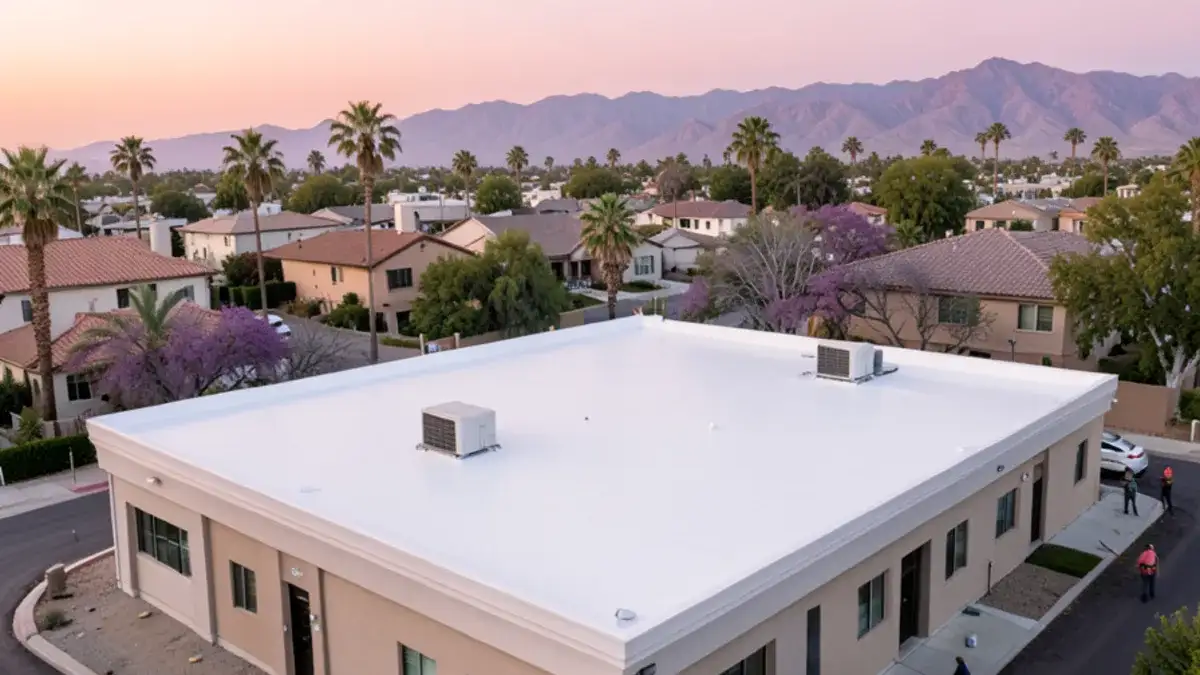
Roof coating maintenance comes down to two checks a year, prompt touch-ups at seams, penetrations and worn spots, and a full recoat when the coating has thinned enough that the roof underneath starts to show. Done on schedule, a recoat costs far less than a tear-off and keeps the reflective surface that helps with summer heat.
Silicone and elastomeric acrylic coatings age differently, and they do not always bond to each other. Knowing which one is on your roof decides how you clean it, what you patch it with and when it is time for a new coat.
Silicone vs. elastomeric acrylic: how each one ages
Both coatings form a seamless, flexible layer over an existing roof. Their weak points differ.
| Coating | How it ages | Main maintenance need | Recoat with |
|---|---|---|---|
| Silicone | Holds up to standing water and UV; surface collects dirt | Gentle cleaning to restore reflectance; check adhesion at edges | Silicone; most other coatings will not stick to it |
| Elastomeric acrylic | Chalks and thins in strong sun; softens where water ponds | Watch thin spots and ponded areas; clean before recoating | Acrylic, or silicone after proper prep and primer |
| Polyurethane and others | Tough under foot traffic; may yellow | Check traffic paths and seams | Follow the maker's recoat instructions |
If you do not know what is on your roof, the original invoice or warranty document usually names the product. A small adhesion test patch tells a roofer the rest.
Want a roofer to look at it?
Call with your address and what you are seeing. We visit same-day or next-day when crews are free.
- 4.9 from 48 Google reviews
- Based on Rosemead Blvd
- Photos and a written quote before work
What a twice-yearly coating check covers
A coating check takes far less time than the repairs it prevents. On most homes and small buildings, the visit follows the same short list.
- Clear leaves, seed pods and grit from the surface, drains and scuppers.
- Walk the roof in a grid, marking thin, chalky, blistered or lifted areas.
- Inspect every penetration, curb and parapet base, where movement and foot traffic wear coating first.
- Probe suspect soft spots for trapped moisture.
- Photograph findings and log them with the date, so wear can be tracked from one visit to the next.
Fall and spring work well in our climate: one visit before the rains, one after them.
When should you recoat a flat roof?
Recoat when wear is spreading, not after leaks start. These are the signs we look for.
- Thin or translucent areas where the base membrane or old cap sheet shows through.
- Chalky residue that rubs off on your hand, common with aging acrylics.
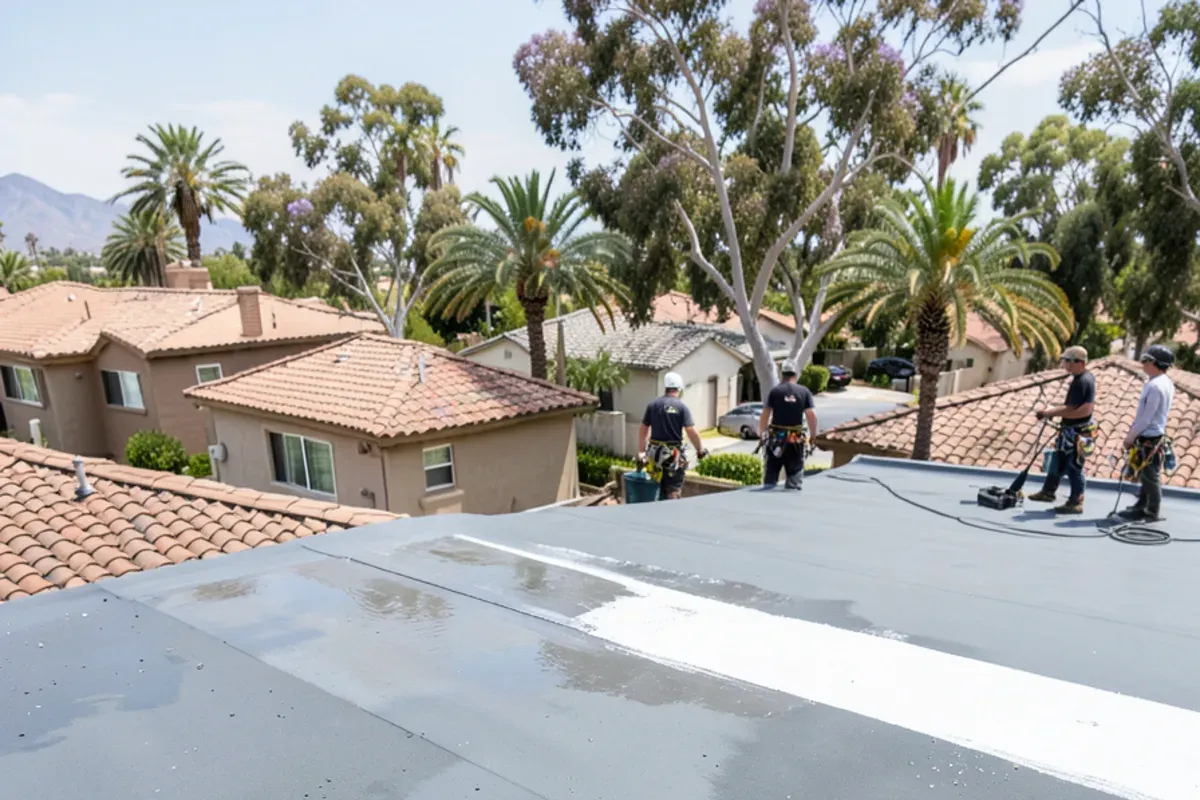
- Peeling or delamination, where the coating lifts in sheets from the surface below.
- Blisters that hold air or water under the coating.
- Cracking at seams, around drains and at the base of parapet walls.
- Dark, dirty surface on a silicone roof that no longer stays bright after cleaning.
Coating peeling is the sign that needs the fastest attention. It usually means the coating lost its bond, often from moisture under it or poor surface prep, and recoating over a peeling layer only adds weight to something already loose.
Touch-up, recoat or replacement?
- Touch-up: small damaged spots, a few open seams or worn areas around penetrations. Clean, prime where needed and apply matching coating with reinforcing fabric at seams.
- Full recoat: widespread thinning or chalking with a sound, dry roof underneath. Clean the entire surface, repair details, then apply a new coat at the specified thickness.
- Replacement: wet insulation, soft decking, extensive peeling or a coating applied over a failing roof. Coating cannot fix what is wrong below it.
Before any recoat, we probe for wet areas. Trapped moisture under a new coat leads to blisters and peeling within a season or two. When the roof underneath has failed, our flat roof repair team prices the fix before any coating goes on.
How is a recoat applied so it actually bonds?
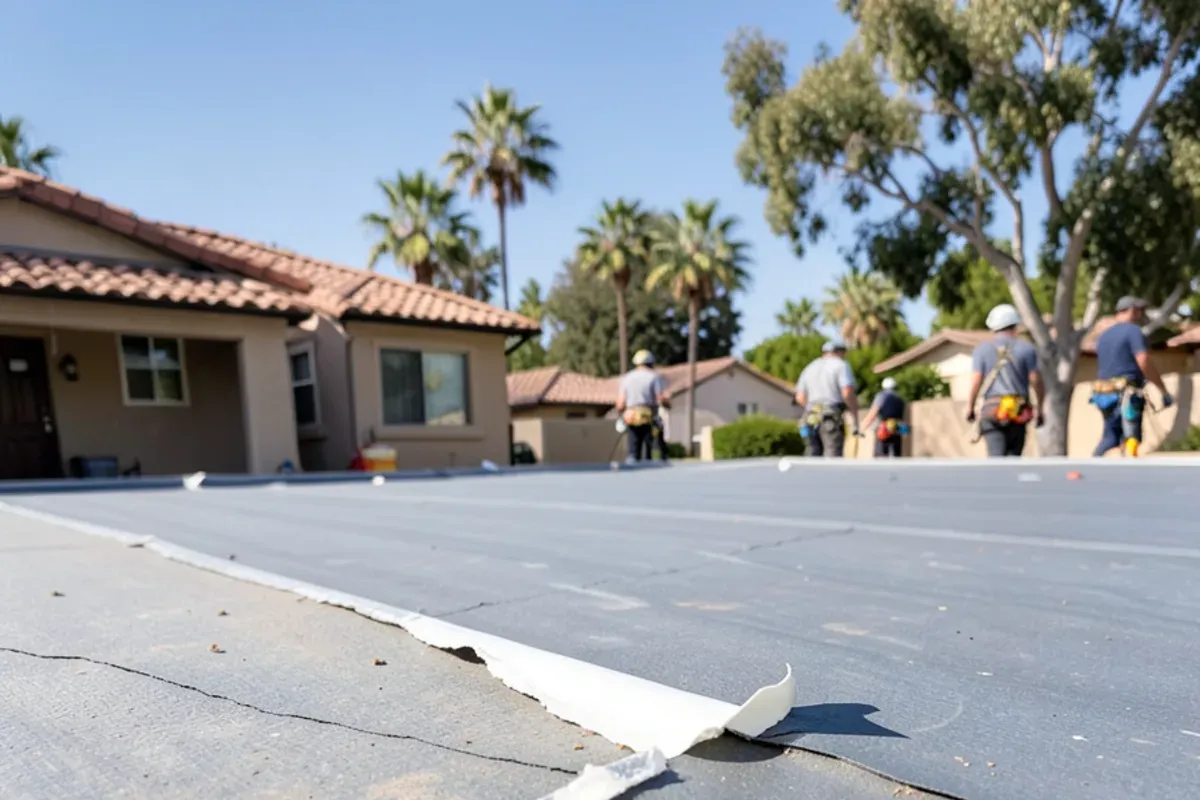
Most coating failures we are called to trace back to the day the coat went on, not to the product. Prep takes longer than spraying or rolling, and skipping any of it shows up as peeling within a season or two.
- Survey for moisture and cut out any wet insulation or soft spots, then patch them before coating.
- Clean the whole surface with low pressure or the maker's approved cleaner, and let it dry fully.
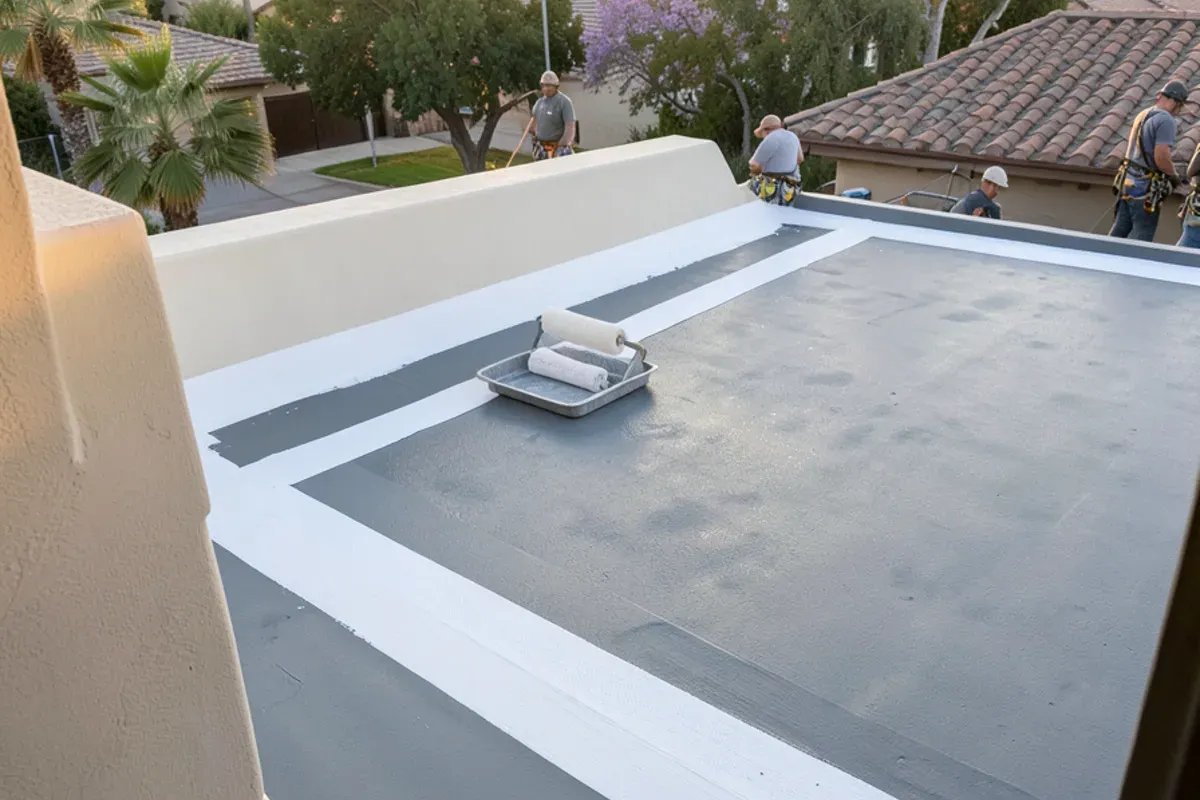
- Rebuild open seams, drain rings and curb bases with base coat and reinforcing fabric.
- Prime where the system calls for it, including a bleed-blocking primer when acrylic goes over asphalt-based roofing such as torch-down.
- Run an adhesion test on a small area and confirm the bond before coating the field.
- Apply the coat at the specified thickness, checking it with a wet-film gauge as we go, and only when the forecast leaves enough dry hours to cure.
Weather matters more for acrylics, which need warm, dry hours and no overnight dew to cure. Silicone tolerates cooler, damper air better, but no coating should go down with rain on the way.
How do you keep a roof coating warranty valid?
Coating manufacturers attach conditions to their coverage, and terms vary by product. The common ones are worth knowing before you need them.
- The coating was applied at the required dry thickness and the installation was registered with the maker, if the program requires it.
- Periodic inspections are done and recorded, often after major storms and on a regular schedule.
- Repairs use compatible materials from the same system.
- Damage from foot traffic, new penetrations or long-term ponding may be excluded.
- Rooftop work by other trades, such as new AC equipment, is followed by a coating repair.
Manufacturer coverage and workmanship terms are separate. Get both in writing, along with whether either one carries over to a new owner.
Our observations on coated roofs in the San Gabriel Valley
We inspect coated roofs on homes, additions and small commercial buildings around Rosemead and South El Monte. Long dry summers and short wet winters create a few predictable issues.
- Dust and pollen building up on silicone roofs over summer, cutting reflectance before anyone notices.
- Acrylic coatings thinning first on the sunniest, most exposed sections and around rooftop equipment.
- Coatings applied directly over gravel or debris that never bonded properly.
- AC service visits leaving screw holes and scuffed coating around units.
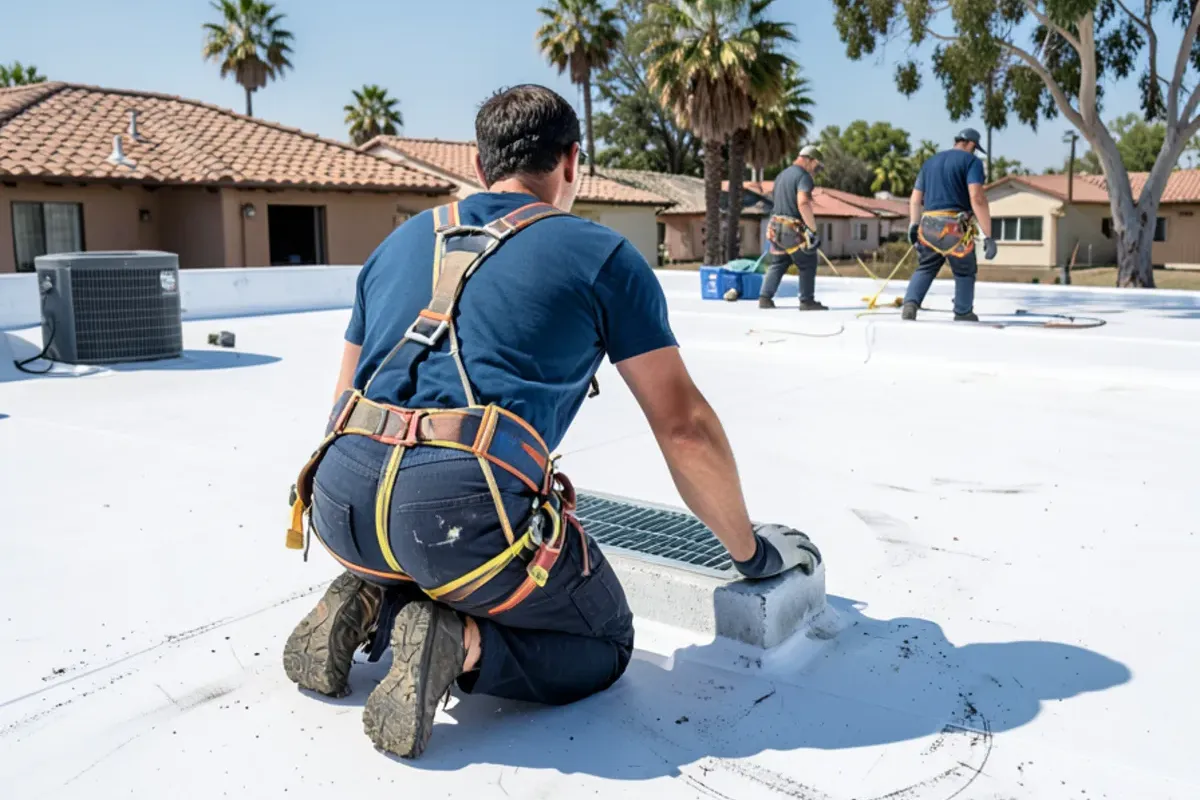
We schedule coating checks in fall, before the November rains, and again in spring after the wettest months, and we photograph every repaired spot.
Trade-offs in keeping a coated roof going
- Silicone shrugs off ponding and UV, but it holds dirt and only bonds to more silicone, so every future repair is locked into that system. Acrylic costs less and stays cleaner-looking, though it wears faster where water sits.
- A thicker recoat costs more in material and labor, yet the extra thickness is what carries the roof through more summers before the next one.
- Fabric-reinforcing every seam during a recoat adds time on day one, while treating only the seams that already failed saves money and leaves the others for the next visit.
- Walkway pads around AC units and roof hatches are a small added line that stops the scuffing and screw holes we find after equipment service. On small business roofs, our commercial roof maintenance plans include them.
A simple yearly plan for your coated roof
Clear debris, rinse the surface gently, check seams and penetrations twice a year, and fix small wear promptly. Plan a recoat when thinning spreads, not after the first leak. Our roof coatings service and roof inspection visits cover each step. To get your coating looked at before the November rains, call (725) 745-8803 or send us a quote request.
Questions readers ask
What is the service life of a silicone coating?
It depends on thickness, prep and exposure more than on the product name. Coatings are sold in different thickness systems with matching coverage terms. A silicone roof that is kept clean, inspected and touched up at wear points will last much longer than one that is ignored until it leaks.
Can you put acrylic coating over silicone?
Generally no. Very little sticks to cured silicone except more silicone, so a silicone roof is normally recoated with silicone. Acrylic roofs can sometimes take silicone after cleaning and priming. An adhesion test on a small area confirms compatibility before the full job.
Can I pressure wash a coated flat roof?
Use low pressure and a soft brush or a cleaner the coating maker approves. High-pressure washing can cut into the coating and force water under loose areas. On silicone roofs, cleaning alone often brings back much of the lost brightness.
Why is my roof coating peeling?
Peeling usually means the coating lost its bond to the surface. Common causes are moisture under the coating, dirt or chalk left from poor cleaning, or an incompatible product. The loose material has to be removed and the cause fixed before recoating.
When is the best time of year to recoat a flat roof in Rosemead?
Late spring through early fall, before the November rains. Acrylic coatings need warm, dry days and nights without heavy dew to cure, and summer here gives plenty of both. Silicone handles cooler weather better, but every coating needs a dry roof and a dry forecast. Book the fall coating check early so any recoat it calls for can still be done in good weather.
Sources
Written by Tylzen Spoke Roofing
A roofing contractor on Rosemead Blvd (CA-19) in Rosemead, working on shingle, tile, metal and flat roofs across the San Gabriel Valley. This guide reflects what our crews check on local roofs. Questions about your roof? Call (725) 745-8803.