
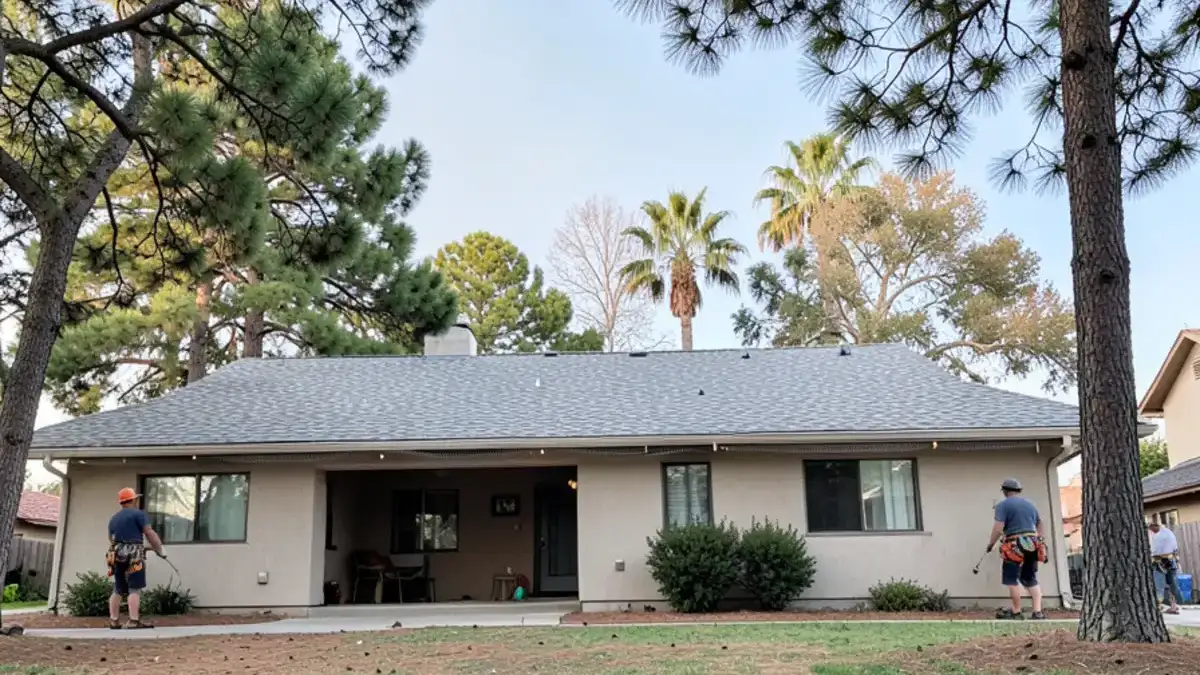
By Tylzen Spoke Roofing · Published
The best gutter guards for most San Gabriel Valley homes are stainless steel micro-mesh panels, because they block pine needles, jacaranda blossoms and shingle grit while still taking in heavy rain. Perforated screens cost less and stop large leaves, but small debris slips through or sticks. Reverse-curve hoods handle big leaf loads on simple rooflines, yet struggle with needles and can shed water past the gutter in hard bursts.
Below we compare all three on debris, rain, maintenance and cost, and explain how our gutter guard installation matches the guard to the trees around your roof.
Which gutter guards work best on Southern California homes?
Start with the trees, not the brochure. A guard that is perfect under a sycamore can clog in a month under a pine. Walk the yard and note what lands on the roof: needles, small leaves, large leaves, seed pods, blossoms or mostly dust and grit.
| Guard type | Best at stopping | Weak spots | Upkeep |
|---|---|---|---|
| Micro-mesh (stainless or aluminum) | Pine needles, blossoms, small leaves, grit | Needs brushing when debris dries on top | Brush or rinse the surface once or twice a year |
| Perforated or wire screen | Large leaves and branches | Needles and seeds wedge in holes; flimsy types sag | Frequent clearing under heavy trees |
| Reverse-curve hood | Large leaves on simple, moderate-pitch roofs | Needles, very heavy rain, complex rooflines | Clean the inlet slot and gutter floor |
| Foam or brush inserts | Some large debris | Hold fine debris and dry out slowly | Remove and clean, often replaced |
Want a roofer to look at it?
Call with your address and what you are seeing. We visit same-day or next-day when crews are free.
- 4.9 from 48 Google reviews
- Based on Rosemead Blvd
- Photos and a written quote before work
Micro-mesh gutter guards: fine filtering, light surface cleaning
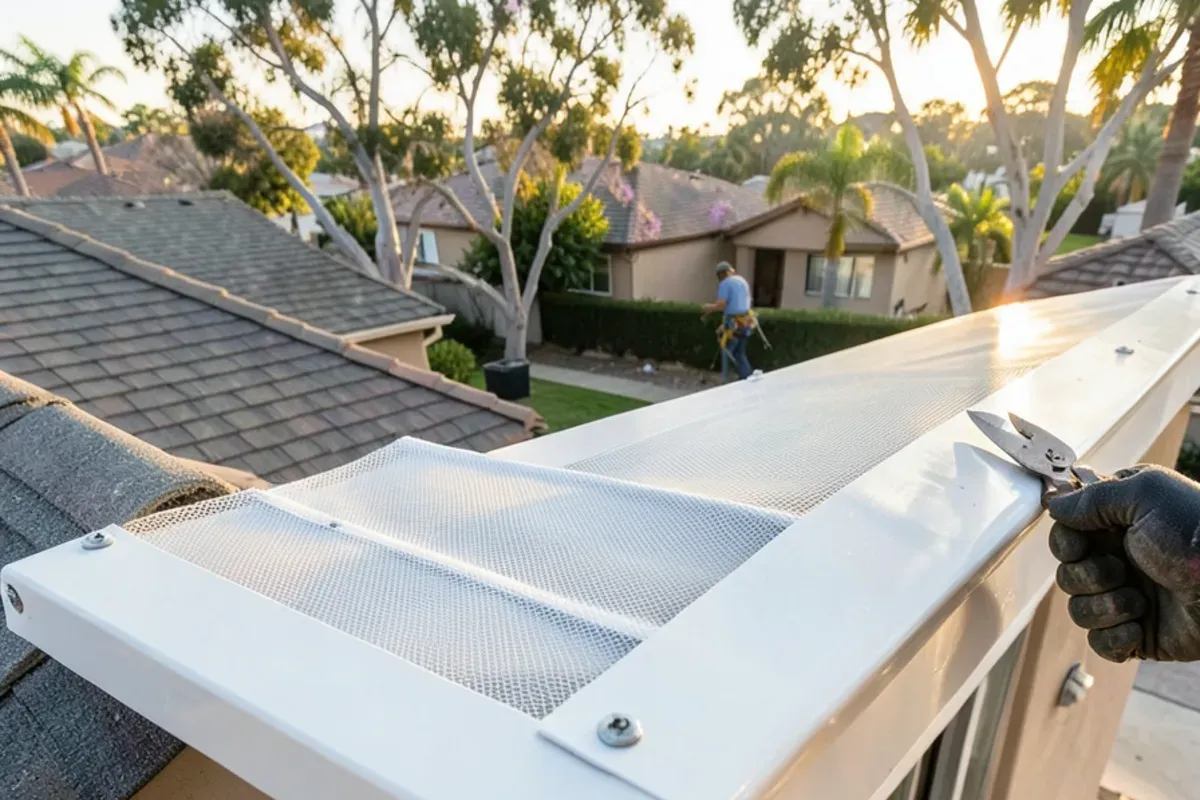
Micro-mesh guards use a fine woven metal screen stretched over a rigid frame. Water clings to the mesh and drops through, while debris rests on top until wind or a brush clears it. Good products use stainless steel mesh, which resists corrosion and sagging, and fasten to the gutter's front lip rather than slipping under shingles.
- Handles the fine debris common here: needles, jacaranda blossoms, ficus leaves and roof granules.
- Takes in heavy rain well when the mesh surface is clear.
- Costs the most of the common types, both for material and careful installation.
- Still needs attention: dried pollen, sap or blossoms can form a film that sheds water.
Are gutter screens good enough?
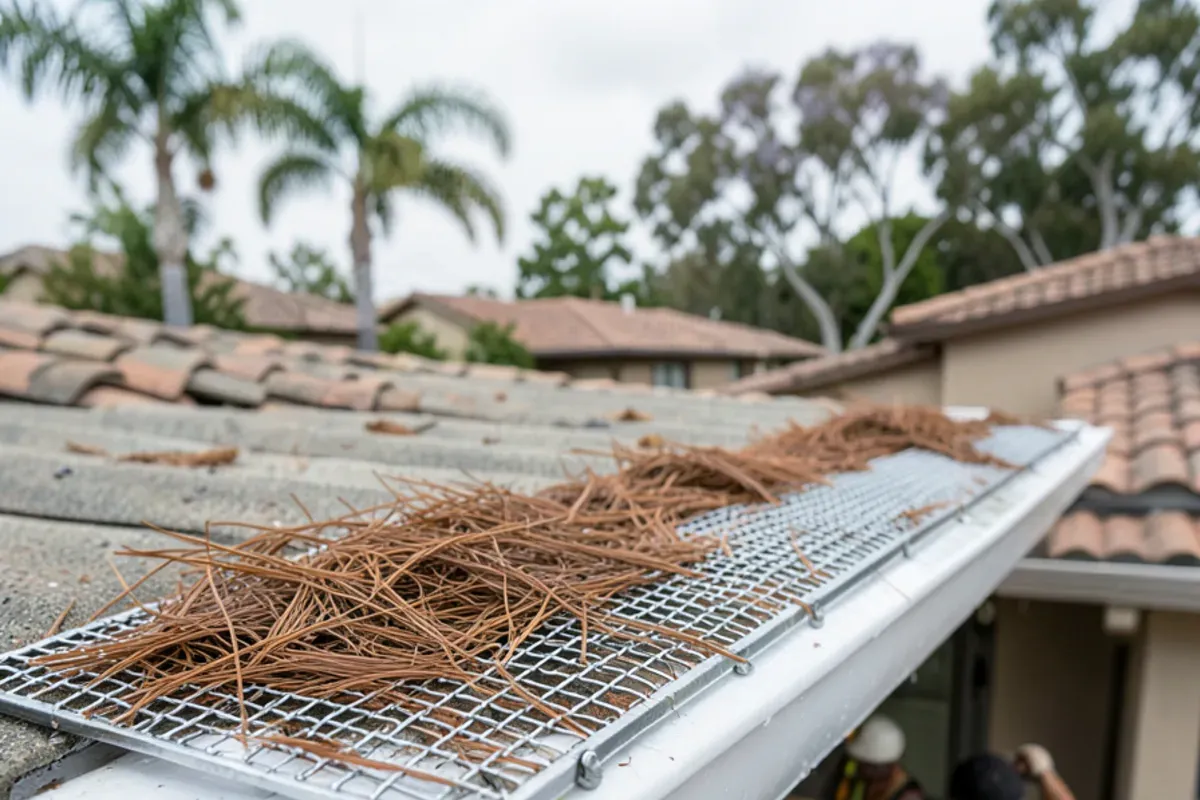
Perforated aluminum or vinyl screens snap into the gutter and block anything larger than their holes. Under large-leaved trees with little fine debris, they work reasonably well and cost far less than mesh. Their limits show quickly under pines: needles slide partway through the holes and lock in place, building a mat that sends water over the edge.
Lightweight screens also sag with debris weight and can lift in strong wind. If a screen is the budget choice, pick a rigid aluminum product fastened to the gutter rather than one that simply rests on top.
Reverse-curve guards: how surface tension works and where it fails
Reverse-curve guards, sometimes called hoods, cover the gutter with a solid panel that curves down over a narrow slot. Rain follows the curve by surface tension and drops into the gutter, while leaves slide off the front edge.
- Work best on straight, uninterrupted eaves with moderate pitch.
- Large leaves shed well, but needles and small seeds can follow the water into the slot.
- In the short, intense bursts typical of a valley winter storm, water can overshoot the curve.
- They change the look of the roof edge and can be difficult to fit under tile.
- Cleaning the gutter underneath means removing panels, which is harder than with other types.
Pine needles, jacaranda blossoms and the debris we see in Arcadia and Temple City
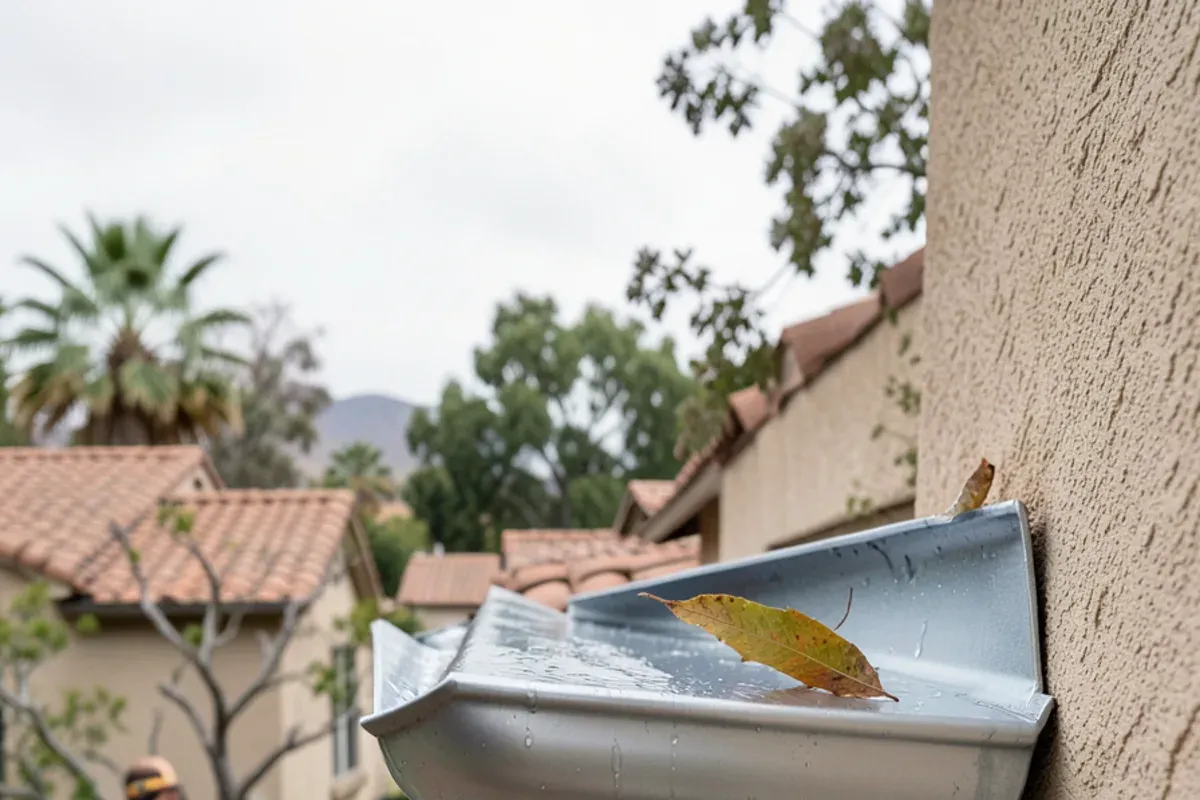
Our crews clean and fit guards under some of the largest trees in the valley. In Arcadia, mature pines, oaks and deodars drop needles all year. In Temple City and the neighborhoods around Rosemead, jacarandas leave purple blossoms in late spring and woody pods in fall.
- Pine needles defeat most screens and many hood designs; micro-mesh is the most reliable choice under them.
- Jacaranda blossoms turn to a sticky layer that coats any surface; mesh needs a brushing after the bloom.
- Palm fronds and seed clusters are too big for any guard to ignore and need periodic removal from the roof.
- Granules from aging shingles pass through screens and settle as sand on the gutter floor.
Guards installed on gutters with poor pitch or loose hangers rarely perform well. We check and correct the gutter first, sometimes with a round of gutter repair, before fitting guards.
Trade-offs between guard designs we explain on site
Mounting angle changes how mesh behaves. Mesh laid nearly flat catches more water in a downpour, but debris sits on it until someone brushes it off. Mesh tilted to follow the roof pitch sheds needles on its own more often, yet in the hardest February bursts a little water can skate across it. Under pines we usually favor the tilt; under open sky with mostly grit, flatter mesh makes sense.
Every guard also makes the gutter floor harder to reach. Shingle granules and fine silt still settle inside, and clearing them means unscrewing panels. Owners who skip guards entirely and book cleanings instead accept more visits but always see the gutter. Neither choice is wrong; it depends on how many trees shade the roof and how comfortable you are on a ladder.
Do gutter guards help in high fire hazard zones?
Dry needles and leaves in a gutter sit right at the roof edge, where wind-blown embers can land. Foothill neighborhoods in Altadena, Sierra Madre, Monrovia and other communities fall in Very High zones on CAL FIRE's Fire Hazard Severity Zone maps. California's wildland-urban interface building rules in Chapter 7A address roofs, vents and gutters in those areas.
A noncombustible metal mesh guard helps keep dry debris out of the gutter, though it still needs clearing before fire season. Plastic or foam guards are a poor choice in fire zones. Check with your building department, and see our fire-resistant roofing page for roof-level measures.
How should gutter guards be installed?
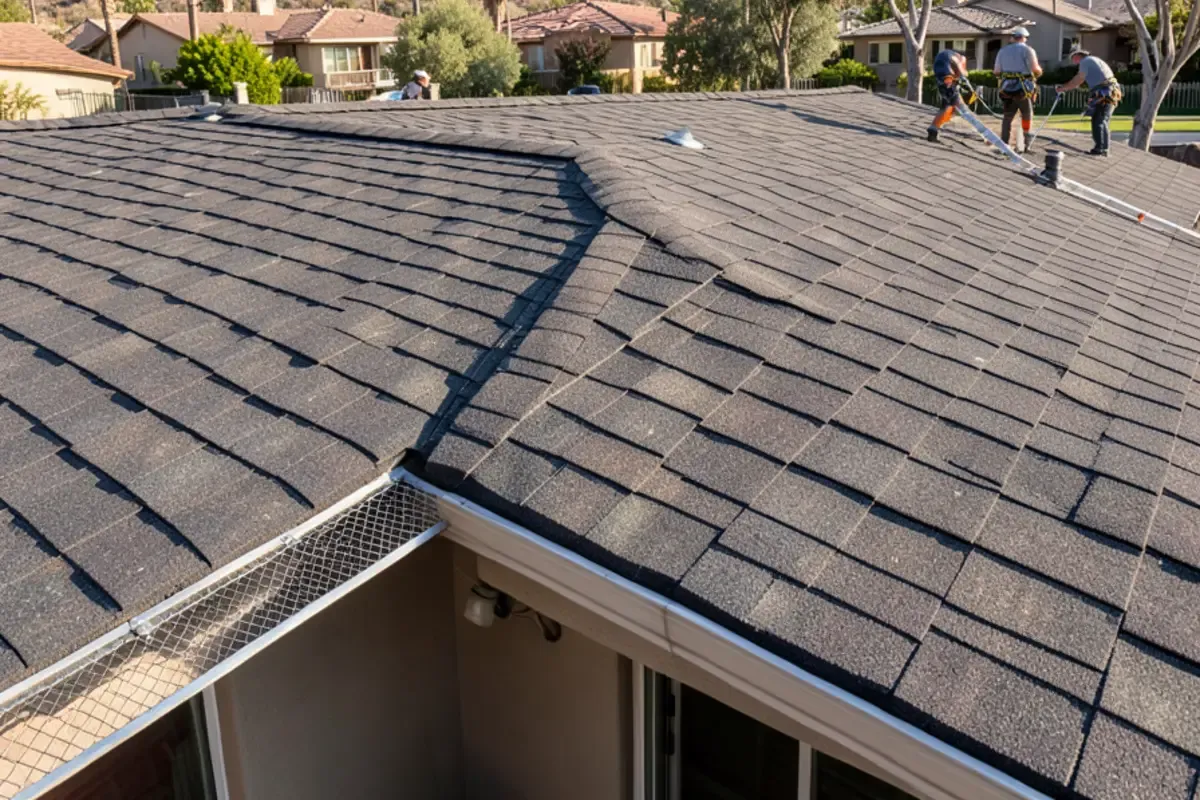
Most guard complaints trace back to installation, not the product. A sound job follows the same order on every house:
- Clean and flush the gutters, then confirm each outlet drains before anything gets covered.
- Check pitch and hangers, and reset or replace any that pulled out of the fascia.
- Measure each run and cut panels so joints overlap in the direction water flows.
- Fit corners and miters with trimmed pieces that close the gap, since open corners are where debris enters first.
- Fasten panels to the gutter's front lip and back edge, leaving shingles and tiles undisturbed.
- Run a hose across the finished guard at several points to confirm water drops into the gutter, not over it.
On tile roofs we also check the gap between the tile nose and the gutter, because a guard that pushes tiles upward can crack them during the next windstorm.
Gutter guard cost and long-term upkeep
Price follows the type and the house: footage, height, corners, roof material and whether the gutters need repair first. Micro-mesh sits at the top of the range, screens at the bottom and hoods in between. The better comparison is cost over time. A cheaper guard that needs clearing four times a year under pines may cost more in the long run than mesh that needs one brushing.
To compare fairly, count what the guard replaces. Write down how many cleanings the house needs now, how many overflowed corners or fascia repairs the last few winters brought, and whether a second-story run needs a crew each time. Then ask each quote to list footage, corner pieces, any gutter repair done first and the fastening method. A guard quote that skips the corners or the repairs underneath is not comparable to one that includes them.
Choosing guards for your gutters
Match the guard to your trees, fix the gutters underneath first and plan on light upkeep whichever type you choose. We will look at the trees, roof and gutters, recommend a type and put the price in an itemized written quote. Call (725) 745-8803 or request a quote to set up a visit.
Questions readers ask
Do gutter guards mean I never clean my gutters again?
No. Guards cut down on cleaning, but debris still collects on top and fine grit settles inside. Plan to brush or rinse the guard surface and flush the gutters once or twice a year, more often under pines. Skipping that upkeep is the most common reason guards fail.
Will gutter guards void my roof warranty?
Some guards slide under the first row of shingles, which can conflict with shingle manufacturer installation instructions. Guards that fasten only to the gutter avoid that issue. Ask how a guard attaches before buying, and check your roofing product's terms if the roof is new.
Can gutter guards go on a tile roof?
Yes, with the right product. Clay and concrete tiles overhang the gutter and break easily, so guards that fasten to the gutter's front lip and back edge without lifting tiles work best. We check the gap between tile edge and gutter before recommending a guard.
Do gutter guards keep birds and roof rats out?
Partly. Rigid mesh stops birds from nesting in the gutter trough and keeps rodents from bedding down in packed debris. It does not stop roof rats from running along the gutter as a path to the attic. If you hear scratching overhead or see droppings along the eave, the gaps at vents and roof edges need sealing through animal damage roof repair.
Can guards be added to older gutters?
Yes, if the gutters are sound. Guards add a little weight and make the gutter harder to inspect, so loose hangers, leaking seams and backward pitch should be fixed first. Rusted galvanized steel gutters on post-war homes are usually not worth covering; replacing them with seamless aluminum and fitting guards at the same time costs less over the life of the system.
Sources
Written by Tylzen Spoke Roofing
A roofing contractor on Rosemead Blvd (CA-19) in Rosemead, working on shingle, tile, metal and flat roofs across the San Gabriel Valley. This guide reflects what our crews check on local roofs. Questions about your roof? Call (725) 745-8803.