
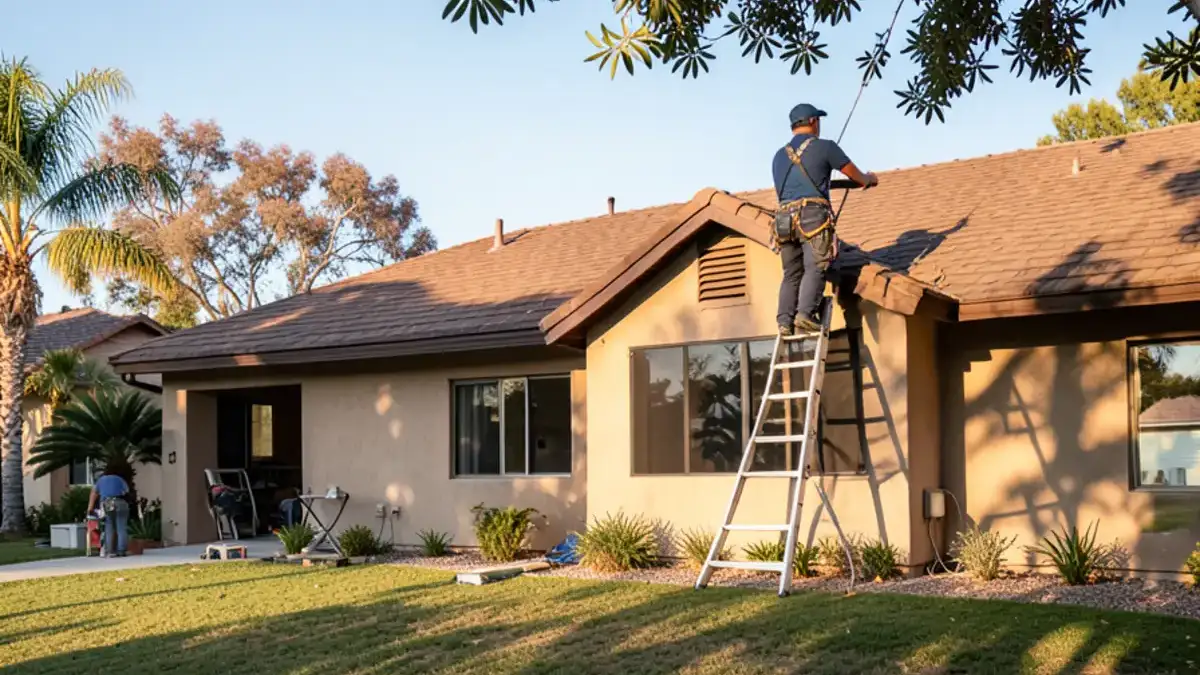
Animal damage roof repair in Rosemead is about two jobs at once: fixing what the animals chewed or tore, and sealing the openings so they cannot come back. Roof rats climb fruit trees and fences, tree squirrels chew through soft eave corners, raccoons pull back shingles and vent covers, and birds nest in open tile eaves. We repair the roof, screen the vents and close each entry point with materials they cannot easily chew.
Pest-proofing falls within our roof repair work around Rosemead and usually follows a call to a pest control or wildlife company that has already handled the animals.
Signs animals are getting into your roof or attic
- Scratching or scurrying overhead at night (rats) or early morning (squirrels).
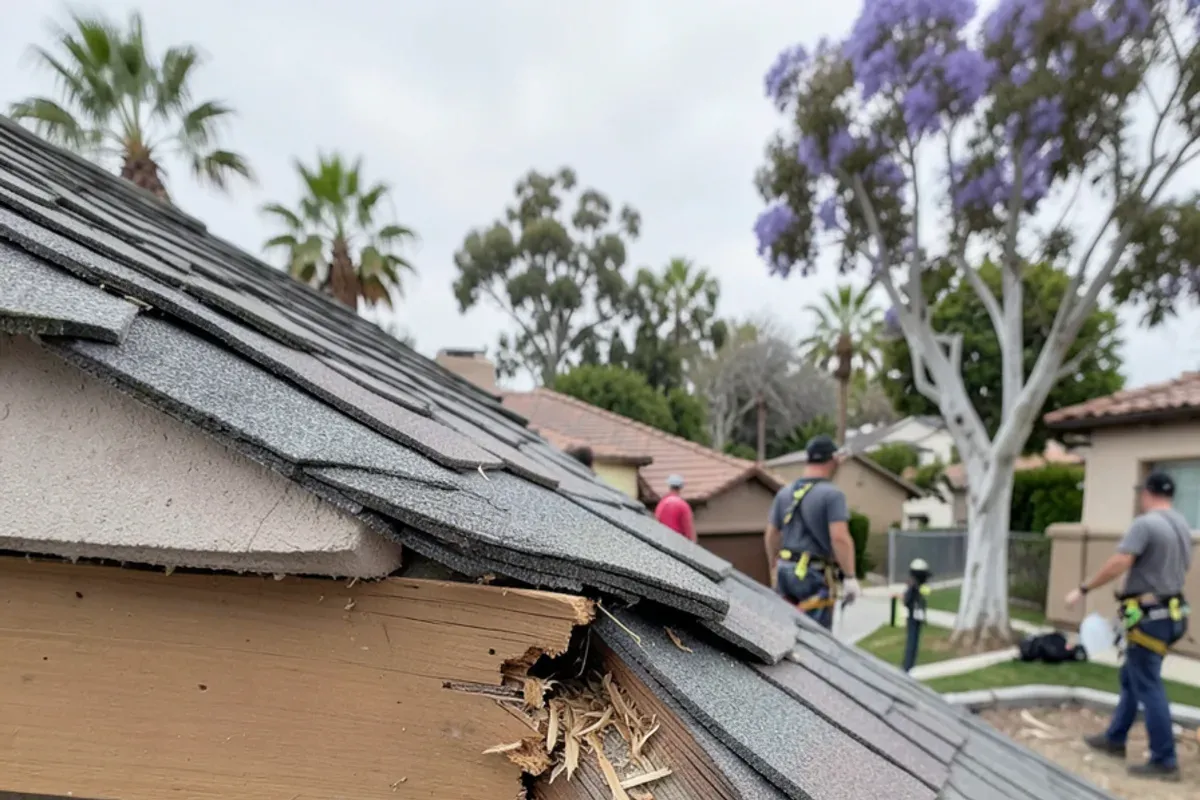
- Chewed corners on fascia boards, eave ends or the trim at a gable.
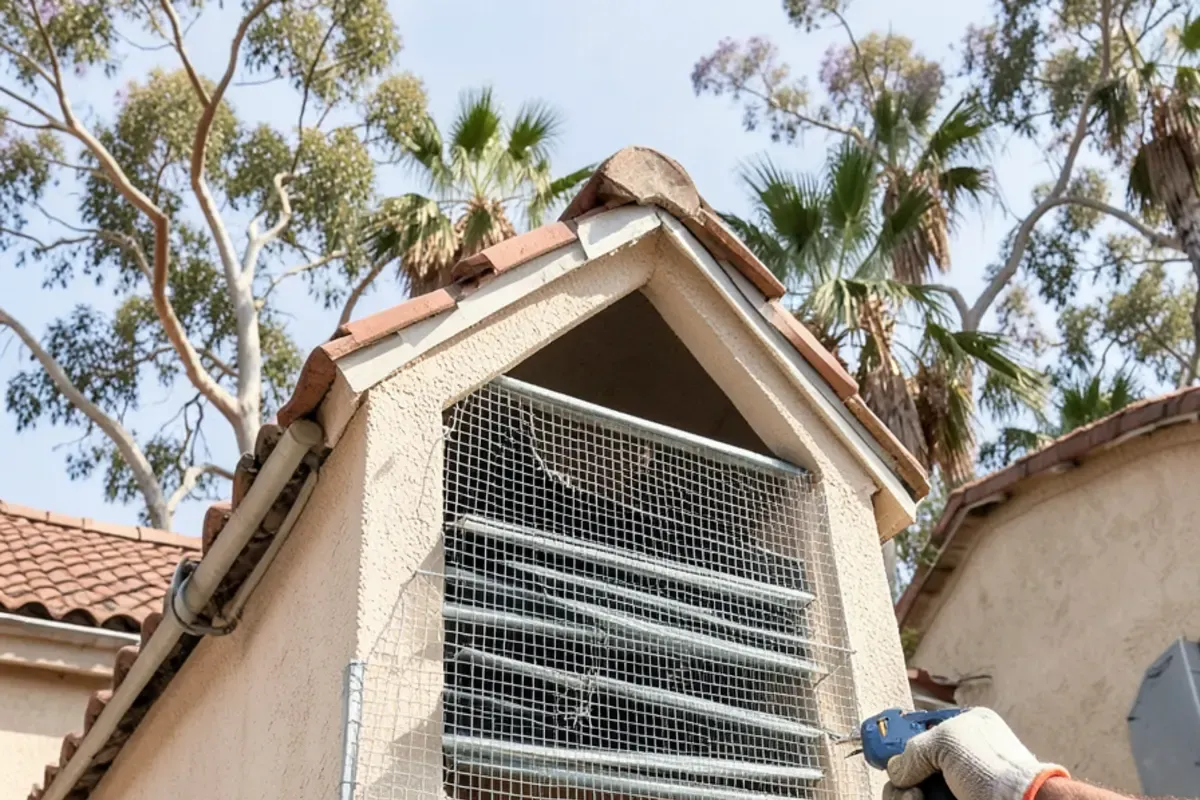
- Torn or pushed-in vent screens on gable, dormer or soffit vents.
- Shingles peeled back or tiles pushed aside, often near a valley or wall.
- Droppings, nesting material or flattened insulation in the attic.
- Dark grease marks along fascia or around a gap where animals rub as they pass.
Common roof pests in the San Gabriel Valley and where they enter
Backyard citrus and avocado trees, ivy-covered walls and overhead utility lines give animals a highway to the roof on many valley streets. Foothill neighborhoods add raccoons and larger wildlife to the mix.
Older houses offer more ways in. Many 1950s gable vents were fitted with light insect screen that tears easily, roof returns were left open at the gable ends, and later additions created new gaps where the old roof meets the new. Tree squirrels tend to look for nesting spots in late winter and spring, and roof rats push indoors when nights turn cool and wet, so closing openings before the rainy season pays off.
| Animal | Typical entry point | Damage we repair |
|---|---|---|
| Roof rats | Gaps at roof returns, tile eaves, pipe and line penetrations | Chewed vent screens, gnawed wood edges, soiled insulation |
| Tree squirrels | Fascia corners, gable vents, eave gaps | Holes in fascia and sheathing edges, shredded screens |
| Raccoons | Roof vents, weak spots at walls and valleys | Torn shingles, crushed vents, broken sheathing |
| Pigeons and sparrows | Open ends under the first row of tile | Nests and droppings under tile, blocked eaves |
| Woodpeckers | Wood fascia and trim | Drilled holes in fascia and rafter tails |
How we find every entry point
Fixing one hole while three others stay open only moves the problem. We check the whole envelope above the walls, working around the house and then from the roof.
- Eaves and roof returns, the small gaps where the gable trim meets the roof edge.
- Every gable, dormer, soffit and ridge vent, including the screen behind the louver.
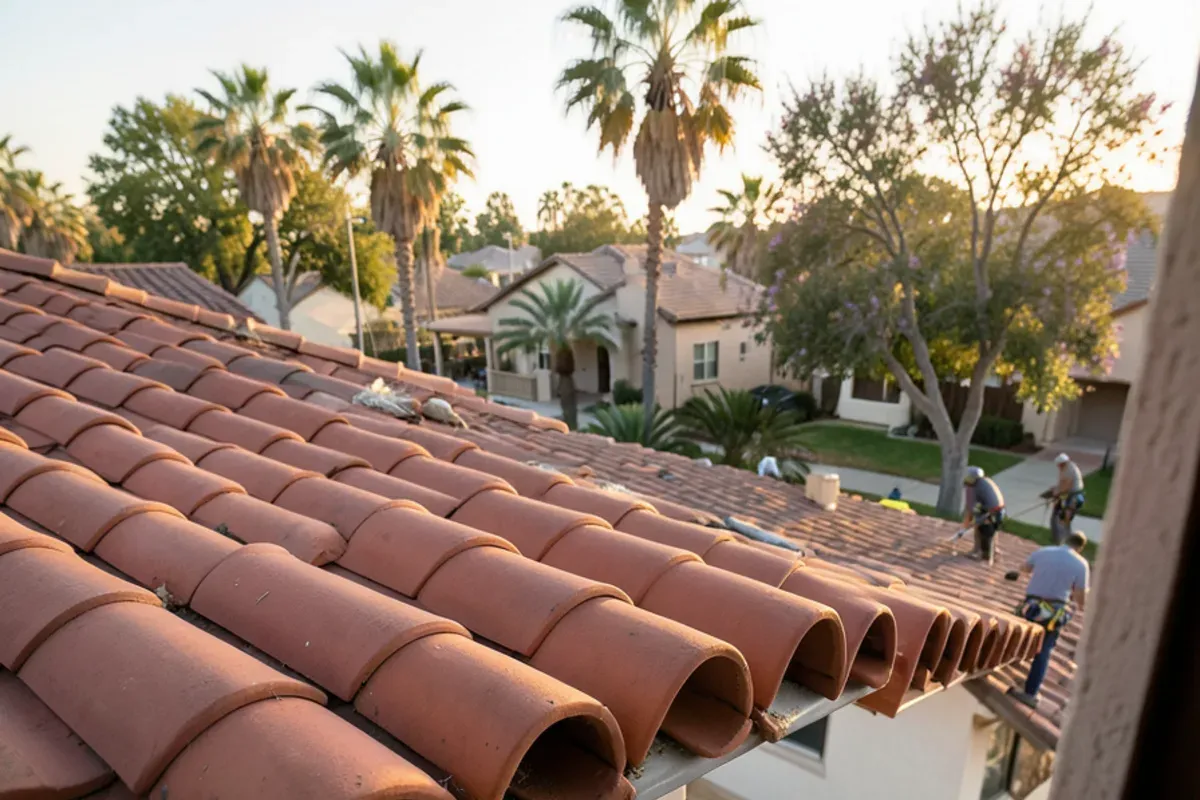
- Tile eaves for missing eave closures, often called bird stops.
- Pipe and cable penetrations, plus gaps where additions meet the original roof.
- The attic, for daylight, droppings trails and nests that show active paths.
Every opening is photographed and numbered, so the quote shows exactly what will be closed and how.
Animal damage roof repair in Rosemead: what we fix
Chewed wood
Gnawed fascia, eave boards and sheathing edges are cut back to solid wood and replaced. At corners squirrels favor, we can wrap the new wood with metal flashing so there is nothing soft to start on.
Torn roofing
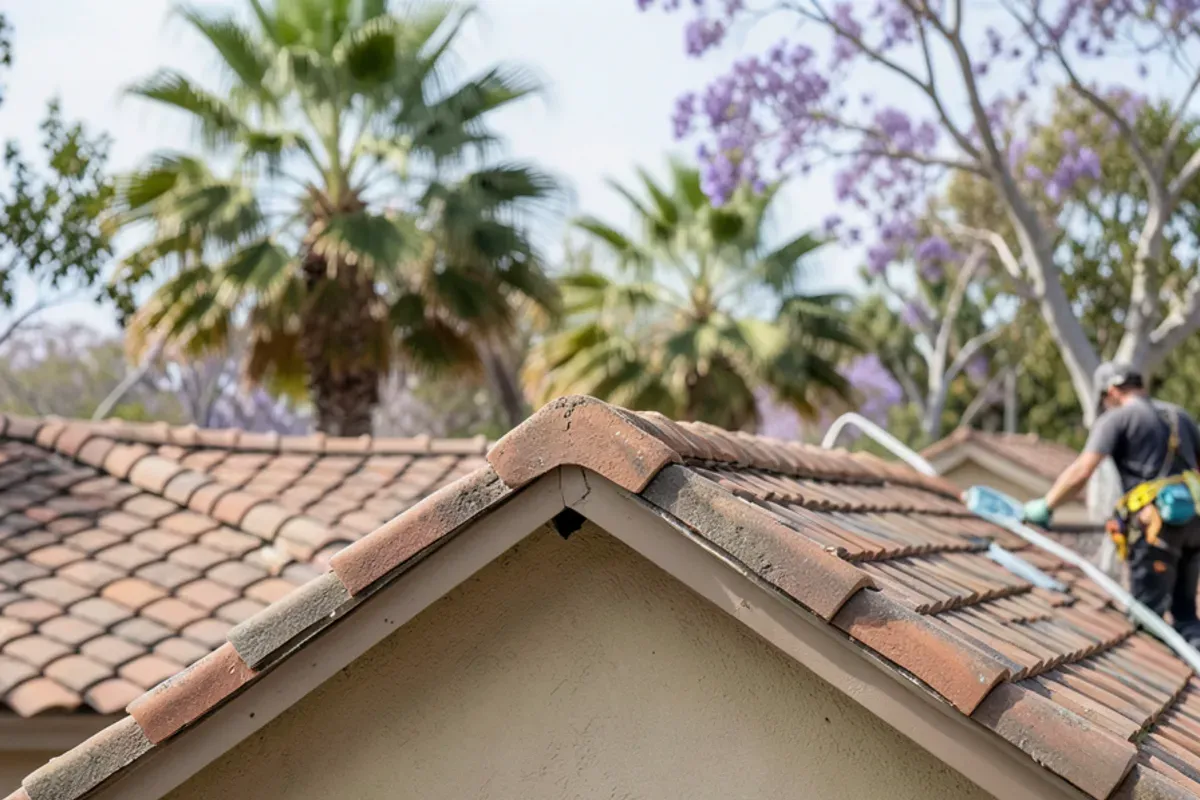
Shingles and underlayment ripped by raccoons are replaced and sealed, and broken sheathing below is patched. Pushed-aside tiles are reset, with cracked ones replaced.
Vent screening
Flimsy window screen is swapped for corrosion-resistant metal mesh fastened behind each vent. In Very High Fire Hazard Severity Zones, Chapter 7A calls for ember-resistant mesh of 1/16 to 1/8 inch, which also stops rodents.
Closures and gaps
We install bird stops at tile eaves, close roof returns with metal flashing, and seal gaps around penetrations with materials rodents do not chew through easily. A gnawed pipe boot is replaced as part of the same visit; see vent and pipe boot repair for that work.
Pigeons under rooftop solar panels
The shaded gap under a solar array is a favorite pigeon nest, and droppings and sticks there hold water against shingles and block drainage. We clear and repair the roof surface we can reach. Mesh guards clipped around the panel edges should be fitted with the solar installer involved, since panel and racking coverage can depend on who touches the array.
Need animal damage roof repair help this week?
Tell us what you are seeing. We schedule same-day or next-day visits when crews are free and send photos with a written quote.
- 4.9 from 48 Google reviews
- Based on Rosemead Blvd
- Photos and a written quote before work
Why do the animals have to be out before we seal?
Sealing an attic with animals inside traps them. A trapped squirrel or rat chews a new exit, often through the fresh repair, and one that dies inside leaves an odor that lingers. That is why we coordinate with whoever handles removal. Pest and wildlife companies usually install one-way exclusion doors, confirm the attic is clear, and then we close everything permanently.
- Removal or exclusion by a pest control or wildlife company.
- Our inspection, photos and written quote for every opening and repair.
- Repair day: wood, roofing and vents fixed, then entry points closed.
- Final photos of each closed opening for your records.
Most exclusion repairs on a single-story house take one day. Fascia replacement along a full side, or raccoon damage to roofing and sheathing, can run longer.
What does pest-proofing a roof cost?
As a planning figure only, Manta's 2023 calculator places LA County roof repairs at $1,185-$1,625 before permits. Exclusion work on a tidy single-story house with a few gaps can come in below that. Raccoon damage through roofing and sheathing, or fascia replaced along a whole side, comes in above it, and every opening is priced as its own line.
- Number of entry points and how spread out they are.
- Length of fascia or eave board to replace and whether it gets metal wrap.
- Number and type of vents to re-screen.
- Roofing or sheathing torn open, and the roof material involved.
- Attic cleanup or insulation replacement, quoted separately.
Permits, licensing and who handles which part
Screening vents and closing gaps is repair work that rarely needs a permit. Replacing torn sheathing over a larger area may, through Rosemead Building and Safety in the city, or LA County Public Works in unincorporated neighbors such as Avocado Heights. Where one applies, we pull it and book the inspection.
Roof repairs above $1,000 in labor and materials need a CSLB-licensed contractor, and the roofing class is C-39; look up any roofer's license and workers' comp at cslb.ca.gov. Pest control companies carry their own state license from the Structural Pest Control Board, which is why removal and roof repair are separate jobs.
Why homeowners turn to Tylzen Spoke after a pest problem
- Each entry point is photographed and listed in a written quote, so nothing is guessed at.
- Reviewers mention quick returns when something needs another look, which matters with persistent animals.
- Google reviewers rate us 4.9 stars on average across 48 reviews (as of November 2026).
- A short drive from our Rosemead Blvd base to most valley neighborhoods.
Mesh, flashing and roofing materials carry coverage that depends on each maker's product line, and our workmanship terms are listed in the contract. Ask to see both in writing, and whether either transfers if you sell.
We repair animal damage in Avocado Heights, Glendora and Duarte, as well as across Rosemead. If animals have soiled the attic, our attic insulation service can replace it. Water stains near the damage point to a leak, covered under roof leak repair.
What customers say on Google
4.9★ from 48 Google reviews (checked Nov 2026)
“A recent strong wind loosened a shingle on my roof in Rosemead. It took just one call, and Tanner came out the very next day to help. While we talked, I mentioned how thankful I still am for the excellent roofing work the crew did years ago, which has continued to hold up very well. …”
“After noticing that my ridge row shingles were starting to break apart, I had trouble getting help from the original roofing company. Eventually, I decided to reach out to a different roofer and spoke with Brandon, who was very helpful right from the start. …”
“William was very professional and easy to work with. We had a long-term roof leak around the attic and a room on the second floor, and several roofing contractors came out to inspect it and give estimates. William clearly had the strongest roofing experience, explained the problem in simple terms, and his price was competitive too. …”
Where we handle animal damage roof repair
- Rosemead
Backyard citrus and avocado trees on post-war lots give roof rats a direct path to open gable vents and roof returns.
- Avocado Heights
Semi-rural, horse-friendly lots with large trees, where squirrels and rats regularly test fascia and eave gaps.
- Glendora
Foothill homes near open hillsides where raccoons tear vents and Chapter 7A ember mesh doubles as rodent screening.
- Duarte
Foothill-edge streets where wildlife from the slopes reaches roofs, and vent screens must meet fire-zone mesh rules.
- Arcadia
Mature oaks and pines over large lots give tree squirrels easy access to fascia corners and gable vents.
- Sierra Madre
Canyon-edge homes where raccoons and squirrels move from the foothills onto roofs through overhanging trees.
- Temple City
Ranch homes with fruit trees and ivy-covered fences that lead rats straight to tile eaves without bird stops.
- Monrovia
Foothill neighborhoods with Craftsman eaves and open rafter bays that squirrels and woodpeckers work open.
- San Gabriel
Clay tile homes whose open tile ends at the eave invite pigeons and sparrows to nest under the first row.
More places we handle animal damage roof repair
Animal Damage Roof Repair questions
How do roof rats and squirrels get into the attic?
Roof rats climb trees, fences and utility lines to the roof, then slip through gaps at roof returns, under tile eaves or around pipes; they need only an opening about the size of a quarter. Squirrels chew their way in, usually at a fascia corner or a gable vent with weak screening. Both follow the same paths every night.
Do you remove the animals or just repair the roof?
We repair the roof and seal it. Removal and exclusion are handled by pest control or wildlife companies, who can install one-way doors and confirm the attic is empty. Once they give the all-clear, we close every opening and fix the damage so the animals cannot return.
Which vents need screening to keep pests out?
All of them: gable, dormer, soffit and ridge vents, plus any open ends where ridge vents stop. Each needs corrosion-resistant metal mesh fastened behind it, not plastic or window screen. In Very High Fire Hazard Severity Zones, use 1/16 to 1/8 inch mesh, which also blocks embers.
Will sealing the roof stop the scratching right away?
If the animals were removed first, yes, the noise should stop. If scratching continues after sealing, an animal was either missed or found an opening we did not close. Call us back and we return to check, and we coordinate with your pest company to make sure the attic is clear.
Does homeowners insurance cover animal damage to a roof?
Policies vary. Many exclude damage from rodents, insects and wear, while some cover sudden damage caused by larger animals. Your adjuster decides. We document the damage and the entry points with photos and can meet the adjuster on site, but we do not negotiate claims.
Can you replace insulation that animals have soiled?
Yes. Insulation contaminated with droppings and nesting is removed and the attic cleaned before new insulation goes in. We quote it separately from the roof repair so you can decide on timing. Replacing it after the roof is sealed keeps the new material clean.