
By Tylzen Spoke Roofing · Published
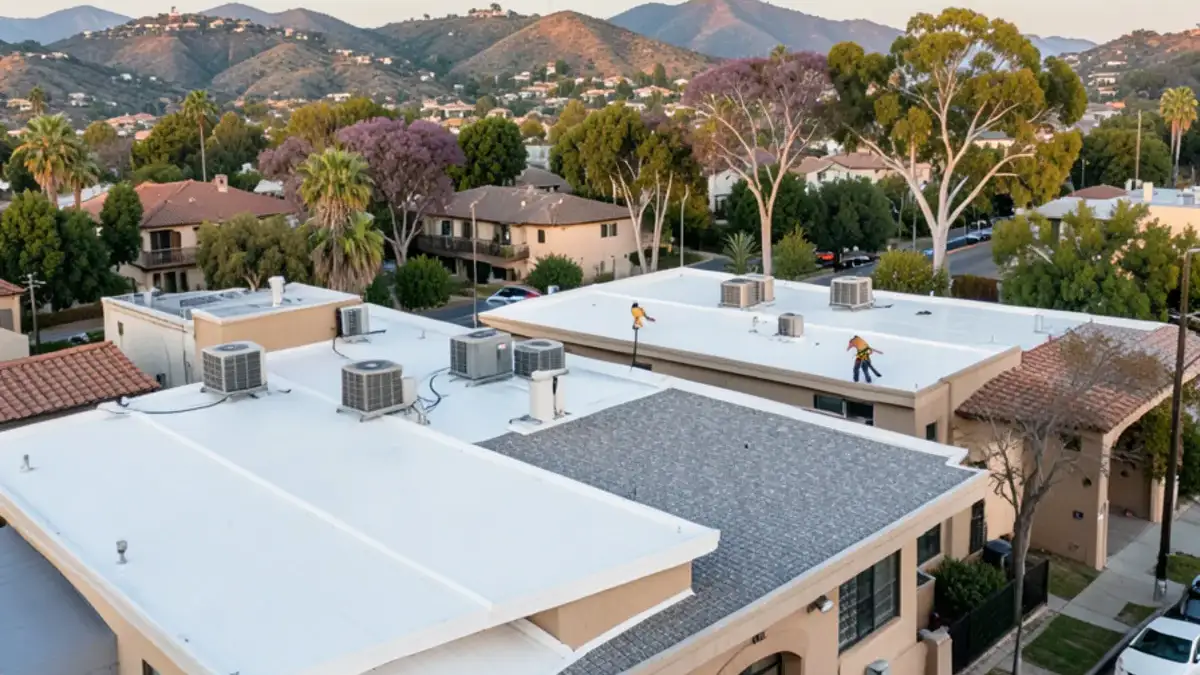
In the TPO vs torch down question, TPO is a white, heat-welded single-ply membrane that suits larger and simpler roofs and meets cool-roof targets as installed, while torch-down modified bitumen is a thicker, multi-layer roof that handles foot traffic and complex details well but needs a reflective top surface. Silicone coating is not a new roof at all: it is a fluid-applied layer that restores a sound existing roof without a tear-off.
For homes with a flat addition or garage, all three show up regularly. For apartment buildings and commercial roofs, scale, equipment and budget cycles shift the balance.
How TPO, torch-down and silicone work
TPO single-ply membrane
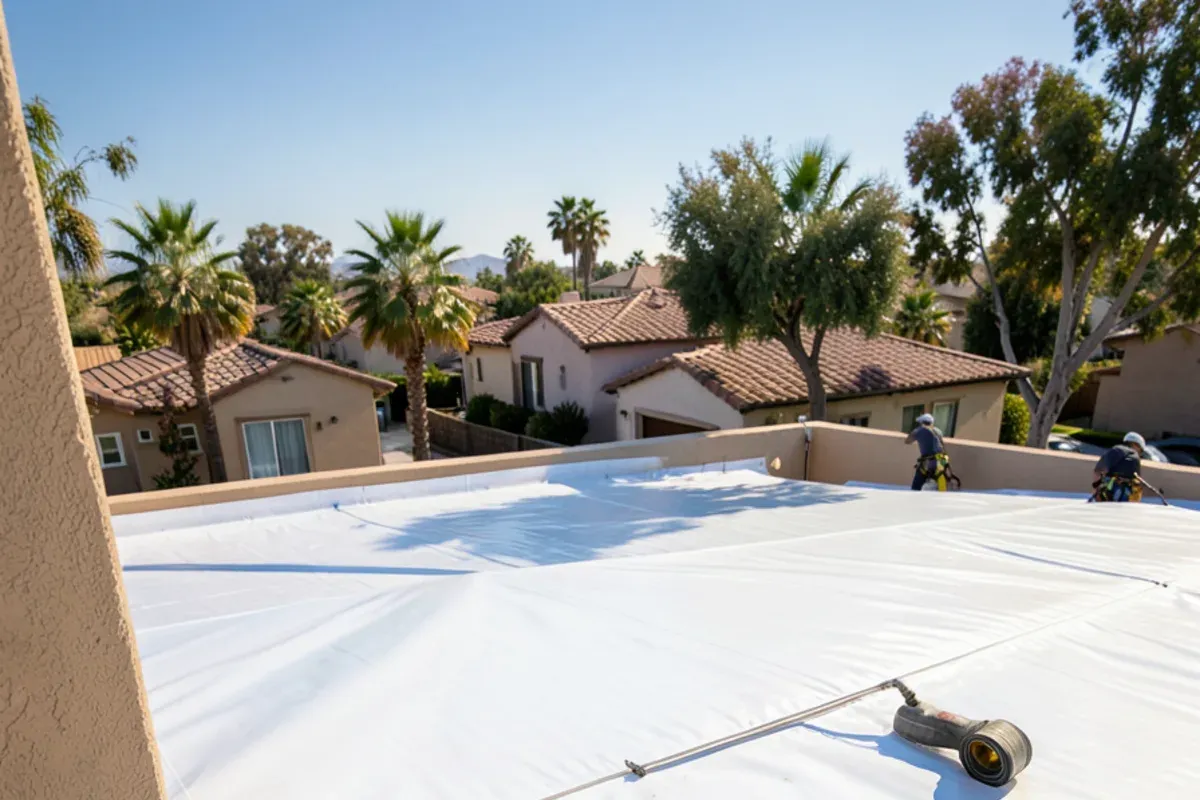
Thermoplastic polyolefin arrives in wide rolls. Crews fasten or adhere it over insulation or a cover board, then fuse the overlapping seams with hot air so they become one continuous sheet. The white surface reflects most sunlight from day one.
Torch-down modified bitumen
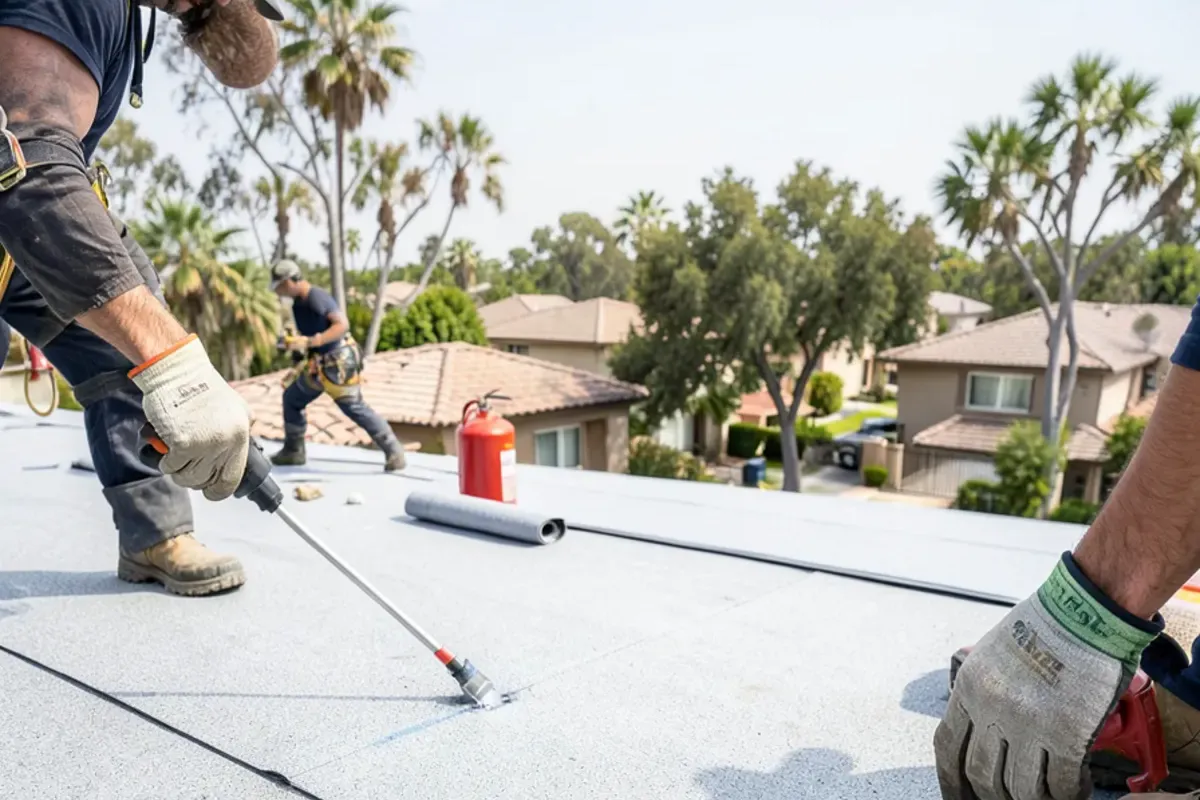
Torch-down uses asphalt sheets modified with rubber or plastic polymers. A base sheet goes down first, then a cap sheet is heated with a torch so the layers melt together. Granulated cap sheets come in light colors, and a rated coating can be added on top.
Silicone roof coating
Silicone is rolled or sprayed over an existing roof after cleaning and repairs. It cures into a seamless, flexible, reflective skin that tolerates standing water. It depends entirely on the roof underneath being dry and well attached.
Want a roofer to look at it?
Call with your address and what you are seeing. We visit same-day or next-day when crews are free.
- 4.9 from 48 Google reviews
- Based on Rosemead Blvd
- Photos and a written quote before work
Which flat roof option fits your building?
| Factor | TPO | Torch-down | Silicone coating |
|---|---|---|---|
| What it is | New single-ply roof | New multi-ply roof | Restoration layer over an existing roof |
| Tear-off | Usually yes | Usually yes | No, if the roof is sound and dry |
| Heat and cool roof | White; meets low-slope targets as installed | Needs light cap sheet or rated coating | White; highly reflective when clean |
| Foot traffic | Moderate; can puncture | Strong; tough surface | Slippery when wet; wears in traffic paths |
| Ponding tolerance | Fair with good seams | Fair | High |
| Repairs | Heat-weld matching TPO patches | Torch or cold-applied patches | Silicone only; little else bonds |
| Good fit | Larger homes, apartments, commercial | Homes with complex details, decks, traffic | Aging but sound roofs on any building |
Life span, heat and Title 24 rules
Service life depends on thickness, installation and maintenance more than on the label. A well-installed TPO or torch-down roof can serve for many years. A coating's life depends on how thick it is applied and how well it is maintained, and it can be renewed with another coat rather than torn off.
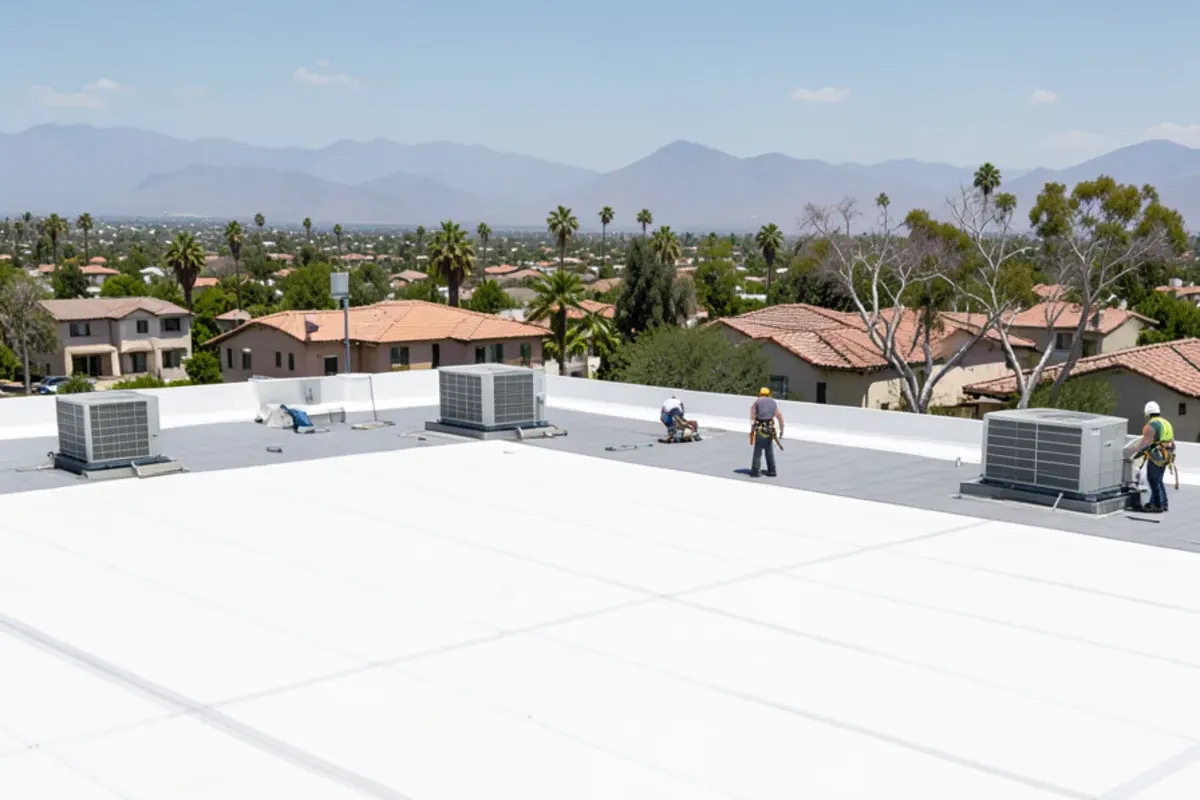
Where cool-roof rules apply, Title 24 wants a replaced roof at 2:12 pitch or flatter to carry a CRRC-rated surface: 0.63 reflectance after aging and 0.75 emittance, or SRI 75. Those rules are triggered when at least half the roof is replaced, and on some low-slope roofs by any replacement larger than 2,000 sq ft. White TPO and white silicone clear that bar; a dark torch-down cap sheet does not unless coated. Check with your building department for your exact project.
Repairs matter over the long run too. TPO patches must be welded with matching TPO, and older sheets can be harder to weld once the surface has weathered. Torch-down accepts patches readily from either torch or cold-applied products. Silicone can be touched up only with more silicone, which keeps repairs simple as long as you stay in the same system. Ask any bidder how they would repair the roof five years from now, not just how they will install it.
Is torch-down safe on a house?
Torch-down is common in Southern California, but an open flame near wood, dry leaves and stucco weep screeds calls for training and care. Experienced crews keep fire extinguishers on the roof, stay on site after torching to watch for smoldering, and switch to self-adhered or cold-applied modified sheets near combustible edges or vents.
If a home sits in a fire hazard zone or has wood fascia and dry trees close by, ask how the contractor handles those areas. On our torch-down roofing jobs, we walk you through which edges get flame-free sheets and why.
Homes vs. businesses: different priorities
- Homes with a flat addition or garage: torch-down for durability around many walls and penetrations, or TPO when reflectivity and a clean white surface matter.
- Apartment and HOA buildings: TPO over tapered insulation for large areas, with walkway pads to equipment.
- Warehouses and retail blocks: silicone restoration when the existing roof is sound, which avoids disrupting tenants with a tear-off.
- Any building with long-standing ponding: correct the slope first, whatever the surface.
Our TPO roofing, roof coatings and commercial roofing pages go deeper on each system.
What our crews find on SGV flat roofs
Across Monterey Park, Rosemead and nearby cities, the condition of the existing roof decides most choices before material preferences come in.
- TPO roofs with seams that were never fully welded, opening first along the edges of the sheet.
- Torch-down roofs that are still sound but sun-baked, good candidates for a reflective coating.
- Silicone sprayed over wet roofs, leaving blisters and soft spots within a few seasons.
- Mixed patches of incompatible materials that make the next repair harder.
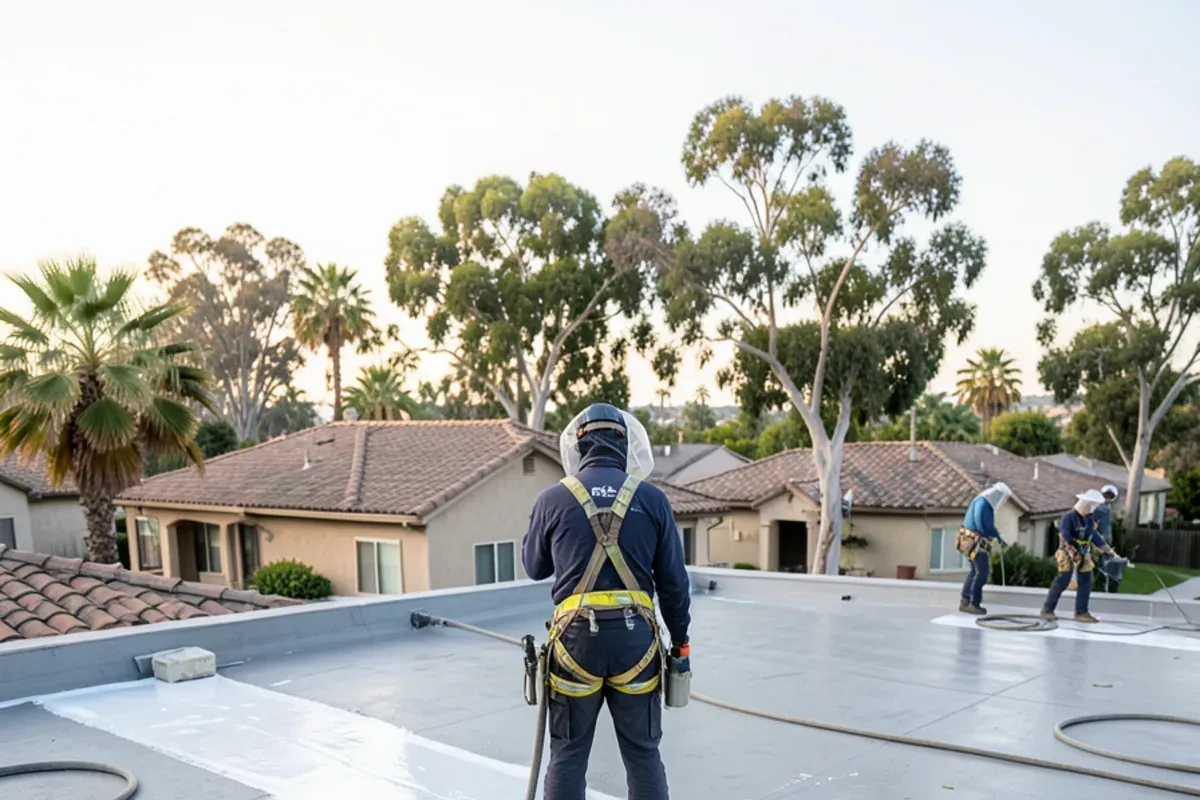
We core-sample or probe suspect areas before recommending a coating, because the cheapest option is only cheap when the roof underneath is dry.
The trade-offs a brochure leaves out
- Mechanically fastened TPO costs less and installs faster, but the sheet can billow between fastener rows in strong wind. Fully adhered TPO stays tight and quiet, at a higher price and with more weather-sensitive installation.
- A light granulated cap sheet lets torch-down meet cool-roof rules with no coating to maintain. Adding a white coating instead lifts reflectance further, but it brings its own recoat schedule.
- A silicone restoration postpones a tear-off and its disposal cost. When that roof is finally replaced, though, the coating comes off with everything else, so the later tear-off is no smaller.
- Keeping one building in one system makes every future repair simpler. Mixing TPO on one section and torch-down on the next creates transition seams that need their own flashing details.
What should every flat roof bid spell out?
Two bids that both say "TPO" or "silicone" can describe very different roofs. These are the details we put in writing, and the ones worth asking any bidder to name.
- TPO: sheet thickness, how it is attached (mechanically fastened, fully adhered or plate-welded), the insulation or cover board beneath it, and whether every welded seam is probed after it cools.
- Torch-down: the base sheet and cap sheet products, the cap sheet color or coating that meets the cool-roof target, and which edges get flame-free self-adhered sheets.
- Silicone: the moisture survey method, the cleaning and primer steps, the adhesion test, and the finished dry thickness the coating maker requires.
- All three: how drains, scuppers and low spots are corrected, the edge metal and wall flashing, and the walkway pads around equipment.
- All three: the permit line, the manufacturer coverage document and the workmanship terms, each as its own item.
Picking the right flat roof system
Start with the roof you have: if it is wet or failing, choose between TPO and torch-down; if it is sound, a silicone restoration may buy years at lower cost. Then weigh foot traffic, heat and the details on your roof. Call (725) 745-8803 for a photo-documented assessment with each option priced side by side, or send us the form to request a quote.
Questions readers ask
Is TPO better than torch-down for a home?
Neither is better in every case. TPO is lighter in color and reflects more heat as installed, which helps rooms under a flat addition. Torch-down handles foot traffic, many penetrations and wall transitions very well, and a light cap sheet or coating addresses heat. The roof's layout often decides.
Can silicone coating go over a TPO or torch-down roof?
Yes, provided the old membrane is dry and bonded tightly to what lies beneath, and the surface is cleaned and primed per the coating maker's instructions. Silicone is often used to restore aging torch-down and TPO roofs. Wet insulation or failed seams must be repaired first, or the coating will blister and peel.
Which flat roof option is the most reflective?
White TPO and white silicone both start highly reflective and usually meet low-slope cool-roof targets. Silicone loses some brightness as dirt collects but recovers with cleaning. Torch-down needs a white granulated cap sheet or a rated coating on top to compete with them on reflectance.
What is modified bitumen compared with TPO?
Modified bitumen is the asphalt-based sheet used in torch-down and self-adhered systems, built up in layers for thickness. TPO is a thermoplastic single-ply sheet joined by heat welding. Modified bitumen is tougher under foot; TPO is lighter and more reflective out of the box.
Which option handles foot traffic or a rooftop deck best?
Of the three, torch-down takes foot traffic best, thanks to its thick, multi-ply build. TPO needs walkway pads along service paths, and silicone becomes slippery and wears where people walk. A roof used as a patio is a different job: it calls for a walkable roof waterproofing system or pavers on pedestals that protect the membrane beneath.
Sources
Written by Tylzen Spoke Roofing
A roofing contractor on Rosemead Blvd (CA-19) in Rosemead, working on shingle, tile, metal and flat roofs across the San Gabriel Valley. This guide reflects what our crews check on local roofs. Questions about your roof? Call (725) 745-8803.