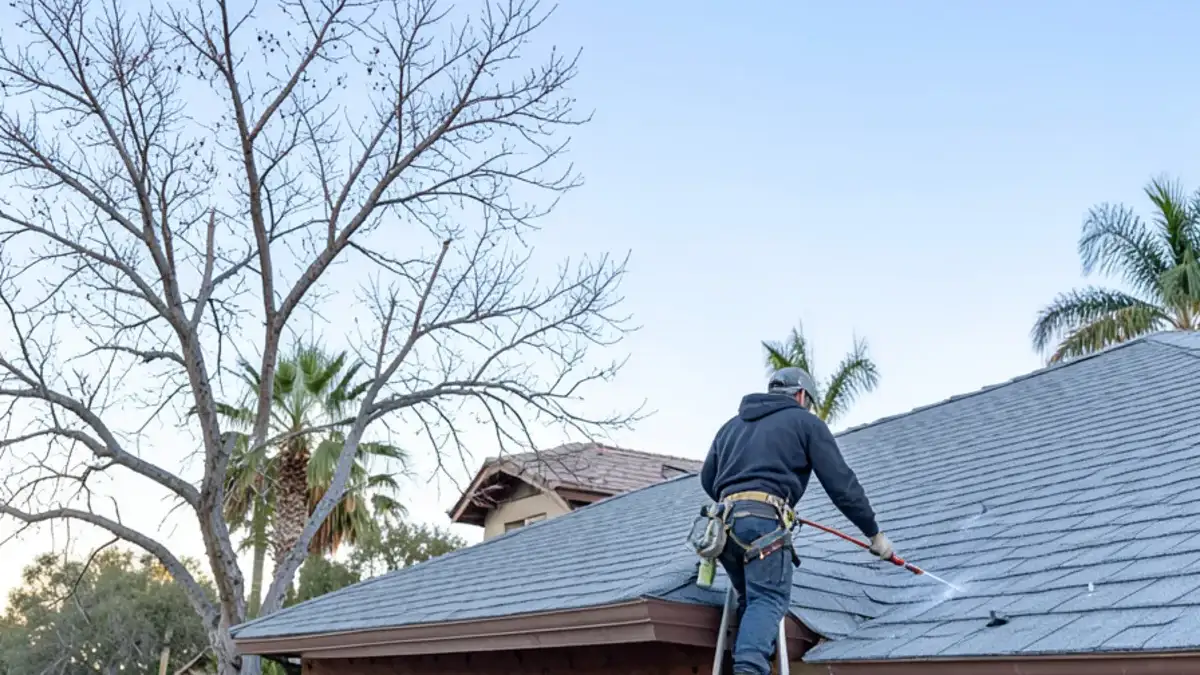
Torch-down roofing in Rosemead uses rolls of modified bitumen, asphalt blended with rubbery or plastic polymers, that we soften with a propane torch so each lap fuses into the sheet below. Laid over a nailed base sheet, the finished cap sheet carries a surface of mineral granules that shields the asphalt from UV. It is one of the membranes we install as part of our flat roof services.
Plenty of valley homes already have some version of it, or its predecessor, hot-mop built-up roofing, on a rear addition, porch or garage. Torch-down remains a strong pick where people walk on the roof, where vents and conduits crowd the surface, or where an owner wants a roof that patches easily later.
Modified bitumen roof types: SBS, APP and the cap sheet
Modified bitumen comes in 2 main families, and a good torch-down roof is usually 2 plies: a base or ply sheet, then the granulated cap.
| Type | Modifier | Character | Typical use |
|---|---|---|---|
| SBS | Styrene-butadiene-styrene rubber | Stretchy, flexible when cool | Torched, mopped or self-adhered; good over moving decks |
| APP | Atactic polypropylene plastic | Stiffer, strong UV tolerance | Torch-applied; common on sunny low-slope roofs |
| Granulated cap sheet | SBS or APP with mineral surface | Walkable, weathering layer | Top ply of a 2-ply system |
| Smooth base or ply sheet | SBS or APP, no granules | Bonding layer | Nailed or torched under the cap |
Color matters in Climate Zone 9. Dark granules soak up heat and fall well short of the 0.63 aged reflectance and 0.75 emittance Title 24 can demand on low-slope reroofs covering half the roof or more. White-granule caps with a CRRC label, or a rated coating over the cap, can get there. Whether the rule applies to your job is a question we put to the building department first.
Torch-down, hot mop or built up roofing: how they differ
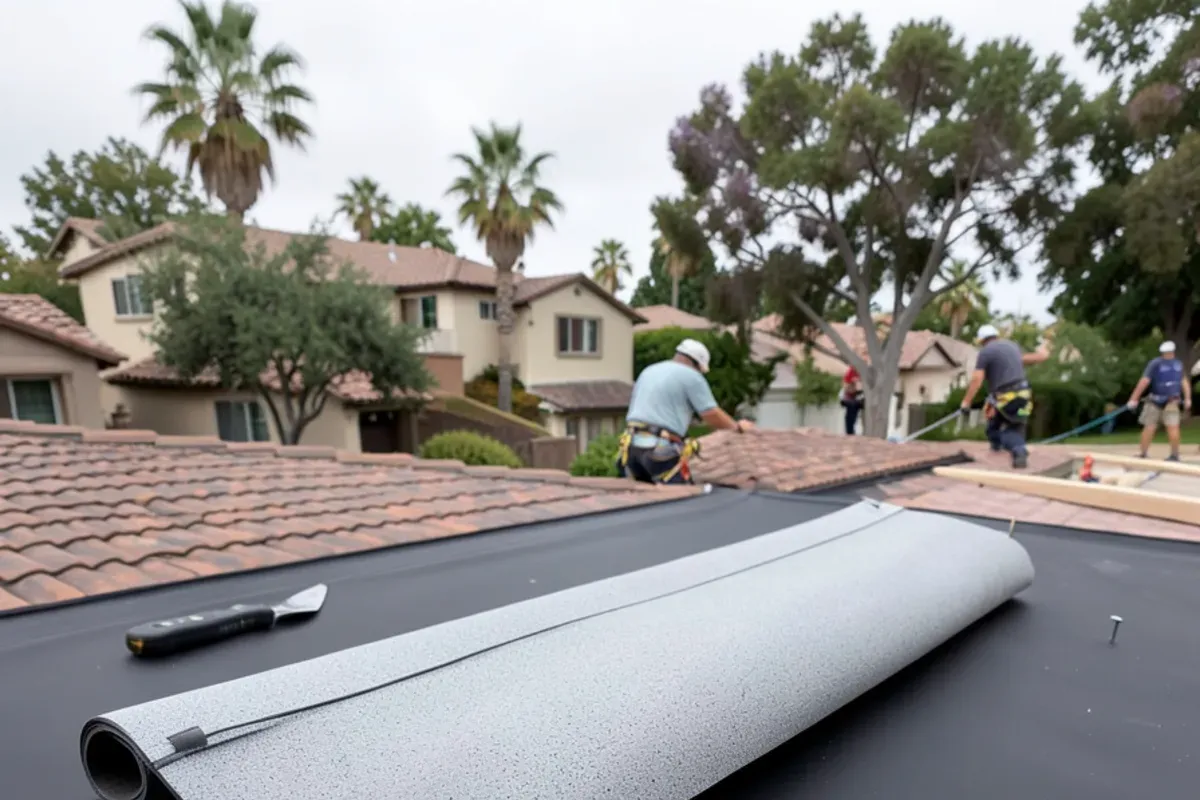
Built-up roofing, the hot-mop system on many post-war Rosemead additions, stacks 3 or more layers of felt bonded with asphalt heated in a kettle, topped with gravel or a mineral cap sheet. It works, but it brings a kettle, fumes and a lot of weight.
Torch-down replaced much of that work because it delivers polymer-modified sheets in fewer plies, with no kettle on the driveway. The polymers keep the asphalt flexible through hot afternoons and cool nights, which plain oxidized asphalt does less well.
- Hot-mop: many plies, heavy, redundant, slower to install.
- Torch-down: 2 plies, lighter, heat-fused laps, granule surface.
- Self-adhered modified bitumen: same family, peel-and-stick, no flame, used at edges and near wood.
How do we keep a torch-down job fire-safe?
Open flame on a roof calls for discipline. These are the rules our crews follow on every torch-down job.
- Never torch directly onto wood. The base sheet is nailed, and only the cap is heated.
- Use self-adhered sheets at eaves, along wood siding, under vents and anywhere the flame could reach a gap.
- Keep fire extinguishers on the roof within reach of every torch.
- Shut the torch down before reaching for anything else, and never leave a lit torch unattended.
- Stay on site after the last torch goes out and recheck laps, edges and gaps where smoldering can hide.
How a torch-down roof goes on
- Tear off the old roof and check the deck, replacing soft sheathing at the per-sheet price on the quote.
- Install edge metal and nail the base sheet in overlapping rows.
- Set cant strips where the roof meets walls so the membrane turns up without a sharp bend.
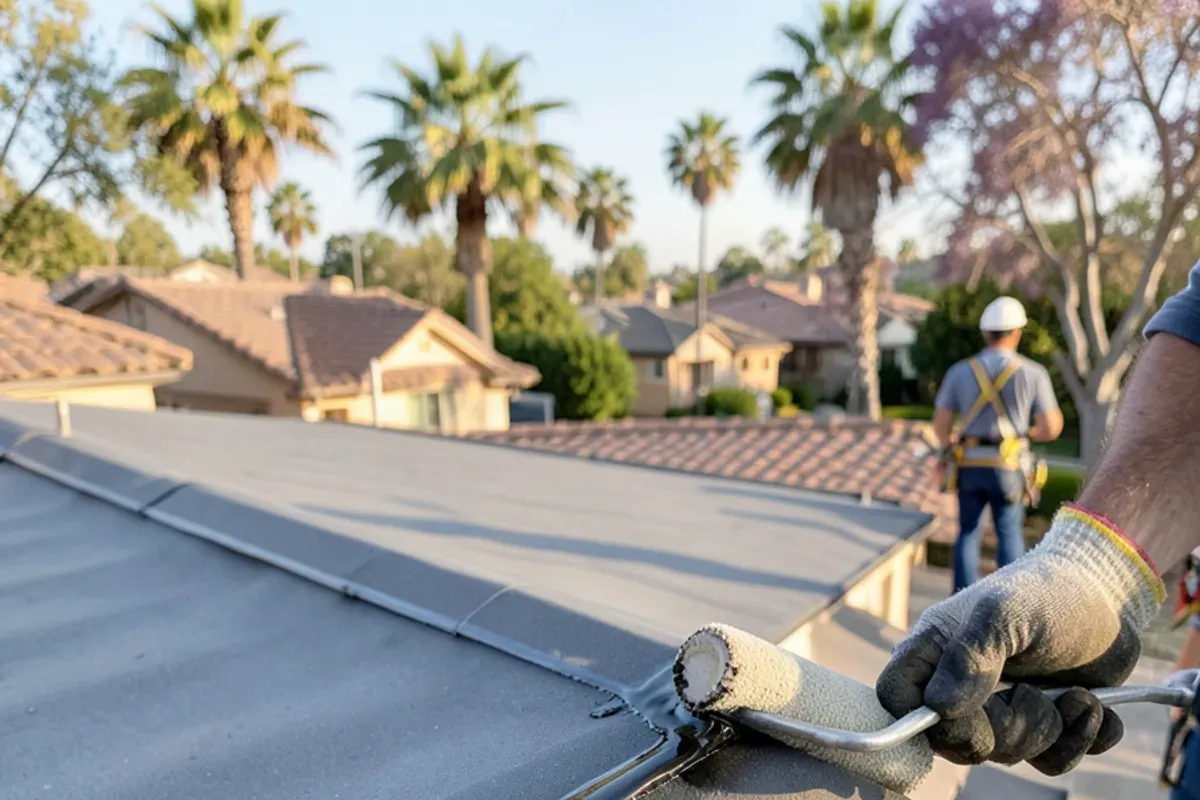
- Torch the cap sheet in rows, with side laps of about 3 to 4 inches and end laps of about 6 inches, watching for a small bead of bitumen at every lap.
- Embed loose granules into any bitumen that bleeds out, so the seam has UV cover.
- Flash walls, pipes and curbs, then the inspection, cleanup and photos.
A typical garage, porch or addition roof takes 1 to 3 days. We pick dry days, because torching over a damp base traps moisture that later becomes a blister.
Need torch-down roofing help this week?
Tell us what you are seeing. We schedule same-day or next-day visits when crews are free and send photos with a written quote.
- 4.9 from 48 Google reviews
- Based on Rosemead Blvd
- Photos and a written quote before work
Torch down roof repair and long-term care
Torch-down is one of the easier membranes to repair. Lifted laps can be re-heated and pressed down, splits get a torched patch of new cap sheet, and areas that have shed granules can be recoated before the asphalt is exposed.
On older valley additions we usually find one of these before the owner sees a stain:
- Bare black patches where the cap has shed its granules, most often in low spots.
- Alligator cracking on hot-mop or gravel roofs that have dried out.
- Laps lifting where the cap turns up the cant strip at a wall.
- Blisters that formed after a cap was torched over a damp base.
- Brittle, cracked cap around pipes and conduit supports.
Manufacturer coverage depends on the specific cap and base sheets used together, and our workmanship terms go into the written contract. Ask for both documents and whether they move with the house if it sells.
GAF Ruberoid, CertainTeed Flintlastic and Polyglass are examples of modified bitumen lines on the market. We name them only to show what is available; the right sheet depends on the roof.
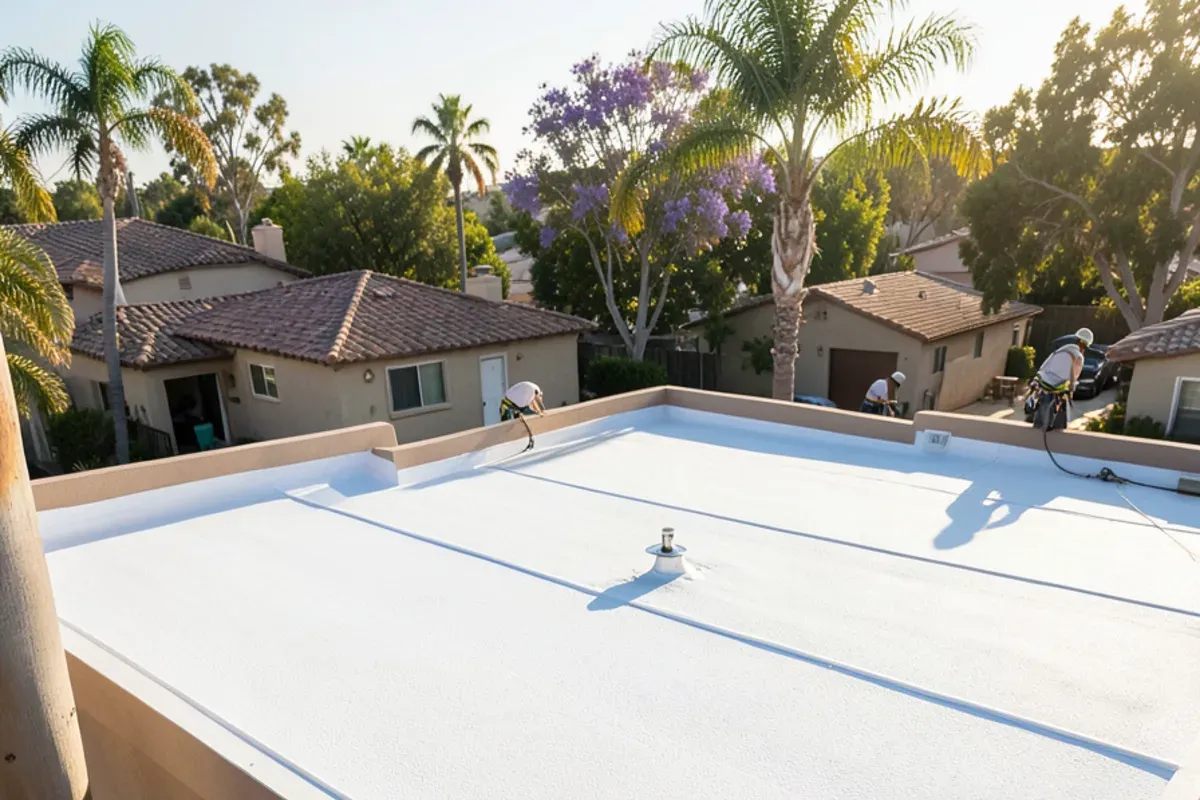
Plan on a yearly check. A white roof coating over a sound cap can add reflectivity, and balconies or decks people walk on daily belong under our roof and deck waterproofing work instead.
Permits, fire rules and Class A ratings for torch-down work
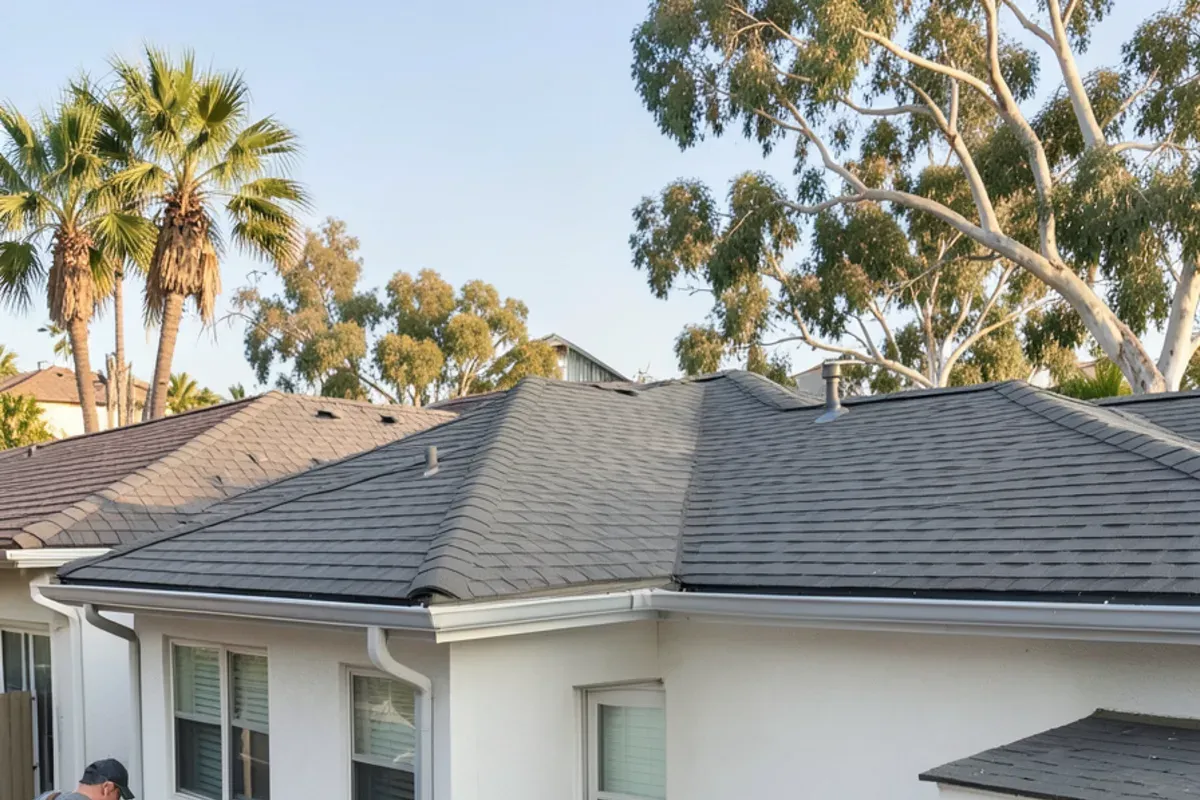
A torch-down reroof needs a building permit, from Rosemead's Building and Safety Division in the city or LA County Public Works in unincorporated areas. The California Fire Code also treats torching as hot work: a fire watch stays on the roof during the work and for at least 30 minutes afterward. Some fire departments add their own hot-work permit, so we check with the local fire authority before scheduling.
In Very High Fire Hazard Severity Zones, such as the foothill edges of Altadena, Sierra Madre and Monrovia, Chapter 7A requires a Class A roof assembly. That rating belongs to the tested combination of deck, base and cap, and fire-resistant cap sheets exist for exactly this. Many self-adhered sheets do not reach Class A alone. Whoever torches your roof needs a CSLB C-39 license you can verify at cslb.ca.gov.
What sets the price of a torch-down roof?
We write each quote after an inspection, because roof size, old layers, deck condition and the chosen cap all move the figure.
- Tear-off of hot-mop and gravel, which is heavy to remove and haul.
- Sheathing replacement once the deck is exposed.
- Cap color, especially a white CRRC-rated cap if Title 24 applies.
- Self-adhered sections near wood siding and eaves.
- Wall flashing height, parapets and the number of penetrations.
- Permit and inspection, listed separately.
Ask about payment options if you would like to spread the project cost.
Why homeowners choose Tylzen Spoke for torch down roofing in Rosemead
- On Google, 48 reviews put us at 4.9 stars on average (November 2026).
- Reviewers mention tidy, protected yards when the job wraps up.
- When the roof requires a permit, we file for it and book the inspector.
- Being based on Rosemead Blvd keeps the drive short for valley homes.
We install and repair torch-down roofs beyond Rosemead too, including torch-down roofing in Montebello, Pico Rivera, Whittier and Downey.
What customers say on Google
4.9★ from 48 Google reviews (checked Nov 2026)
“the roofing crew did an excellent job replacing the roof on my house in rosemead. we had some hail damage after a storm, which another roofer first pointed out. i wanted a second opinion, so i called for a quote, and the response was fast. tanner came by, explained clearly what needed fixing, and was very professional and friendly. …”
“I first hired this roofing company to install a membrane roof over a flat concrete section that was leaking, and they did a fantastic job stopping the leak. Later, I needed new shingles on my home, and their residential team came out to handle it. …”
“I was very happy with the roofing service I received. I reached out because the skylight in my bathroom was leaking, and Brandon scheduled a visit right away. He actually arrived on time, which is rare these days! …”
Where we handle torch-down roofing
- Rosemead
Porch roofs and rear additions on Rosemead's post-war homes, many still carrying hot-mop that torch-down replaces with 2 lighter plies.
- Alhambra
Flat-roofed duplexes and fourplexes with crowded vents and conduit, where a granulated cap handles service traffic between units.
- San Gabriel
Older homes with flat porch and sunroom roofs, where self-adhered edges keep flame away from wood trim and eaves.
- El Monte
Apartment roofs walked often by HVAC and cable technicians, where a mineral-surfaced cap resists scuffs better than smooth sheets.
- Monterey Park
Hillside homes with flat decks over garages, where torched laps are tied into wall flashing below stucco walls.
- Pico Rivera
Mid-century ranch homes with low-slope patio and garage roofs, often recovered once already and due for a full tear-off.
- East Los Angeles
Dense older housing and corner commercial buildings with parapets; unincorporated, so reroofs are permitted through LA County Public Works.
- Altadena
Rebuilding after the Eaton Fire, where flat roof sections need a Class A assembly with a fire-resistant cap under Chapter 7A.
- Sierra Madre
Foothill homes in Very High fire zones, where torch-down cap and base sheets must be chosen as a Class A rated system.
Torch-Down Roofing questions
Torch-down or TPO: which suits a home flat roof better?
It depends on the roof. Torch-down handles foot traffic and crowded penetrations well and patches easily. TPO is lighter, whiter out of the box and installs without flame. For a deck people walk on or a roof full of vents, we lean torch-down; for a cool roof over an addition, TPO often wins.
Is it safe to torch a roof while the family is home?
Yes, when the crew follows strict rules. We never torch onto bare wood, use flame-free self-adhered sheets near siding, eaves and vents, keep extinguishers on the roof, and stay to recheck the roof after torching stops. You can stay home; we just ask that kids and pets stay clear of the work area.
Can torch-down go over an old hot-mop roof?
Sometimes. If there is only 1 existing layer, it is dry and firmly bonded, and the manufacturer allows it, a recover can work. Gravel must come off, and wet felts or blisters mean tear-off. Since many hot-mop roofs in the valley already sit over an older layer, we often find the code requires removal anyway.
Why do I find granules below my torch-down roof?
Some granule loss is normal in the first few rains after installation. Steady loss years later means the cap is weathering, often where water ponds or people walk. Once bare asphalt shows, UV speeds the wear, so recoating or patching at that stage keeps the roof going.
Does a torch-down roof smell during installation?
There is an asphalt odor while the cap is heated, mostly near the work area, and it fades once torching stops. Close nearby windows and turn off any air system that pulls outside air. The smell is milder than an old hot-mop job, which ran a kettle all day.
Can a torch-down roof be white instead of gray?
Yes. Cap sheets come with white mineral granules, and some carry Cool Roof Rating Council labels for low-slope use. Another route is a gray cap topped later with a rated reflective coating. White caps show dirt sooner, but over a bedroom or family room with no attic, the cooler ceiling is usually worth it.