
By Tylzen Spoke Roofing · Published
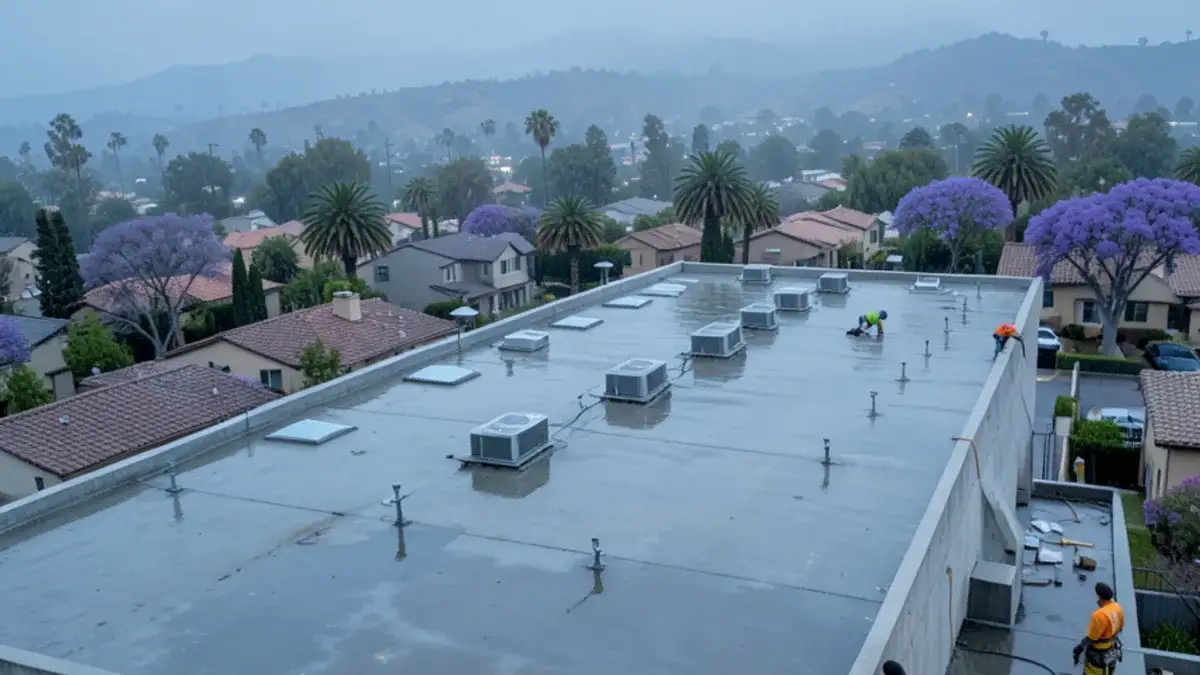
A warehouse roof leak almost always starts at one of five places: a roof drain or scupper, a skylight or smoke vent, an HVAC curb or pipe penetration, the junction where the roof meets a tilt-up wall panel, or a seam that has opened on an aging membrane. You can narrow it down before anyone climbs up by noting exactly where the water lands, what weather brought it and what sits on the roof above that spot.
This guide gives facility managers a routine for doing that, explains the leaks that are not really roof leaks, and covers what commercial roof repair usually looks like once the source is found.
Where do warehouse roofs usually leak?
| Source | Why it fails | Clue inside the building |
|---|---|---|
| Roof drains and scuppers | Debris blocks the strainer; clamping ring loosens; water backs up past the flashing | Drip near a column line or drain leader pipe, worst in long storms |
| Skylights and smoke vents | Curb flashing cracks; old acrylic domes craze and split | Water on the floor directly under a skylight, sometimes with daylight visible |
| HVAC curbs and units | Flashing too short, sealant dried out, panels on the unit itself leaking | Drips around ductwork drops or under rooftop equipment |
| Pipe, conduit and gas penetrations | Pitch pans dry and shrink; boots crack | Small, steady drip near a utility line |
| Wall-to-roof line | Counterflashing or panel joint sealant fails on tilt-up walls | Water running down the inside face of a wall panel |
| Field seams and laps | Aged membrane, foot traffic, wind flutter | Stain mid-bay with no equipment overhead |
Want a roofer to look at it?
Call with your address and what you are seeing. We visit same-day or next-day when crews are free.
- 4.9 from 48 Google reviews
- Based on Rosemead Blvd
- Photos and a written quote before work
A troubleshooting routine for facility managers
Good notes during the storm save hours on the roof afterward. Keep it simple and repeatable.
- Mark each drip on a floor plan or by column grid number, and photograph it with a timestamp.
- Record the weather: steady rain, a short heavy burst, or wind from one direction.
- Note timing. A leak that starts within minutes points to an opening; one that starts hours in often points to a backed-up drain.
- Protect inventory and equipment with plastic and catch containers, and keep forklift paths clear of wet floor.
- After the rain, look at the roof from the hatch or a safe edge. Check drains above the leak area for debris and standing water.
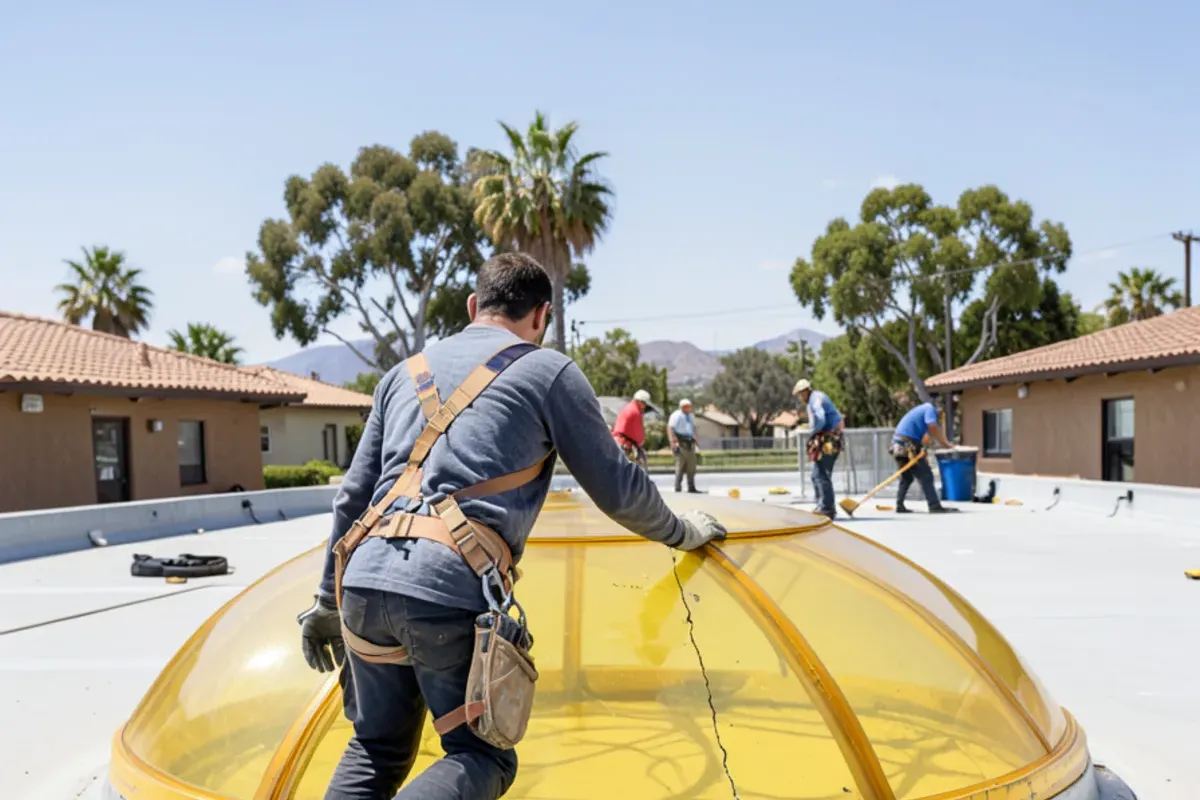
- Do not walk near skylights or the roof edge without fall protection. Cal/OSHA treats skylights as fall hazards for good reason.
- Share the floor plan and photos with your roofer so the inspection starts at the right spot.
Could the water be condensation or HVAC drainage instead?
Some warehouse drips never came through the roof at all. Before paying for roof work, rule out the usual impostors.
- Condensate lines from rooftop units that are cracked, disconnected or draining onto the roof right beside a curb.
- Ductwork sweating in humid weather, which drips on dry days.
- Fire sprinkler or plumbing lines with slow leaks at fittings.
- Condensation on the underside of steel decks or metal roofs when warm, moist air meets a cold surface overnight.
The tell is timing. Water that shows up on clear days, or only when equipment runs, rarely has anything to do with the roof membrane.
Why do tilt-up roofs leak along the wall line?
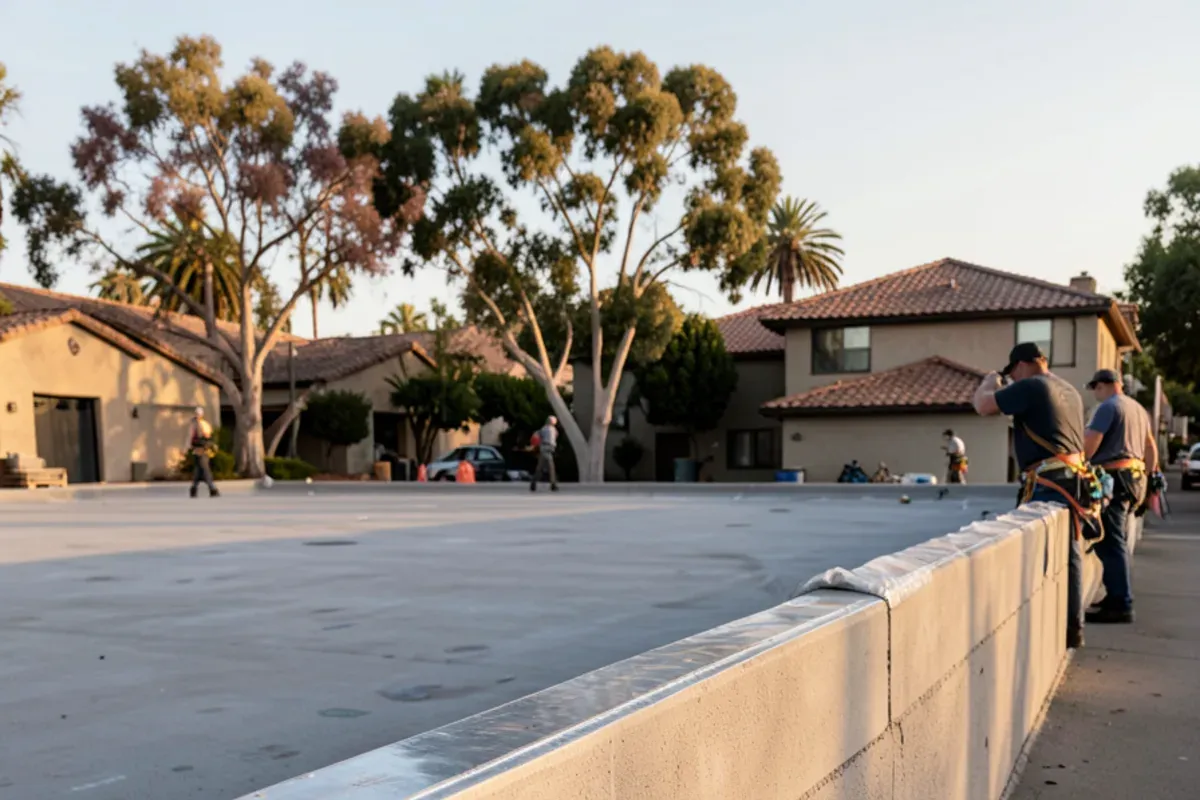
Tilt-up buildings cast their concrete wall panels on site and lift them into place, with the roof framed between them. The roof edge then depends on counterflashing set into or fastened to the panels, and on the sealant in the vertical joints between panels.
When either fails, water runs down the inside of the wall and looks like a roof leak. The fix may be new counterflashing, a reglet cut into the panel, or resealing panel joints above the roofline, which is different work from patching the membrane. Many older Southern California tilt-ups also use panelized wood roof decks, so long-term leaks along the wall can soften the deck edge.
How do roofers pinpoint a warehouse leak?
Your leak log tells us where to start. The roof itself then gets tested with one or more of these methods, chosen by membrane type, deck type and the weather on inspection day.
| Method | How it works | Best use | Limits |
|---|---|---|---|
| Visual and probe survey | Walking each detail above the logged drips and probing seams | Drains, curbs, penetrations, wall lines | Misses water traveling under the membrane |
| Infrared scan | Wet insulation holds daytime heat and shows warm after sunset | Mapping wet areas across large roofs | Needs a dry surface and a clear evening after a sunny day |
| Electronic leak detection | A low-voltage field finds where current passes through a breach | Pinholes and seam breaks on single-ply roofs | Needs a conductive layer under the membrane; some systems block it |
| Controlled water test | Running water at one detail at a time while someone watches inside | Confirming a suspected curb, skylight or wall leak | Slow, and it adds water to the roof |
| Core cuts | Removing a small plug to inspect layers and moisture | Confirming scan results before a repair or recover | Each cut must be patched properly |
Water often enters at one point and drips 20 or 30 feet away after running along a steel deck flute or a purlin. That is why we compare the inside stain with the roof slope and deck direction before cutting anything open.
What we see on warehouse roofs from Commerce to Irwindale
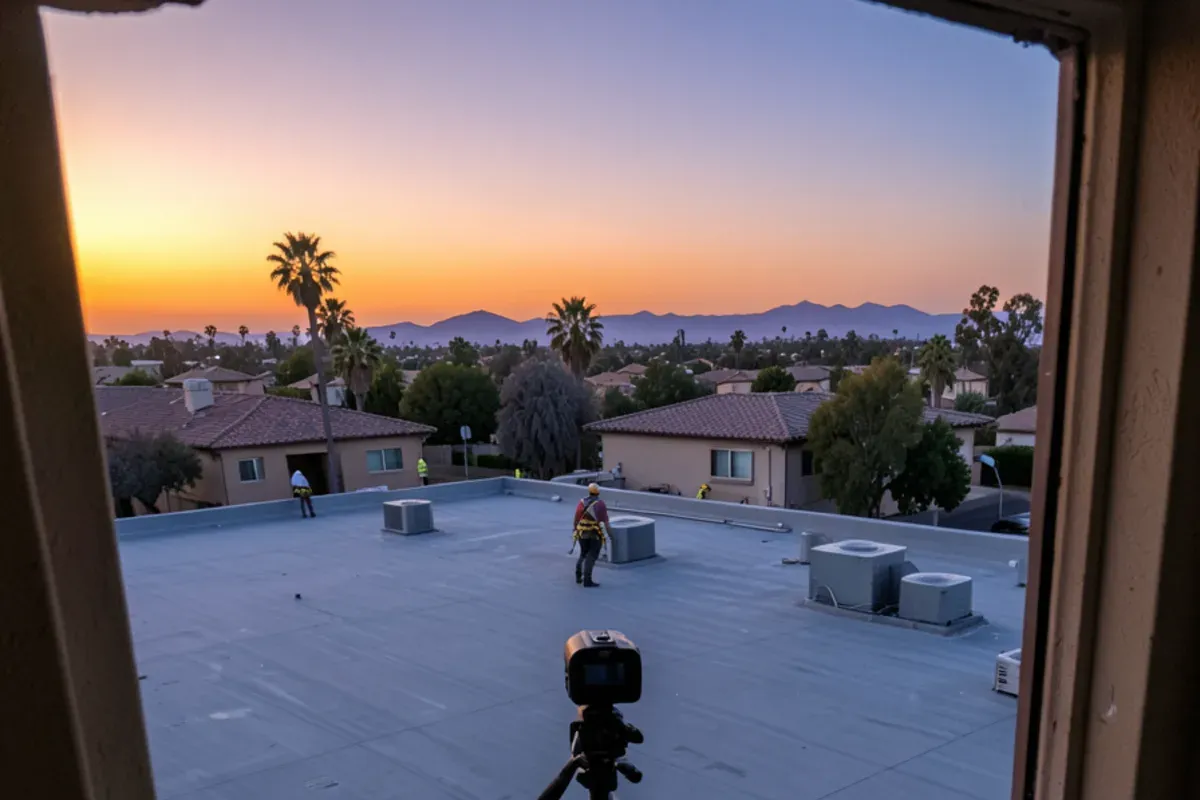
Our crews work on industrial roofs across the southeast county and the San Gabriel Valley, including Commerce, South El Monte and Irwindale. A few patterns repeat.
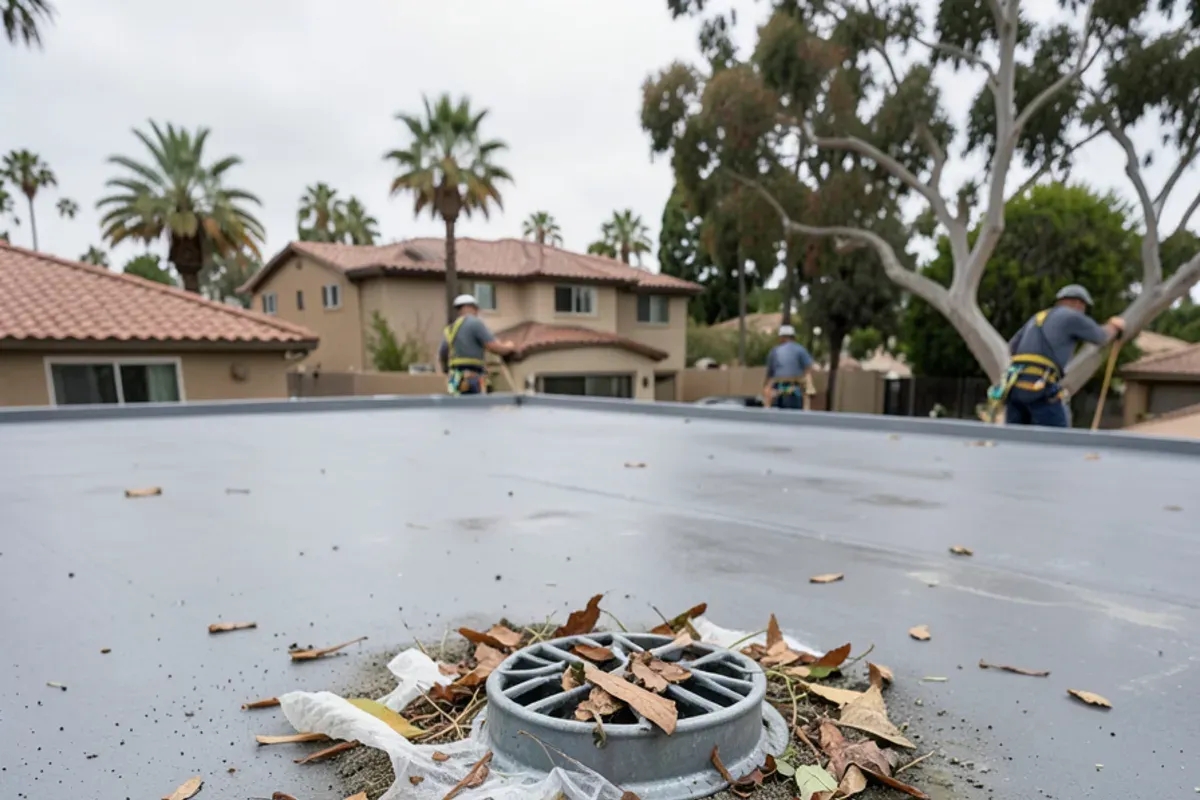
- The first storm after a dry summer, usually in November, exposes every drain that filled with dust and debris since spring.
- Shrink wrap, pallet scraps and bird nests are common drain blockers near loading areas.
- Original skylights on older buildings have yellowed and cracked; many leak at the curb rather than the dome.
- Rooftop units swapped by HVAC contractors often leave curbs reflashed with sealant only.
- Wind events from October to March lift loose perimeter metal and fastened membrane edges.
Repair trade-offs worth weighing
Sealant is the fastest fix and the shortest-lived. A bead of mastic at a curb can stop a drip this week, but it dries and shrinks in the summer sun and usually fails by the next rainy season. Rebuilding the curb flashing to proper height costs more and takes longer, yet it removes that spot from the leak log for good.
Skylights pose a similar choice. Replacing one cracked dome is cheap, but if the rest of the row is the same age, the next storm finds the next one. Replacing them as a set, ideally during a recover, also lets the curbs be raised and screened for fall safety.
Drainage is the hardest call. Where a parapet traps water, the California Building Code requires overflow drains or scuppers set above the primary drains, sized under the Plumbing Code. Older buildings sometimes lack them or have them blocked by later work. Adding overflow capacity means cutting the parapet or adding drain lines, so we flag it when ponding marks show water rising well past the drains, and leave the decision with you.
Temporary fixes versus permanent repairs
During a storm, the goal is to protect the building, not to fix the roof. A trained crew can clear a drain, apply a temporary seal at a failed seam or cover a cracked skylight. Those measures buy time and should be logged so the permanent repair follows.
Permanent repairs match the source. A drain may need a new clamping ring and flashing; a skylight may need a new curb flashing or a full skylight repair or replacement; a curb may need its membrane rebuilt to proper height. Each repair gets photographed before and after, and you receive a written, line-by-line quote first.
When to stop chasing leaks and plan a larger project
Between storms, a scheduled commercial roof maintenance visit in early fall clears drains and reseals curbs before the leak log starts again.
If the leak log keeps growing, the membrane is splitting at seams across the field, or core samples show wet insulation in several bays, repairs are only buying time. That is the point to compare a restoration coating, a recover or a replacement through our warehouse and industrial roofing service. Call (725) 745-8803 or request a quote, send your floor plan and photos, and we will start the inspection where the water is.
Questions readers ask
Why does the warehouse roof leak only in long storms?
Slow leaks that start hours into a storm often point to drainage. A partly blocked drain lets water pile up until it rises above the flashing or a low seam. Short bursts drain before that happens. Clearing strainers and checking the drain bowl is usually the first step.
Can a leak be traced in dry weather?
Often, yes. Water trails, rust or staining on the deck underside, and wet insulation readings point to the area. On the roof, a controlled water test at one detail at a time, starting low, can recreate the leak while someone watches inside.
Who should clear warehouse roof drains?
Someone trained to work on roofs with fall protection, since drains are often near skylights and edges. Many owners include drain clearing in a maintenance plan so it happens before the rainy season and after wind events.
Do skylights need to be replaced during a warehouse reroof?
Not always, but it is often the cheapest time. If the domes are crazed or the curbs are short or rotted, replacing them while the roof is open avoids cutting into a new membrane later. We note the condition of each skylight in the inspection photos.
Does a warehouse roof with parapets need overflow drains?
Yes, in most cases. When parapet walls would trap water if the main drains clog, the building code calls for secondary drains or scuppers that take over at a higher water level. Many older tilt-ups in the industrial belt have them, but later reroofs sometimes covered or blocked them. We check each one during an inspection and note it in the photo report.
Sources
Written by Tylzen Spoke Roofing
A roofing contractor on Rosemead Blvd (CA-19) in Rosemead, working on shingle, tile, metal and flat roofs across the San Gabriel Valley. This guide reflects what our crews check on local roofs. Questions about your roof? Call (725) 745-8803.