
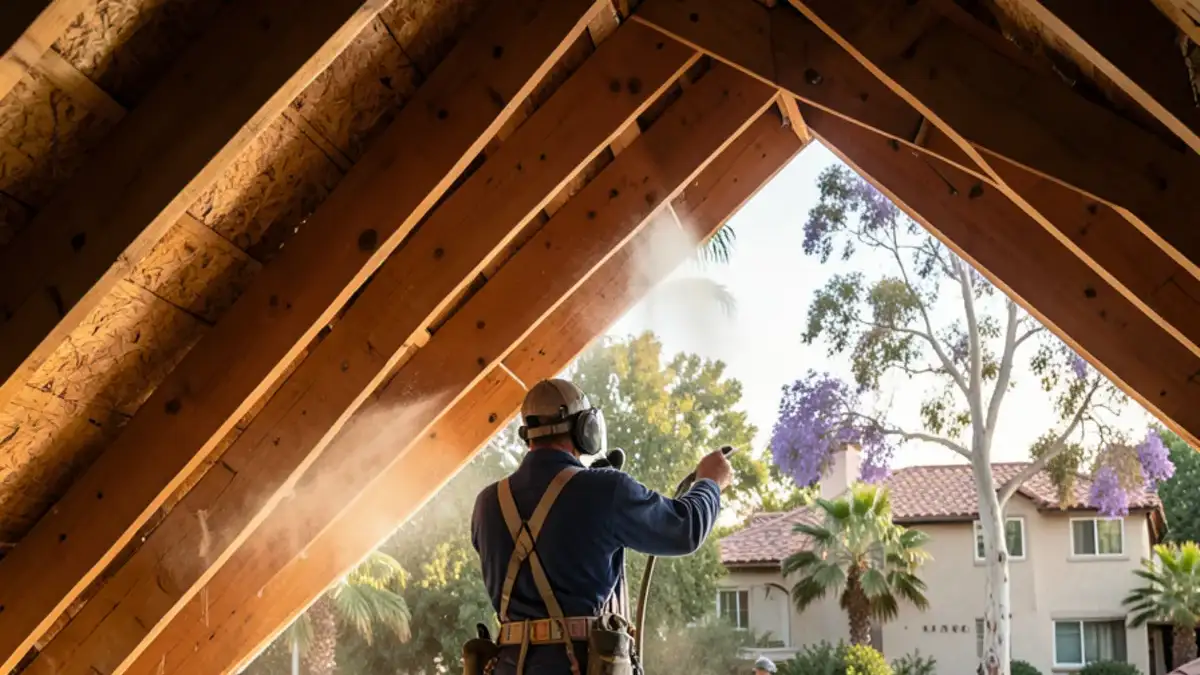
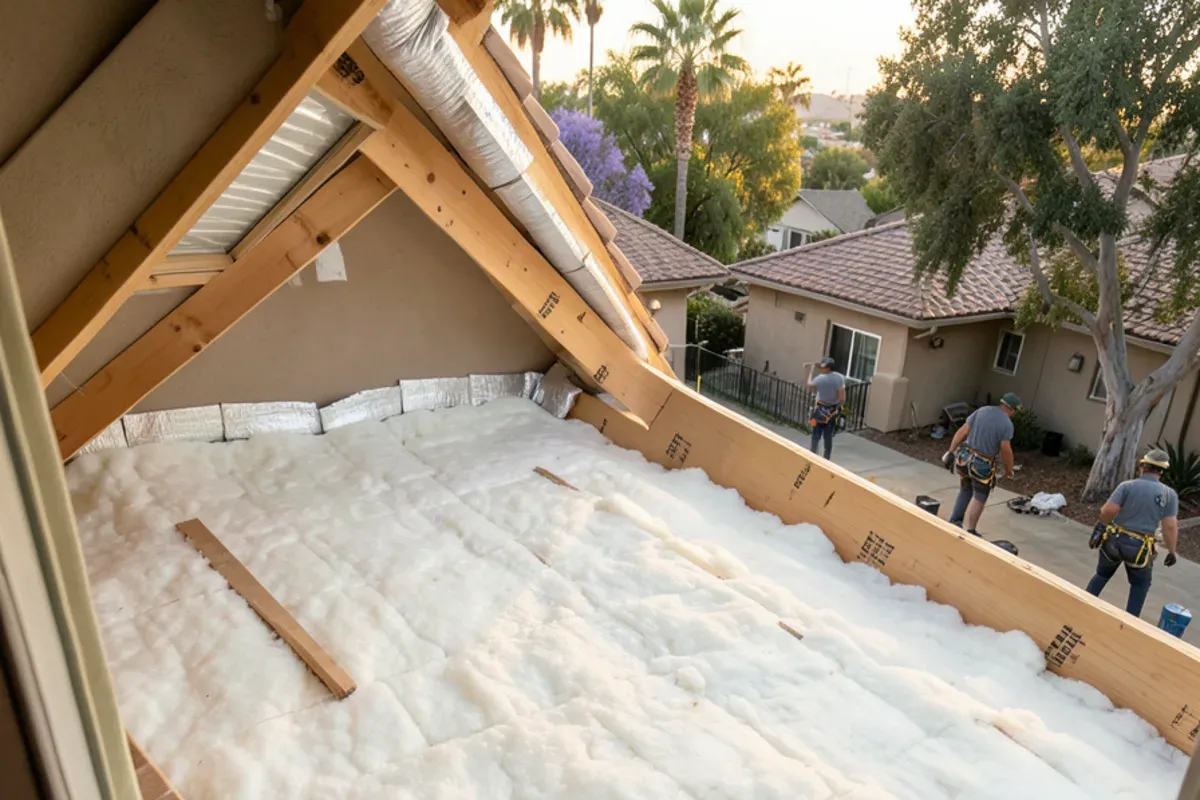
Attic insulation in Rosemead is often the thinnest layer in an older house. Homes built from 1950 to 1959 make up 26.5% of the city's housing units, and many still have a few inches of settled fiberglass or rock wool between the ceiling joists. We remove what is wet, compressed or contaminated, seal the gaps that leak air into the attic, and blow in new insulation to a proper depth. It belongs with our roof maintenance services because the roof, the attic air and the insulation work as one system.
Insulation also ties into the roof in a less obvious way. Under Title 24, R-38 ceiling insulation is one of the exceptions that can free a reroof from cool-roof color rules, so an upgrade ahead of a reroof can widen your color choices.
How much insulation should a San Gabriel Valley attic have?
R-38 is a common target for homes in this climate and the level named in Title 24's cool-roof exception. In blown fiberglass that means roughly 13 to 17 inches, depending on the product; cellulose reaches it in less depth. Many 1950s attics we open hold the equivalent of R-11 or less, often patchy where trades have crawled through.
If the work is part of a permitted reroof or alteration, the building department confirms what level applies. Outside a permit, R-38 is still a sensible goal for an attic that bakes all summer above air-conditioning ducts.
Signs an attic is under-insulated
- You can see the tops of the ceiling joists, which means less than about 4 to 6 inches of fill.
- Coverage is patchy, with bare drywall where trades have crawled through.
- Ceilings feel warm to the touch on summer afternoons, and the AC struggles to catch up after dark.
- Tunnels, droppings or flattened trails show rodents have been living in it.
- Matted or stained spots sit below old roof leaks.
Many Rosemead houses were built before California's first residential energy standards took effect in 1978, so their original insulation was thin or missing, and what owners added later has often settled.
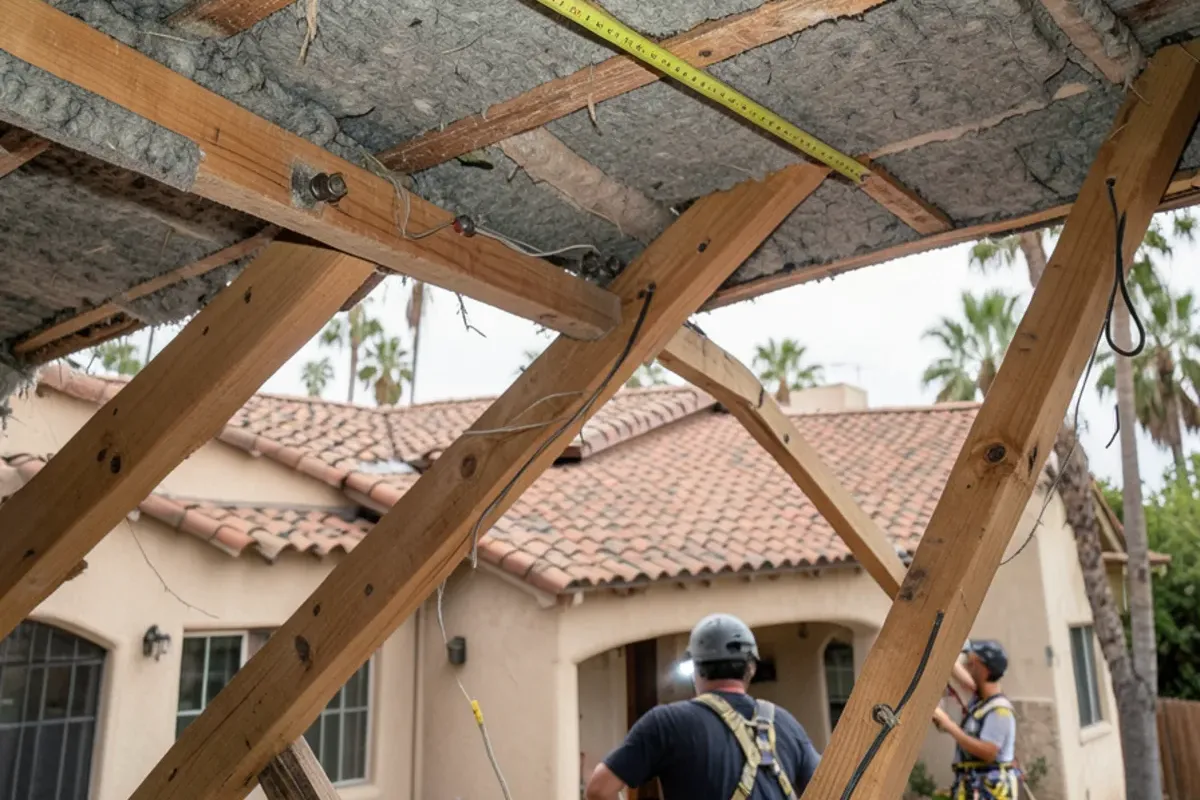
Blown in insulation, batts and radiant barriers
Blown-in fiberglass
Loose fill that flows around wiring and framing, settles little, does not burn and shrugs off brief moisture better than cellulose.
Blown-in cellulose
Recycled paper treated with borates. It is denser with more R-value per inch, but it settles over time and mats down if it gets wet.
Batts
Fiberglass or mineral wool blankets. They suit open framing but leave gaps around wires and pipes unless cut carefully.
Radiant barrier
Foil stapled under the rafters, or radiant barrier sheathing installed during a reroof. It reflects heat radiating from a sun-baked roof deck and counts as a Title 24 cool-roof exception.
| Option | What it does | Best fit | Trade-off |
|---|---|---|---|
| Blown fiberglass | Slows heat flow through the ceiling | Most open attics | Needs more depth than cellulose for the same R-value |
| Blown cellulose | Slows heat flow; dense fill | Attics with tight framing | Settles; damaged by leaks |
| Batts | Slows heat flow in blanket form | Open, regular joist bays | Gaps cut performance |
| Radiant barrier | Reflects radiant heat from the deck | Hot attics with ducts | Adds nothing in winter; dust reduces effect |
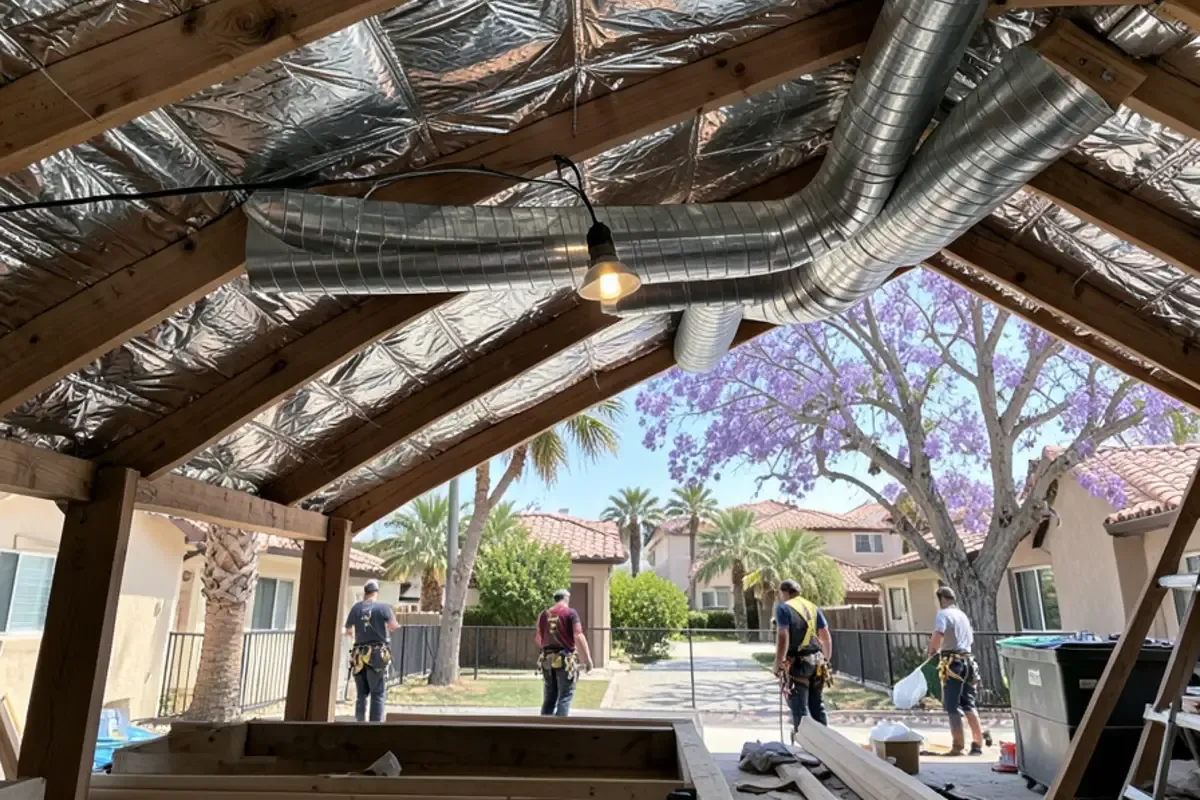
Attic insulation replacement: when old material has to go
- Leak damage: wet cellulose mats down and can grow mold, and soaked fiberglass that stays compressed loses much of its value.
- Rodents: roof rats nest in insulation, and droppings and urine are a health risk and an odor source, so removal is done with respirators and a HEPA vacuum.
- Smoke odor after a fire nearby.
- Vermiculite: the gray-brown pebbly fill found in some older homes can contain asbestos and must be tested before anyone disturbs it.
If the existing insulation is dry and clean, it stays, and new material goes on top. Before replacing anything damaged by a leak or by pests, the roof leak or the entry gap gets fixed first.
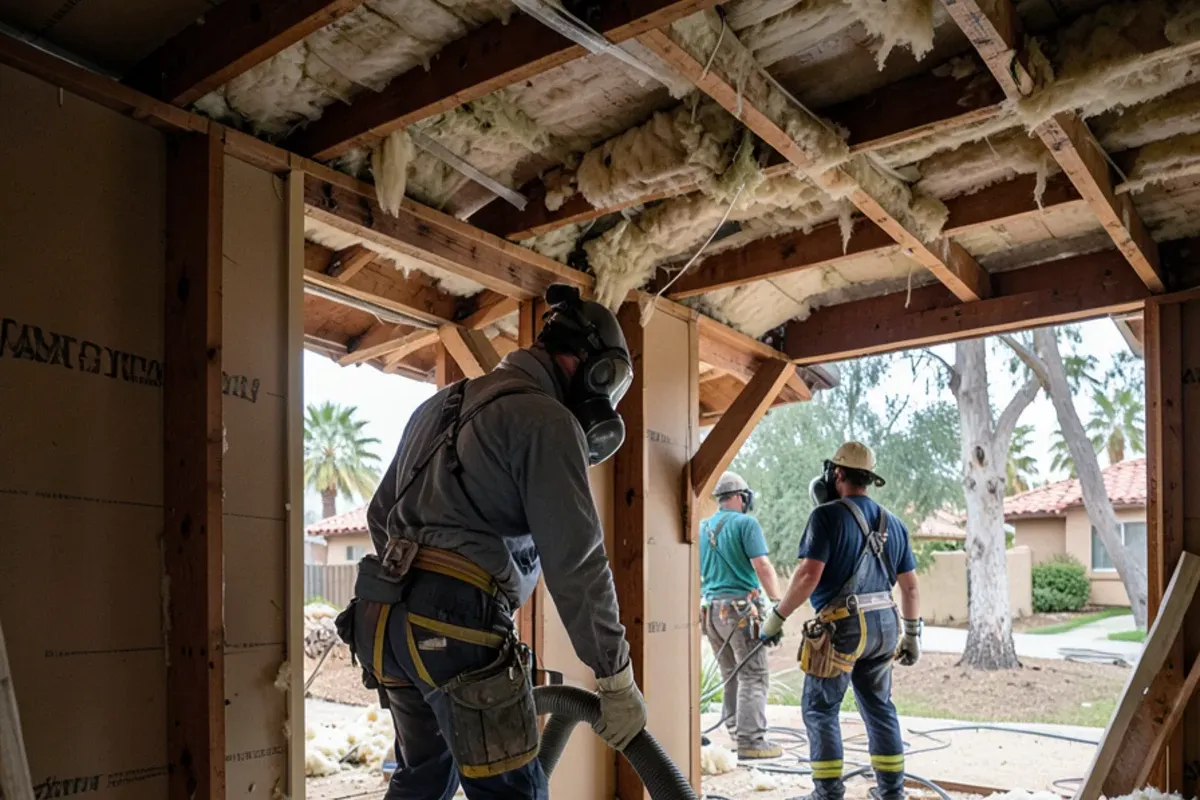
Air sealing, ventilation and depth decisions
- Air sealing: gaps at top plates, wiring holes, plumbing chases and around the attic hatch get sealed before insulation goes down.
- Recessed lights: older cans that are not rated for insulation contact get covered with a fire-rated box or replaced by an electrician.
- Baffles at the eaves keep soffit vents open; see attic ventilation for why intake matters.
- Clearance around flues and chimneys, as the code and manufacturers require.
- Ducts: sealing or replacing air-conditioning ductwork is HVAC work, and we recommend it when we see disconnected or crushed runs.
- Depth markers stapled to framing so anyone can verify the depth later.
Need attic insulation help this week?
Tell us what you are seeing. We schedule same-day or next-day visits when crews are free and send photos with a written quote.
- 4.9 from 48 Google reviews
- Based on Rosemead Blvd
- Photos and a written quote before work
Attic insulation in Rosemead, alone or during a reroof
- We measure the existing depth, check for moisture and pests, and photograph the attic.
- You receive a written, line-by-line quote covering removal, air sealing and new insulation as separate lines.
- Drop cloths go down along the path to the hatch, and the hose runs from the truck through a door or vent.
- Old material is removed where needed, then air sealing and baffles go in.
- A radiant barrier is installed if you chose one.
- Insulation is blown to the depth markers, and we leave a card in the attic listing the material, depth and R-value.
Blowing new insulation into a typical house usually takes a day, and removal adds about another. During a tear-off, radiant barrier sheathing can go down as the new deck, which is the cheapest moment to add one.
California licenses insulation work under the CSLB's C-2 Insulation and Acoustical classification, and for any job over $1,000 you can confirm a bidder's license covers the work at cslb.ca.gov. Whether stand-alone insulation needs a permit varies by city, so check with the building division or, in unincorporated areas, LA County Public Works; when insulation goes in during a permitted reroof, it is documented under that permit. Suspect vermiculite is tested before anyone disturbs it, and confirmed asbestos goes to a registered abatement contractor.
What affects attic insulation cost?
- Attic floor area and the target depth.
- Removal and disposal of old material.
- Rodent cleanup and sanitizing.
- Material choice and whether a radiant barrier is added.
- The amount of air sealing needed.
- Access: low-pitch attics on ranch homes are slow, tight work.
Rosemead and most San Gabriel Valley cities are served by Southern California Edison, so check SCE and Energy Upgrade California for current offers. The LADWP cool-roof rebate covers only LADWP electric customers. Payment options are worth asking about when you go over the quote.
Why homeowners hire Tylzen Spoke for attic insulation
- 4.9 stars on Google from 48 reviews, as of November 2026.
- Before-and-after attic photos and a written quote with each step priced separately.
- Reviewers mention protected, clean work areas, which matters when a hose runs through the house.
- Our Rosemead Blvd base keeps the job a short drive away for most of the valley.
Market examples include blown fiberglass such as Owens Corning AttiCat and Johns Manville Climate Pro, Knauf loose fill, and borate-treated cellulose from GreenFiber. We name them only for comparison.
Coverage on insulation products depends on the manufacturer and the product line, and workmanship terms are written into your contract. Ask for both in writing, and whether they transfer when the house sells. After any roof leak, check the attic so wet insulation does not sit for weeks.
A roof inspection includes an attic check if you want a baseline first, and sellers often fold insulation upgrades into the repairs before a roof certification. We insulate attics in Pico Rivera, Hacienda Heights and Downey, along with Rosemead.
What customers say on Google
4.9★ from 48 Google reviews (checked Nov 2026)
“Five stars all the way. From William’s first visit and walkthrough with us to Brandon’s excellent follow-up, this roofing company was outstanding and professional. We always felt comfortable—never pushed or promised more than they could deliver. …”
“I was very happy with the roofing service I received. I reached out because the skylight in my bathroom was leaking, and Brandon scheduled a visit right away. He actually arrived on time, which is rare these days! …”
“A recent strong wind loosened a shingle on my roof in Rosemead. It took just one call, and Tanner came out the very next day to help. While we talked, I mentioned how thankful I still am for the excellent roofing work the crew did years ago, which has continued to hold up very well. …”
Where we handle attic insulation
- Rosemead
Many 1950s Rosemead attics hold the equivalent of R-11 or less above ducts that bake all summer under shingle roofs.
- Pico Rivera
Single-story post-war homes with low-pitch attics need careful blowing in tight spaces to reach full depth at the eaves.
- Hacienda Heights
Hillside homes from the 1960s and 1970s often have settled fiberglass that falls well short of R-38 over upstairs rooms.
- Downey
Mid-century ranch houses here often reach R-38 most cheaply by sealing air leaks, then topping up dry existing insulation.
- El Monte
Older homes with roof rat activity often need contaminated insulation removed with HEPA equipment before new fill goes in.
- Monterey Park
Hillside homes with ducts in the attic gain from a radiant barrier that reflects heat off sun-facing slopes.
- Temple City
Owners planning a reroof often add R-38 first, which can open the Title 24 exception and keep darker shingle colors available.
- Altadena
Homes near the Eaton Fire area often need smoke-tainted insulation replaced once roof and attic openings are made sound.
Attic Insulation questions
What R-value should a Rosemead attic reach?
R-38 is the usual target here and the level Title 24 names in its cool-roof exception. In blown fiberglass that is roughly 13 to 17 inches; cellulose gets there with less depth. Many older homes start well below that. If the work is part of a permitted project, the building department confirms what applies.
Should old insulation be removed after a roof leak or rodent problem?
Usually, yes. Wet cellulose mats down and can grow mold, and soaked fiberglass that stays compressed loses much of its value. Rodent droppings and nesting are a health risk and an odor source. Small, dry, clean areas can stay. The leak or entry points get fixed first, then the affected insulation is removed and replaced.
Is a radiant barrier worth it in the San Gabriel Valley?
In hot, sunny attics with ducts in them, often yes. A radiant barrier reflects heat radiating off the roof deck, so the attic and the ducts run cooler. It works best with good ventilation and full insulation. It is also a Title 24 exception path, and it is easiest to add as radiant barrier sheathing during a tear-off.
Can new insulation go on top of what I already have?
Yes, if the existing material is dry, clean and free of rodent waste. Loose fill can be blown right over old batts or loose fill. We check for moisture and contamination first and seal air leaks underneath, since piling insulation over open gaps leaves much of the benefit unused.
What if my attic has vermiculite?
Stop and test it before anyone disturbs it. Vermiculite is a gray-brown, pebbly loose fill, and some of it contains asbestos. If testing confirms asbestos, removal is a job for a registered asbestos abatement contractor. Once the attic is cleared, we can air-seal and insulate.
Are there rebates for attic insulation in Rosemead?
Rosemead is in Southern California Edison territory, so check SCE and Energy Upgrade California for current offers, which change from year to year. The LADWP rebates you may read about apply only to LADWP customers in the City of Los Angeles areas it serves. Ask about documentation rules before work starts.