
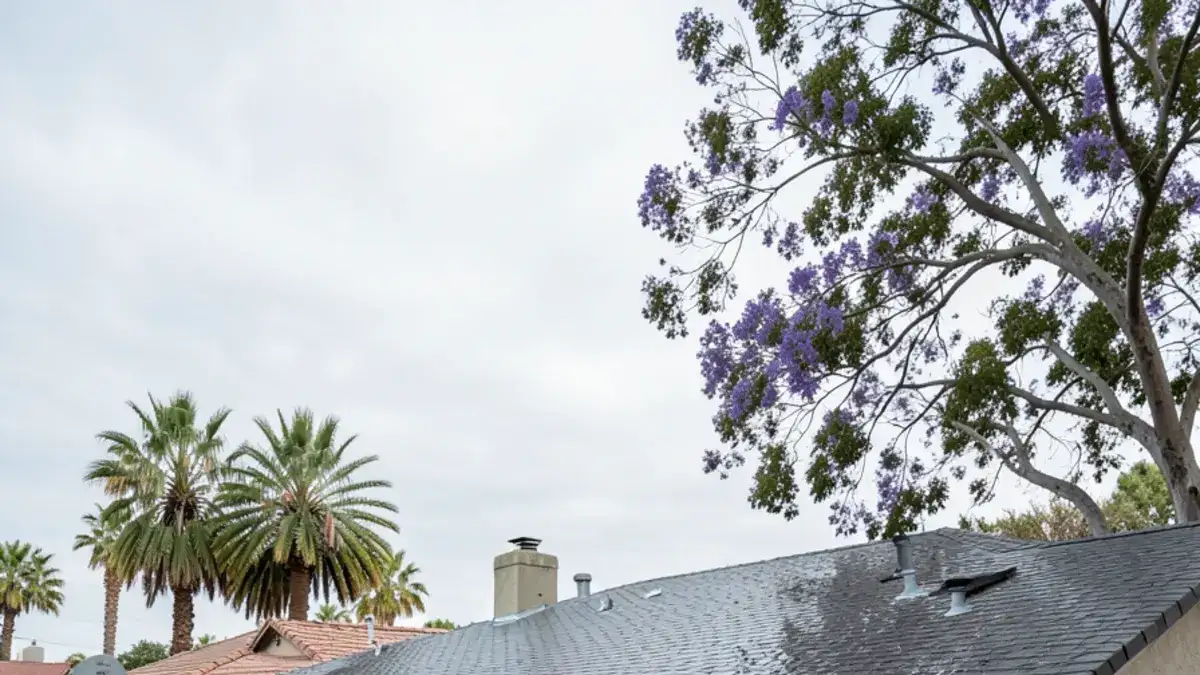
Roof leak repair in Rosemead starts on the roof, not at the ceiling stain: water usually enters a few feet uphill from where it drips, at a flashing joint, a cracked pipe boot, a clogged valley or a slipped tile. We find that entry point, repair it, and document the fix so you know the leak is solved rather than patched over.
Leak work is part of our roof repair service in Rosemead, and most calls come in during the November to March rainy season, when a dry summer of heat has already opened small cracks in sealant and flashing.
Signs your roof is leaking before water reaches the floor
Most leaks give warnings weeks before a drip. Catching them early keeps a flashing repair from turning into wet insulation, stained drywall and soft roof decking.
- A brown ring or bubbling paint on the ceiling, often near a bathroom vent, chimney or exterior wall.
- Damp or flattened insulation and dark streaks on rafters when you look into the attic with a flashlight.
- A musty smell upstairs or in closets after a storm.
- Peeling paint or water marks on the fascia board under the eaves.
- Granules collecting at downspout outlets, or shingles that look lifted along one edge after wind.
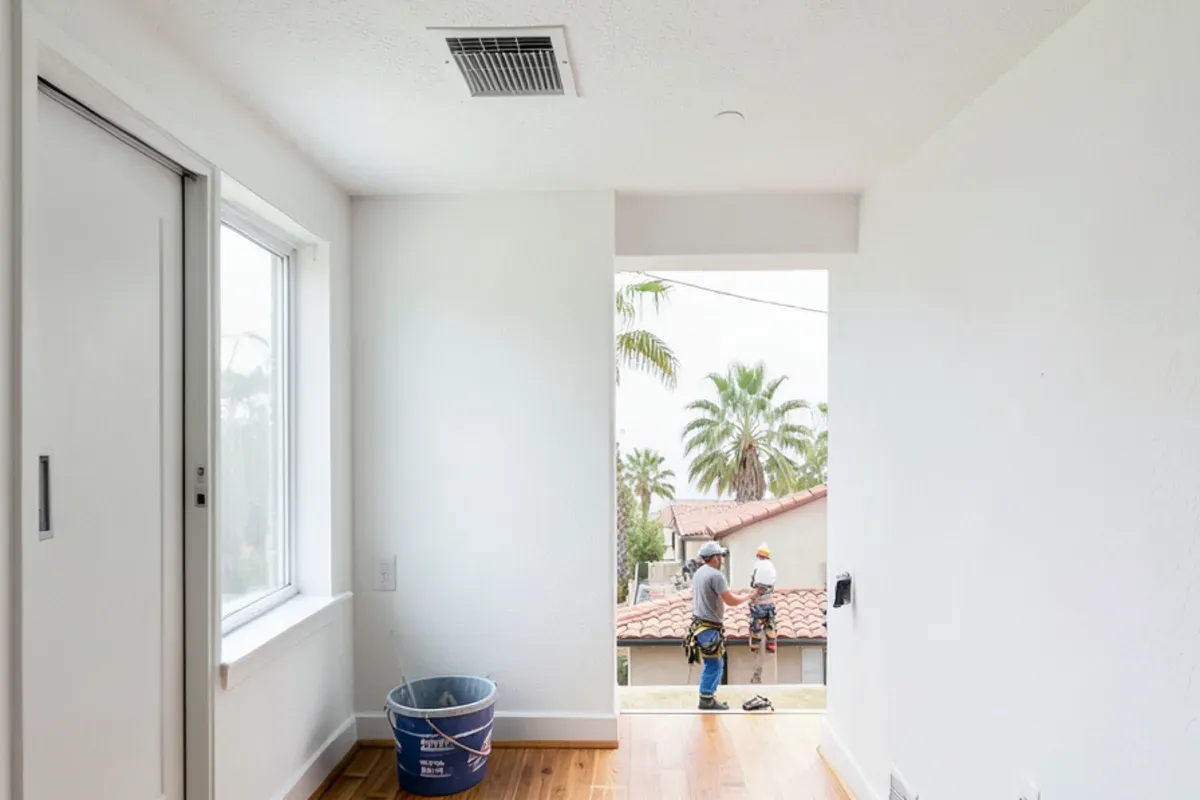
A stain that grows only in wind-driven rain usually points to a wall or step flashing problem. A stain that appears in every storm, even light ones, more often means a cracked pipe boot or a hole in the field of the roof.
When the ceiling stain is not the roof
Some stains have nothing to do with roofing. Overflowing gutters push water behind the fascia and into the wall, an attic air handler can drip condensate in August with no rain at all, and an upstairs supply line leaks on any day. If a stain grows in dry weather, we tell you so and point you to the right trade.
Why roofs in Rosemead leak: heat, age and layered reroofs
Rosemead's housing is old by Southern California standards. The City's Housing Element counts 51.6% of homes built before 1960, and Point2Homes puts the median build year at 1959. Many of those houses carry their second or third roof, and some carry two layers of composition shingle stacked on top of each other.
Summer highs in the upper 80s cook sealant, rubber boots and the asphalt in shingles. The material expands in the afternoon and shrinks at night, and after a few seasons the joints open. Then the rain arrives in short, heavy bursts between November and March, with February usually the wettest month. That pattern is why so many leaks show up with the first big storm of the year.
| Leak source | What fails | Typical sign inside |
|---|---|---|
| Pipe boots and roof jacks | Rubber collar cracks in UV and heat | Stain directly below a bathroom or kitchen |
| Wall and step flashing | Sealant dries out; flashing was face-nailed or missing | Stain along an exterior wall or second-story junction |
| Valleys | Leaves and needles dam water; worn valley metal | Stain near an inside corner of the roofline |
| Clay or concrete tile | Cracked or slipped tiles expose tired underlayment | Leak with no visible damage from the ground |
| Flat sections and additions | Open seams, ponding water, failed drains | Stain over a patio room or garage conversion |
How do we find the source of a roof leak?
We work from both sides of the roof. Inside, we map the stain, check the attic for the wettest rafter and follow the water trail uphill. Outside, we inspect every penetration, flashing run and valley above that point.
- Attic check: wet sheathing, daylight at nail holes, and the path the water took along the framing.
- Roof surface: lifted or cracked shingles, broken tiles, exposed nail heads and worn granules.
- Penetrations: pipe boots, exhaust vents, skylight curbs and satellite or solar mounts.
- Flashing: chimney, wall, step and valley metal, plus the counter flashing that should lap over it.
- Water test when needed: on a dry day we run a hose section by section, low to high, until the leak shows.
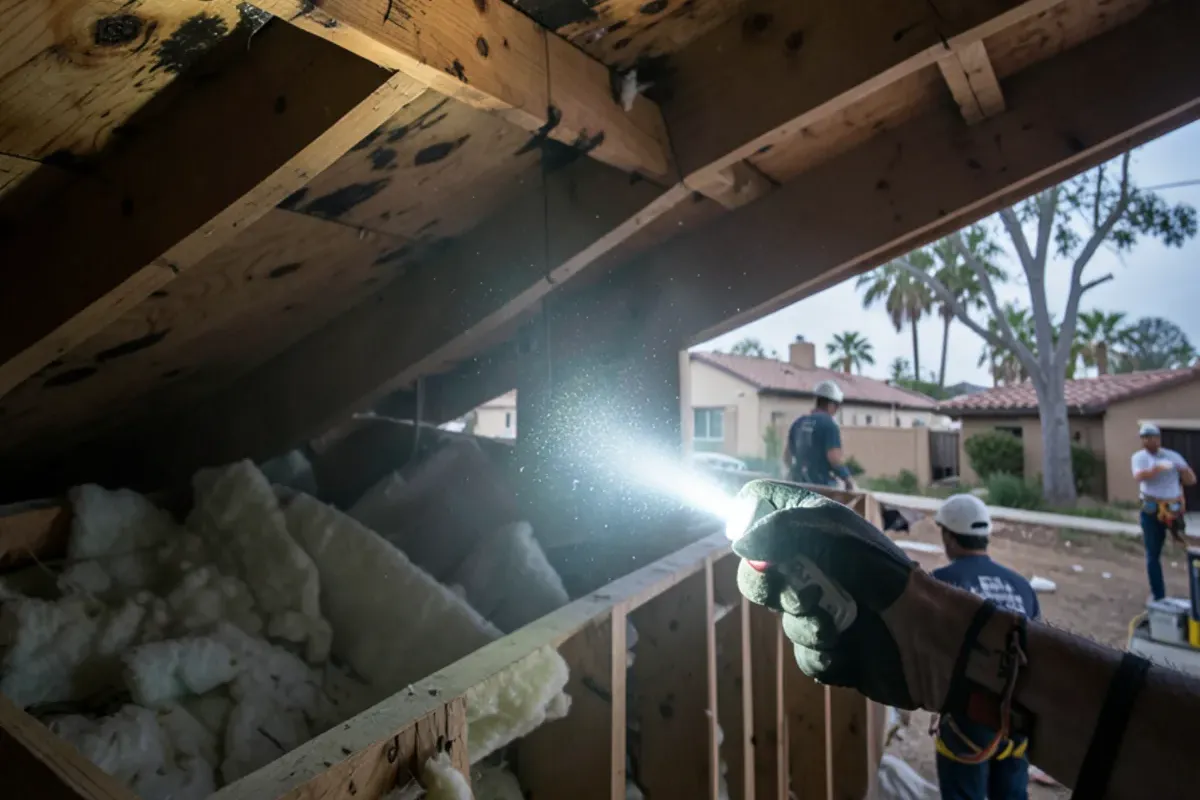
You get photos of what we found and a written, line-by-line quote that separates the leak repair from anything else we noticed, so you can decide what to fix now and what can wait.
Repair options and the trade-offs of each
The right fix depends on what failed and how much life the roof has left. We explain each option and its cost driver before any work starts.
Spot repair
Replace the cracked boot, reset or replace a few tiles, or swap damaged shingles. This is the fastest and least expensive fix when the rest of the roof is sound. On older shingle roofs an exact color match can be hard, which we flag before we start.
Flashing rebuild
When a wall, chimney or valley leaks, smearing new sealant over old metal only buys a season. We remove the surrounding shingles or tiles, install new step or counter flashing, and re-lay the roof covering. See our roof flashing repair page for how that work is done.
Section replacement or reroof
If the decking under the leak is soft, the underlayment is brittle across the slope, or the roof has several active leaks, repairing one spot leaves the next one waiting. In that case we show you the evidence and price a section repair alongside a full roof replacement so you can compare.
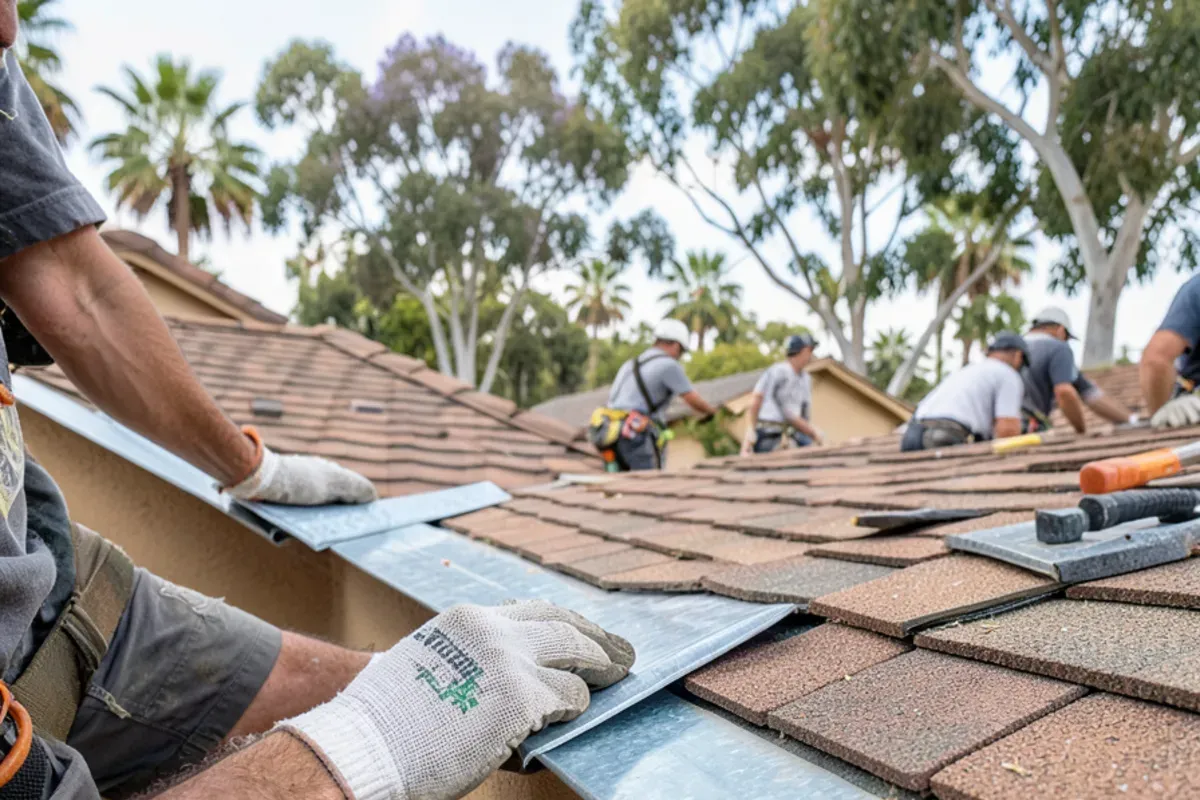
Need roof leak repair help this week?
Tell us what you are seeing. We schedule same-day or next-day visits when crews are free and send photos with a written quote.
- 4.9 from 48 Google reviews
- Based on Rosemead Blvd
- Photos and a written quote before work
What a leak repair visit looks like
Most leak calls follow the same order, whether the roof is shingle, tile or a flat section over an addition.
- You call (725) 745-8803 and describe where the water shows up and when it started.
- We schedule a visit, same-day or next-day when crews are free, and tarp or seal temporarily if water is still coming in.
- We inspect, photograph the source and give you a written quote for the permanent repair.
- With your approval, the crew fixes the source, clears the site and sends you photos of the completed repair.
- If the stain was large, we tell you when the drywall is dry enough to patch and paint.
Small repairs are usually finished in a few hours. A flashing rebuild or tile underlayment section can take a day. Replacing a few shingles or tiles typically needs no permit; work that replaces decking or whole roof sections does, and we pull it when it applies.
Rosemead's Building and Safety Division handles roof permits in the city, and leak jobs in unincorporated East San Gabriel or South San Gabriel are permitted by LA County Public Works. State law adds a second check: repairs above $1,000 in labor and materials need a CSLB-licensed contractor in the C-39 Roofing class. Confirm any roofer's license and workers' comp record at cslb.ca.gov.
What affects the cost of roof leak repair in Rosemead?
Leak repairs are priced by what we have to open up and replace, not by the size of the ceiling stain. As a planning number, Manta's 2023 calculator put typical LA County roof repairs at $1,185-$1,625 before permits. Your quote depends on the factors below.
- Roof material: tile and slate take longer to lift and reset than shingles.
- Access and pitch: steep or two-story roofs need more safety setup.
- Hidden damage: wet or rotted decking found under the leak, priced per sheet in writing.
- Flashing scope: a pipe boot is a small job; a chimney or long wall flashing run is larger.
- Interior work: drywall and paint repair are separate from the roof repair.
Why Rosemead homeowners call Tylzen Spoke for leaks
- We hold a 4.9-star average across 48 Google reviews as of November 2026, and reviewers mention quick returns when something needed a second look.
- Our base is on Rosemead Blvd, so homes in Rosemead and nearby San Gabriel Valley cities are a short drive away.
- Reviewers mention crews who explain what failed in plain terms and never push a bigger job than the roof needs.
- Every repair comes with photos and a written scope, including any decking we replace.
Manufacturer coverage on replacement materials depends on the product, and workmanship terms are written into your contract. Ask us for both in writing before we start.
We handle leak calls across the valley, including roof repair in El Monte, Temple City, San Gabriel and Alhambra. For tile roofs, see tile roof repair; for missing or lifted shingles, see shingle roof repair.
What customers say on Google
4.9★ from 48 Google reviews (checked Nov 2026)
“We had a very good experience with Tylzen Spoke Roofing for our roof work. At first, I was careful because they came to the door offering roofing services, and it almost seemed too simple, but they proved to be trustworthy and professional. …”
“Our flat garage roof had a leak, and since the main roof was already aging, we decided to handle the full roofing project at the same time and upgrade from asphalt shingles to a metal roofing system. …”
“They exceeded my expectations and fixed my roof leak the same day. William and Brandon were professional, efficient, skilled, knowledgeable, respectful, and easy to work with. They found and corrected a roofing issue that was left behind after a previous roof installation, which had been causing the leak. …”
Where we handle roof leak repair
- Rosemead
Pre-1960 homes whose second or third roof hides old flashing, so the first November storm finds the weak boot.
- El Monte
Room additions tied into post-war roofs, where the seam between old and new roof is the usual entry point.
- Temple City
Two-story rebuilds beside single-story homes create wall junctions where wind-driven rain slips behind step flashing.
- San Gabriel
Clay tile homes where water passes a cracked tile and soaks decades-old underlayment with nothing visible from the street.
- Alhambra
Flat rear additions and patio rooms where ponding water and open seams drip into the room below.
- Arcadia
Pine and oak litter dams valleys on large lots, pushing storm water sideways under shingles and tile.
- Monterey Park
Hillside concrete tile homes where worn felt beneath the tile, not the tile itself, lets winter rain through.
- South San Gabriel
Small unincorporated post-war homes, permitted through LA County, where cracked pipe boots drive most leak calls.
More places we handle roof leak repair
Roof Leak Repair questions
Why does my roof only leak in heavy or wind-driven rain?
Wind pushes water sideways and uphill, past flashing that sheds normal rain just fine. That points to wall or step flashing, a lifted shingle edge, or a gap at a skylight curb. We check those spots first and, on a dry day, run a hose test from low to high until the water shows inside.
Can you find a leak when it isn't raining?
Yes. Dry-day inspections are often easier because we can walk the roof safely. Attic staining shows us where water traveled, and a controlled hose test recreates the leak one section at a time. Most sources show up within the first hour of testing.
Will you repair the ceiling damage too, or just the roof?
We repair the roof and any wet decking or framing above the ceiling. Drywall and paint are a separate trade. We tell you when the ceiling is dry enough to patch and note the interior damage in our photos if you are filing an insurance claim.
Is a roof leak repair covered by homeowners insurance?
Policies usually cover sudden damage such as a branch through the roof or wind-torn shingles, and usually exclude wear and tear like a cracked 20-year-old pipe boot. Your adjuster decides. We document the cause with photos, and our insurance claim help page explains what we can and cannot do on a claim.
Should I put a tarp on my roof myself?
Only if you can do it from a ladder without walking a wet roof. Tile and steep shingle roofs are slippery and easy to break. Move belongings, catch the water, take photos, and call (725) 745-8803 so a crew can secure a tarp properly.
How long does a leak repair last?
A repair made with new flashing or a new boot lasts as long as the material around it, often many years. A sealant-only patch on old metal may last one season. We tell you which kind of repair we are making and why, so you are not surprised next winter.