
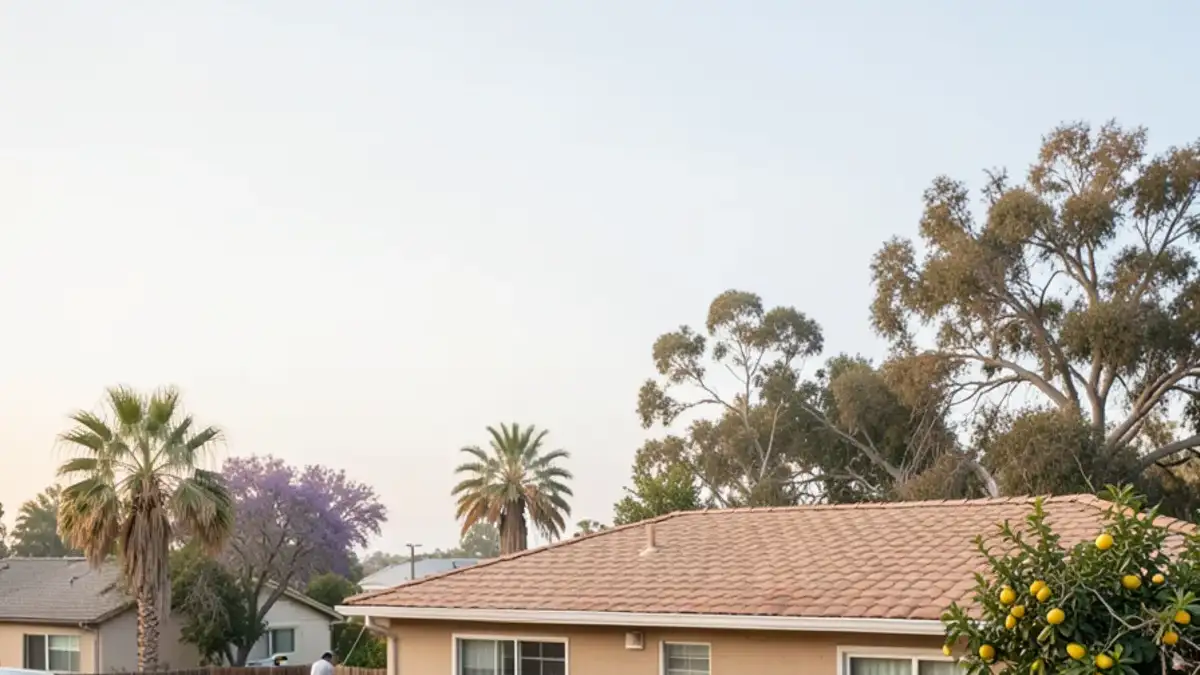
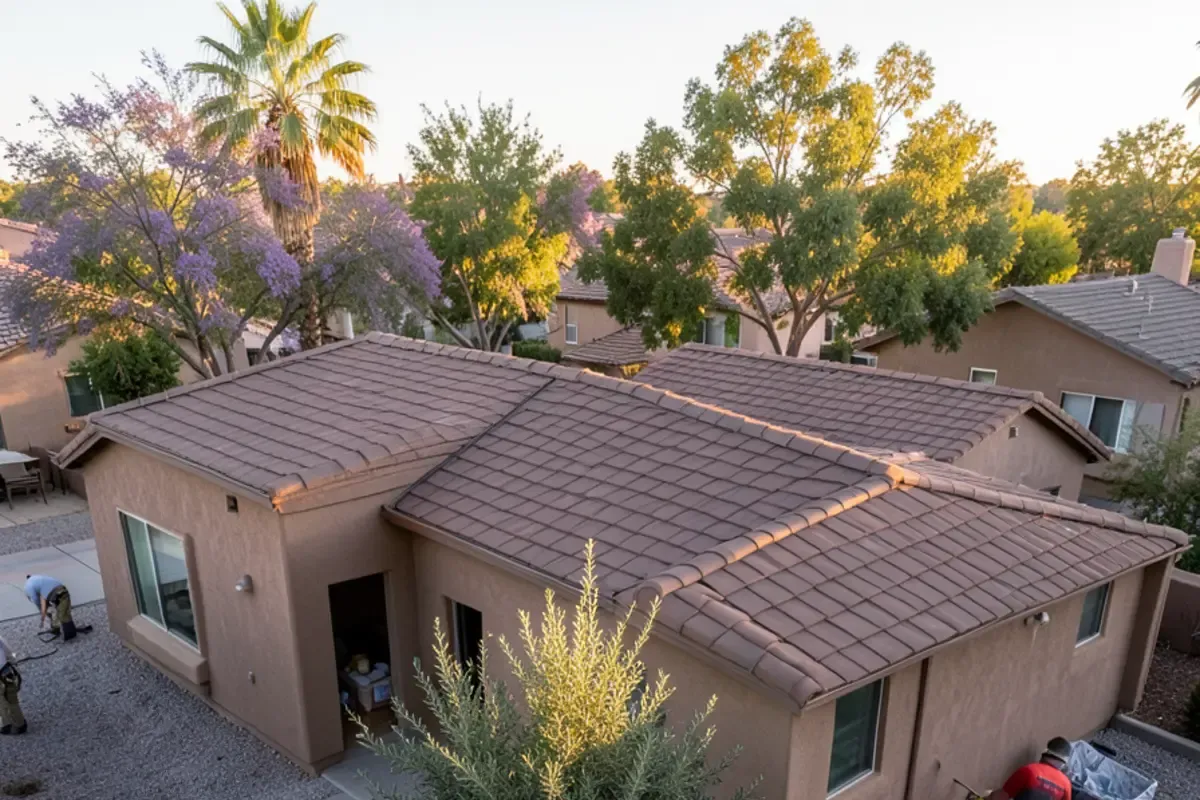
New roof installation in Rosemead covers roofs on structures that have never had one: room additions, backyard ADUs, garage conversions with new framing, and full new homes. Unlike a reroof, nothing comes off first. The work starts at bare sheathing and ends with a roof that has to match the energy documents, the plans and, usually, the house beside it. It is a specialized part of our roof replacement and new roof services.
Rosemead's large single-family lots have made backyard ADUs and rear additions common. The hardest part of those roofs is rarely the field of shingles. It is the joint where new framing meets a 1950s roofline.
Roofing additions, ADUs and new homes in Rosemead
Each project type brings its own priorities.
| Project | Typical roof | Main challenge |
|---|---|---|
| Rear or side addition | Shingle or tile matching the house | Tying new slopes into the old roof without a leak line |
| Detached ADU | Shingle, low-slope membrane or standing seam | Low pitch, small overhangs and tight setbacks |
| Garage conversion with new roof framing | Matches the main house or a low-slope membrane | Drainage toward neighbors and property lines |
| New single-family home | Shingle, concrete tile or metal | Sequencing with framers, solar and inspectors |
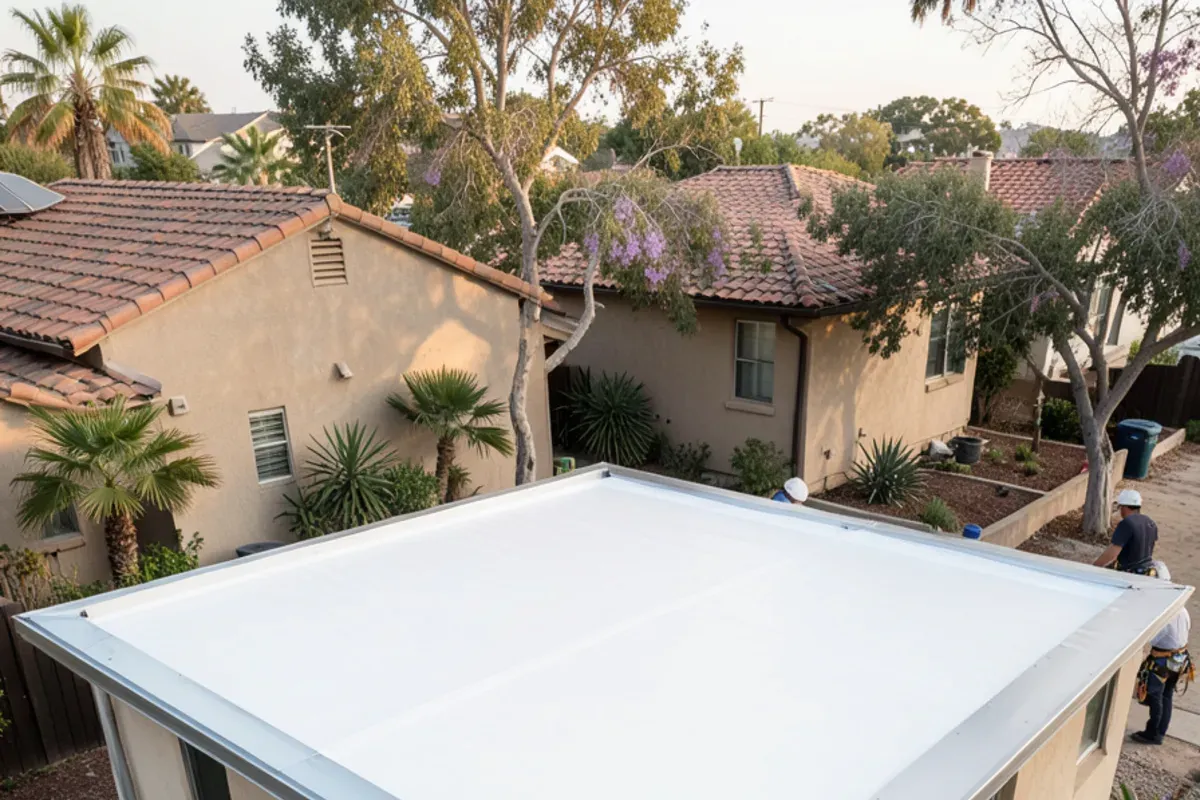
For a detached unit, a low pitch often keeps the building under height limits. Below 2:12 slope, shingles are not allowed, so we install a low-slope membrane such as TPO or a cap sheet system instead.
What a new roof installation includes
A new roof is priced from bare sheathing up, so the quote names every layer the inspector will see:
- Drip edge at eaves and rakes, then underlayment matched to the pitch and the covering.
- Self-adhered membrane at valleys, roof-to-wall joints and every penetration on the plans.
- Step, counter and kick-out flashing wherever the new roof meets a wall or the old roof.
- The roof covering, ridge or hip caps, and intake and exhaust vents sized to the attic.
- Gutters and downspouts when they are in scope, plus a sweep for nails and offcuts.
- Photos at each stage for you, your builder and the permit file.
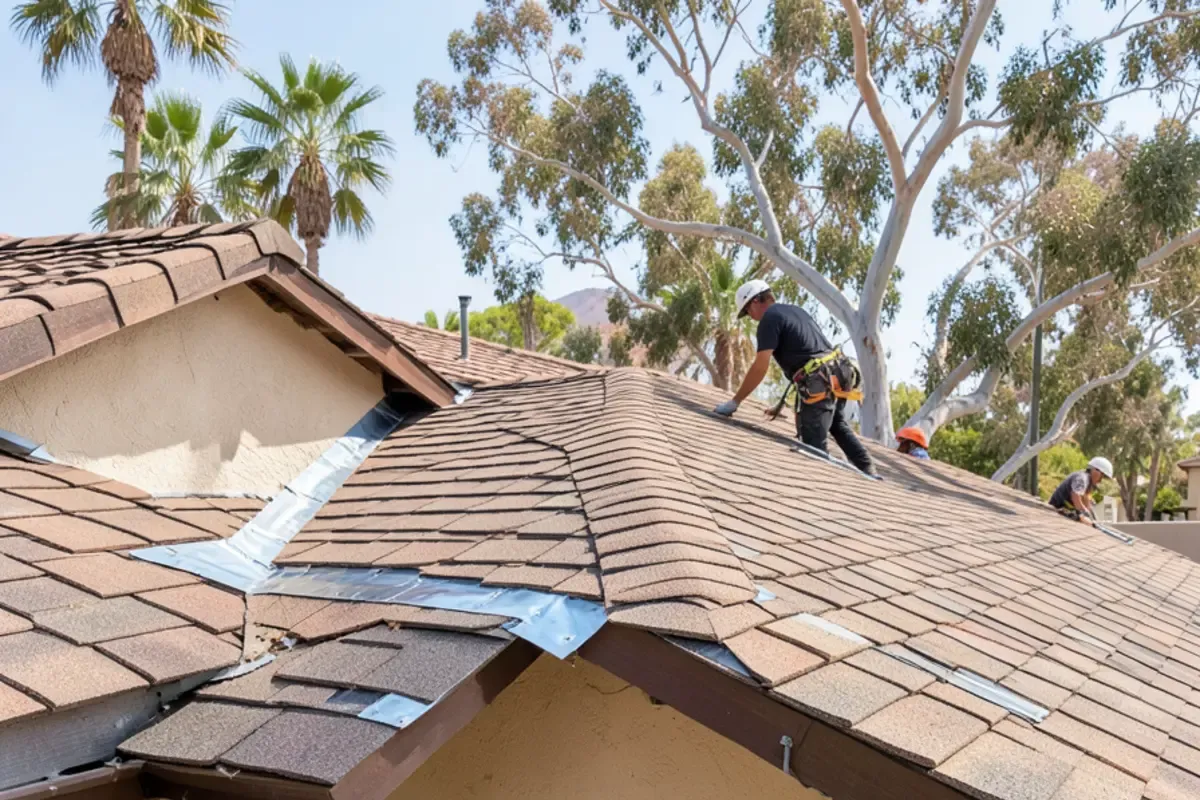
Where a new slope joins the house, we open the old roof only as far as the tie-in needs and tarp it the same day. In the new valley, fresh shingles lap at least a foot onto the old slope over self-adhered membrane, so the joint sheds water instead of channeling it.
Why so many Rosemead lots add roofs
Single-family homes make up 84.5% of Rosemead's housing, against 61.7% across the SCAG region (SCAG, 2021). That is why additions, garage conversions and ADUs drive most new roof work here, each one beside a 1950s roof that sets the tie-in and color match.
Can a new addition's roof be blended into the existing roof?
Usually, yes, and how well it blends depends on the age of the existing roof.
- Shingles: we cut back the existing courses and weave the new shingles in so the joint has no straight seam. A 15-year-old roof will have faded, so even the same color name will look different for a few seasons.
- Tile: we look for the same profile and color from the same manufacturer, or salvage tiles from a hidden slope and use new ones there.
- Where the new roof meets a taller wall: step flashing, counter flashing and a kick-out at the bottom so water lands in the gutter, not in the stucco.
- Where a new slope dies into an old one: a cricket or saddle to steer water around the joint.
If the old roof has few good years left, reroofing the whole house at the same time may make more sense. We price both ways so you can compare.
Design decisions: pitch, drainage and ventilation
A good new roof starts with choices made on paper. We review plans with you or your designer before material is ordered.
- Pitch sets the materials allowed: shingles need at least 2:12 with extra underlayment, while most tile needs a steeper slope.
- Drainage: where each slope sheds water, and whether gutters and downspouts can carry it away from foundations and fences.
- Ventilation: soffit intake and ridge or roof vents sized to the attic area, or a vented or insulated design for vaulted ceilings.
- Energy compliance: the roofing product must match what your Title 24 energy documents list, including any cool-roof rating.
- Solar: new homes in California generally include solar, so we plan for mount locations and conduit runs.
What underlayment goes under a new roof?
Underlayment is the second line of defense when wind drives rain past the roof covering. On new work we typically use:
- Synthetic underlayment across the field of shingle and metal roofs, which resists tearing and lies flat in heat.
- Self-adhered membrane in valleys, around skylights and at roof-to-wall joints, where water concentrates.
- Two-layer or heavier tile underlayment under clay or concrete tile, since that layer does most of the waterproofing on a tile roof.
- Base and cap sheets or a single-ply membrane on low-slope ADU and patio roofs.
Tile roofs depend on that layer far more than shingle roofs do. Our page on tile underlayment replacement explains why it wears out long before the tile.
Need new roof installation help this week?
Tell us what you are seeing. We schedule same-day or next-day visits when crews are free and send photos with a written quote.
- 4.9 from 48 Google reviews
- Based on Rosemead Blvd
- Photos and a written quote before work
Installation sequence on new framing
- Plan review and a site visit to confirm pitch, overhangs and tie-in points.
- Sheathing inspection: on new framing the building inspector usually signs off roof nailing before roofing starts, so we schedule after that approval.
- Drip edge, underlayment and flashing installed, with the house dried in quickly to protect framing.
- Roof covering, ridge, vents and any solar flashing installed.
- Final roofing inspection, along with the other trades' inspections on the permit.
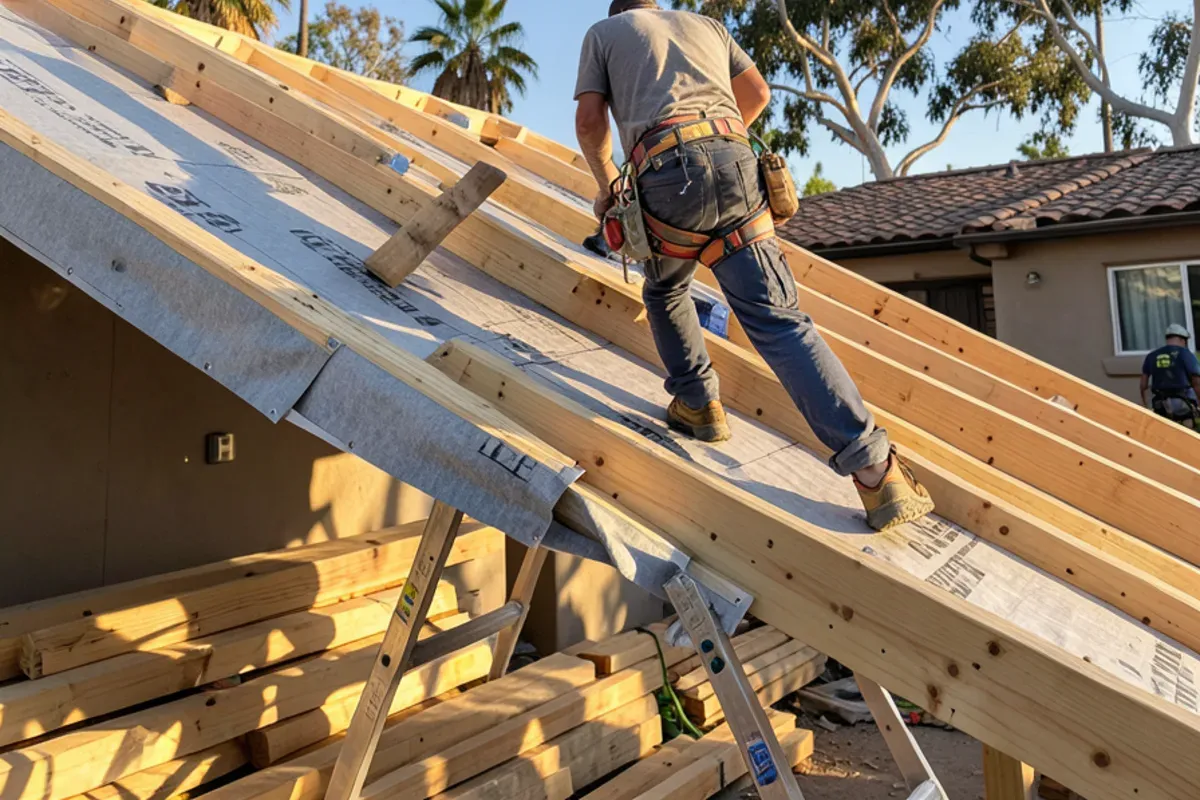
A small addition roof can take a day or two. A full new home depends on size and material, and on how the framer, solar installer and inspector are scheduled.
Who inspects a new roof on an addition or ADU?
The roof is inspected under the structure's building permit, not a separate reroof permit. In Rosemead that permit comes from the city's Building and Safety Division; in unincorporated East San Gabriel it comes from LA County Public Works Building & Safety. Inspectors usually check sheathing nailing before roofing and the finished roof at final. The product must match the plans' Title 24 energy documents, and Very High Fire Hazard Severity Zones require a Class A assembly under Chapter 7A.
Anyone installing a roof on permitted work must hold an active CSLB license, and roofing contractors work under the C-39 class. Check a roofer's number at cslb.ca.gov, including the workers' compensation record, before the first bundle goes up.
What changes the cost of a new roof?
- Roof area and pitch, plus every hip, valley and dormer the design adds.
- Material: shingle, concrete or clay tile, standing seam or low-slope membrane.
- Tie-in complexity where the new roof joins the old one.
- Whether the existing house gets reroofed at the same time.
- Gutters, skylights and vents added as part of the job.
The tie-in varies most between quotes: joining a new hip roof to an old one can mean opening part of the existing roof and adding a cricket, while a detached ADU has none. Tile adds weight the framing must carry. Published LA County reroof ranges fit new work poorly, since there is no tear-off.
We quote line by line from the plans or after measuring the framing. Ask about payment options for larger projects.
Why builders and homeowners call Tylzen Spoke for new roofs
- We work from Rosemead Blvd in Rosemead, which keeps us close to job sites when a framer finishes early.
- Reviewers say our crews show up on time and keep owners informed.
- Each quote is itemized, with photos of tie-in conditions on the existing roof.
- As of November 2026, the 48 reviews on our Google profile average 4.9 stars.
Common market examples include CertainTeed Landmark and Owens Corning Duration shingles, Eagle Roofing concrete tile, and cool-rated finishes that our cool roof installation page covers in detail. The manufacturer sets material coverage based on the exact product, and the contract records our workmanship terms. Keep both on file and ask whether they transfer with the property.
We install new roofs on additions and ADUs in San Gabriel, South San Gabriel and East San Gabriel, among other nearby communities.
What customers say on Google
4.9★ from 48 Google reviews (checked Nov 2026)
“We've had a couple of experiences with this roofing company, and both have been great. The first time, we had a leak around an old roof vent. Their team replaced the vent, sealed everything up, and put our cement tile shingles back in place. The work was finished quickly, looked good, and the price was reasonable. …”
“We had a great experience getting a new roof, gutters, and fascia flashing installed, and the finished work really shows. Everything looks clean, solid, and well done, and the whole roofing project felt organized from start to finish. …”
“awesome roofing team that does solid work. i couldn’t be happier with how my new roof turned out. after the roof replacement was finished, there was a small issue related to the original roof design, not the installation, and david went above and beyond by coming out quickly with william to take care of it himself. …”
Where we handle new roof installation
- Rosemead
Single-family lots behind 1950s ranch homes host many backyard ADUs, often low-slope units that need a membrane rather than shingles.
- Temple City
Teardown rebuilds and second-story additions mean full roofs on fresh framing, often steep hips with several valleys to flash.
- San Gabriel
Rear additions on older homes, where new slopes tie into clay tile or aging shingle without leaving a leak line at the joint.
- South San Gabriel
Unincorporated lots where ADU and addition roofs are inspected under an LA County Public Works building permit.
- El Monte
Garage conversions and backyard units on post-war lots, where low pitches and tight setbacks steer drainage away from fences.
- Arcadia
New custom homes with concrete or clay tile, where framing is sized for tile weight and roofing follows framer and solar schedules.
- Alhambra
Second units behind older bungalows, where the new roof often copies the main house's pitch and shingle color.
- Monterey Park
Hillside additions where a new slope meets an existing concrete tile roof and needs a cricket and step flashing at the uphill wall.
- Altadena
Eaton Fire rebuilds on new framing, where foothill fire zones call for a Class A roof assembly and ember-resistant vents.
New Roof Installation questions
Can a new addition's roof be blended into my existing roof?
Yes in most cases. On shingle roofs we weave new courses into the old ones, and on tile we source a matching profile or move salvaged tiles to the visible side. Expect a slight color difference against a faded older roof for a few seasons. If the existing roof is near its end, reroofing both together gives a full match.
Do you work with builders on new-construction roofs?
Yes. We review plans with the builder or designer, schedule roofing after the sheathing nailing is approved, and coordinate with solar and HVAC trades so their roof penetrations get flashed properly. We send the builder photos at each stage so the general contractor has a record.
What underlayment goes under a new roof?
Synthetic underlayment for most shingle and metal roofs, with self-adhered membrane in valleys and at walls. Tile gets a heavier, often two-layer system because the underlayment carries most of the waterproofing. Low-slope sections get a membrane system instead of shingles. We list the exact products on the quote.
What roof works on a low-pitch ADU?
Below 2:12 slope, shingles and tile are not allowed, so we use a low-slope membrane such as TPO or a modified bitumen cap sheet. Between 2:12 and 4:12, shingles work with extra underlayment. Standing seam metal handles low pitches well and suits modern ADU designs.
Does a new roof on an addition need a permit?
The roof is part of the addition's building permit, so it is inspected with the rest of the structure. Rosemead and most nearby cities issue those permits through their building division; unincorporated areas use LA County Public Works Building & Safety. We schedule the roofing inspection on the existing permit.
How long does it take to roof a new ADU?
Once the sheathing nailing is approved, a typical detached ADU roof takes 1 to 3 working days, depending on material and pitch. Membrane roofs on low-slope units go quickly; tile takes longer because it is loaded and set by hand. Waiting on the inspection or on other trades is usually what stretches the schedule, so we plan our dates around the builder's.