
By Tylzen Spoke Roofing · Published
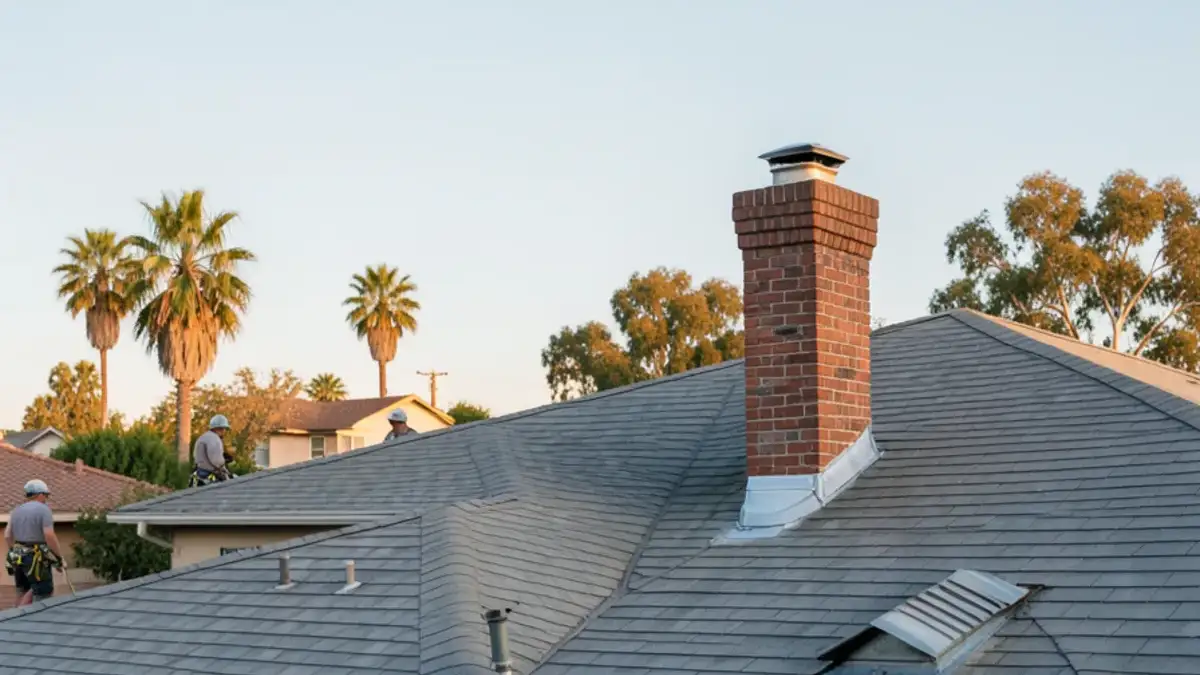
Why does my roof leak? In most homes the answer is a place where the roof surface is interrupted: a plumbing vent, an exhaust cap, a chimney, a valley where two slopes meet, or a wall the roof butts against. Those spots depend on flashing and rubber boots to stay dry, and those parts wear out well before the shingles or tiles around them.
This guide explains how each weak spot fails, how to recognize it from inside the house, and what a proper repair involves, with notes on what we see on older homes around roofing in Rosemead and nearby cities.
Why joints and penetrations fail before the rest of the roof
A roof sheds water by overlap. Each shingle or tile laps over the one below, so rain runs downhill and off the eave. Anywhere that pattern is broken, something else has to carry the water past the opening, and that job falls to metal flashing, rubber collars and, too often, sealant.
Those parts take a beating in the San Gabriel Valley. Summer highs in the upper 80s bake rubber and caulk, the roof expands in the afternoon and contracts at night, and joints slowly open. Then the first heavy rain of the season, usually between November and March, finds every gap at once.
Want a roofer to look at it?
Call with your address and what you are seeing. We visit same-day or next-day when crews are free.
- 4.9 from 48 Google reviews
- Based on Rosemead Blvd
- Photos and a written quote before work
Roof leaks around vents and pipe boots
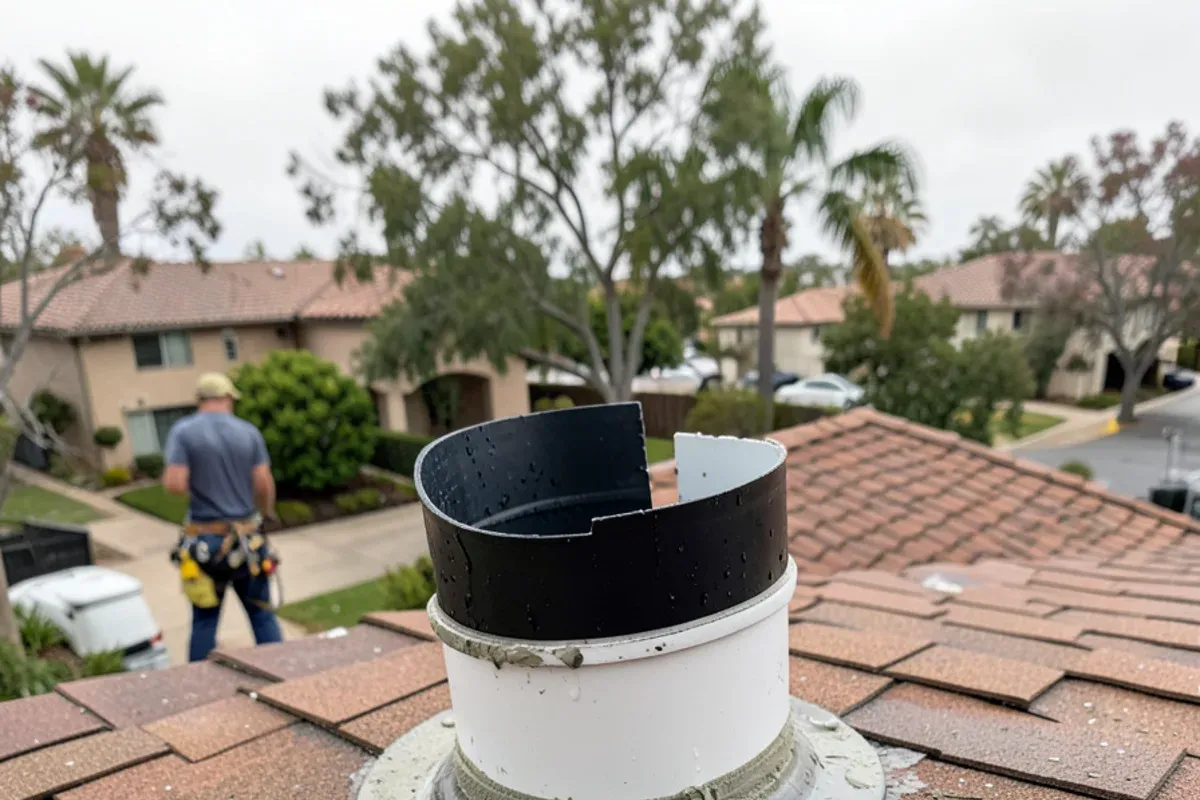
Plumbing vents pass through the roof inside a boot: a metal or plastic flange that slides under the shingles above, with a rubber collar that hugs the pipe. The collar is usually the first thing to go. Sun cracks it, the seal opens, and water runs down the outside of the pipe into the attic.
- Typical sign: a stain directly below a bathroom, laundry room or kitchen, appearing in most rains, not only windy ones.
- Other culprits: exposed nail heads on the boot flange, a flange set on top of the upper shingles instead of under them, or a rusted exhaust cap.
- Proper fix: replace the boot and reweave the surrounding shingles. A bead of caulk around a cracked collar is a short-lived patch.
Our vent boot repair page covers boot materials, from neoprene to all-metal collars, and when each makes sense.
Why do chimneys leak so often?
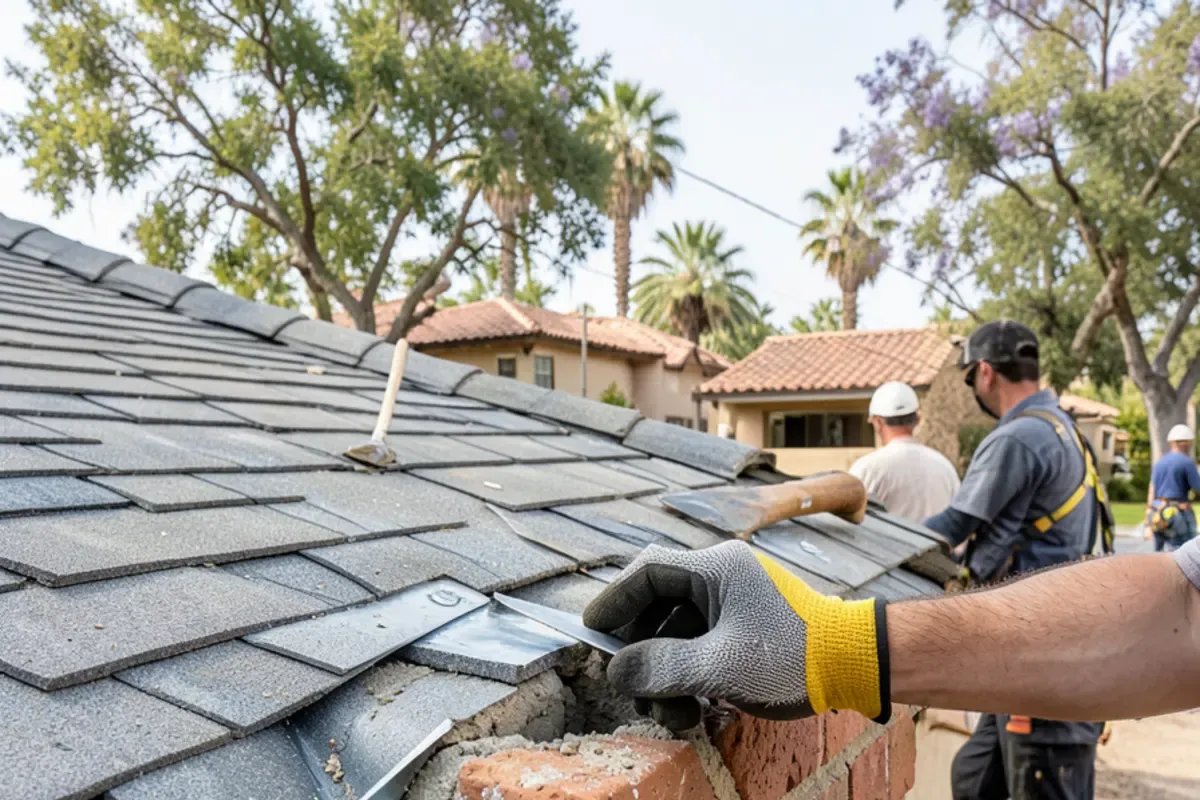
A chimney leak can start in the flashing or in the chimney itself. Proper chimney flashing has two layers: step flashing woven into the roofing along each side, and counter flashing set into the masonry that laps down over it. Wide chimneys also need a cricket, a small peaked diverter on the uphill side, so water and debris do not pile up behind them.
Common failures include counter flashing that was only caulked to the brick face, missing step flashing, a cracked mortar crown on top, and porous brick that wicks water down inside. Many older chimneys in the area also carry cracks, and the 1987 Whittier Narrows earthquake was centered just south of Rosemead. Our chimney flashing repair page explains how the full flashing set is rebuilt.
Valley leaks: where two slopes send water to one line
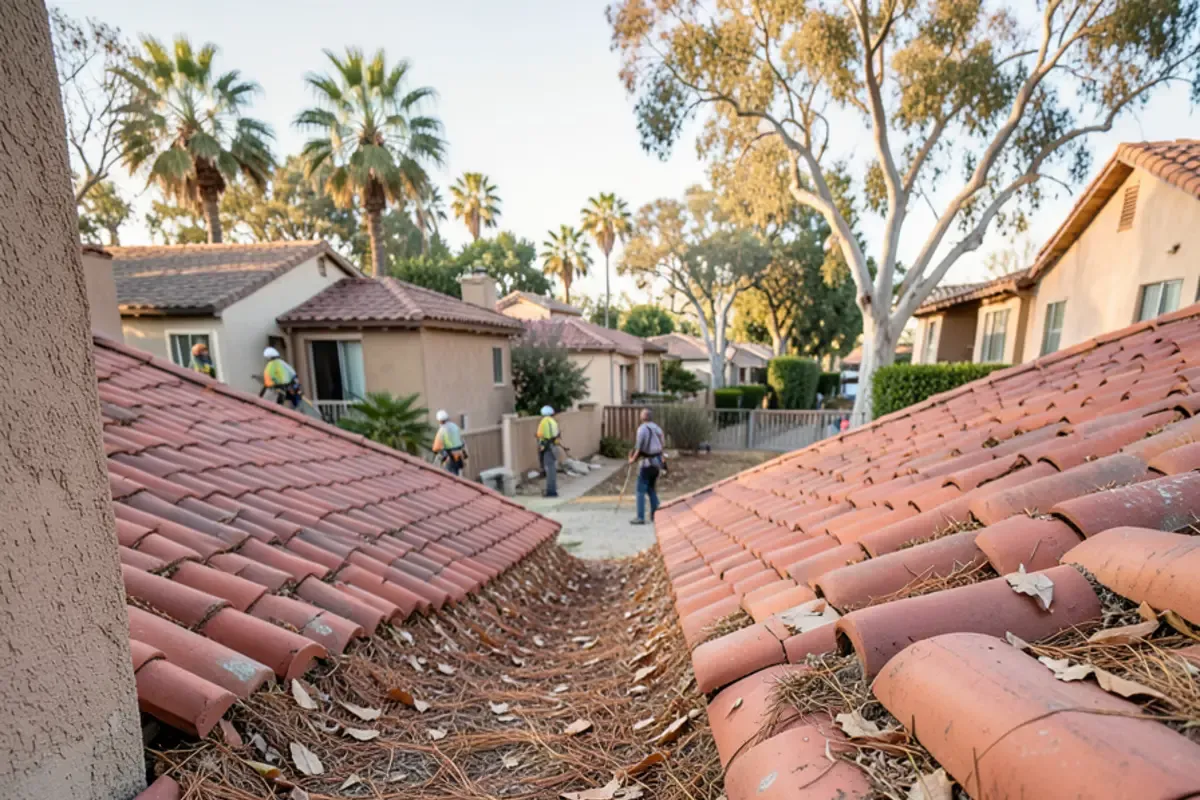
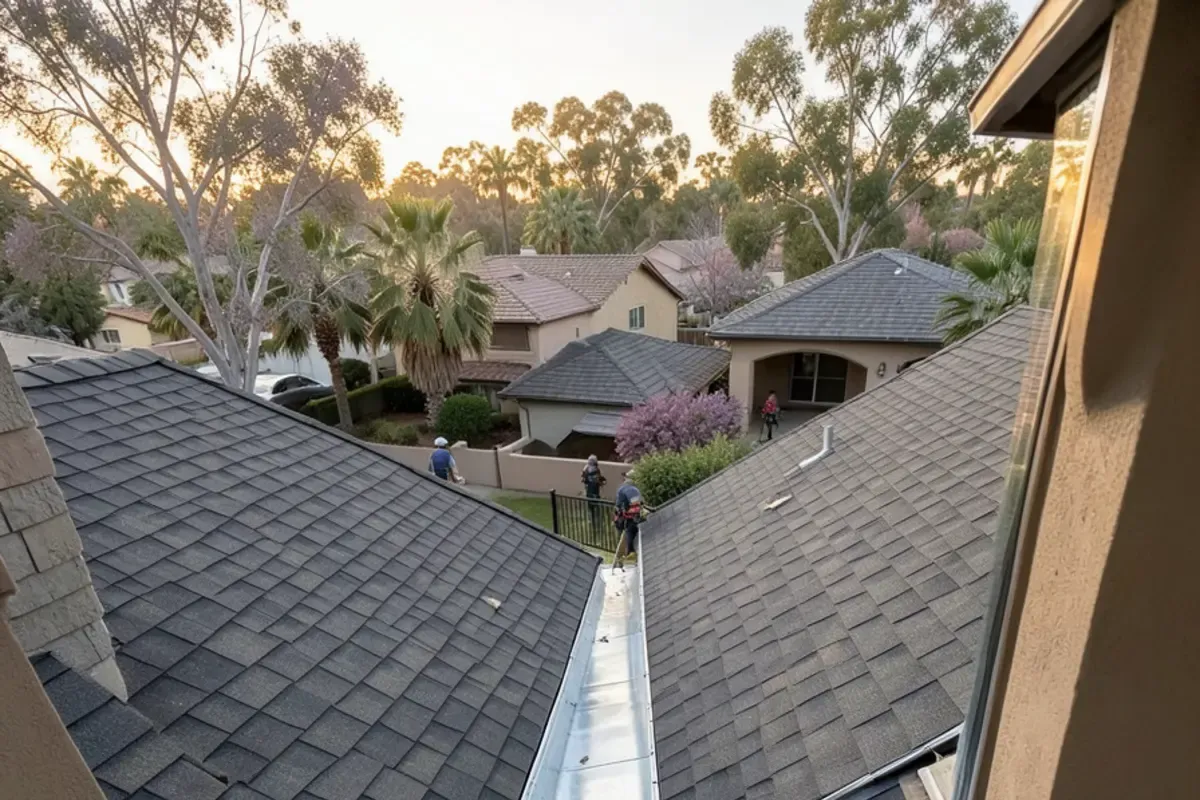
A valley carries the runoff from two roof planes, so it handles more water than any other part of the roof. Leaks start when debris dams that flow, when nails sit too close to the valley center, or when worn valley metal rusts through. On tile roofs, valley pans fill with leaves and needles, and water spills over the pan edge onto the underlayment.
Inside, a valley leak usually shows near an inside corner of the roofline, and it tends to get worse in heavy, sustained rain. Clearing the valley helps, but a leak that has already started usually means new valley metal or underlayment.
Common leak points compared
| Leak point | Sign inside | Typical cause | Proper repair |
|---|---|---|---|
| Plumbing vent boot | Stain under a bathroom or kitchen | Cracked rubber collar | Replace the boot and reseat shingles |
| Chimney | Stain on the ceiling or wall beside the chimney | Caulked counter flashing, missing step flashing, cracked crown | Rebuild step and counter flashing; add cricket if needed |
| Valley | Stain near an inside roof corner | Debris dams, worn metal, nails too close to center | New valley metal or underlayment |
| Wall junction | Stain along an exterior or second-story wall | Missing step or kick-out flashing | Install step and kick-out flashing |
| Skylight | Drips at the skylight frame or drywall around it | Failed curb flashing or seals | Reflash the curb or replace the unit |
Walls, skylights and the other flashing joints
Wherever a roof meets a vertical wall, step flashing should run under each shingle course and up behind the siding or stucco. At the bottom of that wall, a kick-out flashing turns water away from the wall and into the gutter. When either is missing, water runs behind the stucco and shows up as a stain inside the wall rather than the ceiling.
Skylights add a curb with its own flashing kit, and a skylight that leaks only in wind-driven rain usually has a curb problem rather than a failed dome. See skylight repair for those cases, and roof flashing repair for wall, step and valley metal.
Flashing shortcuts we find on older Rosemead and Alhambra homes
On older homes, the flashing is often older than the roof. When a second layer of shingles goes over the first, installers sometimes leave the original metal in place and run a bead of caulk along the edge. Rosemead's median build year is 1959, so many homes have seen that kind of shortcut at least once. Older tile homes in roofing in Alhambra bring a different pattern: tile valleys packed with debris and wall flashing tucked behind decades-old stucco.
We also see face-nailed flashing, where nails were driven through the exposed metal, and boots installed upside down with the flange on top of the upslope shingles. Both look fine from the ground and leak for years.
Reuse the old metal or replace it?
Good flashing can outlast two roofs, so we do not tear out sound metal just to sell a bigger job. Heavy-gauge step flashing with no rust, still lying flat, can often be reused when a few shingles are replaced. Thin, rusted or bent pieces, and any metal that was face-nailed or caulked to the wall, get replaced. The trade-off is time: replacing step flashing along a stucco wall can mean cutting back the bottom of the stucco and patching it afterward, which adds a line to the quote and a short wait for the patch to cure before painting.
Boot and valley options, with their trade-offs
Once the leak point is found, there is usually more than one way to fix it. The cheaper option is not always wrong, and the premium one is not always worth it. These are the choices we walk homeowners through most often.
| Option | Where it fits | Trade-off |
|---|---|---|
| Standard neoprene boot | Most plumbing vents on shingle roofs | Low cost, but the collar is the part that cracks in sun |
| Silicone or all-metal boot | South and west slopes, or roofs with repeat boot failures | Costs more, outlasts rubber; metal needs the right size for the pipe |
| Slip-over collar sleeve | A sound flange with only a cracked collar | Fast and cheap, but useless if the flange is rusted or set wrong |
| Open metal valley | Tile roofs and valleys under heavy leaf fall | Carries water and debris well; the metal is visible and must be sized for the flow |
| Closed-cut shingle valley | Shingle roofs with light debris | Clean look, but nails near the center line are a common failure |
| Woven shingle valley | Three-tab shingle roofs | No exposed metal; thick architectural shingles do not weave well |
On chimneys, the bigger decision is whether to cut a reglet, a groove sawn into the mortar joint, and set new counter flashing into it, or to reuse surface-mounted metal held with sealant. The reglet costs more and takes masonry work, but it does not depend on caulk to stay dry. The residential code also calls for a cricket on the uphill side of a chimney wider than 30 inches, and many older chimneys here were built without one.
How is a leak traced and fixed properly?
We start in the attic, find the wettest framing and follow the trail uphill, then inspect every penetration and joint above that point. On a dry day, a hose test run low to high, section by section, confirms the source. The repair replaces the failed part, laps new metal shingle-style so water always runs over a joint, and keeps sealant as a backup rather than the main defense.
If water is showing near a vent, chimney or roof corner, call (725) 745-8803 or request a quote. You get photos of what failed and a written scope before any work begins.
Questions readers ask
Can I just caulk around a leaking roof vent?
It may slow the leak for a season, but caulk on a cracked rubber collar shrinks and peels in strong sun. The lasting repair is a new boot with its flange slid under the upslope shingles. On most roofs that is a short job, and it removes the guesswork.
Why does my chimney leak only in some storms?
A chimney that leaks only in wind-driven rain usually has a flashing gap on the side facing the storm. One that leaks in every rain often has a cracked crown or porous brick soaking up water. Inspecting the flashing and the top of the chimney together sorts out which it is.
How long does a pipe boot last?
It depends on the material and the sun exposure. Rubber collars on south- and west-facing slopes crack soonest, often before the shingles around them wear out. Metal and silicone collars hold up longer. When we replace a roof or make a repair, we check every boot, since one cracked collar often means the others are close.
Is an open metal valley better than a shingle valley?
It depends on the roof and the trees. Open metal valleys move water and leaves faster, which is why tile roofs and homes under heavy canopy use them. Closed-cut and woven shingle valleys look cleaner and work well where debris is light. On any type, the leak risk rises when fasteners sit too close to the center line or the valley is left packed with debris.
Sources
Written by Tylzen Spoke Roofing
A roofing contractor on Rosemead Blvd (CA-19) in Rosemead, working on shingle, tile, metal and flat roofs across the San Gabriel Valley. This guide reflects what our crews check on local roofs. Questions about your roof? Call (725) 745-8803.