
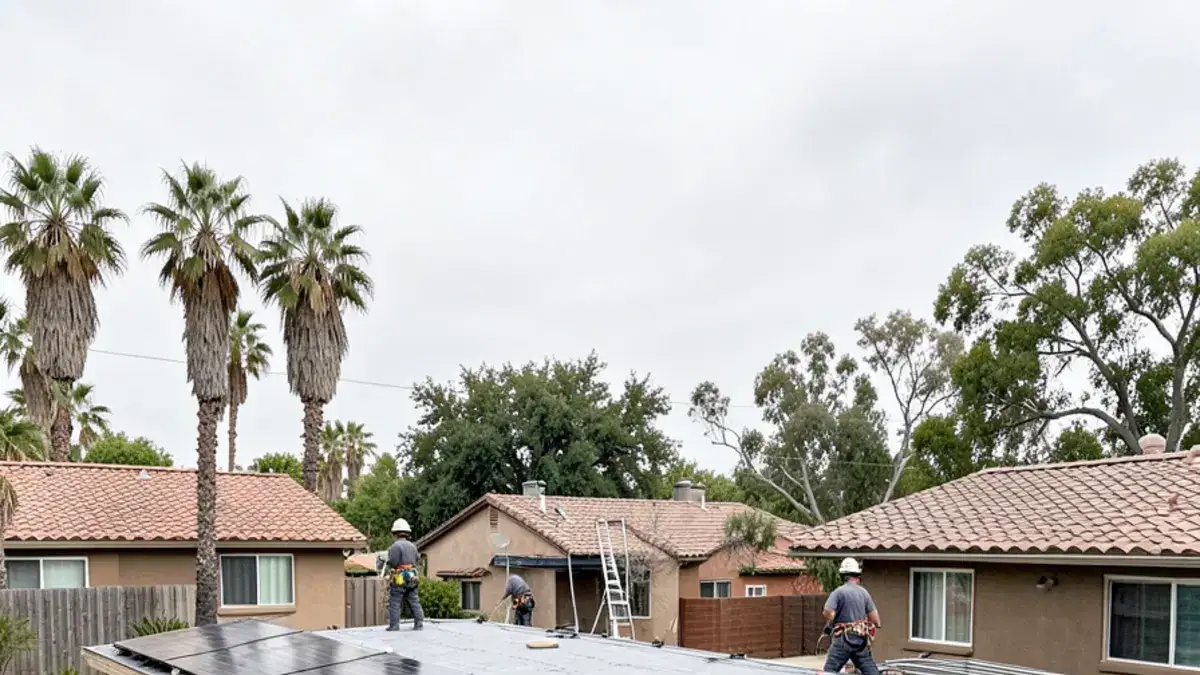
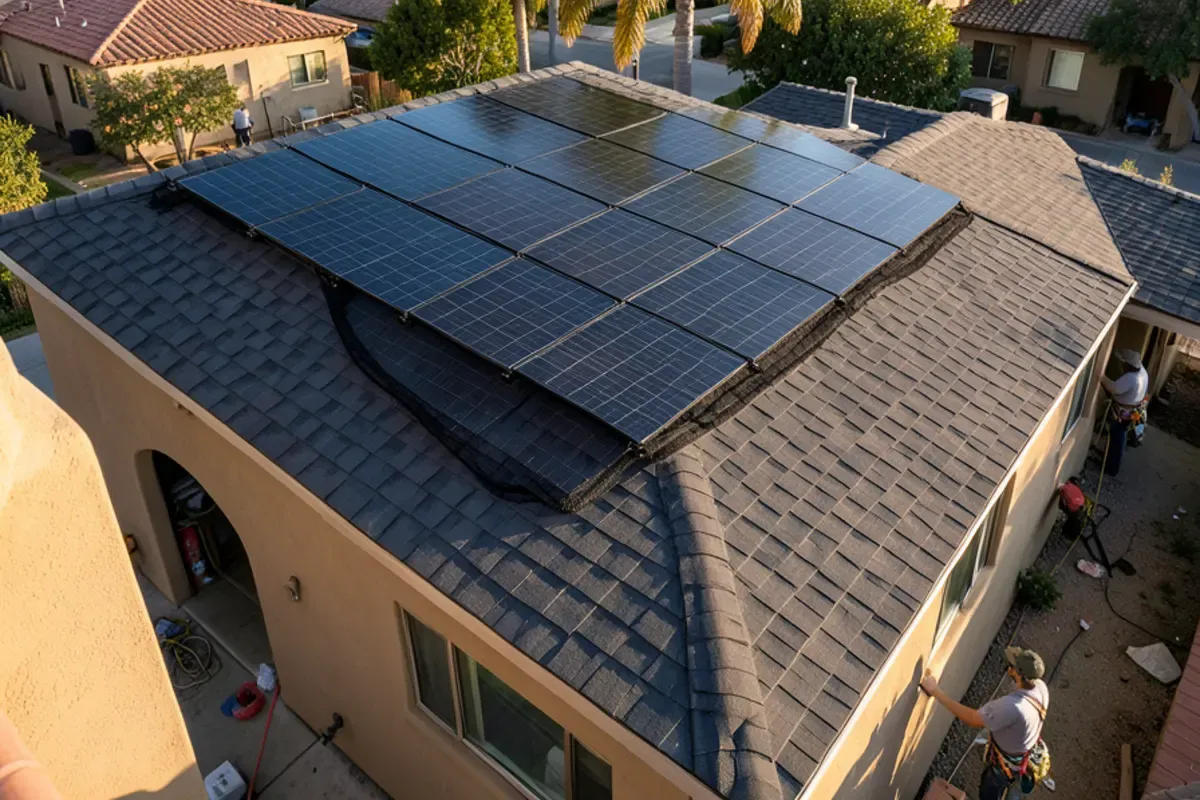
Roof replacement with solar panels in Rosemead is a three-step job: the panels and racking come off, the roof underneath is replaced, and the system is reinstalled on new mounts flashed into the fresh roof. The roofing and the solar work are done by different trades, so the schedule matters as much as the materials. We run the roofing side of this sequence as part of our roof replacement service and coordinate dates with whoever handles your panels.
Many San Gabriel Valley homes added solar on top of roofs that were already middle-aged. Those roofs are now wearing out under arrays that still have plenty of life left.
Should you reroof before installing solar?
If you are planning solar and the roof is well into its life, replacing it first is usually the cheaper path over time. Removing and reinstalling an array later adds a second trade, a second schedule and often a second permit.
- Reroof first if the shingles are brittle, granules are washing off, or the tile underlayment has little life left.
- Reroof first if the deck has soft spots, since mounts need solid wood and rafters to anchor into.
- Keep the current roof if it is relatively new and sound, and have us flash the mounts when the solar crew installs.
- Ask your solar designer to place panels away from valleys and chimneys, where leaks start and repairs are harder.
Title 24's solar exception covers roof area under building-integrated panels; it does not name standard rack-mounted arrays, so we plan on a CRRC-rated product across the whole roof unless the building department says otherwise.
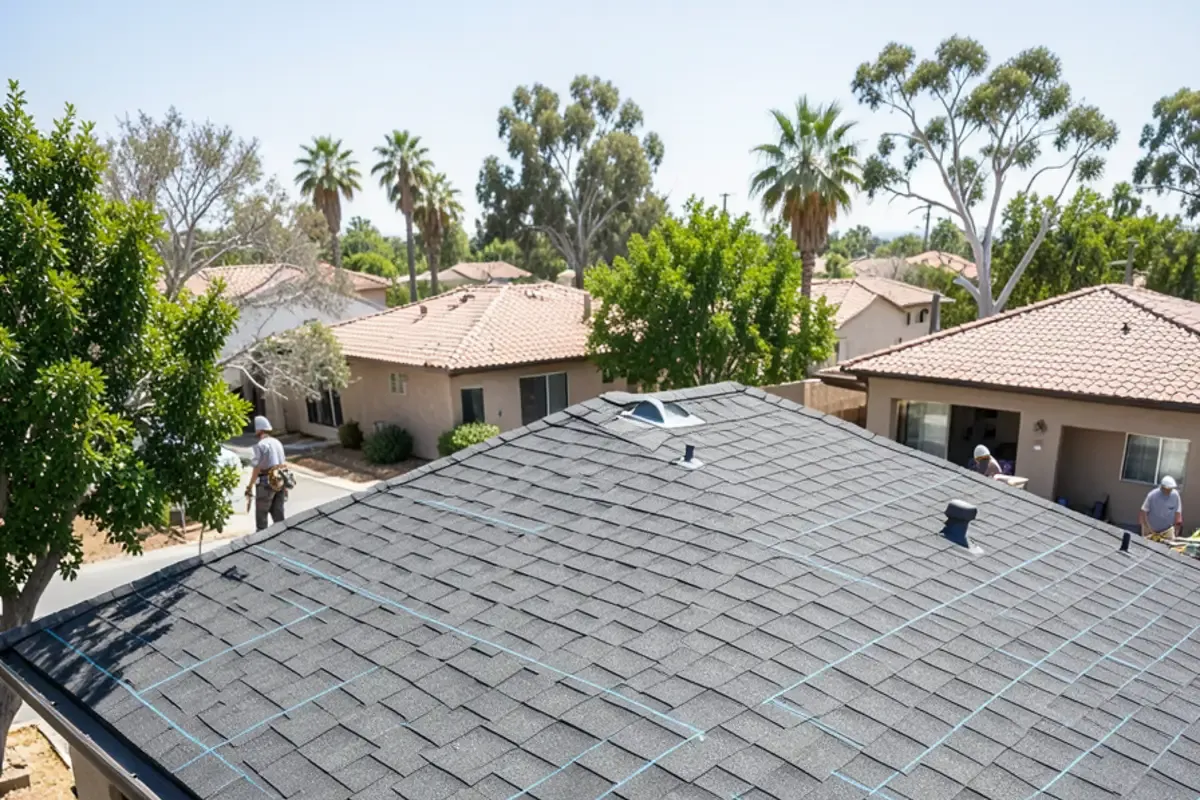
Who handles the solar panel removal and reinstall?
Detach-and-reset is solar work: disconnecting the system, removing panels and racking, storing them safely, then reinstalling and recommissioning. It is usually done by your original installer or a company that specializes in removal and reinstall. We coordinate with them so nobody is waiting on anyone else.
- You or we contact the solar contractor and share the reroof dates.
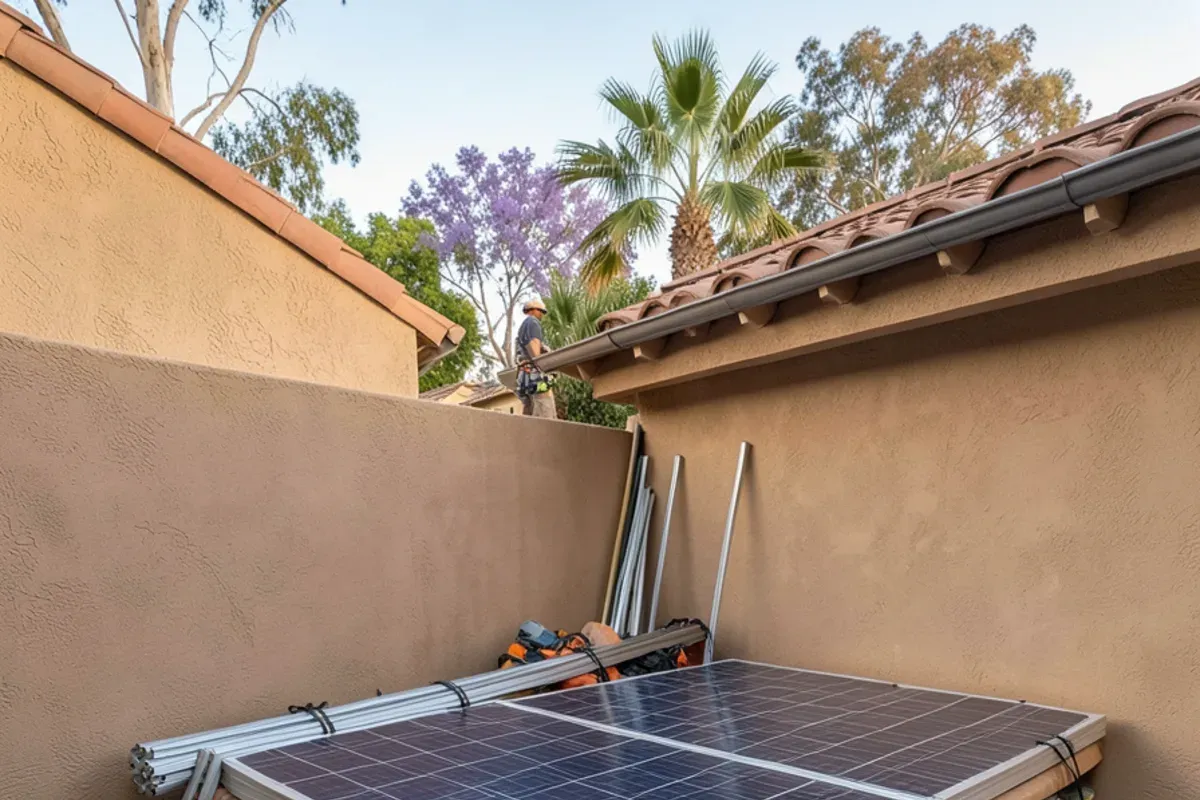
- They shut down the system, remove panels and rails, and stage them on the ground or a protected part of the roof.
- We tear off, repair the deck and install the new roof, leaving marked mount locations.
- We install new flashed mounts or flashing kits at each attachment point.
- The solar contractor reinstalls the array and handles any electrical permit and inspection the reinstall requires.
What the roofing side covers
- Photos of the roof and every existing mount before the panels come off.
- Tear-off, deck repair and new underlayment across the full roof, including under the array.
- Rafter locations chalked on the new roof so mounts land in framing, not sheathing alone.
- New flashing at every mount, conduit run and junction box penetration.
- Photos of each flashed mount sent to you and the solar contractor before reinstall.
The reroof permit comes from Rosemead's Building and Safety Division, or from LA County Public Works Building & Safety on unincorporated streets, while any permit for the reinstall belongs to the solar company. The trades are licensed separately too: roofing is CSLB's C-39 class, and solar work is done under the C-46 Solar or C-10 Electrical class. Look up both companies at cslb.ca.gov before the panels come off.
Flashing solar mounts so they don't leak
Every attachment point is a hole in the roof. A good mount ties into the roof's own water-shedding layers rather than relying on a dab of sealant.
On shingle roofs
Each mount is lagged into a rafter, then covered by a metal flashing that slides under the shingle course above and laps over the one below, so water runs over it. Sealant fills the bolt hole as a backup, not as the main defense.
On clay and concrete tile
Tile hooks attach to the deck under the tile, with flashing at deck level, and the tile above is notched or replaced with a flashed mount tile. Cracked tiles around hooks are the most common leak source we find on older tile arrays.
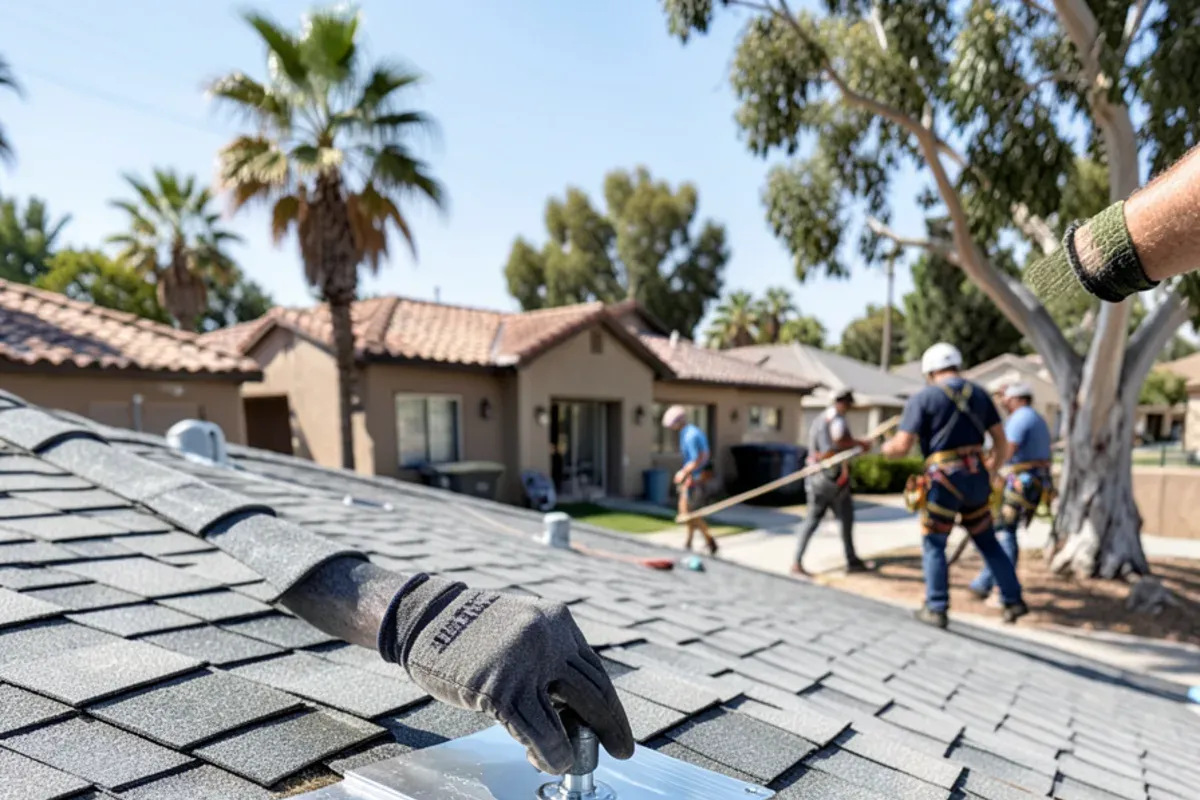
Conduit runs, junction boxes and wire penetrations get the same treatment. Gaps there leak just as easily as a mount.
Timeline while the panels are off
The roofing itself often takes the same few days as any reroof on a home that size. The total time the panels are off depends mostly on the solar contractor's schedule for removal and reinstall. From removal to reinstall, plan on anywhere from several days to a couple of weeks, and expect no solar production during that window.
We aim to book the reroof just after removal and to have the mounts ready the day the solar crew returns. Planning the work outside the November to March rainy season keeps the roof open for fewer wet days.
Need solar panel removal & reroof help this week?
Tell us what you are seeing. We schedule same-day or next-day visits when crews are free and send photos with a written quote.
- 4.9 from 48 Google reviews
- Based on Rosemead Blvd
- Photos and a written quote before work
Roof leaks under existing solar panels
Leaks under an array are hard to trace from the ground. Common causes include:
- Mounts sealed with caulk alone instead of being flashed under the shingle course.
- Lag bolts driven beside the rafter instead of into it, holding only in sheathing.
- Cracked tiles around tile hooks from foot traffic during installation.
- Leaves and pigeon nesting under the panels, which dam water and hold moisture against the roof.
- An old roof aging out underneath a newer array.
Sometimes a single panel has to come off for us to reach the leak. If the rest of the roof is sound, a targeted roof leak repair may be enough. If it is not, we show you the evidence for a full reroof.
What affects the cost of a reroof under solar?
- Roof size, pitch and material, the same factors as any replacement.
- Number of mounts and penetrations to flash.
- Deck repair found after tear-off.
- The solar contractor's detach-and-reset charge, quoted separately by them.
- Optional critter guard mesh around the array edge to keep birds out.
For the roofing portion alone, Manta's 2025 calculator gives $5,582-$7,555 for an LA County asphalt shingle replacement, before permits and fees, as a planning figure only. Mount flashing and the detach-and-reset come on top, and the actual quote depends on size, pitch, layers and what the deck shows once the array is off.
We put the roofing quote in writing, line by line, and note which items belong to the solar contractor. If the existing roof only needs an overlay, our re-roofing page explains when that is allowed. Ask about payment options for the roofing portion.
Why solar owners book reroofs with Tylzen Spoke
- Reviewers say our crews arrive on time, which keeps the solar contractor's dates intact.
- You receive photos of every mount location and the flashing installed there.
- Leaks under an array can be checked same-day or next-day when crews are free.
- Our 4.9-star Google average comes from 48 reviews, as of November 2026.
Mount flashing kits from solar racking makers and shingle lines such as Owens Corning Duration are market examples of what goes into these jobs. Each manufacturer sets its own coverage by product, and our workmanship commitments are listed in your contract. Keep both in writing, and check whether they move with the house if you sell. The solar system carries its own separate terms from the solar company.
We reroof under solar in West Covina, Covina and Whittier, along with the rest of the SGV. Our article on solar panels and reroofing covers planning in more depth.
What customers say on Google
4.9★ from 48 Google reviews (checked Nov 2026)
“Our flat garage roof had a leak, and since the main roof was already aging, we decided to handle the full roofing project at the same time and upgrade from asphalt shingles to a metal roofing system. …”
“We've had a couple of experiences with this roofing company, and both have been great. The first time, we had a leak around an old roof vent. Their team replaced the vent, sealed everything up, and put our cement tile shingles back in place. The work was finished quickly, looked good, and the price was reasonable. …”
“i had a bad roof leak that ended up causing a ceiling leak inside the house, but the whole experience turned out great with tylzen spoke roofing. grant called me back quickly after i left a message and came out the very next day to inspect the roofing issue. …”
Where we handle solar panel removal & reroof
- Rosemead
Ranch homes whose arrays went up on middle-aged shingle roofs, now wearing out under panels with years of output left.
- West Covina
Hillside tracts with broad south-facing roof planes, where arrays on concrete tile need their hooks reflashed at deck level.
- Covina
Post-war and 1960s homes with arrays on composition roofs, where each mount is reflashed under the new shingle courses.
- Whittier
Older homes on hillside streets, where narrow side yards make staging removed panels during the reroof a planning step.
- Temple City
Newer two-story homes with arrays on steep hip roofs, where panel layout should move away from valleys before the reset.
- El Monte
Low-pitch tract roofs where pigeons nest under arrays, so critter guard mesh is worth adding when the panels go back up.
- Arcadia
Tile roofs under mature trees, where leaves collect beneath panels and cracked tiles around hooks cause most leaks.
- Glendora
Foothill homes where a reroof under solar must still meet Class A fire rules across the exposed roof around the array.
- Diamond Bar
Planned-community homes with concrete tile, where association rules may require review of roof color before panels are reset.
More places we handle solar panel removal & reroof
Solar Panel Removal & Reroof questions
Should I replace my roof before installing solar?
If the roof is well into its life, yes. Panels are built to run for decades, and removing and reinstalling them for a later reroof adds a second trade and cost. If the roof is fairly new and sound, keep it and make sure each mount is flashed into the shingle or tile courses.
Who removes and reinstalls the panels during a reroof?
A solar contractor, usually your original installer or a detach-and-reset specialist. They disconnect, remove, store and reinstall the array and handle any electrical permit for the reinstall. We coordinate the roofing dates with them and install new mount flashing before they return.
How are solar mounts flashed so they don't leak?
On shingle roofs, each mount is lagged into a rafter and covered by metal flashing that slides under the course above, so water runs over it. On tile, hooks attach under the tile with deck-level flashing and a notched or flashed tile above. Sealant is a backup, never the only seal.
Will I lose solar production during the reroof?
Yes, the system is off from removal until the solar contractor reinstalls and recommissions it. That can be several days to a couple of weeks depending on both schedules. Planning the work for spring or fall, when you would be producing less anyway, can soften the impact.
Does a reroof under solar need a cool roof?
Title 24 exempts the roof area covered by panels from the cool-roof rule, but exposed sections outside the array still count when the reroof covers half the roof or more in Zone 9. The building department makes the call, and we choose a rated product for the exposed areas if needed.
How do you find a leak under solar panels?
We start in the attic to locate wet sheathing, then check every mount and conduit penetration above that spot. If the source sits directly under a panel, the solar contractor may need to lift that panel so we can repair the flashing properly rather than caulking around it.