
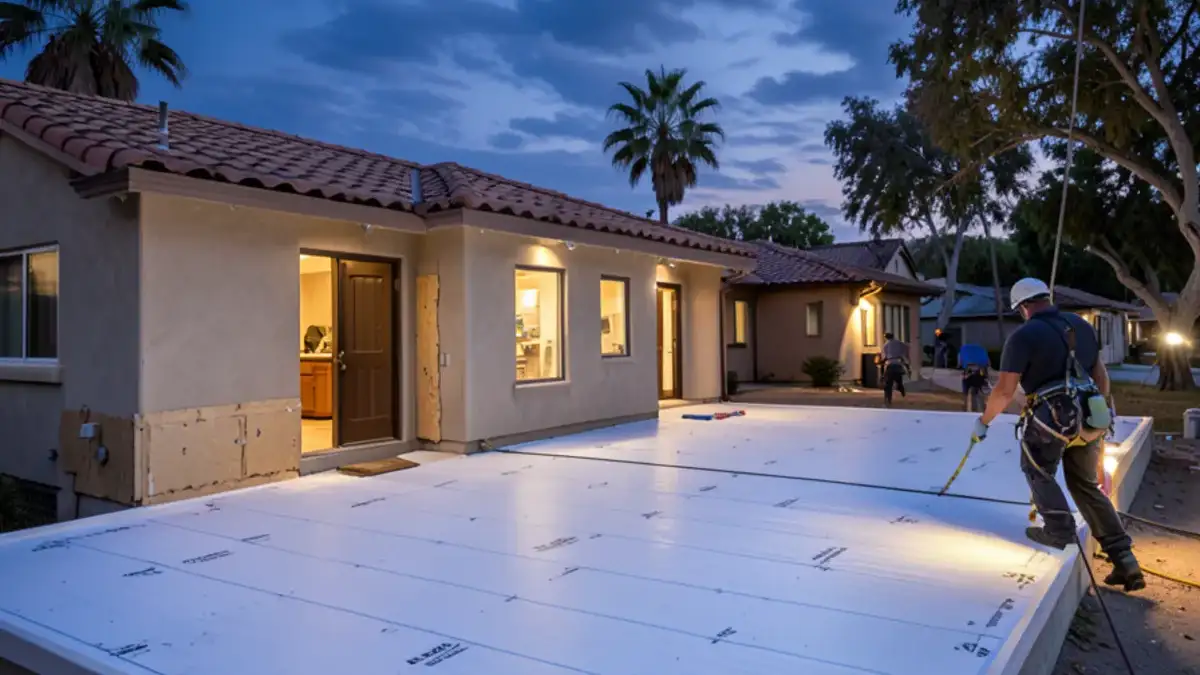
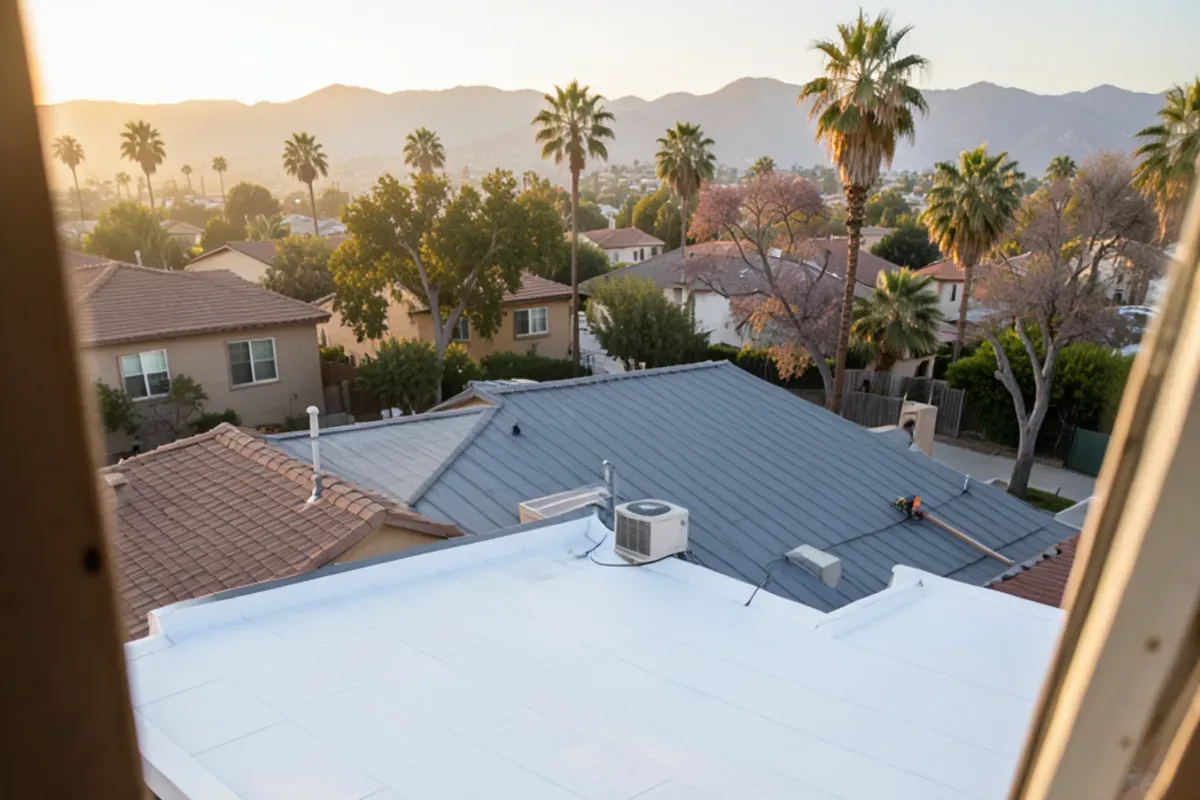
Commercial roof installation in Rosemead covers roofs on new buildings, building additions and tenant improvements where the roof is being built or rebuilt from the deck up. We install TPO, PVC and modified bitumen systems, and we coordinate with the architect, the mechanical contractor and the solar installer so every penetration is flashed once and correctly.
This work is part of our commercial roofing service for San Gabriel Valley properties. New roofs on additions, mezzanines converted to office, and restaurant build-outs with new kitchen exhaust make up much of it.
Commercial roofing systems for new buildings and additions
On new work the deck, slope and drain locations are still on paper, which makes this the best moment to get them right. The roof system then follows from use, exposure and the energy code.
| System | Best fit | Install method | Notes |
|---|---|---|---|
| TPO, 60 or 80 mil | Retail, office, warehouse | Mechanically fastened or fully adhered over insulation | White surface helps meet cool-roof targets |
| PVC | Restaurants, food processing, labs | Mechanically fastened or adhered; hot-air welded seams | Resists grease and many chemicals |
| Modified bitumen, 2 or 3 ply | High foot traffic, small roofs, additions tied into existing cap sheet | Self-adhered, cold-applied or torched | Torch work needs fire watch and is avoided near combustibles |
| Standing seam metal | Low-slope metal buildings with enough pitch | Concealed clips on purlins or deck | Needs minimum slope set by the panel maker |
We install over plywood, OSB, steel deck or concrete, with the insulation and cover board the design calls for. If the plans leave the roof system open, we price two options so you can compare.
Fastening patterns follow the wind design for the building's height and exposure. Corner and perimeter zones get more fasteners or stronger adhesion than the middle of the roof, because uplift is highest at the edges.
A new-roof scope from us runs from the deck up:
- Insulation, tapered crickets and cover board to the plan's R-value and slope.
- The membrane, fastened or adhered to the wind design.
- Base flashing at parapets, curbs, pipe portals and drains.
- Edge metal, coping, gutters and scupper boxes.
- Walkway pads and flashed attachment points for solar or equipment.
What prompts a new commercial roof in the valley
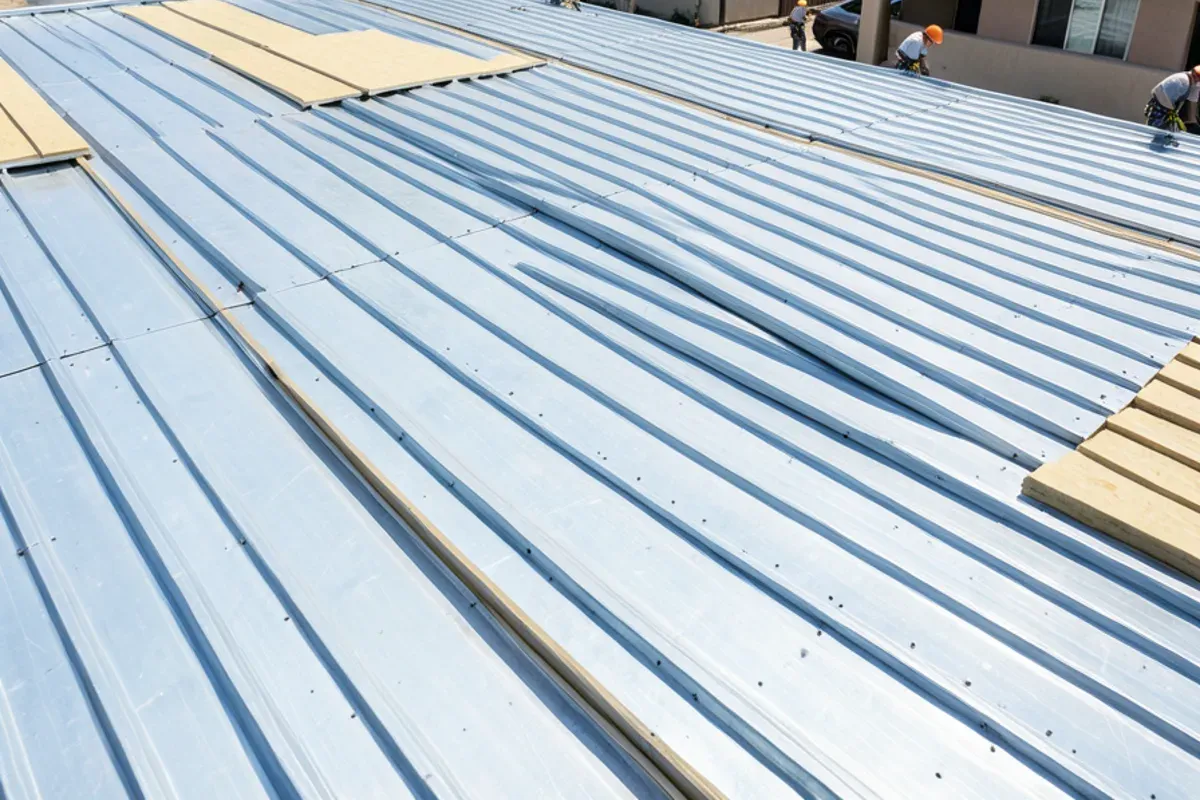
In a built-out valley, many new commercial roofs are not on empty lots. They sit over additions to existing shops, a converted warehouse bay, or a storefront becoming a restaurant, where the new roof has to tie into an older one at a parapet or a step. Each case sets a different starting point.
- Additions and mezzanines: a new roof joined to an existing membrane that may be a different material and age.
- Use changes: kitchen exhaust, makeup air and heavier rooftop units arriving with a new tenant.
- Ground-up buildings: deck, slope and drains drawn from scratch, with the energy code set from day one.
- Solar on new buildings: since the 2022 Energy Code, most newly constructed nonresidential buildings need solar PV, and usually batteries, so the roof layout has to leave room for the array.
The tie-in is where these projects most often leak later. We look at the existing roof before bidding the new one, so the joint is designed rather than improvised.
Which roof system fits a tenant improvement project?
Tenant improvements change what happens under the roof, and the roof often has to change with them. A shop turned into a restaurant needs new exhaust, makeup air and grease protection. An office turned into a clinic may add rooftop units and more ductwork.
- Kitchen tenants: PVC or a grease-resistant section around exhaust fans, plus a grease containment system.
- New rooftop units: new curbs set at the correct height and flashed into the existing membrane.
- Partial new roof over an addition: a membrane compatible with the existing roof so the tie-in can be welded or sealed properly.
- Old roof near end of life: replacing it during the improvement avoids cutting a new membrane later.
If the existing roof is in poor shape, we tell you before the tenant moves in, when the work is easiest. A prior-condition report also helps sort landlord and tenant responsibility under the lease. We also ask whether the deck can carry heavier new equipment; a larger rooftop unit may need a structural engineer's sign-off.
Planning curbs, HVAC, solar and drainage before the membrane
Most leaks on newer commercial roofs start at something added after the roofer left. We try to lay out every penetration with the other trades first.
- HVAC: factory curbs or field-built curbs tall enough for proper flashing height above the finished roof.
- Pipes and conduit: grouped through pipe portals instead of many separate pitch pockets.
- Solar: attachment points flashed into the membrane, with walk paths and fire setbacks kept clear.
- Drains: primary and overflow drains or scuppers in the locations the plumbing plans call for.
- Access: roof hatch, guardrails and walkway pads placed where techs actually walk.
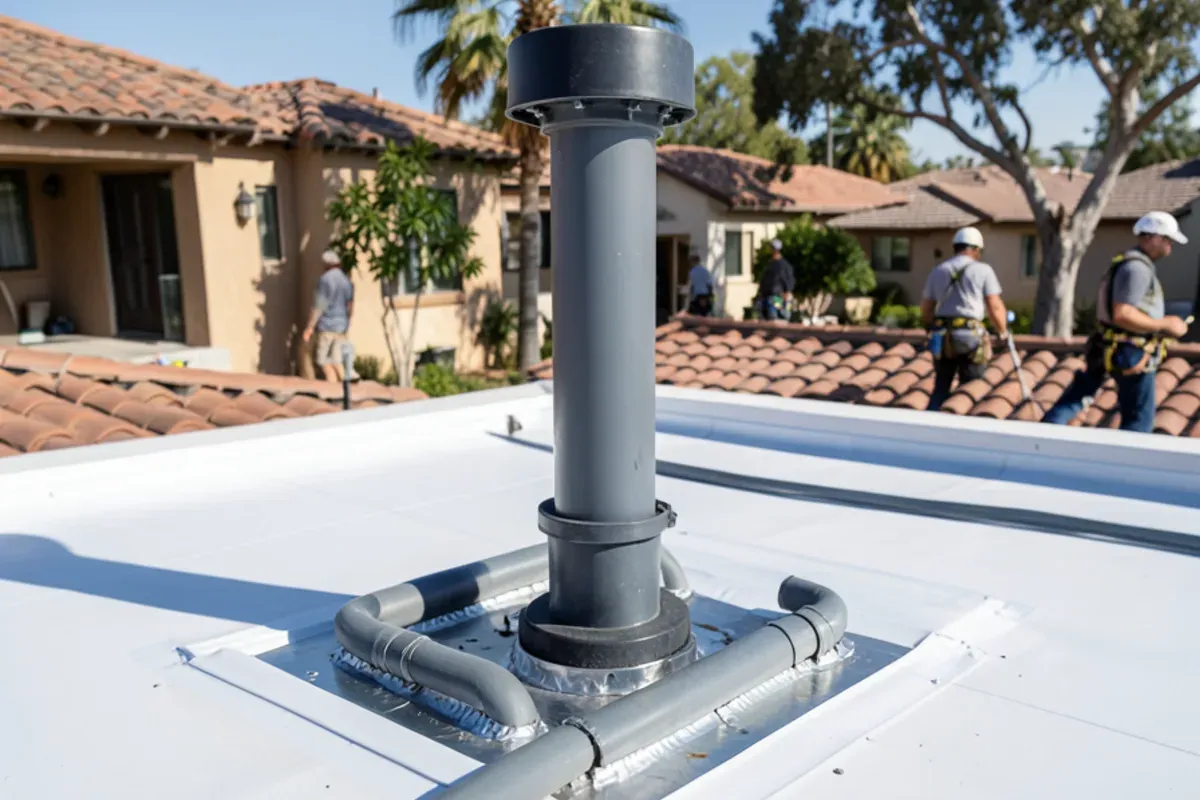
When solar goes on later, ask the installer to work with a roofer on the flashings. Our solar and reroofing guide covers how attachment timing affects the roof.
Need commercial roof installation help this week?
Tell us what you are seeing. We schedule same-day or next-day visits when crews are free and send photos with a written quote.
- 4.9 from 48 Google reviews
- Based on Rosemead Blvd
- Photos and a written quote before work
Commercial roof installation in Rosemead from submittal to final
- Plan review: we read the roof plan, details and energy compliance requirements and flag conflicts.
- Submittals: product data, CRRC ratings for reflective membranes, and fastening patterns for the engineer or architect.
- Preinstallation meeting with the general contractor, mechanical and solar trades to set sequence.
- Deck check: we confirm the deck is dry, clean and fastened before insulation goes down.
- Install: insulation, cover board, membrane, flashings, edge metal and coping.
- Inspection: we schedule the building inspection and correct anything the inspector flags.
- Closeout: as-built photos, product labels and warranty paperwork for the owner.
A small addition roof can take a few days once the deck is ready. Larger new buildings follow the general contractor's schedule. We pull the permit when the roofing scope is ours to permit, or work under the building permit when the general contractor holds it.
Permits, fire rules and license checks on new roofs
Building permits come from the city's building division, or from LA County Public Works Building & Safety in unincorporated areas. New buildings in a CAL FIRE Very High Fire Hazard Severity Zone, such as the foothill parts of Monrovia and Glendora, also fall under California Building Code Chapter 7A, which calls for a Class A roof assembly. Any roofing subcontractor on a permitted job must hold a CSLB C-39 license; confirm it, and the workers' comp record, at cslb.ca.gov.
What does a new commercial roof cost to install?
We price new roofs from the plans and a site visit, not from a rate per square foot. These items carry the most weight:
- Roof area and shape: many corners, levels and parapets add labor.
- Insulation R-value and tapered design required by the plans and energy code.
- Membrane type and thickness.
- Count of curbs, drains, penetrations and solar attachments.
- Edge metal, coping and gutters specified.
- Access and lifting: crane time, height and site constraints.
- Solar attachments and walk paths required by the energy code and fire setbacks.
- Tie-in work where the new roof meets an older one.
For tenant improvements and additions, ask about payment options that match your draw schedule.
Brands, coverage and care after a new commercial roof
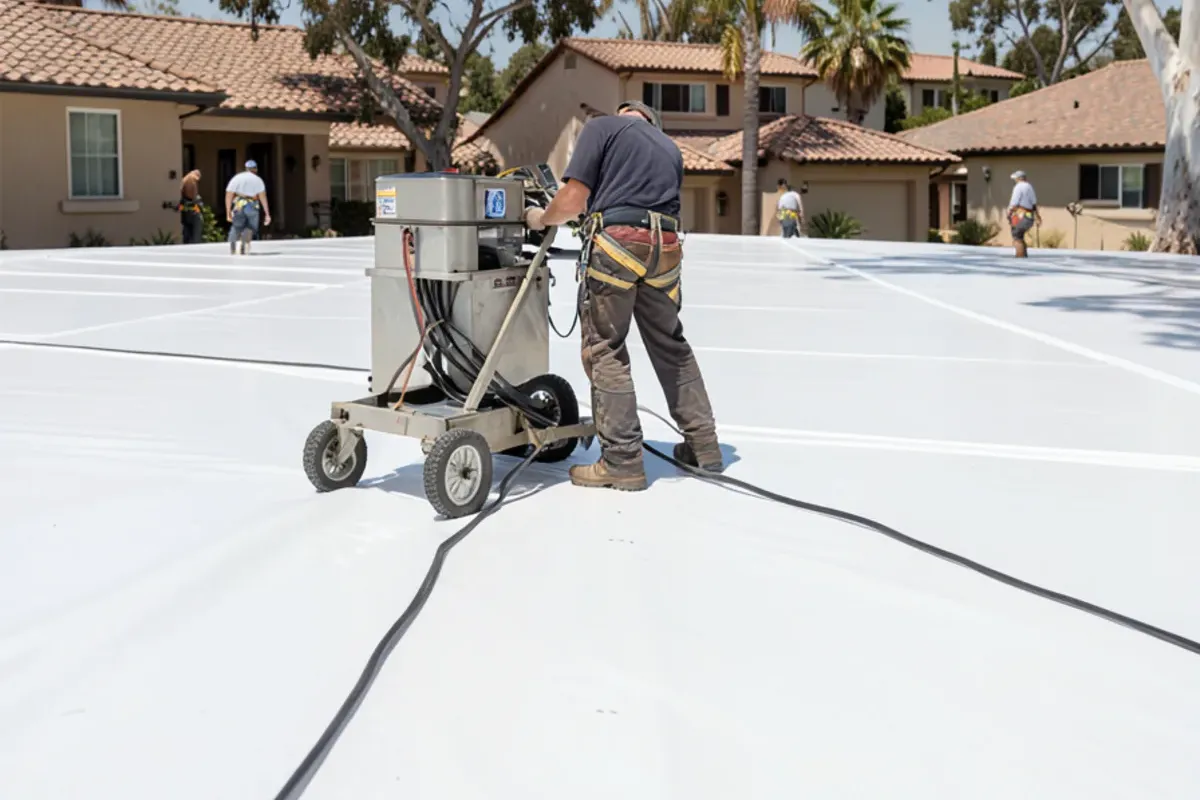
Carlisle, GAF, Johns Manville, Elevate and Sika Sarnafil are examples of manufacturers whose single-ply and modified product lines are widely specified in California. Plans often name a product or an equal; we confirm the exact line before ordering.
What the manufacturer covers depends on the system and product line chosen, and our workmanship terms are written into the contract. Request both in writing and ask if either transfers to a future owner.
New roofs still need care. A first-year look after the initial rainy season catches any settling at curbs, and scheduled commercial roof maintenance keeps drains and flashing in the condition the manufacturer expects. Buyers and lenders can request a commercial roof inspection report later on.
Why builders and owners call Tylzen Spoke for new commercial roofs
- Rosemead Blvd is our base, which keeps job sites across the valley close.
- You receive a written, line-by-line quote, with permits shown separately.
- Reviewers mention clear explanations and crews that keep the site tidy and protected.
- Our Google average is 4.9 stars over 48 reviews, as of November 2026.
We install commercial roofs in Pasadena, Arcadia, Irwindale and other cities within about 30 miles of Rosemead.
What customers say on Google
4.9★ from 48 Google reviews (checked Nov 2026)
“I was very happy with the roofing service I received. I reached out because the skylight in my bathroom was leaking, and Brandon scheduled a visit right away. He actually arrived on time, which is rare these days! …”
“Five stars all the way. From William’s first visit and walkthrough with us to Brandon’s excellent follow-up, this roofing company was outstanding and professional. We always felt comfortable—never pushed or promised more than they could deliver. …”
“We had a great experience getting a new roof, gutters, and fascia flashing installed, and the finished work really shows. Everything looks clean, solid, and well done, and the whole roofing project felt organized from start to finish. …”
Where we handle commercial roof installation
- Rosemead
Storefronts and restaurants on Valley Blvd and Garvey Ave, where tenant improvements add kitchen exhaust and new rooftop units.
- Pasadena
Additions and adaptive reuse of older commercial buildings, where a new roof meets parapets and built-up roofs from earlier decades.
- Arcadia
New office, medical and retail buildings where Title 24 solar requirements shape the roof layout from the first drawing.
- Irwindale
New industrial buildings and expansions near the 605 and 210, with large steel-deck roofs and many drains.
- City of Industry
Warehouse expansions and new distribution space where TPO goes over steel deck and tapered insulation sets the drainage.
- South El Monte
Industrial bays converted to new uses, where heavier rooftop equipment may need structural review before curbs are set.
- Monrovia
Foothill-edge sites inside Very High Fire Hazard Severity Zones, where new commercial roofs must be Class A assemblies.
- El Monte
Restaurant and retail build-outs where PVC around kitchen fans and compatible tie-ins to older cap sheet matter most.
- Santa Fe Springs
Manufacturing additions where process exhaust and pipe racks call for pipe portals and chemical-resistant membrane choices.
Commercial Roof Installation questions
Which roof system fits a new tenant improvement project?
It depends on what the tenant does. Restaurants need grease resistance near exhaust, so PVC or a protected section is common. Offices and retail usually suit TPO. If the new roof ties into an existing one, the material must be compatible so the joint can be welded or sealed instead of caulked.
Do you coordinate roof penetrations for HVAC and solar?
Yes. We review mechanical and solar layouts before the membrane goes down, set curbs and pipe portals at the right height, and flash solar attachments into the roof. When those trades arrive after we finish, we ask to be called back for the flashings rather than leaving them to sealant.
What paperwork do you provide for inspections?
Product data sheets, CRRC ratings for reflective membranes, fastening details when the engineer requires them, and photos of the work at each stage. At closeout you get the labels, warranty registration documents and as-built photos. We schedule the roofing inspection and stay on the job until it passes.
Can you work under the general contractor's permit?
Yes. On new buildings and larger improvements the general contractor usually holds the building permit and we work as the roofing subcontractor. On roof-only scopes, such as a new roof over an addition, we pull the permit ourselves when one is needed.
How soon can a new roof go on after framing?
Once the deck is installed, fastened and dry, and the curbs and drain bodies are set. We check moisture in wood decks and the condition of steel decks before insulation goes down, because trapping wet deck under a new roof causes problems later.
Does a new commercial roof need to be white?
Not always, but often. Title 24 cool-roof rules apply to many low-slope roofs in California, and Rosemead is in Climate Zone 9. Requirements depend on the building type and scope, so confirm with the building department. White or light TPO and PVC meet most targets.